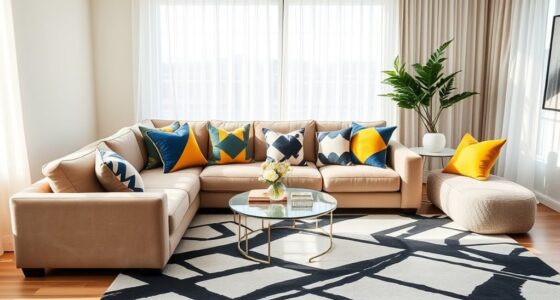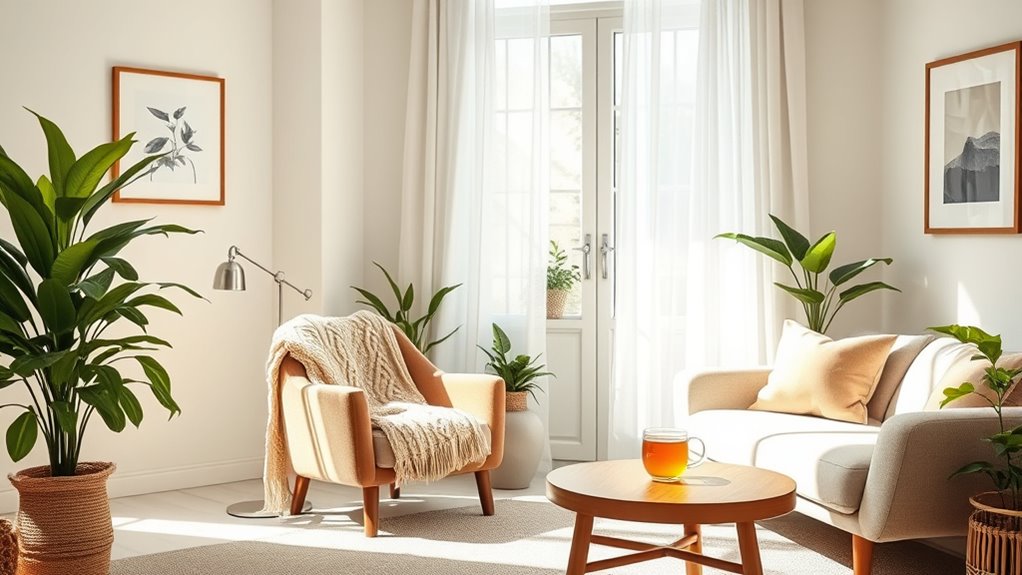
To create a stress-free home environment, focus on maximizing natural light by positioning furniture near windows and using sheer curtains. Choose calming colors like soft blues, greens, or neutral tones to promote tranquility. Incorporate natural elements such as plants or wooden accents to deepen your connection with nature. Thoughtful space planning with these elements can boost your well-being. If you keep exploring, you’ll discover even more ways to design a truly calming space.
Key Takeaways
- Maximize natural light with strategic window placement and sheer curtains to boost mood and regulate circadian rhythms.
- Use calming, muted colors like soft blues and neutrals to create a tranquil and relaxing atmosphere.
- Incorporate natural elements such as plants and wooden accents to enhance serenity and a connection to nature.
- Ensure proper lighting during day and night with warm, dimmed lights to promote relaxation and restful sleep.
- Plan space thoughtfully to foster safety, comfort, and a cohesive environment that reduces stress.

Have you ever considered how the spaces around you influence your well-being? The way your home is designed can markedly impact your stress levels and overall mood. One of the most effective ways to create a calming environment is by focusing on natural lighting and calming colors. Natural light is a powerful mood booster; it helps regulate your circadian rhythm, improving your sleep and energy levels. When you let in plenty of sunlight, your space feels more open, inviting, and vibrant. Position your furniture near windows to maximize daylight, and consider using sheer curtains that diffuse sunlight softly, avoiding harsh glare. If natural light is limited, supplement with warm, full-spectrum bulbs that mimic daylight, ensuring your home remains bright and cheerful throughout the day.
Pairing natural lighting with calming colors enhances the sense of tranquility. Soft, muted tones like gentle blues, soothing greens, and warm neutrals evoke serenity and help reduce anxiety. These colors work by creating a visual environment that feels safe and relaxing, encouraging your mind to unwind. When choosing paint, furniture, or decor, opt for these calming hues to establish a peaceful atmosphere. Keep in mind that vibrant, bold colors can sometimes stimulate the mind too much, so lean toward softer shades that promote restfulness.
To truly craft a stress-free home, consider how these elements intertwine. Natural light not only illuminates your space but also influences how colors appear, making the calming shades even more effective. During the day, open your curtains to flood rooms with sunlight, and in the evening, switch to warm, dim lighting to wind down. Consistency in lighting and color palette creates a cohesive environment that signals relaxation. Incorporate natural elements like indoor plants or wooden accents to further enhance the calming effect, connecting your home to nature’s serenity.
Frequently Asked Questions
How Can Lighting Influence Mental Health at Home?
Lighting plays a vital role in your mental health at home. Natural light boosts your mood and energy levels, helping you feel more alert and positive. By maximizing natural light, you can reduce stress and enhance your overall well-being. Additionally, using warm, soft lighting in the evening can create a calming atmosphere, supporting relaxation. Paying attention to your home’s lighting directly influences your mental health and mood enhancement daily.
What Are Effective Soundproofing Tips for Reducing Stress?
To reduce stress through soundproofing, focus on adding acoustic treatments like soft furnishings, rugs, and curtains that absorb noise. Installing noise barriers such as double-glazed windows or heavy doors can block external sounds. Seal gaps around doors and windows to prevent sound leaks. Combining these strategies creates a quieter, calmer space, helping you feel more relaxed and less overwhelmed in your home.
How Does Indoor Air Quality Impact Overall Well-Being?
Indoor air quality directly affects your overall well-being by influencing your respiratory health, energy levels, and mood. You can improve it through effective air purification, which removes pollutants, and humidity control, preventing mold and dry air. When you maintain clean, balanced air, you reduce allergies and respiratory issues, creating a healthier, more comfortable environment that promotes relaxation and mental clarity in your daily life.
What Are Simple Ways to Introduce Calming Colors?
You can easily introduce calming colors by understanding color psychology and choosing the right paint selection. Opt for soft, muted tones like blues, greens, or gentle neutrals that evoke tranquility. Use these colors on walls, furniture, or accents to create a soothing atmosphere. When selecting paint, prioritize low-VOC options for better indoor air quality. This simple step helps foster a peaceful, stress-free environment in your home.
How Can Furniture Arrangement Promote Relaxation?
You might think furniture placement is just about aesthetics, but it’s actually your secret weapon for relaxation. By arranging furniture with ergonomic design in mind, you create a space that invites calm rather than chaos. Clear pathways, cozy corners, and accessible seating help your mind unwind. So, embrace thoughtful furniture placement—your home’s layout can turn stress into serenity, proving that good design really does make all the difference.
Conclusion
As you nurture your home, think of it as a sanctuary tree, its roots grounded in calm and its branches reaching for serenity. Each mindful choice you make—soft lighting, calming colors, clutter-free spaces—is like watering and pruning, helping your wellness tree flourish. With patience and care, your environment becomes a peaceful forest where stress can’t take root. Remember, your home is the nurturing soil that allows your well-being to grow strong and resilient.