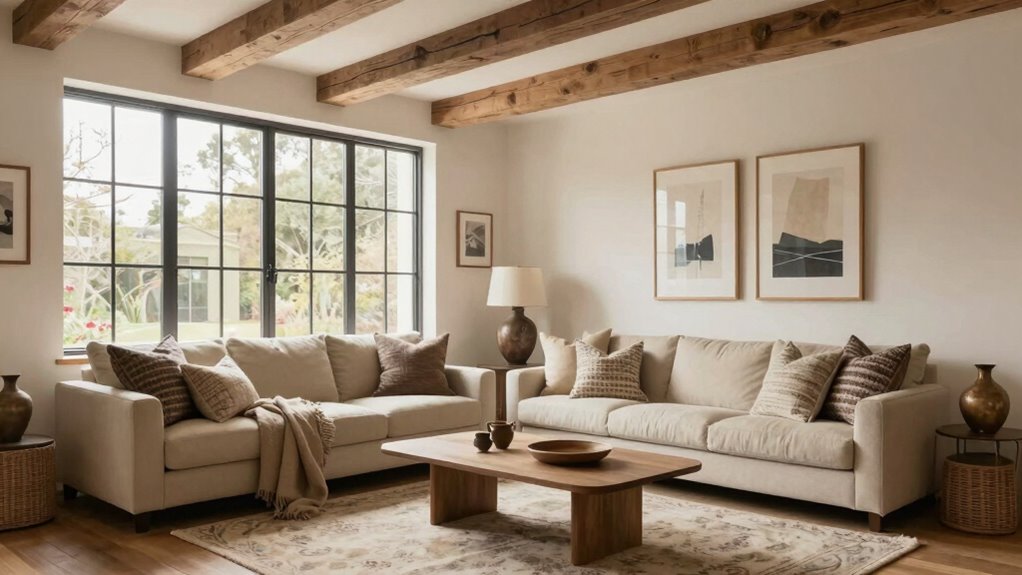

To create a unique, non-generic passage interior, start with a neutral color palette like soft beige or cool greys that serve as a versatile backdrop. Mix modern and vintage furniture with natural materials and carefully consider scale. Add personality with textured textiles, curated artwork, and statement decor pieces that reflect your style. Balance and harmony are key, so avoid clutter while incorporating thoughtful accents. Keep exploring to discover more tips for designing a truly personalized space.

Get furniture and decor delivered free with Prime
- Fast, free delivery on millions of items
- Prime Video, Amazon Music and more included
- Member-only deals all year
Key Takeaways
- Combine modern and traditional furniture with natural materials for a balanced, personalized look.
- Use a cohesive neutral color palette to unify diverse styles and add subtle contrast.
- Incorporate textured textiles, artwork, and statement decor to soften transitions and add visual interest.
- Mix different eras and finishes to create depth and prevent the space from feeling uniform.
- Maintain balance and avoid over-accessorizing for a curated, inviting, and unique atmosphere.
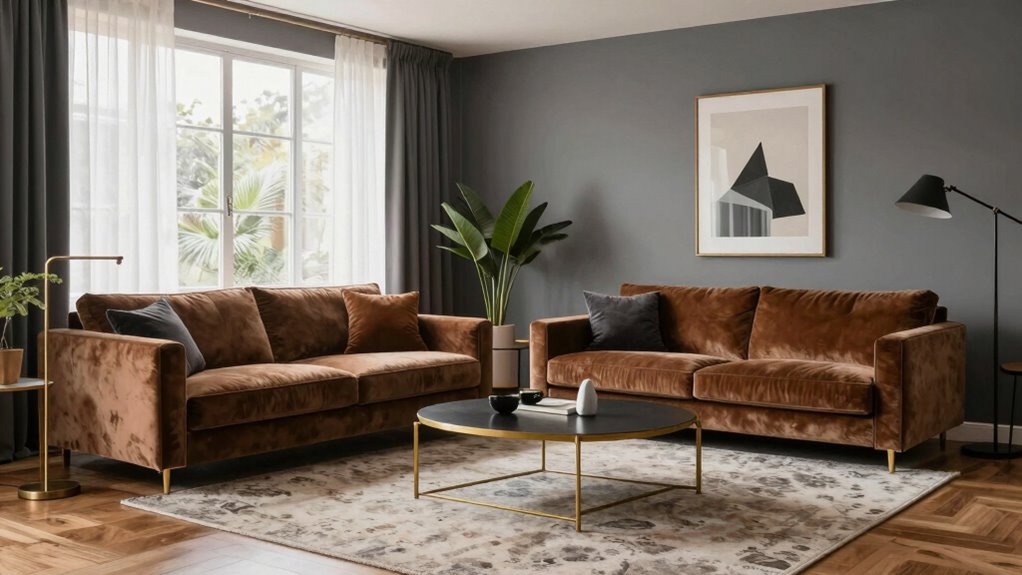
Have you ever wondered how to blend traditional and modern styles seamlessly in your home? Achieving a transitional interior isn’t about copying either style exactly, but about creating a space that feels balanced, inviting, and uniquely yours. The key lies in thoughtful choices, especially when it comes to your color palette and furniture selection. You want a look that feels cohesive without leaning too heavily into one aesthetic or appearing too generic. Start by choosing a neutral color palette as your foundation. Shades like soft beige, warm taupe, or cool greys provide a versatile backdrop that allows both traditional and modern elements to shine. These hues create a calm, sophisticated atmosphere that’s neither too stark nor overly ornate, making it easier to layer different styles without clashing. When selecting colors, think about how they’ll interact with your furniture and decor accents, aiming for harmony and subtle contrast rather than bold, jarring tones.
Your furniture selection plays a pivotal role in establishing a transitional style. Opt for pieces that combine clean lines with subtle details or classic touches. For example, a sofa with a sleek silhouette but plush cushions offers a modern form with traditional comfort. Incorporate furniture made from natural materials like wood or metal, which can bridge the gap between styles. Be mindful of scale and proportion; avoid overly bulky or overly delicate pieces. Instead, choose furniture that feels substantial yet streamlined, striking a balance between traditional craftsmanship and contemporary minimalism. Mixing different eras and finishes can also add personality—pair a vintage wooden coffee table with a modern upholstered armchair or a sleek metal side table. The goal is to create visual interest without making the space feel cluttered or chaotic.
Furthermore, understanding interior design basics can help you make more informed decisions about balancing form and function in your space. In addition to color and furniture, pay attention to the accessories and decor you incorporate. Use textiles, artwork, and lighting fixtures to soften the shift between styles. Soft, textured throws and pillows can introduce warmth, while modern art or sculptures add a contemporary edge. When it comes to lighting, a classic chandelier paired with sleek, minimalist lamps can tie everything together. Remember, a transitional interior is about balance—so keep a sense of flow and avoid over-accessorizing. Instead, select a few statement pieces that reflect your personality, ensuring your space feels curated and intentional. By carefully blending a neutral color palette with well-chosen furniture and accessories, you’ll craft a transitional interior that feels fresh, inviting, and far from ordinary.
transitional style furniture set
As an affiliate, we earn on qualifying purchases.
As an affiliate, we earn on qualifying purchases.
Frequently Asked Questions
How Do I Balance Modern and Traditional Elements Effectively?
To balance modern and traditional elements effectively, you should blend artistic accents with strategic material contrasts. Incorporate contemporary art or sleek fixtures alongside classic furniture pieces, creating visual interest. Use varied textures and finishes—like matte and glossy surfaces—to highlight contrasts without overwhelming the space. Keep a cohesive color palette to unify these elements, ensuring your transitional interior feels harmonious rather than disjointed.
What Color Palettes Work Best for Transitional Interiors?
For intermediate interiors, you should choose neutral color palettes like soft grays, warm taupes, or creamy whites to create a harmonious backdrop. Incorporate accent accents in muted blues, greens, or earthy tones to add depth and interest. Focus on color harmony by balancing these shades throughout your space, and use accent accents strategically to highlight architectural details or furniture, ensuring a cohesive and inviting look.
How Can I Incorporate Personal Style Without Clutter?
Did you know that homes with personalized touches feel 30% more inviting? To incorporate your style without clutter, focus on artistic accents like unique sculptures or artwork that reflect you. Use texture layering—mixing soft throws, textured rugs, and varied fabrics—to add depth without overwhelming the space. Keep clutter at bay by selecting a few meaningful pieces that stand out, creating a balanced, personalized, yet streamlined changeover interior.
What Furniture Styles Suit a Transitional Design?
You should choose furniture with clean lines and soft curves that blend traditional and modern styles. Incorporate vintage accents like antique side tables or ornate mirrors to add character. Use textured fabrics such as plush velvet or woven upholstery to create visual interest and warmth. This combination of sleek furniture with vintage touches and tactile fabrics helps you achieve a cohesive progression look that feels personalized and inviting.
How Do I Make a Transitional Space Feel Cohesive?
Think of your space as a symphony—each element must harmonize. To make a passage feel cohesive, layer textures like plush rugs and sleek metals, adding depth and interest. Use lighting enhancements—warm, layered lighting— to unify the room’s mood and highlight your design elements. Consistent color palettes and balanced furniture pieces also help create a seamless flow, making your space feel thoughtfully curated rather than disjointed.
neutral color palette wall paint
As an affiliate, we earn on qualifying purchases.
As an affiliate, we earn on qualifying purchases.
Conclusion
By blending modern and traditional elements thoughtfully, you can craft a seamless interior that feels both timeless and personalized. Remember, a well-designed space not only reflects your style but also enhances your daily comfort. Remarkably, studies show that homes with balanced design elements tend to boost mood and reduce stress by up to 30%. So, take your time, experiment, and create a space that truly feels like home—beautiful, functional, and uniquely yours.
textured throw pillows and blankets
As an affiliate, we earn on qualifying purchases.
As an affiliate, we earn on qualifying purchases.
As an affiliate, we earn on qualifying purchases.
Fall Picks
fall essentials
As an affiliate, we earn on qualifying purchases.