
Paper clutter builds up quickly at home because it’s easy to hold onto important-looking documents and pile them up without a proper system. You might keep papers for future use or to avoid forgetting something, but without regular sorting, they quickly accumulate. Disorganized spots for incoming mail and no clear filing system only make things worse. If you keep these habits, clutter continues to grow—if you want simple ways to stop this pattern, learn more below.

Get furniture and decor delivered free with Prime
- Fast, free delivery on millions of items
- Prime Video, Amazon Music and more included
- Member-only deals all year
Key Takeaways
- People often hold onto papers they perceive as important or urgent, causing quick accumulation.
- Lack of a clear organization system leads to papers being shoved into piles or drawers.
- Emotional attachment and fear of forgetting important info encourage ongoing paper retention.
- Inconsistent routines for sorting and processing papers allow clutter to build rapidly.
- Digital or physical storage inefficiencies make it hard to maintain ongoing organization.
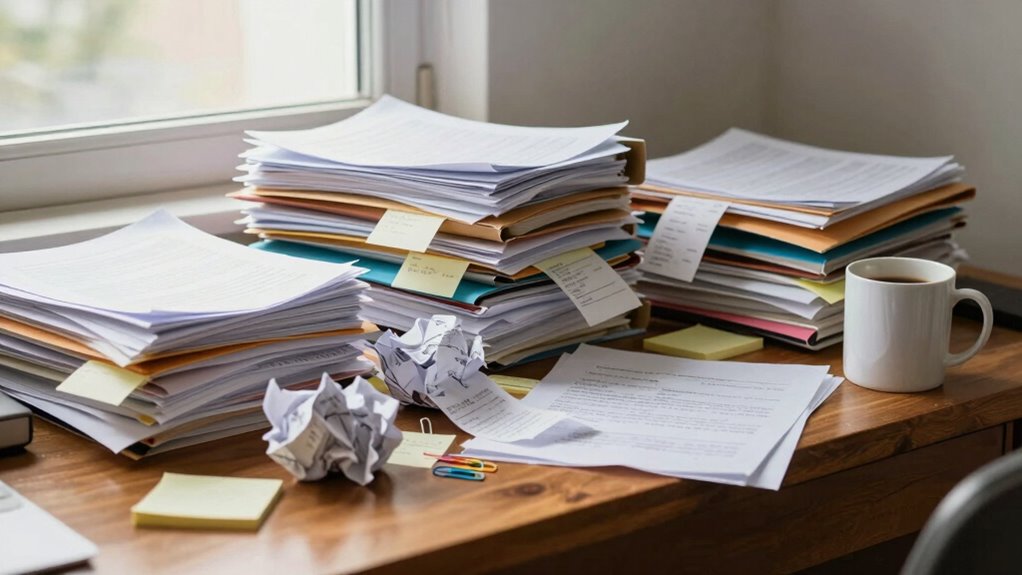
Have you ever stepped into a room and felt overwhelmed by the mountain of paper clutter? It seems to grow overnight, and no matter how often you tidy up, it quickly reappears. The truth is, paper clutter builds up so fast because it’s easy to accumulate and hard to manage. You get bills, receipts, flyers, notes, and printouts that all seem urgent or important. Without a clear system, they pile up, creating chaos and making it difficult to find what you actually need. It’s a cycle that can feel endless, but understanding why it happens is the first step in tackling it.
One big reason paper clutter takes over is that we tend to hold onto items we believe are important, even if we don’t need them anymore. We’re conditioned to think that everything might be useful someday or that we might forget something important. As a result, papers get shoved into drawers, folders, or piles, and before you know it, the clutter spirals out of control. Add to that the tendency to print out documents for convenience or record-keeping, which only increases the volume of paper you need to manage. Without a proper system, these papers accumulate rapidly. Incorporating digital organization into your routine can significantly reduce this buildup and help you stay on top of your paperwork.
Holding onto unnecessary papers and printing for convenience quickly leads to overwhelming clutter and disorganization.
Clutter prevention relies on establishing routines and systems that keep paper from piling up. Regularly sorting through incoming papers and immediately discarding or digitizing what’s unnecessary can make a significant difference. Create designated areas for incoming mail and be diligent about processing items daily or weekly. Using labels, folders, or digital folders helps you stay organized and prevents papers from lingering around and turning into clutter. Additionally, understanding storage solutions can help you choose the best methods for managing your papers efficiently. Establishing a consistent filing system that is easy to maintain helps prevent papers from accumulating and becoming overwhelming. When you develop these habits, you’re less likely to be overwhelmed by paper and more likely to keep your space tidy. In the end, reducing paper clutter isn’t just about cleaning—it’s about creating a system that works for you and keeps your home orderly.
As an affiliate, we earn on qualifying purchases.
Frequently Asked Questions
How Can I Prevent Paper Clutter From Reappearing Quickly?
To prevent paper clutter from reappearing quickly, establish a regular paper sorting routine. Set aside specific times each week to go through new papers, discarding what’s unnecessary and filing important documents immediately. Use clearly labeled folders or an organizer to keep everything in order. Staying consistent with your filing routines helps you maintain a clutter-free space and reduces the chance of paper pile-up over time.
What Are the Best Storage Solutions for Paper Organization?
You should use designated storage containers, categorize by document sorting, and label clearly to streamline your paper organization. Opt for stackable bins, file folders, and drawer dividers to keep everything accessible and neat. Regularly review and declutter, ensuring each paper has a specific place. This organized approach helps prevent clutter from piling up, making it easier to find important documents quickly and maintain a tidy home environment.
How Often Should I Declutter My Paper Piles?
You should declutter your paper piles at least once a month to keep things manageable. During this process, focus on sorting documents for proper archiving or paper recycling. Regular decluttering prevents buildup and helps you stay organized. By consistently managing your paper, you avoid unnecessary clutter, make space for important documents, and streamline your workflow. Set a monthly reminder to review and efficiently handle your paper organization.
Are There Digital Alternatives to Paper Documentation?
Imagine your documents as fragile leaves falling from a tree. Digital backups and cloud storage act as the sturdy branches catching them, preventing clutter from piling up. Instead of paper stacks, you can scan important papers and save them securely online. This way, your essential information stays accessible and safe, reducing clutter. Embracing digital alternatives turns chaos into calm, giving you peace of mind and a cleaner, more organized space.
How Do I Decide What Papers to Keep or Discard?
You decide what papers to keep or discard by using document sorting and a clear filing system. Start by sorting papers into categories like bills, receipts, and personal documents. Keep only essential items, such as important legal papers, warranties, or tax records. Discard duplicates or expired items. Use a filing system to organize the kept papers, making it easier to find what you need and prevent clutter from building up again.
As an affiliate, we earn on qualifying purchases.
Conclusion
Think of paper clutter as a river that quickly overflows its banks. Without boundaries and regular clearing, it rushes in, overwhelming your space and peace. But you hold the dam—the power to control the flow. By setting boundaries and clearing regularly, you stop the flood before it starts. Remember, you’re the architect of your home’s calm. Keep the dam strong, and let your space breathe, free from the relentless tide of paper chaos.
As an affiliate, we earn on qualifying purchases.
As an affiliate, we earn on qualifying purchases.
Halloween Picks
halloween
As an affiliate, we earn on qualifying purchases.