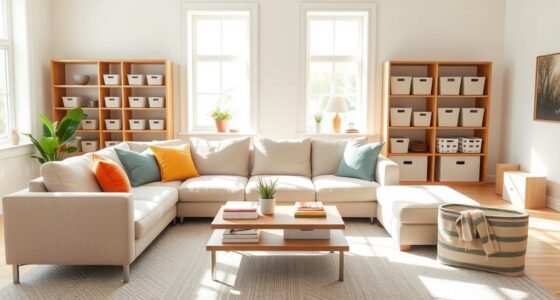
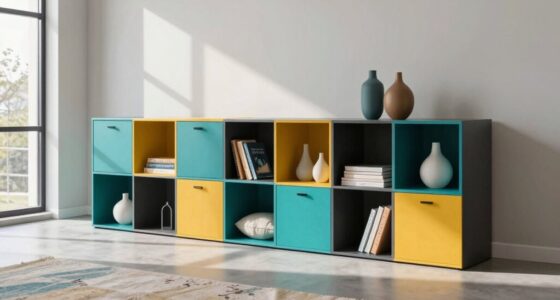
To live more with less stuff, start by decluttering your space, keeping only what truly serves or brings you joy. Embrace minimalist habits like adopting a capsule wardrobe and choosing a tiny home to reduce physical possessions and simplify daily routines. Focus on quality over quantity, and shift your mindset to value experiences and relationships over material items. This approach creates freedom and clarity—keep exploring to discover how further mindful choices can transform your life.
Key Takeaways
- Prioritize quality over quantity by choosing versatile, durable items that serve multiple purposes.
- Declutter regularly by evaluating each possession’s usefulness and joy, keeping only what truly matters.
- Adopt a capsule wardrobe to simplify clothing choices and reduce closet clutter.
- Embrace a mindset that values experiences and personal growth over material possessions.
- Use minimalist planning tools and routines to maintain an organized, intentional, and clutter-free lifestyle.

Minimalist living is about simplifying your life by focusing on what truly matters. When you embrace this lifestyle, you start to see how much excess clutter and unnecessary possessions can weigh you down. One of the most popular ways to adopt minimalism is by choosing a tiny home. These compact living spaces encourage you to prioritize quality over quantity and make you rethink how much space you really need. Moving into a tiny home forces you to evaluate your belongings and eliminate anything that doesn’t serve a purpose or bring you joy. It’s about creating a home that’s functional, efficient, and free of clutter, which makes cleaning and maintaining much easier. With less space to fill, you naturally start to question whether you need that extra set of dishes or a stack of unopened boxes.
Alongside tiny homes, capsule wardrobes offer another effective method to cut down on clutter and streamline your daily routine. Instead of having dozens of clothing items that you rarely wear, you focus on a small, versatile collection of clothing that can be mixed and matched effortlessly. A capsule wardrobe encourages you to choose quality pieces that fit well and suit your style, reducing decision fatigue and making mornings less stressful. It also promotes sustainable shopping habits, as you’re less likely to impulse buy and more likely to invest in durable, timeless garments. By limiting your wardrobe, you not only free up space in your closet but also gain clarity about what truly matters in your personal style. You’ll find it easier to keep your space tidy because there are fewer items to organize and clean.
Living minimally isn’t just about reducing possessions; it’s about shifting your mindset. It’s about understanding that material things don’t define your happiness or success. When you simplify your environment, you create room for more meaningful experiences, relationships, and personal growth. You learn to value quality over quantity in all areas of life. Whether you’re downsizing to a tiny home or curating a capsule wardrobe, the goal is to remove the excess and focus on what truly enriches your life. This approach can lead to greater financial freedom, less stress, and more time to enjoy what genuinely matters. Incorporating minimalist planning tools can further support your journey towards a clutter-free life. Minimalism isn’t about deprivation; it’s about intentional living and making space for what brings you fulfillment.

SPACELEAD Slim Storage Cart 4 Tier,Bathroom Organizer Rolling Utility, Mobile Shelving Unit Slide Out for Office, Kitchen, Laundry Room & Narrow Places,White
1.Gap Storage Expert: 4-Tier Intelligent Height Differential Design:(4.9"W x 38.7"H x 15.3"D)Engineered for modern compact living! With its…
As an affiliate, we earn on qualifying purchases.
As an affiliate, we earn on qualifying purchases.
Frequently Asked Questions
How Can Minimalism Improve Mental Health?
You might wonder how minimalism affects mental health. By decluttering your space, you create an environment that fosters mindfulness practices, helping you stay present and focused. This simplicity reduces stress and anxiety, boosting your emotional well-being. When you prioritize quality over quantity, you gain clarity and peace of mind. Embracing minimalism encourages intentional living, leading to improved mental health and a more balanced, fulfilling life.
Is Minimalist Living Suitable for Families With Children?
Is minimalist living a good fit for families with children? Think of it as planting a garden—fewer cluttered weeds, more room for family activities and child development. You can create a calm, organized environment that encourages quality time and growth. With mindful decluttering, your family can thrive, focusing on meaningful experiences rather than possessions. Minimalism isn’t just for individuals; it can nurture a supportive, intentional family life too.
How to Start Decluttering When Overwhelmed?
When you’re overwhelmed, start decluttering by identifying clutter triggers and recognizing emotional attachment to items. Break the process into small, manageable steps, like tackling one drawer or shelf at a time. Take deep breaths and remind yourself that letting go isn’t easy, but it’s freeing. Focus on progress, not perfection. Over time, you’ll feel less overwhelmed and more in control, making decluttering a positive experience.
What Are Eco-Friendly Minimalist Habits?
Ever wondered how your habits impact the planet? You can adopt eco-friendly minimalist habits by choosing sustainable practices like using reusable bags, bottles, and containers. Opt for eco-conscious choices such as buying secondhand or supporting local, eco-friendly brands. Simplify your life by reducing waste and conserving energy. These small changes help you live more intentionally, reduce your environmental footprint, and align your lifestyle with your values of sustainability and minimalism.
Can Minimalism Save Money Long-Term?
You might wonder if minimalism can save you money long-term. By practicing budget planning and focusing on essential purchases, you reduce unnecessary expenses. This approach encourages smarter investment strategies, like saving for future needs instead of impulse buying. Over time, these habits can lead to significant savings, helping you build financial security and cut costs, all while living more intentionally and with less clutter.

CTIME 3-Tier Medicine Organizer – Portable Medicine Cabinet with Leather Handle, Empty First Aid Kit for Home
[3-Layer Large Capacity Design]The 2025 New Medicine Storage Box features a spacious 3-layer design, perfect for organizing pills,…
As an affiliate, we earn on qualifying purchases.
As an affiliate, we earn on qualifying purchases.
Conclusion
Embracing minimalist living means finding freedom in less—the cluttered chaos replaced by open space and calm. Imagine your life as a clear sky, where every item has purpose and beauty, unlike a storm of possessions weighing you down. With less stuff, you create room for more meaningful moments and genuine connections. So, let go of the excess and open yourself to a simpler, richer life—where less truly becomes more.

The Joy of Less: A Minimalist Guide to Declutter, Organize, and Simplify – Updated and Revised (Minimalism Books, Home Organization Books, Decluttering Books House Cleaning Books)
As an affiliate, we earn on qualifying purchases.
As an affiliate, we earn on qualifying purchases.
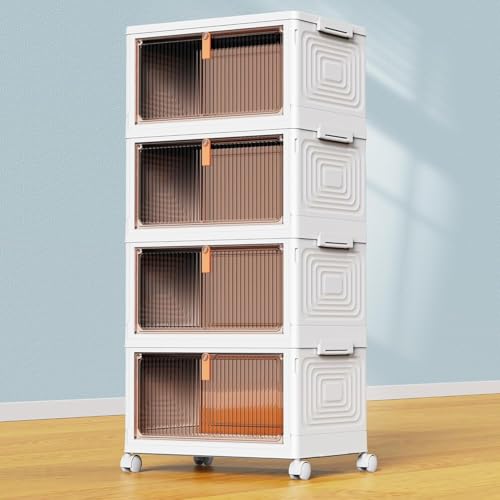
YFXCVSL 4 Tier Plastic Storage Bins with Lid 23QT, Stackable Storage Containers with Wheels, Folding Storage Boxes, Stackable Storage Bins, Organizers and Storage for Living Room,Office,Dorm
【92Qt Storage Boxes】With total volume of 92QT, the storage box measures 15.35in*11in*8.27in each tier.The Storage bins are good…
As an affiliate, we earn on qualifying purchases.
As an affiliate, we earn on qualifying purchases.