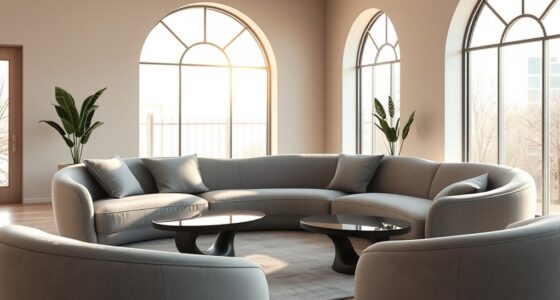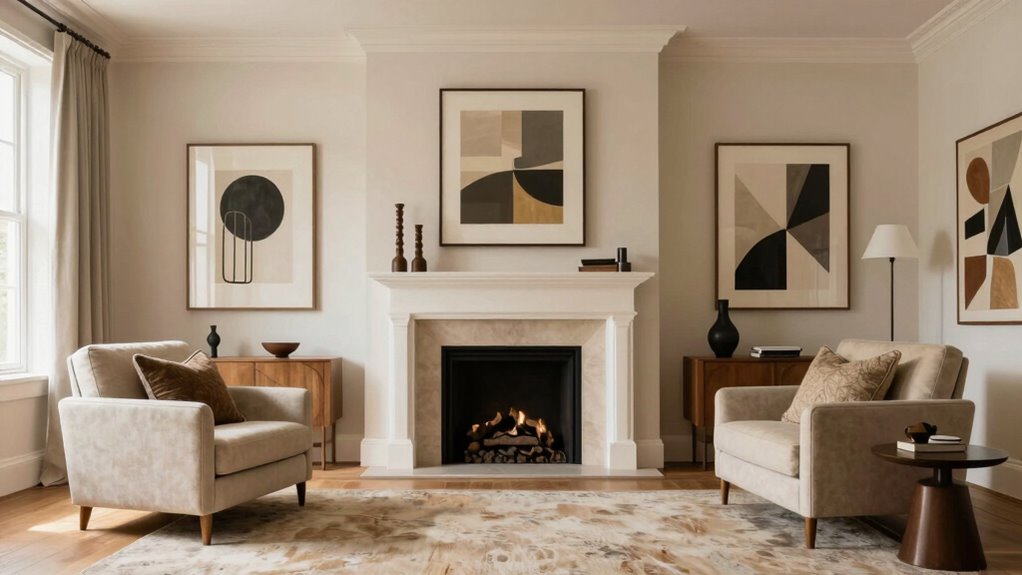

To effectively combine symmetry and asymmetry in your interior design, start with a balanced foundation by using symmetrical elements for stability and calm. Then, add asymmetrical accents, like bold artwork or unexpected placements, to inject energy and personality. Use contrasting colors and textures to create visual interest while maintaining harmony through carefully scaled pieces. Mixing these principles keeps your space both organized and dynamic. Keep exploring to discover even more ways to create a lively, balanced environment.
Key Takeaways
- Use symmetry as a foundation and introduce asymmetrical accents to create visual interest and personality.
- Balance symmetrical elements with bold, contrasting asymmetrical pieces for dynamic harmony.
- Incorporate subtle asymmetrical details within otherwise symmetrical arrangements for depth.
- Play with scale and proportion, ensuring asymmetrical accents complement larger symmetrical structures.
- Use color and texture contrasts to enhance the interplay between symmetry and asymmetry.
Have you ever wondered how to create a balanced yet dynamic interior? Achieving this involves skillfully combining symmetry and asymmetry to craft a space that feels both harmonious and interesting. When you use symmetry, you bring order and stability; it’s like creating visual echoes—matching pairs of furniture, balanced arrangements, or repeating patterns that give your room a sense of calm. But relying solely on symmetry can make a space feel predictable or static. That’s where asymmetry comes into play, injecting energy and personality. The trick is knowing how to blend these two principles seamlessly, keeping your space lively without sacrificing balance.
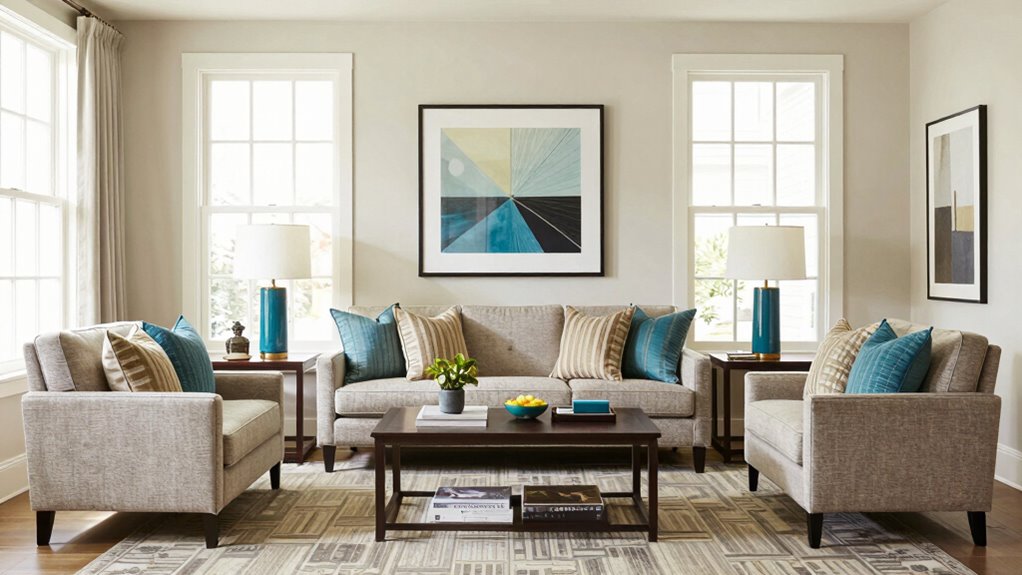
Color balance plays an essential role in this process. When you pair symmetrical elements with colors that complement or contrast, you enhance the sense of harmony. For example, if you place matching lamps on each side of a sofa, choose shades that tie into your overall color scheme. Then, introduce asymmetrical accents—like a bold throw pillow or an art piece on one side—to add visual interest. These contrasting colors keep your eye moving and prevent the room from feeling dull. Texture contrast is equally important. You might have a symmetrical arrangement of furniture, but by mixing textures—smooth velvet with rough woven fabrics, shiny metals with matte finishes—you create a tactile experience that balances visual stability with variety. This contrast in textures stimulates your senses and makes the space more engaging.
Additionally, understanding the importance of contrast ratio can help you make more informed choices about lighting and visual depth in your interior. As you design, consider how symmetry can establish a foundation of order, while asymmetry can serve as a focal point or accent. For instance, a symmetrical arrangement of side tables and lamps can frame a central piece of artwork, but you might offset a large vase or sculpture on one side to break the uniformity. This deliberate imbalance draws attention and adds personality without disrupting the overall harmony. Incorporating natural elements can also enhance this balance further, creating a seamless connection between your interior and the outdoors. Moreover, paying attention to scale and proportion ensures that your asymmetrical accents complement rather than overwhelm the symmetrical foundation. Keep in mind that the key is subtlety—small asymmetrical details can have a significant impact when balanced with larger symmetrical elements.
Ultimately, your goal is to craft a space that feels cohesive yet lively. Use symmetry to establish a sense of structure and comfort through balanced color schemes and aligned textures. Then, introduce asymmetry through carefully chosen accents, contrasting textures, or unexpected placements. This interplay keeps your interior dynamic and inviting, making sure it reflects your personality while maintaining visual harmony. When you master this balance, your space won’t just look good—it’ll feel right.

Specialty Gift, Unisex, Modern Asymmetrical Mandala Throw Pillow
Bold Aesthetics
As an affiliate, we earn on qualifying purchases.
As an affiliate, we earn on qualifying purchases.
Frequently Asked Questions
Can Symmetry and Asymmetry Be Combined in Small Spaces Effectively?
Yes, you can combine symmetry and asymmetry effectively in small spaces by balancing scale contrast and color harmony. Use symmetrical elements for structure, like matching furniture, and add asymmetrical accents to create visual interest. Keep colors consistent or complementary to unify the design. This approach prevents clutter and makes the space feel larger while maintaining a dynamic, balanced look that’s both functional and stylish.
How Do I Balance Symmetry and Asymmetry for a Cohesive Look?
You balance symmetry and asymmetry by mixing balanced elements with unexpected accents, creating visual interest. Use color harmony to unify your space, choosing complementary or analogous colors. Incorporate texture contrast—smooth against rough—so elements stand out. Keep your symmetrical pieces as anchors, then add asymmetrical accents to break monotony. This approach guarantees your space feels cohesive yet dynamic, with each design element working harmoniously to reflect your style.
Are There Specific Styles That Favor Symmetry or Asymmetry?
Did you know that classical styles like Neoclassical and Victorian favor symmetry, creating a balanced, harmonious look? You’ll find that these styles emphasize color harmony and texture contrast to enhance their structured layouts. Conversely, modern and eclectic designs often embrace asymmetry for a dynamic, lively feel. Whether you choose one or blend both, understanding these style preferences helps you craft a space that feels cohesive and visually engaging.
What Are Common Mistakes When Mixing Symmetry and Asymmetry?
A common mistake is disrupting balance and harmony by overusing asymmetry, making the space feel chaotic. You might also focus too much on creating focal points without considering how they relate to each other, causing visual confusion. To avoid this, guarantee your symmetrical elements anchor the design while asymmetrical pieces add interest. Aim for a thoughtful mix that guides the eye naturally, maintaining balance and harmony throughout your space.
How Do Lighting Choices Influence Symmetrical and Asymmetrical Designs?
Lighting choices are the brushstrokes that paint your space’s mood. With lighting contrast, you highlight or soften areas, guiding the eye through symmetry’s harmony or asymmetry’s surprise. Bright, focused lights can enhance the structure’s balance, while softer, varied lighting adds drama and depth, amplifying mood enhancement. Your lighting design becomes the conductor, orchestrating emotions and emphasizing the beauty of both symmetry and asymmetry in your interior.

Design Reimagined: A Fresh and Colorful Take on Timeless Rooms
As an affiliate, we earn on qualifying purchases.
As an affiliate, we earn on qualifying purchases.
Conclusion
By blending symmetry and asymmetry, you create a space that’s balanced yet exciting, like a dance of harmony and surprise. Think of symmetry as the steady beat and asymmetry as the lively melody—together, they make your interior design enchanting. Don’t be afraid to experiment and find your unique rhythm. When you master this balance, your home will feel both soothing and dynamic, inviting you to enjoy every detail like a well-composed symphony.
contrast textured throw blankets
As an affiliate, we earn on qualifying purchases.
As an affiliate, we earn on qualifying purchases.

23" Modern Ceramic Table Lamps Set of 2 – Table Lamps for Living room, Farmhouse Bedside Night Stands Lamp for Bedroom, White Boho Nightstand Lamps Set of 2, Desk Lamp for End Table Home Decor
Sleek Design: Elevate your home decor with our exquisite ceramic lamps set of 2, featuring a chic beige-white…
As an affiliate, we earn on qualifying purchases.
As an affiliate, we earn on qualifying purchases.