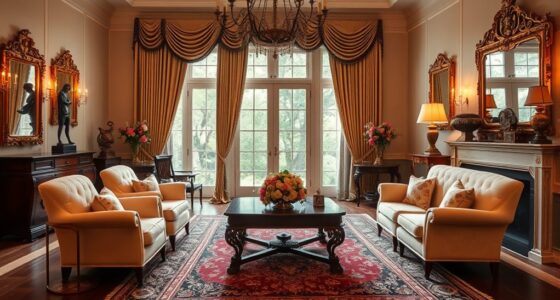
Biophilic design works beyond plants by incorporating natural lighting, water features, and authentic textures that engage your senses and promote well-being. You benefit from improved mood, focus, and stress reduction through calming water sounds and immersive materials. Natural elements create a sense of connection to nature and support sustainability. These features help foster environments that feel alive and nurturing. If you explore further, you’ll discover even more ways biophilic design enhances your space and health.
Key Takeaways
- Incorporation of natural lighting enhances mood, circadian regulation, and energy efficiency beyond the presence of plants.
- Use of indoor water features creates calming auditory and visual experiences that promote relaxation.
- Utilization of natural materials, textures, and patterns deepens sensory engagement and environmental harmony.
- Designing spaces that foster a connection to nature boosts well-being, focus, and stress reduction.
- Combining multiple elements like lighting, water, and materials creates a holistic environment that supports health and productivity.

Biophilic design integrates natural elements into built environments to foster health, well-being, and productivity. It’s more than just adding a few plants; it’s about creating spaces that connect you deeply with nature, even indoors. One key element is natural lighting. When you maximize daylight through large windows or skylights, you help regulate your circadian rhythms, improve mood, and boost focus. Natural light makes interiors feel more open and inviting, reducing reliance on artificial lighting and contributing to energy efficiency. You may notice that spaces with abundant natural lighting feel calmer and more vibrant, encouraging you to spend more time there with less fatigue. Additionally, incorporating natural lighting with smart technology can optimize light levels throughout the day for even greater health benefits.
Natural lighting enhances mood, focus, and energy while creating inviting, energy-efficient indoor spaces.
Indoor water features are another powerful aspect of biophilic design that go beyond plants. When you incorporate a small fountain or waterfall into your environment, it introduces a soothing auditory experience that reduces stress and enhances mental clarity. The gentle sound of flowing water creates a calming ambiance, which can help you unwind during busy workdays or stressful moments. These features also serve as visual focal points, drawing your attention and anchoring you in a natural setting. Unlike static decorative elements, water features engage multiple senses, making your environment more dynamic and alive. Incorporating water elements can also promote a sense of tranquility and connection to natural water sources. Recognizing the importance of natural materials further deepens the connection to the outdoors and enhances the sensory experience within your space. Employing natural textures and patterns**** can reinforce this connection, making environments feel more immersive and authentic.
Beyond these elements, the underlying principle of biophilic design is its intentional connection to nature—using natural materials, textures, and patterns that mimic the outdoors. This approach fosters a sense of place and belonging, which can markedly improve your overall well-being. When natural lighting filters through your space, it not only illuminates your environment but also connects you to the natural cycles of day and night. Recognizing the role of biophilic design elements can help you create more sustainable and harmonious environments. Similarly, indoor water features provide a constant reminder of flowing streams or waterfalls, reinforcing a sense of serenity and continuity.
You might also notice how these elements influence your behavior and mood. Natural lighting can elevate your energy levels and enhance concentration, making tasks feel less burdensome. Indoor water features, with their calming sounds, can act as natural stress reducers, helping you stay focused and balanced. Together, these features create a space that feels more alive and nurturing, encouraging you to spend more time in harmony with nature. When you combine natural lighting, water features, and other natural elements thoughtfully, you craft environments that do more than look good—they actively support your health, productivity, and overall happiness.

Stecutts 2×1 Ft Smart Blue Sky Light Ceiling Lamp, APP Control and Biological Rhythm Simulate Sunlight Irradiation, Artificial Skylight for Living Room, Bathroom, Office (2×1 Ft)
Blue Sky Experience: The artificial skylight ceiling lamp reproduces the ligh of the sun and the sky in…
As an affiliate, we earn on qualifying purchases.
As an affiliate, we earn on qualifying purchases.
Frequently Asked Questions
How Does Biophilic Design Impact Mental Health?
Biophilic design positively impacts your mental health by creating spaces that feel calming and connected to nature. Natural ventilation reduces indoor air pollution and enhances comfort, which lowers stress. Daylight optimization boosts your mood and energy levels by providing ample natural light, reducing reliance on artificial lighting. These elements together foster a sense of well-being, helping you feel more relaxed, focused, and mentally rejuvenated in your environment.
Can Biophilic Elements Improve Productivity in Workplaces?
Studies show that biophilic design can boost productivity by up to 15%. You’ll notice improvements when natural light floods your workspace and water features create calming backgrounds. These elements reduce stress and increase focus, making it easier for you to stay engaged. Incorporating natural light and water features isn’t just aesthetic; it actively supports your well-being and efficiency, transforming your work environment into a space that energizes and motivates you.
What Materials Enhance Biophilic Design Beyond Plants?
You can enhance biophilic design by incorporating natural textures like wood, stone, and bamboo, which bring tactile warmth and authenticity to your space. Sustainable materials, such as recycled metal or eco-friendly textiles, also boost connection to nature while reducing environmental impact. Using these materials creates a harmonious environment that fosters well-being, encourages creativity, and deepens the natural feel, making your space more inviting and aligned with biophilic principles.
How to Incorporate Biophilic Principles in Small Urban Spaces?
To incorporate biophilic principles in small urban spaces, prioritize natural lighting to create a sense of openness and connection to nature. Use reflective surfaces and glass to enhance light flow, and arrange furniture to maximize spatial connectivity, making the area feel larger and more inviting. Add small green elements like wall-mounted planters or vertical gardens to boost natural cues without cluttering the space, creating a calming, nature-inspired environment.
Are There Any Cost-Effective Ways to Implement Biophilic Design?
Imagine you’re a pioneer of the digital age, yet you can still embrace nature without breaking the bank. Budget-friendly alternatives include using DIY biophilic features like creating wall-mounted planters, repurposing jars for mini gardens, or adding natural textures like stone or wood accents. These inexpensive, easy-to-make elements bring biophilic benefits into your space, making it more calming and connected to nature without hefty costs.

Kalona Tabletop Fountain 3 Bowls with LED Light Soothing Water Flowing Sound Fountain Zen/Meditation Home/Office Decor Home Décor Relaxation Indoor (23113)
Indoor fountain: The built-in circulating water pump makes the desktop fountain form 9 waterfalls, and at the same…
As an affiliate, we earn on qualifying purchases.
As an affiliate, we earn on qualifying purchases.
Conclusion
By embracing biophilic design beyond just adding plants, you tap into a timeless human longing for nature, reminiscent of Thoreau’s retreat to Walden. It’s about creating spaces that nurture your well-being, foster connection, and inspire creativity—transforming environments into sanctuaries. When you thoughtfully integrate natural elements, you’re not just decorating; you’re invoking a sense of harmony that echoes the wisdom of nature itself, making your space truly resonate with life.

STICKGOO 3D Wall Panels for Interior Wall Decor, Wood 3D Textured Wall Decor Panels, Natural Oak Wave Design Accent Wall Panels for Living Room, Office
SPECIFICATION: A single package contains 12 3d decorative wall panels, 19.7"x19.7"x0.12" each, covers about 32.4 square feet. 𝐍𝐎𝐓𝐈𝐂𝐄:…
As an affiliate, we earn on qualifying purchases.
As an affiliate, we earn on qualifying purchases.

Sustainability in Creative Industries: Integrating Design, Culture, and Urban Solutions―Volume 2 (Advances in Science, Technology & Innovation)
As an affiliate, we earn on qualifying purchases.
As an affiliate, we earn on qualifying purchases.