To use bold colors without overwhelming your space, start by choosing one accent wall in a vibrant hue like teal or yellow, keeping the other walls neutral to balance the energy. Incorporate neutral furniture and accessories in soft shades to ground the design. Pay attention to natural and artificial lighting to enhance or soften bold tones, and experiment gradually with smaller décor items before committing fully. For a harmonious, lively atmosphere, these strategies will guide you as you explore further.
Key Takeaways
- Use neutral furniture and decor to balance and ground bold color choices.
- Create accent walls with vibrant shades, keeping remaining walls neutral to prevent visual overload.
- Incorporate accessories like pillows and artwork in subtle or complementary hues for gradual color introduction.
- Consider natural and artificial lighting to soften or enhance bold colors and set the desired mood.
- Apply color psychology to select shades that evoke the right emotions without overwhelming the space.
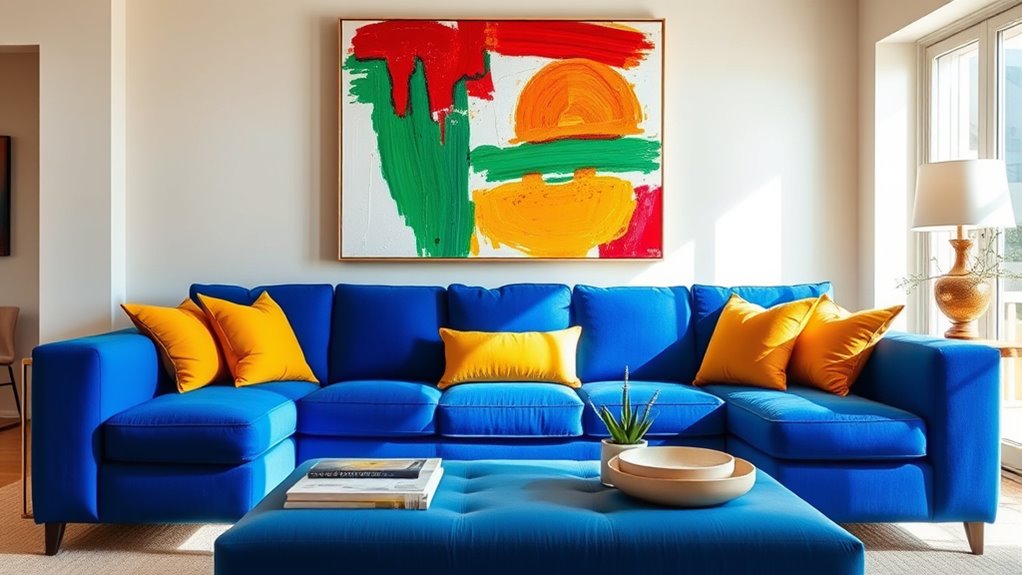
Adding bold colors to your space can instantly transform it into a vibrant, energetic environment. But if you’re worried about overwhelming the room, there are smart ways to incorporate these hues without creating chaos. One effective method is to understand color psychology, which helps you choose shades that evoke the right mood and harmony. Bright reds and oranges can energize and stimulate, while deep blues and purples promote calm and focus. Knowing how colors influence emotions allows you to select bold tones that enhance your space without feeling overpowering.
Understanding color psychology helps you choose bold hues that energize or calm your space without overwhelming it.
A popular strategy is to create accent walls. Instead of painting every wall in a vivid hue, pick one wall to serve as a focal point. This approach adds a punch of color and visual interest without dominating the entire room. For example, a striking teal or mustard yellow on one wall can bring personality and warmth, while keeping the remaining walls neutral to balance the intensity. When choosing your accent wall, consider natural light and the room’s purpose. A sunny room can handle brighter, bolder shades, whereas a darker or more intimate space might benefit from more subdued, yet still bold, tones.
To prevent the bold colors from overwhelming the space, keep the rest of your decor simple and cohesive. Use neutral furniture, such as whites, creams, or light grays, to ground the room and give your accent wall room to shine. Incorporate accessories in complementary colors or subtle patterns to add depth without clashing with the bold hues. If you’re hesitant about committing to a large swath of color, start small. Use bold throw pillows, curtains, or artwork to introduce vibrant shades gradually. This method lets you experiment with color psychology and see how it fits your environment before making bigger changes.
Lighting also plays a critical role in how bold colors appear. Natural light can soften or intensify a hue, so plan accordingly. Consider adding warm or cool lighting to enhance the mood you want to create. Dimmer switches give you control over brightness, allowing you to adjust the atmosphere as needed. Remember, balance is key. The goal isn’t to create a room that feels chaotic but one that feels lively and inviting. By thoughtfully selecting your accent wall, understanding color psychology, and balancing bold hues with neutral elements, you can craft a space that’s both vibrant and harmonious. Incorporating color psychology into your design choices helps ensure your bold color selections evoke the desired emotional response and create a cohesive environment. This approach ensures your bold color choices energize your environment without overwhelming it, resulting in a lively yet comfortable atmosphere.
Frequently Asked Questions
Can Bold Colors Make a Small Room Feel Bigger?
Bold colors can make a small room feel bigger when you use them strategically. Color psychology suggests that lighter shades expand space visually, while bold accent walls create focal points without overwhelming. By painting one wall in a striking hue, you add personality and depth, making the room appear larger. Keep the rest of the decor neutral to balance the boldness, enhancing the sense of openness without clutter.
What Color Combinations Work Best With Bold Hues?
You should consider complementary color schemes or analogous color palettes to pair with bold hues. Complementary schemes, like blue and orange, create vibrant contrast that energizes your space without overwhelming it. Analogous palettes, such as green, teal, and blue, offer harmonious combinations that maintain balance. By choosing the right combination, you can highlight your bold colors while keeping your room feeling cohesive and inviting.
How to Balance Bold Colors With Neutral Tones?
You can balance bold colors with neutral tones by using techniques like color blocking or creating accent walls. Incorporate neutral shades such as beige, gray, or white to ground your space and let bold hues pop without overwhelming. When you add a bold accent wall, it draws attention while keeping the rest of the room calm. This approach helps you enjoy vibrant colors without making your space feel chaotic or cluttered.
Are There Any Risks in Using Too Much Bold Color?
Using too much bold color can be like walking a tightrope—you risk losing your balance. It may cause color fatigue, making your space feel overwhelming or chaotic. Plus, it can break design consistency, leaving your room looking disjointed. To avoid these pitfalls, sprinkle bold hues thoughtfully and balance them with neutrals, ensuring your space remains vibrant yet harmonious. This way, your bold choices enhance rather than overpower.
How Can Lighting Impact the Use of Bold Colors?
Lighting effects play a vital role in how bold colors appear in your space. Good lighting can soften intense hues or make them pop, enhancing the overall mood. For example, warm lighting creates a cozy atmosphere, while cool lighting emphasizes vibrancy. You should consider both natural and artificial light sources to balance bold colors, ensuring they boost mood enhancement without overwhelming the room’s harmony.
Conclusion
By thoughtfully incorporating bold colors, you create a vibrant space that energizes rather than overwhelms. Remember, it’s not about filling every corner but about balancing statement pieces with calming neutrals. Like a painter’s brushstrokes on a canvas, each color choice adds depth and personality—so trust your instincts and let your space reflect your bold spirit. After all, a well-balanced room is like a symphony—harmonious, lively, and uniquely yours.