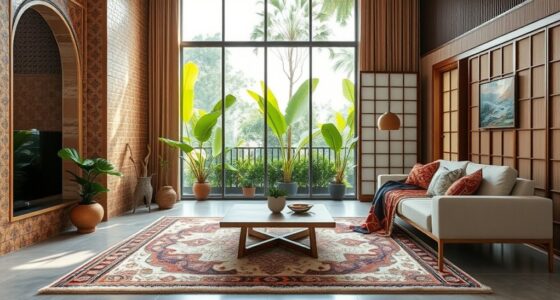
To convert a room for both work and play, focus on flexible furniture like fold-away desks and modular seating, and carefully position zones to prevent interference. Use rugs, shelving, and lighting to visually and functionally separate areas, creating cozy moods or energizing atmospheres as needed. Smart storage keeps clutter hidden, while strategic lighting enhances focus or relaxation. Keep these tips in mind, and you’ll learn how to transform your space effortlessly.
Key Takeaways
- Use flexible furniture like fold-away desks and modular seating to easily switch between work and leisure zones.
- Employ visual cues such as rugs and vertical shelves to delineate different functional areas without clutter.
- Optimize lighting with adjustable lamps and ambient options to set distinct moods for work and relaxation.
- Position workspaces away from lounging areas to minimize interference and promote focus.
- Incorporate smart storage solutions to keep the space organized and adaptable for multiple activities.
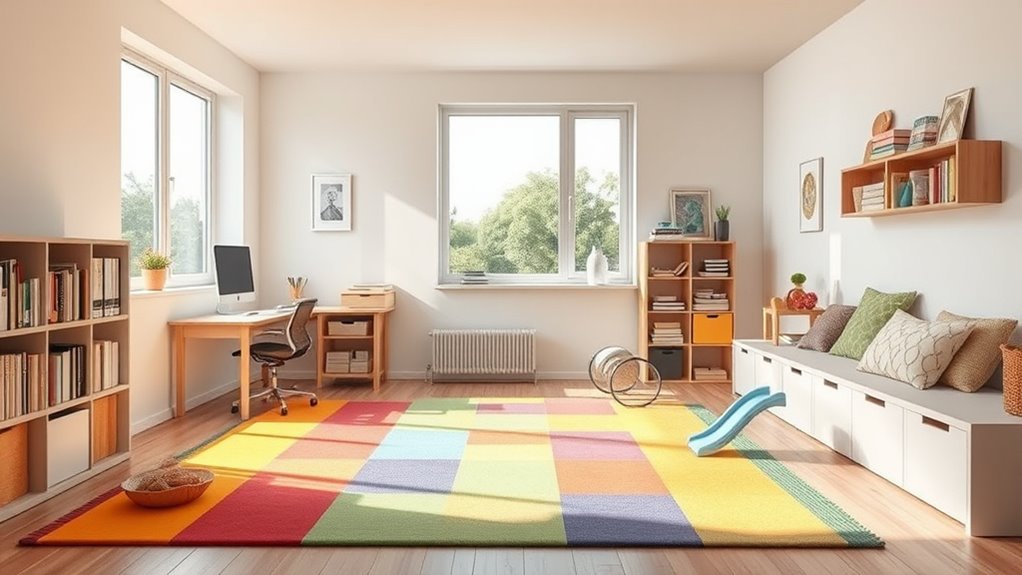
Have you ever considered how a single space can serve multiple purposes? It’s a smart way to maximize your home’s functionality without sacrificing style or comfort. When creating a multi-use room, your furniture arrangements play a vital role. You want to carve out distinct zones—one for work, another for relaxation—without making the space feel cramped or cluttered. To achieve this, consider using furniture that’s flexible and easy to move, like fold-away desks, modular couches, or storage ottomans. Position your workspace away from the main lounging area, perhaps along a wall or in a corner, so it doesn’t interfere with your leisure activities. Meanwhile, keep the living zone inviting with comfortable seating and a coffee table that can double as a workspace when needed. Active listening and empathy are also crucial in creating a harmonious multi-use environment, especially if multiple people share the space. Lighting options also matter immensely in a multi-use space. Good lighting helps set the mood and clearly defines different areas. For your work zone, bright, focused lighting is essential—think adjustable desk lamps or task lighting that reduces eye strain. In the relaxation area, softer, ambient lighting creates a cozy atmosphere that invites you to unwind. Incorporating multiple light sources allows you to easily switch between bright and relaxed moods, depending on your needs. Consider installing dimmer switches to give you control over lighting intensity, or add floor lamps and string lights for a warm, inviting glow. If possible, leverage natural light by positioning your workspace near windows, which can boost your mood and productivity. Another way to differentiate areas is through strategic lighting options and furniture arrangements that maintain an open feel. Use rugs to delineate zones visually and add texture, making each space feel intentional yet connected. Vertical storage or shelving units can also act as subtle dividers, giving each zone its own identity without closing off the room entirely. Keep clutter hidden with smart storage solutions, so the space remains adaptable and functional. Remember, the key is balance—your furniture should be versatile enough to adapt, and your lighting should be flexible enough to suit different activities. Ultimately, designing a multi-use space requires thoughtful planning. By carefully arranging your furniture and choosing lighting options that enhance multiple functions, you create a room that’s both practical and inviting. This approach allows you to seamlessly transition from work to play, making your home more efficient and enjoyable. With a bit of creativity and intentional design, you’ll find that a single space can truly serve many purposes, enriching your daily life.
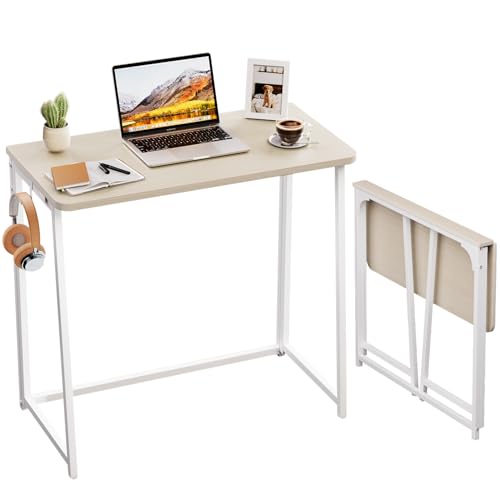
WOHOMO Folding Desk, Small Foldable Desk 31.5" for Small Spaces, Space Saving Computer Table Writing Workstation for Home Office, Easy Assembly, Oak
- Ideal for Small Spaces: Fits in compact areas like bedrooms and caravans
- Easy Folding Mechanism: Nylon buckle design for quick fold and unfold
- Stable and Secure: Ensures stability without shaking during use
As an affiliate, we earn on qualifying purchases.
As an affiliate, we earn on qualifying purchases.
Frequently Asked Questions
How Do I Maximize Small Multi-Use Spaces Effectively?
To maximize small multi-use spaces, you should prioritize flexible layouts that easily adapt from work to play. Use multi-functional furniture like fold-away desks and Murphy beds to save space. Incorporate smart storage solutions such as wall-mounted shelves and hidden compartments to keep clutter out of sight. Keep the area organized, and choose light colors to make it feel larger. Regularly declutter to maintain a versatile, functional environment.
What Are the Best Furniture Options for Dual-Purpose Rooms?
You should choose furniture that’s versatile and space-saving, like fold-out desks, sofa beds, and stackable chairs. Opt for furniture arrangement that creates distinct zones for work and play, making the room functional. Incorporate decorative accessories like colorful rugs, artwork, and plants to define each area and add personality. This way, your dual-purpose room feels inviting and organized, maximizing every inch without clutter.
How Can I Soundproof a Multi-Use Room?
To soundproof your multi-use room, start with effective soundproofing techniques like sealing gaps around doors and windows. Use noise reduction materials such as acoustic panels, foam, or thick curtains to absorb sound. Adding a rug or carpet can also reduce noise transfer. Consider installing a door sweep or using double-layer drywall for extra insulation. These steps help create a quieter, more versatile space for work and play.
What Lighting Solutions Suit Versatile Room Functions?
Did you know 68% of people find proper lighting boosts productivity and mood? For your versatile room, combine ambient lighting to create a warm, inviting atmosphere and task lighting for focused activities. Use dimmable fixtures to easily switch between relaxing and working modes. Incorporating adjustable lamps and layered lighting options helps you customize the space for work, play, or relaxation, making your room truly adaptable.
How Do I Maintain Privacy in Multi-Use Spaces?
To maintain privacy in multi-use spaces, you should address privacy concerns by creating visual barriers like folding screens, curtains, or movable partitions. These options let you easily separate areas when needed, ensuring your activities stay private. Incorporate furniture placement and strategic lighting to further enhance privacy, and consider soundproof panels if noise is a concern. This approach allows flexibility while respecting your privacy needs.

108'' Modular Sectional Sofa with Pull Out Bed, Sleeper Sofa, Dark Gray
- Multiple Package Shipments: May arrive in separate packages
- Seat Cushion Recovery: Cushions recover in 48 hours
- Enhanced Comfort Tips: Use blanket or topper for better sleep
As an affiliate, we earn on qualifying purchases.
As an affiliate, we earn on qualifying purchases.
Conclusion
By transforming your rooms into multi-use spaces, you create a versatile environment that adapts to your needs—whether you’re working, playing, or relaxing. With a little creativity, you’ll find that your home becomes a sanctuary where productivity and leisure coexist seamlessly, much like the timeless concept of a “great hall.” So, embrace these flexible designs and turn your space into a modern-day castle—minus the moat! Your home will be more functional, fun, and uniquely yours.

TORCHSTAR Metal Desk Lamp, Adjustable Swing Arm, E26, Black
- 2-in-1 Design: Stand or clamp for versatile use
- Adjustable Swing Arm: Extend up to 18 inches, rotatable
- Premium Metal Construction: Durable black finish with weighted base
As an affiliate, we earn on qualifying purchases.
As an affiliate, we earn on qualifying purchases.

DUMOS 43 Inch Folding Storage Ottoman Bench, Large Hidden Storage Chest with Thicker Foam Padded Seat, End of Bed Foot Rest Stool for Bedroom Living Room Entryway, Load 660 lbs, Grey
- Heavy-Duty Support: Supports up to 660 lbs with sturdy MDF panels
- Comfortable Seating: Cushioned top with high-density foam and linen fabric
- Large Storage Capacity: Holds up to 35 gallons of items
As an affiliate, we earn on qualifying purchases.
As an affiliate, we earn on qualifying purchases.