
TL;DR
In a Season 1 episode of Fixer to Fabulous, Dave and Jenny Marrs used a vintage window awning to create a distinctive range hood for a kitchen honoring the homeowner’s grandmother. The look can inspire other kitchens, but adapting an awning or building a hood cover requires planning around the ventilation system and safe installation.
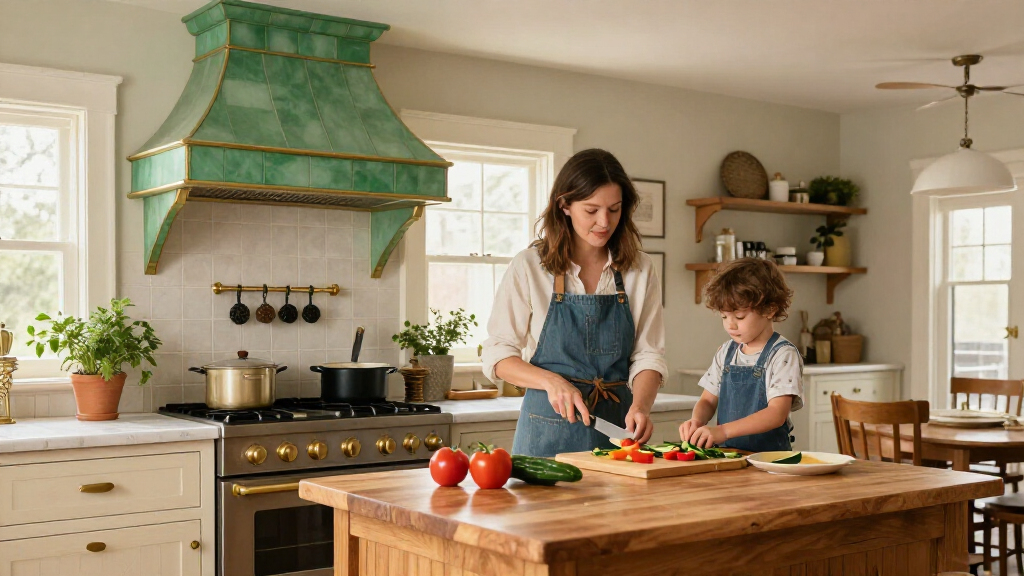
Dave and Jenny Marrs turned a vintage window awning into a decorative range hood cover in Season 1, Episode 4 of Fixer to Fabulous, offering a distinctive alternative to standard metal hoods. The design was part of a kitchen renovation intended to honor the homeowner’s grandmother, and it shows how a functional ventilation area can also carry a personal design detail.

Get furniture and decor delivered free with Prime
- Fast, free delivery on millions of items
- Prime Video, Amazon Music and more included
- Member-only deals all year
The homeowner, Lisa, had inherited her grandmother’s property. The episode’s design linked the kitchen to the grandmother’s life: Jenny Marrs said the renovation included a pickled finish on the cabinetry and an old awning used as the hood cover. The awning echoed the home’s exterior and brought a scalloped, canopy-like shape into the kitchen.
Jenny described the choices in a blog post: “We stained the cabinetry in a pickled finish as an ode to Granny, incorporated an old awning as the range hood for an unexpected pop of farmhouse character.” The renovation account says she sourced a vintage, scalloped metal window awning similar to those used on the house. Lisa recognized the design’s personal connection in the episode, saying, “This is so cute, because my granny used to have one of those over that window.”
The awning functions as a decorative cover around the ventilation equipment; it does not replace the need for a working range hood. The project description recommends first deciding how the kitchen will remove cooking exhaust. A hood can connect to ductwork that sends air outdoors, or use a ductless system that filters and recirculates air. Ductless filters require regular replacement, according to the project guidance.
A playful range hood with a personal story
In Season 1 of Fixer to Fabulous, Dave and Jenny Marrs turned a vintage window awning into a decorative hood cover honoring the homeowner’s grandmother.
A cover, not the ventilation
The scalloped awning framed the working range hood and echoed the home’s exterior.
- Vintage scalloped metal awning
- Pickled-finish cabinetry
- A look tied to family memories
- Working ventilation equipment
- Outdoor ducting or filtered recirculation
- Access and required clearances
Choose the ventilation first
The right cover depends on how the kitchen will remove cooking exhaust.
Decide whether it will duct air outdoors or filter and recirculate it.
Follow equipment instructions, clearances and applicable building requirements.
Adapt a vintage awning or consider a paneled custom cover around the chosen hood.
Make the idea your own
Use an awning
A scalloped piece can bring a canopy shape and a personal connection to the kitchen.
Build a paneled cover
A tongue-and-groove MDF cover is one suggested route to a country-inspired look.
A Hood With a Personal Story
The example matters because range hoods are both working ventilation equipment and a prominent visual feature. Their position above the stove can make them stand out from surrounding cabinets, so a custom cover can shape the look of the kitchen without requiring every visible part to resemble a standard stainless-steel appliance. In the Marrs’ renovation, the awning also connected the new design to the home’s history.
That does not mean an old awning is automatically suitable for every kitchen. The central practical question is whether a decorative cover can be built around the chosen hood while preserving access, airflow and the manufacturer’s required clearances. The renovation offers a design reference, not a tested universal installation plan. For readers considering the look, the useful takeaway is to settle the ventilation system first and treat the cover as a separate design decision.
A similar effect could also be created without locating a vintage awning. The project account suggests a built-in, paneled cover made with tongue-and-groove MDF as another route to a country-inspired appearance. That alternative could help homeowners adapt the visual idea to their own kitchen dimensions, materials and budget, though the details would depend on the specific installation.
Products Worth Considering

Roborock Q10 S5+ Robot Vacuum and Mop with 10,000 Pa Suction

eufy C28 Robot Vacuum and Mop with 15,000 Pa Suction

Levoit Vital 100S-P Air Purifier with Washable Pre-Filter
As an affiliate, we earn on qualifying purchases.
The Renovation Behind the Awning
The design appeared in an episode centered on a home Lisa inherited from her grandmother. The reported renovation details connect the kitchen’s finishes and focal point to memories of the previous owner: the cabinetry received a pickled finish, and the awning recalled the kind of exterior window feature associated with the house. Jenny’s blog description presents these elements as intentional references rather than a purely decorative style choice.
The awning was used to box in the vent, creating a cover with slatted panels and a scalloped edge. In the episode, Lisa’s response reflected recognition of the awning style from her grandmother’s home. The reported account does not identify a newly announced product, a current renovation, or a broader trend; it describes a design choice from an existing television episode and presents it as inspiration for homeowners weighing hood styles.
“We stained the cabinetry in a pickled finish as an ode to Granny, incorporated an old awning as the range hood for an unexpected pop of farmhouse character.”
— Jenny Marrs, in a blog post about the renovation
Installation Details Still Matter
The available account does not provide measurements, a materials specification, a cost, or step-by-step technical instructions for recreating the installation. It also does not clarify the exact ventilation model, duct arrangement, clearances or how the vintage awning was adapted to accommodate the hood. Those details are specific to the kitchen and cannot be inferred from the finished look.
Readers should not assume that a decorative awning can substitute for a range hood or that any vintage piece is safe to place above a stove. The ventilation equipment’s instructions, applicable building requirements and appropriate heat-rated materials need to guide the work. The project account offers general design suggestions, not professional installation advice or confirmation that the same approach will meet requirements in every home.
Plan Ventilation Before the Cover
For anyone considering a similar design, the next step is to identify the required hood and how it will exhaust or filter cooking air. If an existing hood already vents outdoors, a cover may be designed around it; if not, the renovation guidance points to a ductless option that recirculates filtered air. Homeowners should check the chosen equipment’s instructions and plan for filter maintenance where applicable.
Only after those functional decisions are settled should the decorative cover be measured and built or sourced. A vintage awning may provide the closest visual match, while a paneled custom cover can offer a more adaptable interpretation. Installation involving electrical work or changes to ducting should be handled by qualified professionals, with power shut off before work begins and appropriate protective equipment used. The next development for this particular design is unclear: no follow-up project or new announcement is reported.
Source: rss
Key Questions
What did Dave and Jenny Marrs use as a range hood cover?
They used a vintage, scalloped metal window awning as a decorative cover around the kitchen’s ventilation equipment in a Season 1 episode of Fixer to Fabulous.
Why did the renovation include an old awning?
The home belonged to Lisa’s grandmother, and the renovation included details intended to honor her. Jenny Marrs said the awning added farmhouse character; Lisa also recognized the style from her grandmother’s home.
Does a decorative awning replace a working range hood?
No. The awning was used as a cover for the vent. A kitchen still needs suitable ventilation, whether the system ducts air outdoors or filters and recirculates it.
Can homeowners make a similar hood cover?
The renovation guidance describes building a support frame and fitting a decorative cover, with a paneled design as one possible alternative to a vintage awning. The specific installation depends on the hood, kitchen and applicable requirements; electrical or ducting work should be handled by qualified professionals.
Source: hunker.com