TL;DR

Get furniture and decor delivered free with Prime
- Fast, free delivery on millions of items
- Prime Video, Amazon Music and more included
- Member-only deals all year
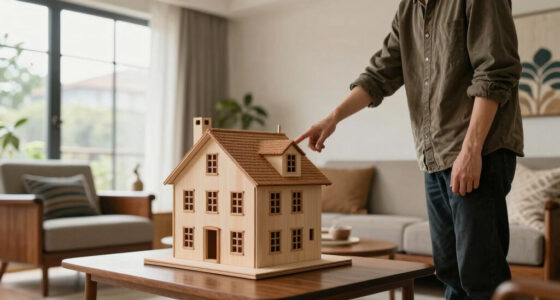
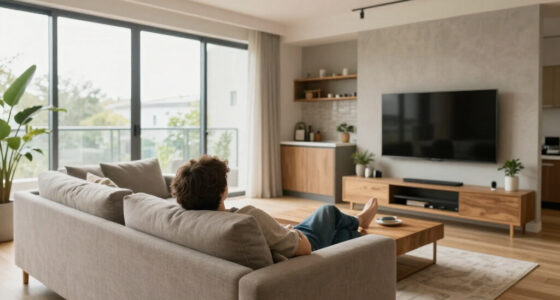
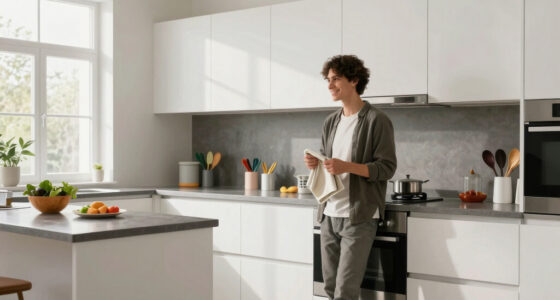
Design professionals caution that open-plan layouts are not suitable for small homes. Instead, they recommend strategic separations and vertical space use to maximize functionality. This shift aims to improve comfort and practicality in tiny living spaces.
Design experts are advising against the default use of open-plan layouts in small homes, emphasizing that such configurations often fail to optimize space and functionality. This guidance comes ahead of a free talk at the National Gallery of Victoria featuring architects and designers discussing tailored solutions for tiny living environments.
Colin Chee, a Melbourne-based designer and YouTube personality, highlights that rushing into a fully furnished small space can be counterproductive. He recommends living in a space for a period before making significant changes, to better understand its needs. Chee’s own apartment, a 40 sq m converted warehouse, was furnished with second-hand and budget items, including separating the fridge and freezer to maximize space.
Tahj Rosmarin, an architect, advocates for creating ‘tactical openings’ instead of demolishing load-bearing walls, to improve visual connection and spatial flow without costly renovations. He transformed a 6-metre-long custom joinery piece into multifunctional storage and seating, eliminating the need for additional furniture.
Claire Scorpo emphasizes that open-plan living can be impractical for small homes. She and her partner divided their space with a glass partition in the bathroom to separate bathing and dressing areas, and elevated their bed to free up storage underneath. She advises making use of vertical space and customizing solutions to suit specific needs, rather than defaulting to open layouts.
Why It Matters
This advice is significant as it challenges the common trend of open-plan layouts, which are often promoted as ideal for small spaces. By advocating for strategic separations and vertical solutions, these designers aim to improve residents’ comfort, privacy, and functionality—key factors that impact quality of life in tiny homes.
As an affiliate, we earn on qualifying purchases.
Background
The trend toward small-scale living has surged due to housing shortages and urban densification, prompting many to seek efficient design solutions. Past preferences leaned toward open-plan layouts for spaciousness, but recent expert insights suggest that such configurations may not serve small homes well. Choosing the right air purifier can also improve comfort in open-plan small homes. The upcoming talk at the National Gallery of Victoria reflects this evolving approach, emphasizing tailored, cost-effective strategies for maximizing limited space.
“Homes will never be perfect, and small spaces require patience and understanding before making major changes.”
— Colin Chee
“Creating tactical openings instead of demolishing walls can improve spatial flow without high costs.”
— Tahj Rosmarin
“Open-plan living is often not practical for small spaces; separate zones improve usability and privacy.”
— Claire Scorpo
vertical storage solutions for small apartments
As an affiliate, we earn on qualifying purchases.
As an affiliate, we earn on qualifying purchases.
What Remains Unclear
It is not yet clear how widely these design principles will be adopted by the general public or if they will influence mainstream small-space architecture. Specific cost and feasibility details for some suggested modifications remain to be tested in different contexts.
multi-functional furniture for small homes
As an affiliate, we earn on qualifying purchases.
As an affiliate, we earn on qualifying purchases.
What’s Next
The upcoming talk at the National Gallery of Victoria will further explore these design strategies, with experts sharing detailed case studies. Additionally, more homeowners and designers are expected to adopt these tailored approaches, potentially influencing future small-space trends.
As an affiliate, we earn on qualifying purchases.
Key Questions
Why are open-plan layouts not recommended for small homes?
Open-plan layouts can make small spaces feel cluttered and lack privacy. Experts suggest that dividing spaces improves functionality and comfort.
What are some affordable ways to improve small space design?
Using vertical space, custom joinery, and tactical openings like partial walls or glass partitions are cost-effective strategies recommended by designers.
How long should I live in a small space before redesigning?
Design professionals advise spending several months in a space to understand its needs before making major modifications, ensuring solutions are well-suited.
Are these design tips suitable for all small homes?
While these strategies are broadly applicable, specific solutions should be tailored to individual needs, budgets, and structural constraints.
Source: Guardian Life
Halloween Picks
halloween
As an affiliate, we earn on qualifying purchases.