
If you want to capture stunning Milky Way shots in 2025, I recommend checking out the VILTROX 75mm f/1.2 lenses for Sony and Fuji, which excel in low-light conditions. The AstrHori 6mm fisheye and Sony’s 16mm wide-angle are perfect for expansive night sky scenes. I also suggest considering the 78 D Double Aspheric lens for sharpness and versatility. Keep exploring these options; you’ll discover the ideal gear to elevate your astrophotography game.
Key Takeaways
- Wide-angle lenses (14mm–24mm) with large apertures (f/1.4–f/2.8) maximize light collection for clear, detailed Milky Way shots.
- Lenses with fast autofocus and manual control ensure precise focusing in low-light astrophotography conditions.
- High-quality optics with minimal aberrations and durable, weather-sealed build enhance image clarity and outdoor performance.
- Focal lengths around 20mm–24mm offer a perfect balance between expansive sky coverage and minimal distortion.
- Compact, lightweight lenses improve portability and ease of use for night sky photography adventures.

VILTROX 75mm f/1.2 F1.2 EF PRO EF Lens for Sony E-Mount Ultra Wide Angle APS-C Auto Focus Prime Lens Compatible with Sony E-Mount Mirrorless Cameras A7M/R/S Series A7Cc A9 A1 A6x00 Fs5
- Large F1.2 Aperture: Ideal for low-light conditions
- Fast, Precise Autofocus: Includes eye, face, animal modes
- High-Resolution Image Quality: 16 elements in 11 groups for sharp images
As an affiliate, we earn on qualifying purchases.
VILTROX 75mm f/1.2 PRO E Lens for Sony APS-C Cameras

If you’re serious about capturing stunning Milky Way shots with your Sony APS-C camera, the VILTROX 75mm f/1.2 PRO E lens is an excellent choice thanks to its super large f/1.2 aperture. This wide aperture allows more light to reach the sensor, making it perfect for low-light astrophotography. Its fast, precise autofocus system, powered by the latest STM stepper motor, ensures sharp images even in challenging conditions. With 16 elements in 11 groups, including high-refractive index lenses, it delivers exceptional resolution and clarity. Plus, its compatibility with a range of Sony E-mount cameras makes it versatile for various shooting scenarios.
Best For: astrophotographers and Sony APS-C camera users seeking a versatile, high-quality lens for low-light and portrait photography.
Pros:
- Features a super large f/1.2 aperture for exceptional low-light performance and creative depth of field.
- Equipped with a fast, precise STM autofocus system supporting eye, face, and animal detection for sharp images in various scenarios.
- Contains 16 high-quality lens elements, including high-refractive index lenses, for outstanding resolution and image clarity.
Cons:
- The large f/1.2 aperture may result in a narrower depth of field, requiring careful focusing.
- Its specialized design might be more expensive compared to standard lenses.
- Being a prime lens, it lacks zoom capabilities, which may limit framing flexibility.

VILTROX 75mm f/1.2 F1.2 XF PRO Level Ultra Wide Angle Auto Focus APS-C Lens Compatible with Fuji X-Mount Cameras X-T5 X-H2 X-H2S X-T30 II X-T4 X-A7 X-E3 X-E4 X-H1X-Pro2 X-T4 X-T10 X-T20
- Large F/1.2 Aperture: Ideal for low-light and portrait shooting
- Fast, Quiet Autofocus: Utilizes STM stepper motor technology
- Full Manual Focus Override: Supports manual focus at any time
As an affiliate, we earn on qualifying purchases.
VILTROX 75mm f/1.2 XF PRO Lens for Fuji X Mount Cameras

The VILTROX 75mm f/1.2 XF PRO lens stands out as an excellent choice for astrophotographers who want sharp, high-quality images of the Milky Way. Designed specifically for Fuji X-mount APS-C cameras, it offers a bright f/1.2 aperture perfect for low-light conditions. Its 16-element, 11-group optical structure, including high-refractive index lenses, ensures exceptional resolution and minimal aberrations. The lens supports quick, accurate autofocus with quiet operation, plus manual override. Its durable, non-bulb design guards against scratches during close-ups. Weighing 2.82 pounds, it’s a sturdy, versatile tool ideal for capturing stunning night sky images with clarity and precision.
Best For: astrophotographers and night sky enthusiasts seeking a high-quality, low-light capable lens for sharp Milky Way and star photography with Fuji X-mount APS-C cameras.
Pros:
- Bright f/1.2 aperture ideal for low-light and astrophotography
- High-resolution optical design with minimal aberrations
- Fast, quiet autofocus with manual override for precise control
Cons:
- Hefty weight of 2.82 pounds may affect portability
- Relatively high price point for some users
- Limited compatibility to Fuji X-mount APS-C cameras only

AstrHori 6mm F2.8 Circular Fisheye Lens
- Ultra-Wide 220° Field of View: Captures immersive, full-circle images
- Bright F2.8 Aperture: Performs well in low-light conditions
- True Circular Fisheye Effect: Creates iconic spherical, artistic images
As an affiliate, we earn on qualifying purchases.
AstrHori 6mm F2.8 Circular Fisheye Lens for Nikon Z Mount
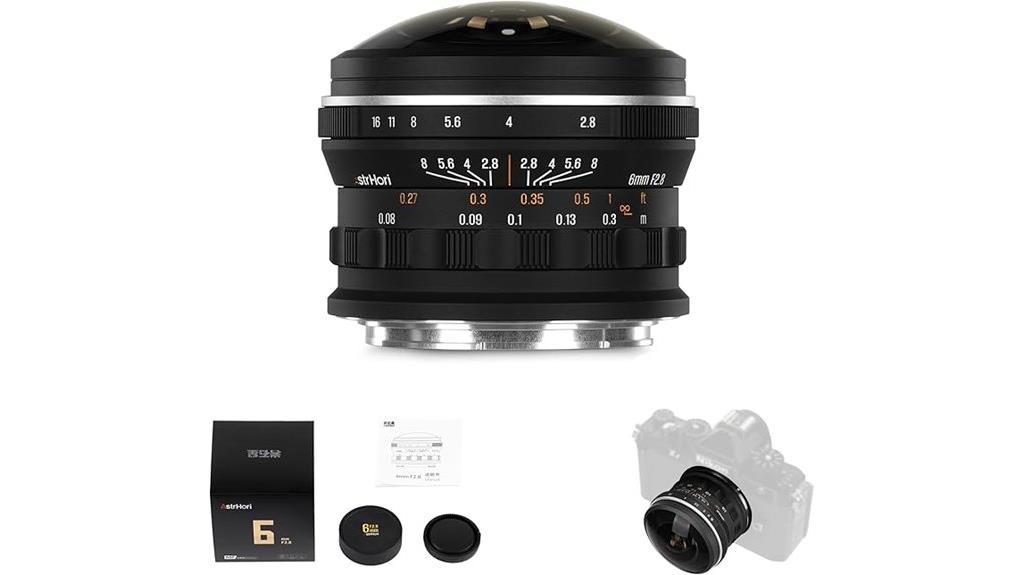
For astrophotographers seeking to capture the expansive beauty of the night sky, the AstrHori 6mm F2.8 Circular Fisheye Lens for Nikon Z Mount offers an exceptional choice with its 220° ultra-wide field of view. This lens creates immersive, circular images with dramatic edge distortion, perfect for showcasing the Milky Way, landscapes, or cityscapes. Its large F2.8 aperture enhances low-light performance, ensuring sharp stars and background separation. Built with a durable all-metal body, it’s compact and travel-friendly. Although manual focus is required, the precise control allows for creative compositions, making it an excellent tool for astrophotography and artistic shots alike.
Best For: astrophotographers, landscape artists, and creative videographers seeking an ultra-wide, immersive fisheye perspective for night sky, cityscape, or artistic shots.
Pros:
- 220° ultra-wide field of view creates dramatic, spherical images perfect for artistic and astrophotography.
- Large F2.8 aperture delivers excellent low-light performance for stars, Milky Way, and night scenes.
- Durable all-metal construction combined with a compact design makes it travel-friendly and robust for outdoor use.
Cons:
- Manual focus only, requiring precise adjustments for sharp images.
- Compatibility limited to Nikon Z mount full-frame mirrorless cameras, which may restrict users with other systems.
- No autofocus or electronic aperture control, potentially limiting quick adjustments in dynamic shooting scenarios.

Sony E 16mm F2.8 Wide-Angle Prime Lens (SEL16F28) | Compact Pancake Design, Lightweight Travel |Filter Kit, Cap Keeper, Cleaning Kit, and More
- Sony USA Authorized. Sony E 16mm f/2.8 Lens...
- Ultra-Compact Wide-Angle Prime – The Sony E 16...
- High-Quality Optics in a Small Form – Despite...
As an affiliate, we earn on qualifying purchases.
Sony E 16mm F2.8 Wide-Angle Prime Lens (SEL16F28)
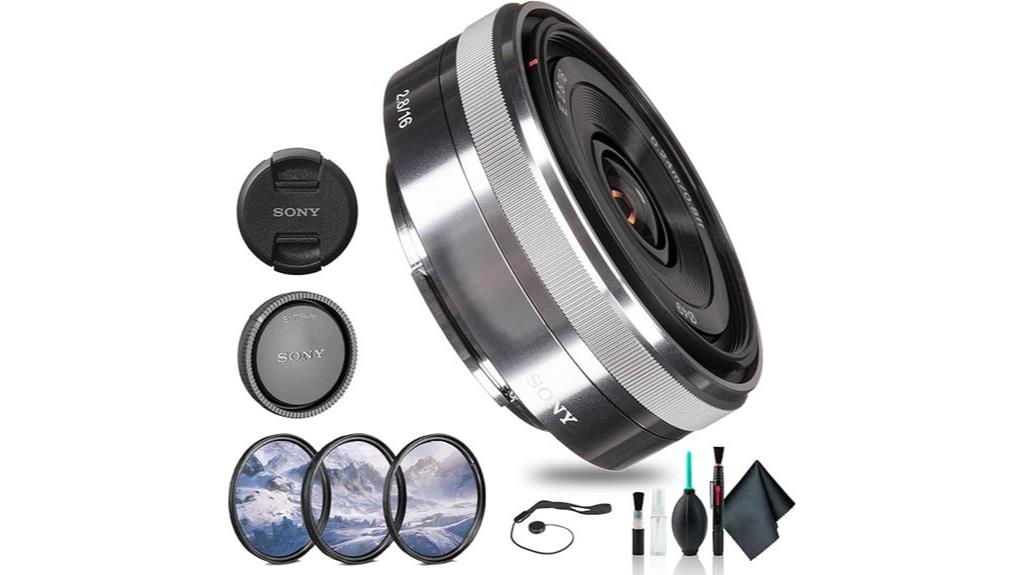
Looking to capture stunning Milky Way images with minimal gear? The Sony E 16mm F2.8 (SEL16F28) is perfect for that. This ultra-compact, pancake-style wide-angle lens fits APS-C E-mount cameras, weighing just 67 grams. Its high-quality optics, including aspherical elements, minimize distortion and produce sharp, contrast-rich images with natural colors. The responsive autofocus is quiet and smooth, great for both stills and videos. With a close focus distance of 0.24 meters, you can get creative with close-up shots. Plus, the included filter kit and travel-friendly design make it an excellent, portable option for capturing the night sky on the go.
Best For: photographers and travelers seeking a compact, high-quality wide-angle lens ideal for landscapes, street photography, and astrophotography, including capturing stunning Milky Way images on the go.
Pros:
- Ultra-compact and lightweight design (67 g), perfect for travel and everyday use
- High-quality optics with aspherical elements for sharp, contrast-rich images with natural colors
- Quiet, smooth autofocus suitable for both stills and video shooting
Cons:
- Fixed focal length limits versatility compared to zoom lenses
- Limited aperture (f/2.8) may require longer exposure times in very low light conditions for astrophotography
- No image stabilization feature, which can be a concern in handheld low-light photography
78 D Double Aspheric Lens

If you need an efficient lens that balances wide field and magnification, the 78 D Double Aspheric Lens is an excellent choice. Designed mainly for slit lamp exams, it offers a good mix of coverage and detail, making it versatile for various astrophotography needs. It’s compact, lightweight at just 5 ounces, and provides an extended working distance from the target, improving ease of use. Its high-quality aspheric design ensures sharp images with minimal distortion, and with an average rating of 4.4 stars, users appreciate its performance. Although primarily built for clinical use, its clarity and precision also make it a solid, budget-friendly option for capturing stunning night skies.
Best For: enthusiasts and professionals seeking a versatile, high-quality lens for slit lamp examinations or astrophotography with an extended working distance and minimal distortion.
Pros:
- Provides an optimal balance of wide field and magnification for detailed viewing or imaging.
- Compact and lightweight at just 5 ounces, enhancing portability and ease of use.
- High-quality aspheric design ensures sharp images with minimal distortion.
Cons:
- Primarily designed for clinical use, which may limit its suitability for some photography applications.
- Specifications and color may vary due to ongoing research and development.
- Available pricing and features can fluctuate, requiring comparison shopping.
Factors to Consider When Choosing Wide-Field Lenses for Milky Way Photography

When selecting a wide-field lens for Milky Way photography, I focus on key factors like aperture size, focal length, and low-light performance to get the best results. I also consider autofocus accuracy and lens build quality to guarantee reliability during shoots. Understanding these points helps me choose a lens that captures stunning night sky images with clarity and ease.
Aperture Size Importance
Aperture size plays a essential role in Milky Way photography because it determines how much light the lens can gather in low-light conditions. A larger aperture, like f/2.8 or wider, lets in more light, which is critical for capturing the faint details of the night sky. This allows for shorter exposure times, reducing star trails caused by Earth’s rotation and resulting in sharper images. An aperture of f/1.4 to f/2.8 offers greater flexibility in managing depth of field and exposure, making it easier to balance foreground and sky brightness. Additionally, wider apertures help you shoot in darker environments with lower ISO settings, minimizing noise. Overall, a lens with a large aperture enhances image quality and versatility in various astrophotography conditions.
Focal Length Selection
Choosing the right focal length is essential for capturing stunning Milky Way images, as it directly influences how much of the sky and landscape you can include in a single shot. Wider focal lengths, like 14mm to 24mm, are ideal because they let you capture expansive night sky scenes and more of the landscape. Shorter focal lengths provide a broader field of view, making it easier to include the Milky Way and foreground in one frame. Focal lengths around 20mm to 24mm strike a good balance, offering wide coverage while minimizing distortion and maintaining sharpness. Ultra-wide lenses, such as 14mm or less, create immersive and dramatic perspectives. Longer lenses above 35mm are better suited for detailed shots of specific celestial features rather than wide panoramas.
Low-Light Performance
To capture the faint light of the Milky Way effectively, selecting a wide-field lens with a large maximum aperture is essential, as it allows more light to reach the sensor. Lenses with apertures of f/2.8 or wider enable you to shoot in darker conditions without needing excessively high ISO settings, which helps reduce noise. Fast lenses with apertures of f/1.4 or f/1.8 further enhance low-light performance, making it easier to capture sharp, detailed images in extremely dark environments. High-quality optics that minimize chromatic aberration and maintain sharpness at wide apertures ensure your night sky photos are clear. Additionally, lenses with good light transmission and coatings that reduce flare and ghosting help maximize brightness and contrast, resulting in stunning Milky Way shots even in challenging lighting conditions.
Autofocus Accuracy
Since manual focus can be tricky in low-light conditions, autofocus accuracy becomes a critical factor when selecting wide-field lenses for Milky Way photography. Modern lenses with advanced autofocus systems can quickly and precisely lock onto distant stars and celestial objects, saving time and frustration. The latest autofocus motors, like STM or linear motors, offer quieter and more reliable focusing during nighttime shoots, helping to prevent vibrations that can blur images. Accurate autofocus minimizes the need for refocusing during long exposures, reducing star trailing and ensuring sharp points of light. While some lenses support eye, face, or animal autofocus, for astrophotography, combining manual focus with autofocus features often yields the best results. Reliable autofocus guarantees your shots are crisp and well-focused, even in the dark.
Lens Build Quality
When selecting a wide-field lens for Milky Way photography, build quality plays a vital role in ensuring your gear withstands the demands of nighttime shooting. A durable, all-metal body not only boosts longevity but also endures outdoor conditions like cold, dew, and dust. High-quality optical elements with low dispersion and aspherical designs help reduce chromatic aberration and distortions, delivering sharper, clearer images. Precise manual focus rings with smooth rotation are essential for fine-tuning focus in low-light conditions. Robust construction with sealed joints or weather-sealing protects against moisture and environmental elements, ensuring reliability during extended shoots. Additionally, well-made lens mounts and filters provide secure attachment, minimizing focus or alignment issues—key factors for capturing stunning Milky Way images with consistency and confidence.
Compatibility With Cameras
Choosing a wide-field lens that’s compatible with your camera system is vital for successful Milky Way photography. First, verify the lens mount matches your camera, whether it’s Nikon Z, Sony E-mount, or Fuji X. If you’re using a manual focus lens, confirm it supports manual focus and that you can easily control focus during shots. Check if you need an adapter for your camera model and verify its stability and compatibility. It’s also essential to confirm the lens’s image circle covers your sensor size, especially for full-frame or APS-C formats. Finally, review whether the lens has autofocus support, electronic aperture control, and firmware compatibility with your camera body. These factors help guarantee seamless operation and prime image quality in your nighttime captures.
Portability and Size
A lightweight and compact wide-field lens makes outdoor astrophotography sessions more enjoyable and manageable. When I travel to remote locations, smaller lenses are easier to carry, helping me reduce fatigue and stay mobile. They also take up less space in my camera bag, so I can pack more gear efficiently. Quick setup is essential for capturing fleeting night sky conditions, and a travel-friendly size allows me to set up swiftly without hassle. Plus, lightweight lenses let me shoot for longer periods without feeling weighed down, making long exposures more comfortable. Discreet, small lenses also help me blend into the environment, enabling more natural, unposed Milky Way shots. Overall, portability and size are vital factors to enhance my outdoor astrophotography experience.
Image Distortion Control
Portability and size are important, but equally essential is how well a lens controls image distortion. Wide-field lenses with minimal barrel distortion are vital for capturing an accurate, natural view of the night sky. Excess distortion, whether pincushion or barrel, can warp star points and create curved star trails, compromising image quality. High-quality optics with aspherical elements help reduce edge distortion, ensuring sharpness across the frame. Lens design, including element placement and coatings, profoundly influences distortion levels and overall clarity. Choosing a lens with well-controlled distortion guarantees that celestial features and the Milky Way core are portrayed realistically, without unwanted warping. This control allows for cleaner, more precise astrophotography results—essential for stunning night sky images.
Frequently Asked Questions
How Do Lens Aperture Sizes Impact Milky Way Astrophotography?
Lens aperture size plays a vital role in astrophotography because a wider aperture allows more light to enter, which is essential for capturing the faint details of the Milky Way. I always choose lenses with a large maximum aperture, like f/1.4 or f/2.8, because they help me shoot in darker conditions with shorter exposures. This results in clearer, more detailed images with less noise and better star sharpness.
What Is the Ideal Focal Length for Capturing the Milky Way?
The ideal focal length for capturing the Milky Way is between 14mm and 24mm. I know some worry this range might be too narrow or too wide, but these focal lengths give you a great balance of wide coverage and detail. They allow you to include stunning sky vistas without distortion, making your night shots look breathtaking. Trust me, this range is perfect for immersing yourself in the galaxy’s beauty.
Are There Specific Lens Coatings That Improve Night Sky Photography?
Yes, certain lens coatings can profoundly enhance night sky photography. I recommend lenses with anti-reflective coatings, which reduce glare and internal reflections, allowing more light to reach the sensor. Coatings like multi-coating or multi-layer coating improve contrast and minimize lens flare caused by bright stars or moonlight. These features help me capture sharper, more detailed images of the Milky Way, especially in challenging lighting conditions.
How Does Lens Distortion Affect Wide-Field Milky Way Shots?
Lens distortion can really affect my wide-field Milky Way shots by warping the stars, especially near the edges of the frame. This distortion can make stars appear stretched or bent, which disrupts the natural look of the night sky. To minimize this, I choose lenses with low distortion and use post-processing software to correct any warping. That way, my images stay sharp and true to the beauty of the Milky Way.
Can I Use Crop Sensor Lenses for High-Quality Astrophotography?
Think of crop sensor lenses as a sharp arrow aimed at the stars; they can deliver stunning astrophotos if chosen wisely. I’ve used them myself and found that with a fast aperture and good quality glass, they produce excellent results. While they might not have the wide field of full-frame lenses, crop sensors excel in capturing detailed night sky images, especially when paired with the right camera settings.
Conclusion
Choosing the right wide-field lens can truly transform your Milky Way shots. Remember, the right tool makes all the difference—it’s not just about gear, but about capturing the wonder above us. Don’t be afraid to experiment and find what works best for your style. As the saying goes, “The sky’s the limit.” So, get out there, shoot boldly, and let your passion light up the night!