If you’re looking for the best tripods and pier mounts for astrophotography in 2025, I’ve got you covered with top picks like the Sky-Watcher Star Adventurer GTI, iEXOS-100-2, and sturdy support platforms like the iOptron Mini Pier extension. These gear options offer stability, portability, and precise tracking to help you capture stunning skies. Keep exploring further, and you’ll discover detailed features and tips to find the perfect setup for your needs.
Key Takeaways
- Prioritize lightweight, portable tripods and mounts with high stability for outdoor astrophotography sessions.
- Look for models with advanced control features like Wi-Fi, GoTo, and precise tracking capabilities.
- Choose support platforms and extensions that enhance stability and reduce vibrations for heavier or more sensitive gear.
- Consider compatibility with popular mounts and telescopes, including Vixen-style dovetails and quick-attach systems.
- Focus on durable materials such as aluminum or stainless steel for longevity and reliable performance in various outdoor conditions.

Sky Watcher Sky-Watcher Star Adventurer GTI Mount Kit with Counterweight, CW bar, Tripod, and Pier Extension - Full GoTo EQ Tracking Mount for Portable and Lightweight Astrophotography
- Mount Type: Full GoTo EQ Tracking Mount
- Tripod and Pier: Includes Tripod with Pier Extension
- Polar Scope: Built-in Polar Scope with Illuminator
As an affiliate, we earn on qualifying purchases.
Sky-Watcher Star Adventurer GTI Mount Kit with Counterweight and Tripod
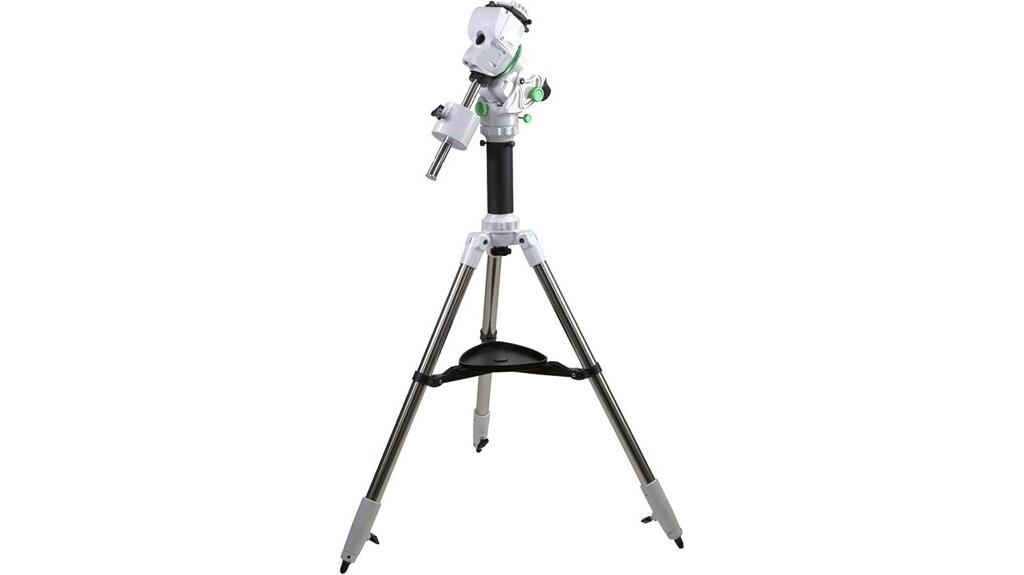
If you’re looking for a portable, versatile mount that makes astrophotography accessible, the Sky-Watcher Star Adventurer GTI Mount Kit is an excellent choice. Introduced in 2014 and upgraded with full GoTo capabilities, it offers precise polar alignment with a built-in illuminated scope, Wi-Fi connectivity, and multiple tracking modes. The kit includes a sturdy tripod, counterweight, and support for various cameras and small telescopes, handling up to 11 pounds. Its compact size (44 x 9 x 13 inches) and lightweight design make it perfect for on-the-go sessions. With smartphone control and reliable tracking, it delivers excellent performance for deep space, lunar, and planetary imaging.
Best For: amateur astronomers and astrophotographers seeking a portable, versatile mount capable of precise tracking and easy control for capturing deep space, lunar, and planetary images.
Pros:
- Compact, lightweight, and portable design for easy transport and setup
- Full GoTo capability with Wi-Fi connectivity and smartphone control for precise object locating
- Supports a variety of cameras and small telescopes with a payload capacity of 11 pounds
Cons:
- Limited payload capacity may restrict larger telescopes or heavy equipment
- May require some technical setup, including polar alignment, for optimal performance
- Slightly higher price point compared to basic mounts without full GoTo functionality

iEXOS-100-2 PMC-Eight Equatorial Tracker System Tripod and Mount for Astrophotography with WiFi and Bluetooth Compatible
- Advanced Multi-CPU System: Eight independent CPUs for superior performance
- Quiet Dual-Axis Gears: Clutched worm gears with quiet stepper motors
- User-Friendly App: ExploreStars app for easy telescope control and star navigation
As an affiliate, we earn on qualifying purchases.
iEXOS-100-2 PMC-Eight Astrophotography Tracker System with Tripod and Mount
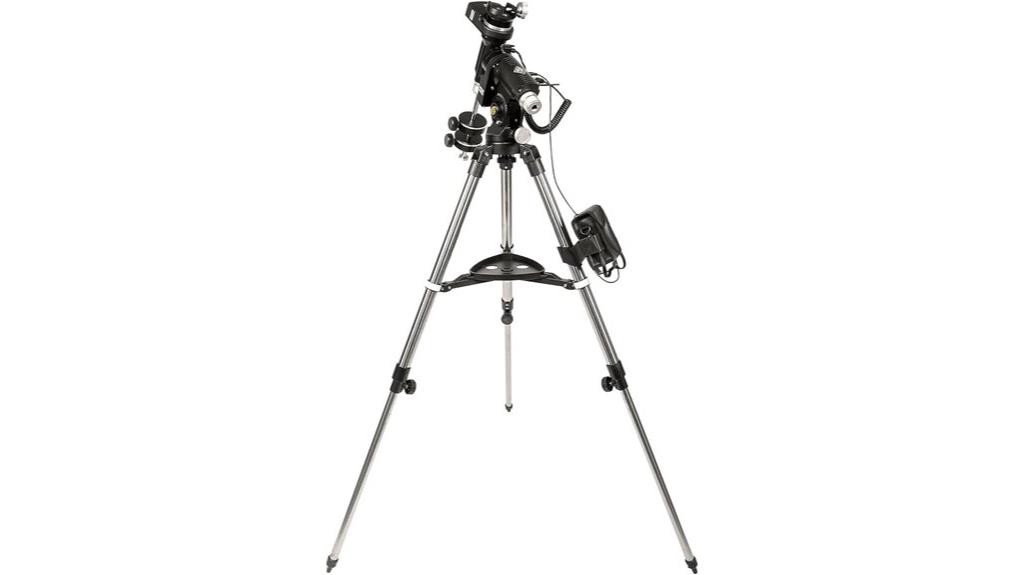
The iEXOS-100-2 PMC-Eight Astrophotography Tracker System with Tripod and Mount stands out as an ideal choice for serious astrophotographers who demand precise control and reliable tracking. Its integrated PMC-Eight system with eight independent CPUs guarantees fast, responsive operation, while the quiet dual-axis worm gears and stepper motor belt drives provide smooth, accurate movement. Compatibility with WiFi and Bluetooth, along with the intuitive ExploreStars app, makes setup and star alignment straightforward. The system’s balanced RA and Declination axes, along with a polar alignment sight hole, enable quick, precise alignment without a polar scope. It’s a powerful, dependable tool for capturing detailed celestial images.
Best For: Serious astrophotographers seeking precise, reliable tracking with advanced control features for capturing detailed celestial images.
Pros:
- Equipped with eight independent CPUs for superior responsiveness and efficiency
- Quiet dual-axis worm gears and stepper motor belt drives ensure smooth, accurate movement
- Compatibility with WiFi, Bluetooth, and the ExploreStars app simplifies setup and star alignment
Cons:
- Relatively heavy at 20 pounds, which may affect portability
- Higher price point compared to basic tracking systems
- Requires familiarity with app-based operation for optimal use

Sky Watcher Star Adventurer Tripod - Star Adventurer Accessory - Compatible with AZGT Series and AZ5 Mounts (S20555)
- Compatible with multiple mounts: Works with AZGT, AZ5, and GTi series
- Versatile tripod for Star Adventurer: Supports Star Adventurer Mini and Tripod
As an affiliate, we earn on qualifying purchases.
Sky Watcher Star Adventurer Tripod
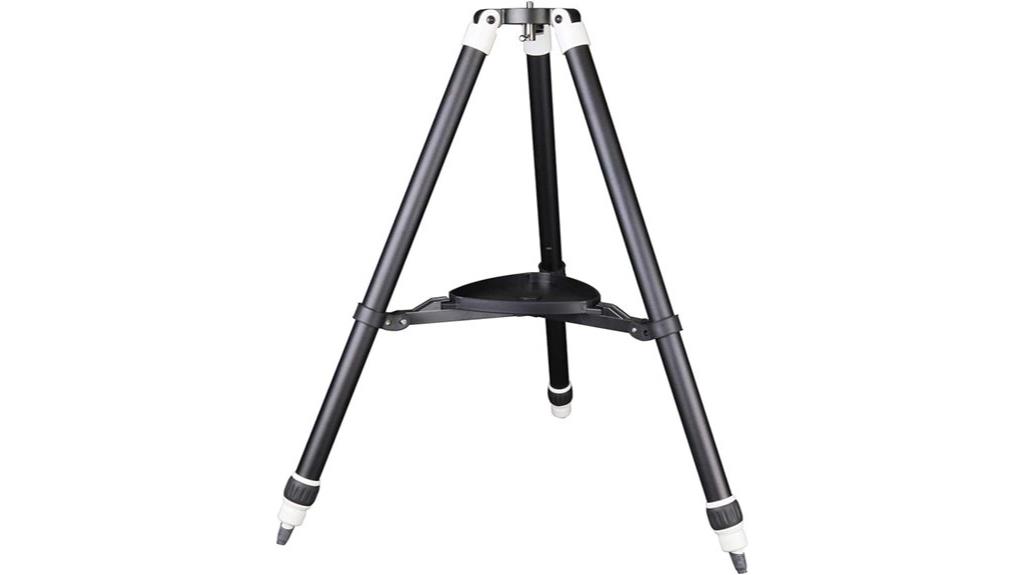
Designed for astrophotographers who need a stable platform, the Sky Watcher Star Adventurer Tripod (Model S20555) offers compatibility with popular mounts like the Star Adventurer Mini, GTi, AZ-GT series, and AZ5. It measures 36 x 54 x 36 inches and weighs just under 5 pounds, making it portable yet sturdy. This tripod provides excellent stability for precise star tracking and long-exposure astrophotography. Highly rated with a 4.7-star average from 181 customers, it’s a popular choice in the astrophotography community. Its versatility and reliable support make it an essential accessory for enhancing your astrophotography setups.
Best For: astrophotographers seeking a stable, versatile tripod compatible with multiple Sky Watcher mounts for precise star tracking and long-exposure photography.
Pros:
- Compatible with popular Sky Watcher mounts like Star Adventurer Mini, GTi, AZ-GT series, and AZ5, offering great versatility.
- Lightweight and portable at just under 5 pounds, making it easy to transport for outdoor astrophotography sessions.
- Highly rated with a 4.7-star average from 181 reviews, indicating strong customer satisfaction and reliability.
Cons:
- Size (36 x 54 x 36 inches) may be cumbersome for very limited storage space or transport in small bags.
- May require additional accessories or adapters for specific mounts not directly compatible out of the box.
- As with all tripods, stability can be affected on very uneven or soft surfaces, potentially impacting star tracking accuracy.

iOptron Mini Pier Tripod Extension for CEM60, iEQ45, iEQ30, MiniTower, MiniTower II and MiniTower Pro Mount
- Enhanced Stability: Provides a solid, vibration-minimizing foundation
- Increased Height: Adds 8 inches for better viewing angles
- Universal Compatibility: Fits iOptron MiniTower and MiniTower II mounts
As an affiliate, we earn on qualifying purchases.
iOptron Mini Pier Tripod Extension
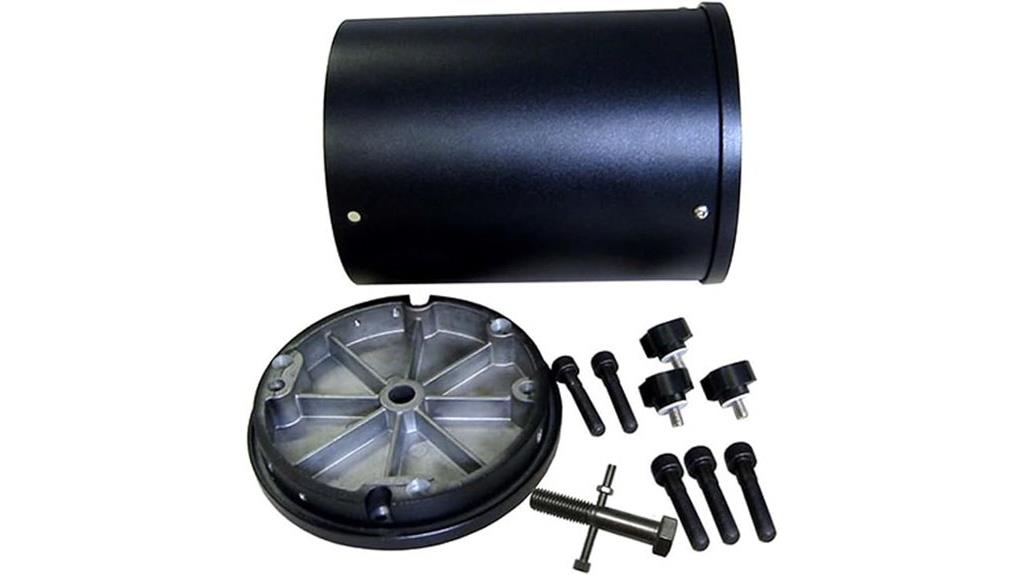
Looking to enhance the stability and accuracy of your astrophotography setup? The iOptron Mini Pier Tripod Extension offers a solid solution. It boosts stability by reducing vibrations, resulting in clearer images and better observations. Made with durable materials, it features multiple hex head screws (M8 & M10) and a M12 center bolt for a secure platform. Elevating your setup by 8 inches (203.2mm), it improves viewing angles and prevents ground obstructions. Compatible with iOptron MiniTower mounts and others like CEM60 and iEQ series, it includes precision alignment tools to ensure accurate polar alignment for ideal tracking. It’s a reliable upgrade for serious astrophotographers.
Best For: serious amateur and professional astrophotographers seeking to improve stability, alignment, and viewing angles for their telescope setups.
Pros:
- Enhances stability by minimizing vibrations for clearer images and observations
- Elevates the telescope by 8 inches, improving viewing angles and reducing ground obstructions
- Compatible with a wide range of mounts including MiniTower, CEM60, and iEQ series, with precision alignment tools included
Cons:
- May require additional tools or adjustments for perfect installation on certain mounts
- Slightly increased setup complexity due to added components and alignment procedures
- Limited to specific pier diameters and flange sizes, potentially reducing compatibility with non-standard mounts
Sky-Watcher AZ-GTI Portable Computerized Alt-Az Mount

If you’re seeking a highly portable mount that combines advanced technology with ease of use, the Sky-Watcher AZ-GTI Portable Computerized Alt-Az Mount is an excellent choice. Weighing just 8.6 pounds, it’s perfect for travel and quick setup. It supports payloads up to 11 pounds, fitting most telescopes and cameras. The adjustable aluminum tripod extends from 28 to 53 inches, ensuring comfortable viewing. WiFi-enabled, it connects to the Sky-Watcher SynScan Pro app for remote control, time-lapse, and panorama shots. With rugged brass and aluminum gears, it offers smooth tracking, while built-in power options keep your sessions uninterrupted.
Best For: amateur astronomers and astrophotographers seeking a portable, easy-to-use mount with advanced features for casual and travel astronomy.
Pros:
- Lightweight and portable at only 8.6 pounds, ideal for travel and quick setups
- WiFi-enabled with compatibility for the Sky-Watcher SynScan Pro app for remote control and imaging
- Supports payloads up to 11 pounds, accommodating most telescopes and cameras
Cons:
- Limited to 11-pound payload capacity, which may restrict larger telescopes or heavier accessories
- Requires external power sources for extended use, potentially adding to setup complexity
- All-metal gears, while smooth, may require maintenance or lubrication over time
iOptron SkyHunter Extension Pier and Tripod
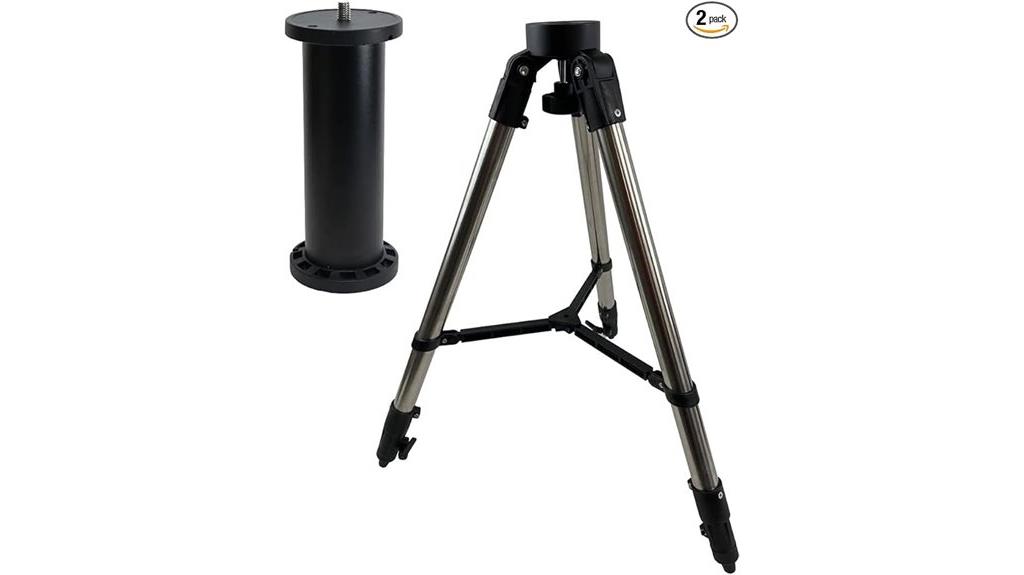
The iOptron SkyHunter Extension Pier and Tripod is an excellent choice for astrophotographers seeking stability and versatility. Its 1.25-inch stainless steel tripod offers solid support, while the 3/8-16 threaded aluminum extension pier raises your setup by 7.5 inches for better viewing angles. Compatible with SkyHunter, SkyGuider Pro, SkyTracker Pro, and various mounts or cameras, it’s highly adaptable. Weighing about 24 pounds, the stainless steel construction guarantees durability, and the aluminum pier adds stability. It’s designed for precise elevation and support, making it ideal for both astrophotography and observational setups. Overall, a reliable, versatile addition to any gear collection.
Best For: astrophotographers and observational astronomers seeking a stable, versatile support platform for their telescopes and camera setups.
Pros:
- Durable stainless steel tripod provides excellent support and stability.
- Adjustable 7.5-inch aluminum extension pier enhances viewing angles and setup flexibility.
- Compatible with multiple mounts and cameras, offering versatility for various astrophotography needs.
Cons:
- Heavier weight (~24 pounds) may require more effort to transport and set up.
- Stainless steel construction might be prone to corrosion if not properly maintained.
- Limited to specific mounting hole sizes, which may not fit all equipment without adapters.
iOptron Tri-Pier for GoTo Mounts
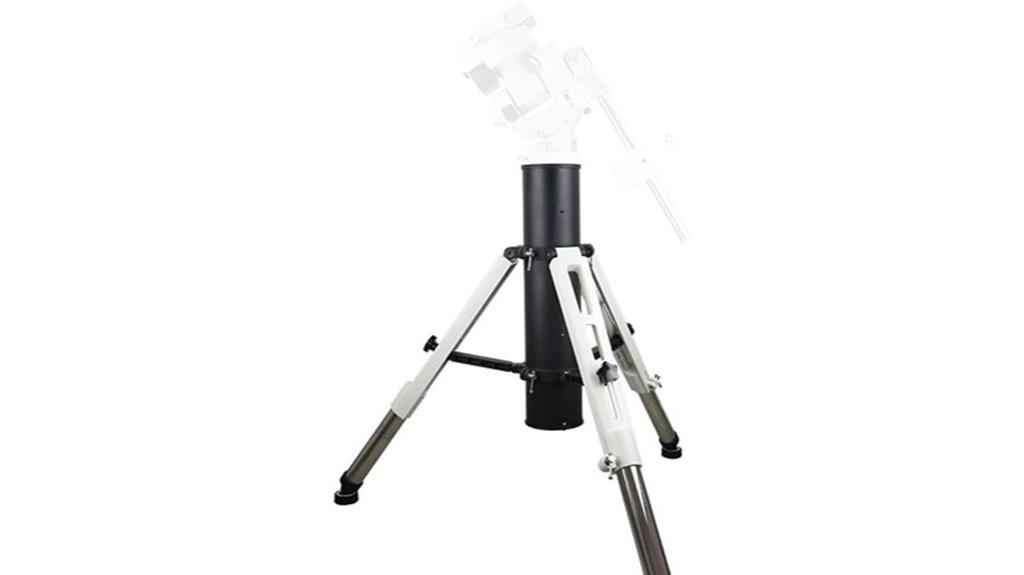
For astronomers who need a stable and versatile platform, the iOptron Tri-Pier stands out thanks to its impressive load capacity of up to 220 pounds. Its robust design minimizes vibrations, ensuring steady observations and clear images. Despite its strength, it remains lightweight at just 25.8 pounds, making it portable and easy to transport. The adjustable height from 31.5 to 42.5 inches allows for customized viewing comfort, and its ability to handle uneven terrain with a 3.35-inch ground range adds to its versatility. Compatible with various GoTo mounts, the iOptron Tri-Pier delivers a reliable, vibration-free foundation for precise astrophotography sessions.
Best For: amateur and professional astronomers seeking a stable, portable, and versatile platform for precise, vibration-free observations and astrophotography sessions.
Pros:
- Supports up to 220 pounds, providing excellent stability for heavy telescopes and gear.
- Lightweight at 25.8 pounds, making transportation and setup more manageable.
- Adjustable height from 31.5 to 42.5 inches, accommodating various viewing preferences and terrains.
Cons:
- May require additional accessories for specific mounting needs.
- Folded dimensions (12.8 x 26 inches) might still pose storage challenges for very tight spaces.
- Compatibility with all GoTo mounts may require verification for some models.
Celestron Heavy Duty Alt-Azimuth Tripod
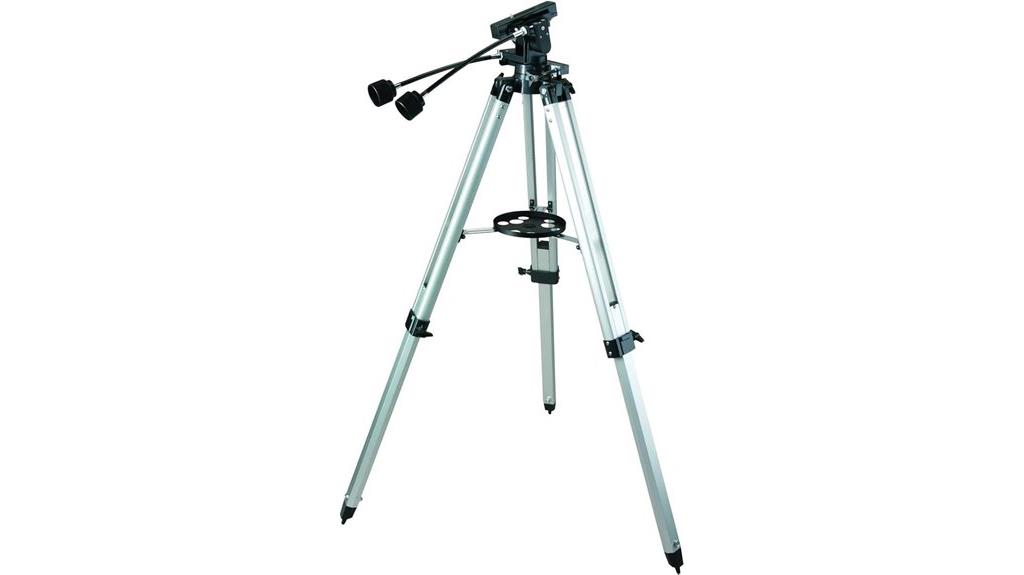
A standout choice for amateur astronomers and outdoor enthusiasts seeking reliable stability is the Celestron Heavy Duty Alt-Azimuth Tripod. Its robust aluminum build provides excellent stability and minimizes vibrations, ensuring sharp images at high magnifications. Supporting up to 11 pounds, it’s versatile enough for binoculars, cameras, or small telescopes. The adjustable height—from 30.9 to 49.2 inches—fits different users and viewing positions comfortably. Weighing just 7.8 pounds and folding to 32.3 inches, it’s portable for outdoor adventures. Quick to set up and easy to adjust, this tripod offers reliable stability and user-friendly operation for both beginners and seasoned observers.
Best For: amateur astronomers and outdoor enthusiasts seeking a stable, portable, and easy-to-use tripod for binoculars, cameras, or small telescopes.
Pros:
- Robust aluminum construction provides excellent stability and minimizes vibrations.
- Adjustable height from 30.9 to 49.2 inches for comfortable viewing positions.
- Lightweight at 7.8 lbs with a compact folded length of 32.3 inches, making it highly portable.
Cons:
- Supports up to 11 lbs, which may limit use with larger, heavier telescopes.
- May require occasional tightening to maintain stability during extended use.
- Not suitable for heavy-duty professional equipment or extremely high magnifications.
Sky-Watcher AZ5 Telescope Mount
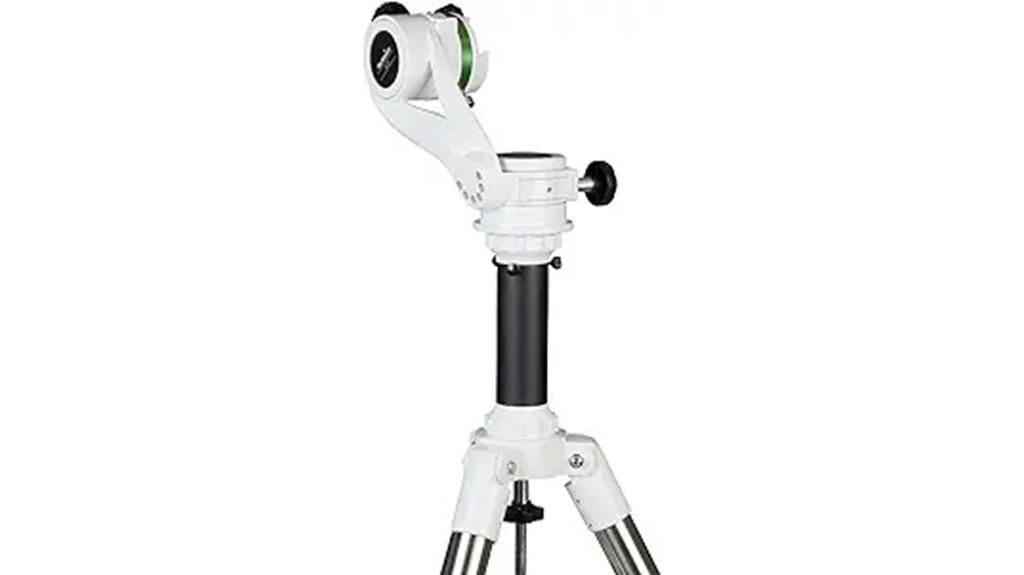
If you’re just starting out in astronomy or terrestrial observation, the Sky-Watcher AZ5 Telescope Mount offers an excellent combination of lightweight design and stability. Made from durable cast aluminum, it supports payloads up to 15 pounds and attaches with a Vixen-style dovetail bar. Its sturdy, adjustable steel tripod provides solid support, even on uneven surfaces. The mount features geared slow-motion controls for precise manual tracking, making it ideal for beginners. Weighing around 12 pounds and measuring about 40 inches tall, it’s easy to transport and set up. Overall, the AZ5 is a reliable, user-friendly choice for those seeking stability without sacrificing portability.
Best For: beginner astronomers and terrestrial observers seeking a lightweight, stable, and easy-to-use mount for visual observation.
Pros:
- Durable all-metal construction with cast aluminum for longevity and stability
- Supports payloads up to 15 pounds, suitable for a variety of optical tubes
- Geared slow-motion controls allow precise manual tracking for accurate observations
Cons:
- Weighs around 12 pounds, which may be less portable for some users
- Limited to visual observation; not suitable for astrophotography
- Only supports Vixen-style dovetail bars, limiting compatibility with certain equipment
DaVoice 44mm Tripod Quick Release Plate Camera Mounting Adapter
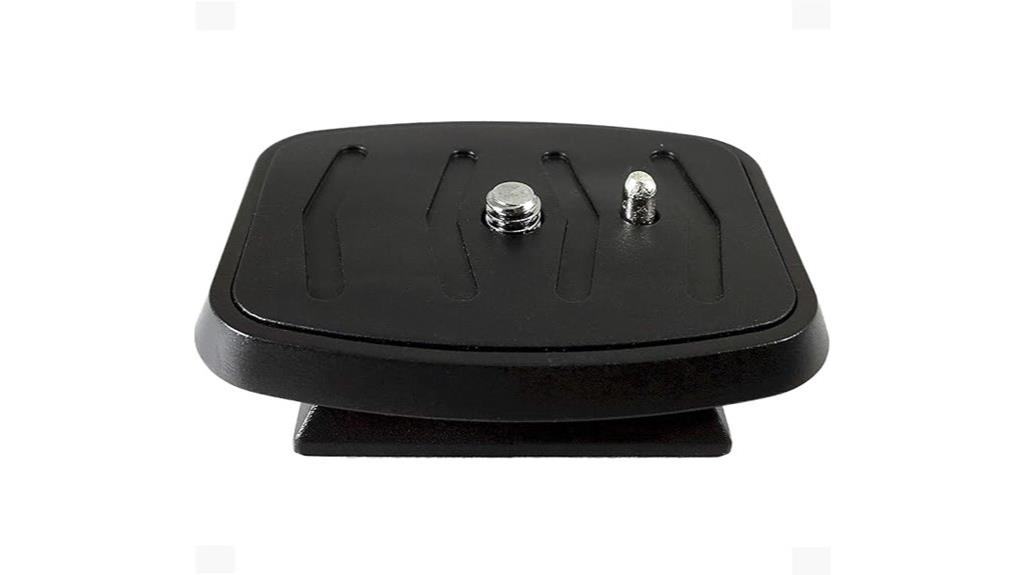
The DaVoice 44mm Tripod Quick Release Plate is an excellent choice for astrophotographers who need quick and secure camera mounting. It’s designed for specific tripods like Amazon Basics, Velbon, Sunpak, and others, fitting tripod head openings of 1 3/4” (44mm square). Made from durable plastic with a rubber top, it guarantees a firm grip without slipping. The plate features a metal pin and thumb screw, allowing tool-free attachment and removal. This makes swapping cameras fast and hassle-free, ideal for multi-camera setups. Before purchasing, double-check your tripod’s head dimensions to ensure compatibility and maximum stability during your astrophotography sessions.
Best For: photographers and videographers using compatible tripods who need quick, secure camera mounting and easy device swapping during their shoots.
Pros:
- Facilitates rapid, tool-free attachment and detachment of cameras or devices.
- Durable construction with rubber top provides a secure, slip-resistant grip.
- Compatible with a variety of tripod brands and models, offering versatile use.
Cons:
- Compatibility limited to tripods with 44mm x 44mm square head openings; check dimensions before purchase.
- Made from plastic, which may be less durable than metal options for heavy-duty use.
- Requires verification of tripod head dimensions to ensure proper fit and stability.
NEEWER 72-inch Camera Tripod with Monopod and Ball Head
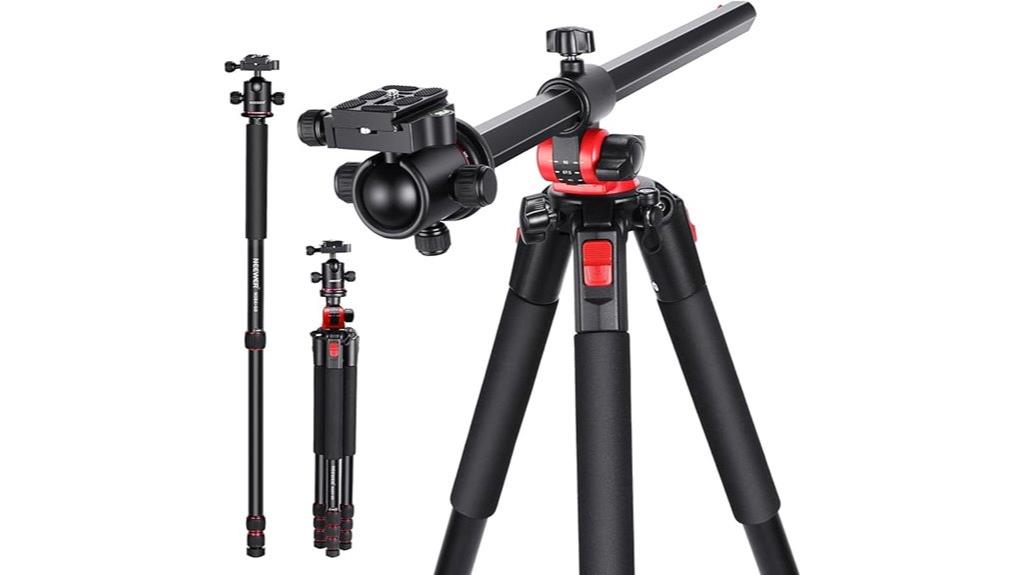
For astrophotography enthusiasts seeking stability and versatility, the NEEWER 72-inch Camera Tripod with Monopod and Ball Head stands out as an excellent choice. Made from durable aluminum alloy, it supports up to 33 pounds, ensuring solid stability during long exposures. Its adjustable four-section legs extend up to 72 inches and can be removed to convert into a monopod. The multi-angle center column offers vertical and horizontal positioning for creative shots. The ball head with quick-release plate allows fast adjustments, while features like bubble levels and overhead mounts enhance usability. Overall, this tripod combines strength, flexibility, and portability—perfect for capturing stunning astrophotos.
Best For: astrophotography enthusiasts and photographers seeking a versatile, stable tripod capable of supporting long exposures and macro shots.
Pros:
- Supports up to 33lb/15kg, providing excellent stability for heavy camera gear
- Multi-angle center column allows for versatile vertical and horizontal positioning
- Converts easily into a monopod, increasing portability and shooting options
Cons:
- Slightly heavy due to aluminum construction, which may impact portability for some users
- Some users might find the setup complex due to multiple adjustable features
- Price may be higher compared to basic tripods with fewer functionalities
Sky Watcher Star Adventurer GTI Mount Head Kit
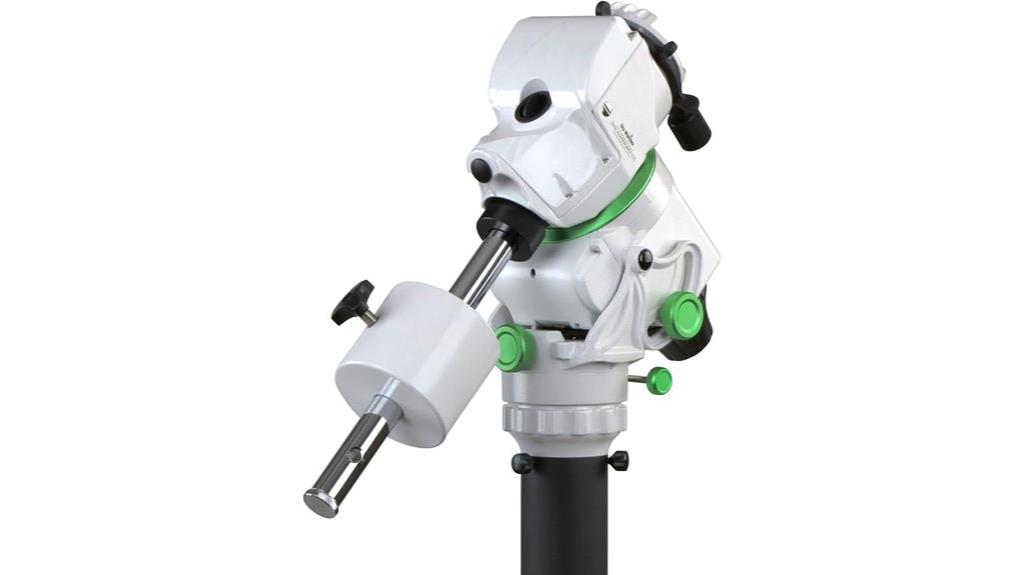
Looking for a lightweight, portable mount that combines full GoTo capabilities with precise polar alignment? The Sky Watcher Star Adventurer GTI Mount Head Kit fits the bill perfectly. It’s compact, weighing just over 15 pounds, yet supports an 11-pound payload for DSLR, mirrorless cameras, or small telescopes. Features like built-in Wi-Fi, an illuminated polar scope, and multiple tracking modes—sidereal, lunar, solar—make astrophotography easier. The dual-position counterweight bar adapts for low latitudes, and the V-style dovetail ensures versatile mounting options. With its portability and smart controls, it’s ideal for capturing deep-sky objects, the Moon, or planets on the go.
Best For: Amateur astrophotographers seeking a portable, full-featured mount with GoTo capabilities for capturing celestial objects with small telescopes or cameras.
Pros:
- Lightweight and portable design weighing just over 15 pounds for easy field setup
- Built-in Wi-Fi and illuminated polar scope for convenient control and precise polar alignment
- Supports multiple tracking modes (sidereal, lunar, solar) and up to 11-pound payload capacity for versatile astrophotography
Cons:
- Slightly limited payload capacity may restrict larger or heavier telescopes and equipment
- May require additional accessories (tripod, pier extension) for certain setups, increasing overall cost
- Some users might find the initial learning curve for full GoTo and app integration features challenging
EQ6 Tripod to Wave Steel by Sky-Watcher
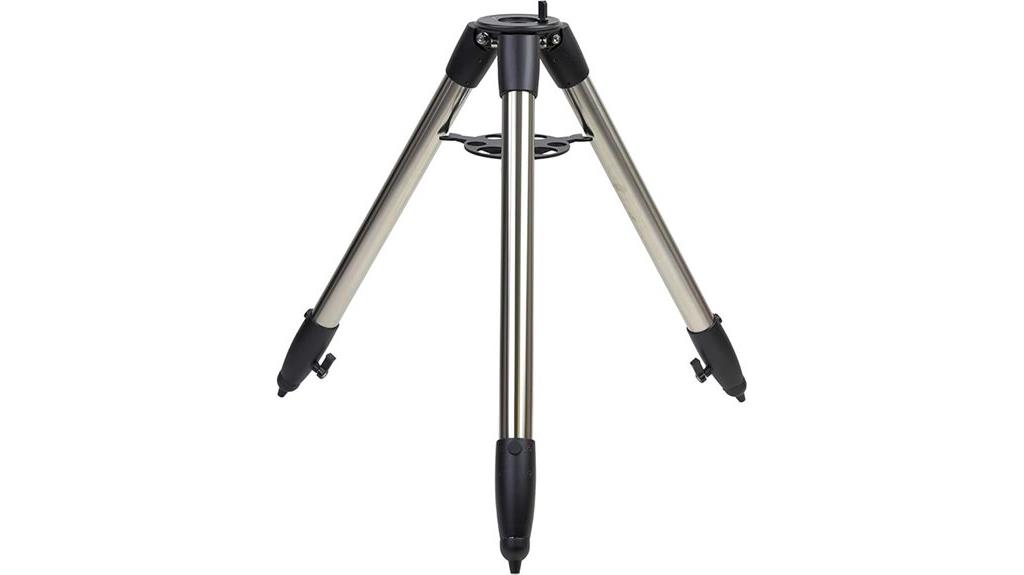
If you’re seeking a stable and durable tripod for astrophotography, the EQ6 Tripod to Wave Steel by Sky-Watcher is an excellent choice. Its robust 2-inch rolled steel legs provide exceptional stability, minimizing vibrations for clearer views and smooth tracking. Designed for Sky-Watcher Wave mounts, it’s also compatible with NEQ6, EQ6, EQ6-R, and AZ-EQ6 mounts, making it versatile. To attach Wave mounts, you’ll need the Wave Pier Adapter (S30916). With a sleek black trim, it offers a professional appearance that complements your gear. Overall, this tripod combines strength, stability, and style for serious astrophotographers.
Best For: astrophotographers and stargazers seeking a stable, durable tripod compatible with Sky-Watcher Wave mounts and similar equatorial mounts.
Pros:
- Robust 2-inch rolled steel legs provide exceptional stability and reduce vibrations
- Compatible with multiple mounts including NEQ6, EQ6, EQ6-R, and AZ-EQ6
- Sleek black trim offers a professional appearance and complements existing gear
Cons:
- Requires the Wave Pier Adapter (S30916) for attaching Wave mounts, which is an additional purchase
- Heavier and potentially less portable due to steel construction
- May be overbuilt for casual or beginner use, offering more stability than necessary
Vortex Optics Mountain Pass Tripod Kit

The Vortex Optics Mountain Pass Tripod Kit stands out as an excellent choice for outdoor enthusiasts who need a sturdy, portable support system. Made from machined aluminum, it offers a perfect balance of durability and lightweight design, weighing just 3.6 pounds. It supports up to 22 pounds, making it suitable for larger binoculars and spotting scopes. The telescoping legs with quick-lock levers ensure easy, stable adjustments, while the two-way pan and tilt head, compatible with Arca-Swiss mounts, provides smooth camera and optic control. Its compact size and robust build make it ideal for wildlife observation, hunting, or astrophotography on the go.
Best For: outdoor enthusiasts, hunters, wildlife observers, and photographers seeking a durable, portable tripod support for binoculars, scopes, and cameras.
Pros:
- Lightweight yet sturdy design weighing only 3.6 pounds
- Supports up to 22 pounds, accommodating larger optics and cameras
- Independent telescoping legs with quick-lock levers for easy adjustments
Cons:
- May be less suitable for very heavy or professional-grade equipment exceeding 22 pounds
- Slightly bulkier size compared to ultra-compact tripods, which could affect packability for some users
- Limited color options, primarily available in black
NEEWER 74″ Video Tripod Monopod (TP05)
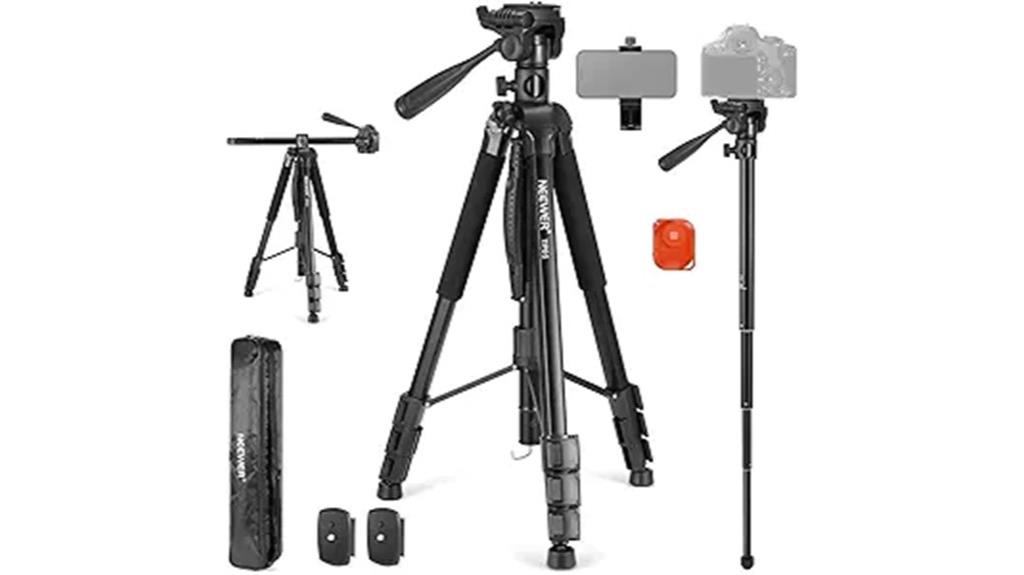
For astrophotographers seeking an affordable yet reliable tripod solution, the NEEWER 74″ Video Tripod Monopod (TP05) stands out thanks to its versatile design and lightweight construction. Made from aluminum alloy, it weighs just 3.9 pounds and folds down compactly for easy transport. Its adjustable height ranges from 23.6 to 74.4 inches, and the 3-way pan tilt head allows smooth horizontal and vertical movements. The tripod supports cameras up to 17.6 pounds and includes a Bluetooth remote for remote shutter control. Its central axis can be detached for use as a monopod, making it a flexible option for various astrophotography and videography needs.
Best For: astrophotographers and videographers seeking an affordable, versatile tripod and monopod solution with lightweight portability and smooth motion control.
Pros:
- Lightweight aluminum alloy construction weighing only 3.9 pounds for easy transport
- Versatile design with adjustable height (23.6 to 74.4 inches) and detaching central axis for monopod use
- Supports cameras up to 17.6 pounds, suitable for various photography and videography needs
Cons:
- Maximum load capacity may be limiting for heavier professional equipment
- The basic design lacks advanced features found in higher-end tripods
- The compact folding size may compromise some stability on uneven terrain
Factors to Consider When Choosing Tripods and Pier Mounts for Astrophotography

When selecting a tripod or pier mount for astrophotography, I focus on stability and vibration control to guarantee sharp images. I also consider weight and portability, making sure it’s manageable for my setups, while checking compatibility with my gear. Additionally, I look at height, adjustability, and the durability of materials to match my specific needs and conditions.
Stability and Vibration Control
Choosing the right tripod or pier mount is vital for stable astrophotography, as vibrations can ruin long-exposure images. A sturdy mount with a high weight capacity helps prevent unwanted movement during extended sessions. Materials like steel or aluminum are ideal because they resist flexing and dampen vibrations, ensuring steady imaging. Additional features such as vibration pads, dampening plates, or built-in vibration suppression systems can greatly improve stability. Properly balancing your equipment and setting up on a level surface also reduces oscillations. Locking mechanisms and adjustable tension on mount components are essential to secure your setup and avoid shifts caused by external forces or equipment movement. Prioritizing these aspects will help you achieve sharp, blur-free astrophotos.
Weight and Portability
Portability is a critical factor in selecting tripods and pier mounts for astrophotography, especially if you frequently shoot from remote or outdoor locations. Lighter setups, often made from aluminum or carbon fiber, are easier to carry and set up, making field sessions more convenient. Portable tripods typically weigh between 3 to 20 pounds, allowing for quick assembly and disassembly. While lighter weight enhances mobility, it’s essential to balance this with stability to prevent vibrations that can blur long-exposure images. Heavier mounts offer better steadiness but can be cumbersome to transport and set up. Ultimately, choosing a lightweight yet stable tripod or pier mount guarantees you can reach remote sites efficiently without sacrificing image quality.
Compatibility and Mounting
Selecting a tripod or pier mount that’s compatible with your astrophotography gear guarantees your setup remains stable and secure during long exposures. I always check that the mounting holes and sizes, like 1/4-20, 3/8-16, or Vixen-style dovetails, match my equipment. It’s essential that the platform can support the weight and dimensions of my gear to avoid instability. I verify that the attachment points and locking mechanisms are secure, preventing slipping or shifting. Additionally, I look for mounts with adjustable or level platforms to facilitate precise polar alignment and orientation. Compatibility with accessories such as extensions or adapters is also vital for flexibility and accommodating various setups. Ensuring these factors helps me achieve consistent, sharp astrophotos without worrying about equipment mishaps.
Height and Adjustability
Adjustability in tripods and pier mounts is vital because it allows me to set the perfect height for comfortable viewing and precise polar alignment. Telescoping legs or extension mechanisms let me customize the setup height, which can range from about 23 inches to over 53 inches. This flexibility helps adapt to different observing environments and personal preferences. A secure locking system, like twist locks or quick-release clamps, is key to keep the setup stable when adjusting. Fine-tuning the height also reduces vibrations and improves the accuracy of polar alignment during long exposures. Choosing a model with adjustable height ensures compatibility with various setups, making astrophotography more comfortable and effective. Proper adjustability ultimately enhances both observation quality and imaging results.
Durability and Material Quality
When choosing tripods and pier mounts for astrophotography, paying attention to durability and material quality is essential. High-quality models are built from materials like stainless steel, aluminum alloys, or cast iron, which endure environmental stresses and repeated use. Corrosion-resistant materials are vital for outdoor setups exposed to moisture and temperature changes, ensuring longevity. The strength of these materials directly affects stability; thicker metals offer better vibration dampening and support for heavy equipment. Lightweight yet durable options, such as anodized aluminum, provide portability without compromising stability. Additionally, the manufacturing process—precise machining, strong welding, and reliable fastening—plays a crucial role in long-term durability and performance. Choosing well-crafted, high-quality materials guarantees stability and reliability during your astrophotography sessions.
Frequently Asked Questions
How Does Tripod Stability Impact Astrophotography Image Quality?
Tripod stability is essential for astrophotography because even tiny movements can blur long-exposure images. When my tripod is steady, I get sharper star trails and clearer details, especially during extended shots. Instability causes vibrations that ruin image quality, so I always make certain my tripod is on solid ground and locked tight. Reliable stability helps me capture the night sky with precision and detail, making all the difference in my photos.
Which Materials Are Most Durable for Astrophotography Tripods?
Think of durable materials like the backbone of a sturdy tree—essential for steady astrophotography. I find carbon fiber to be first-rate; it’s lightweight yet incredibly strong, resisting vibrations and temperature swings. Aluminum is also reliable—more affordable and sturdy, though a bit heavier. Both materials keep your gear grounded during those long night exposures, ensuring sharp images without trembling. Choosing the right material is like selecting a faithful companion for those cosmic adventures.
Can Portable Tripods Support Heavy Astrophotography Equipment Effectively?
Yes, portable tripods can support heavy astrophotography equipment effectively if they’re designed with sturdy materials and a solid build. I always look for models with robust legs, good weight capacity, and reliable locking mechanisms. While portability is key, don’t compromise on stability—especially when handling heavy gear. Proper setup and choosing a tripod with high load ratings help ascertain your equipment stays steady for clear, sharp astrophotos.
Are Motorized Pier Mounts Suitable for Long Exposure Astrophotography?
Imagine a dance floor where every move must be precise; a motorized pier mount is just that for astrophotography. Yes, they’re perfect for long exposures because they offer smooth, programmable tracking that keeps your stars sharp. With their stability and accuracy, you can focus on capturing the cosmos without worrying about shutter shake or drift. It’s like having a skilled partner guiding your camera through the night sky’s intricate dance.
How Does Weather Resistance Influence Tripod Longevity in Outdoor Astrophotography?
Weather resistance considerably impacts a tripod’s longevity in outdoor astrophotography. When I choose a tripod, I look for models with durable, weatherproof materials like aluminum or carbon fiber that resist rain, dew, and temperature changes. Proper weather-resistant designs prevent corrosion and wear, ensuring my equipment stays reliable over time. Skimping on weather resistance often leads to quicker deterioration, meaning I’d have to replace gear more frequently, which isn’t cost-effective or reliable.
Conclusion
No matter which tripod or pier mount you choose, remember that stability is key for great astrophotos. I get it—investing in gear can seem intimidating, but the right setup doesn’t have to break the bank. With options like the Sky-Watcher Star Adventurer or compact mini piers, you’ll find something that fits your needs and budget. Just prioritize stability and enjoy capturing stunning night skies—you won’t regret it!