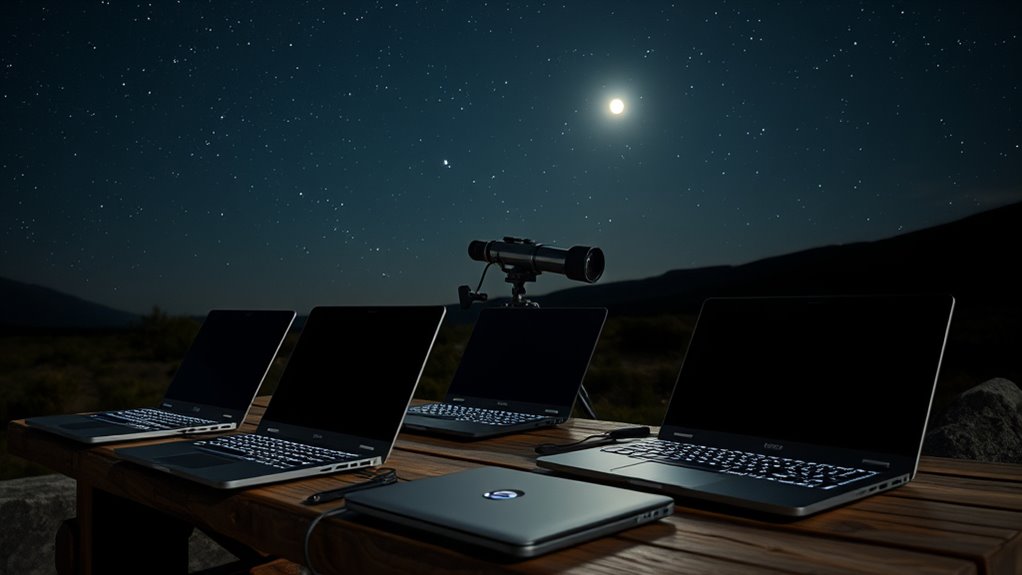

When searching for astronomy laptops with high battery life, the goal is to find a device that balances power, portability, and endurance for long stargazing sessions or fieldwork. The HP OmniBook 3 14-inch stands out as the best overall choice thanks to its impressive battery longevity combined with a sharp display and strong performance. The ASUS Vivobook 14 offers a compelling mix of battery life and performance at a more affordable price, making it ideal for budget-conscious enthusiasts. However, tradeoffs often involve sacrificing raw power or screen size for extended battery runtime. Continue reading for a detailed breakdown of the top options and what makes each one unique.

Get furniture and decor delivered free with Prime
- Fast, free delivery on millions of items
- Prime Video, Amazon Music and more included
- Member-only deals all year
Complete the kit


Key Takeaways
- The best laptops in this category prioritize battery life but often have tradeoffs in display size or processing power.
- Models with OLED displays, like the HP OmniBook 3, tend to offer better visuals but may impact battery longevity slightly.
- Affordable options such as the ASUS Vivobook balance performance and endurance, perfect for casual astronomers.
- High-performance picks like the Acer Aspire with 32GB RAM are designed for intensive tasks but may have shorter battery life.
- Choosing the right laptop depends heavily on whether you prioritize portability, display quality, or raw computing power.


| astronomy laptops with high battery life | Processor | Display | Storage | RAM |
|---|---|---|---|---|
| HP Everyday Laptop with Copilo | AMD High Performance Processor | 14-inch HD (1366×768), anti-glare | 128GB SSD + 1TB OneDrive | — |
| HP OmniBook 3 14-inch Next Gen | Snapdragon X1-26-100 | 14-inch 2K OLED, 1920×1200 | 256 GB PCIe Gen4 NVMe SSD | 16 GB LPDDR5x |
| ASUS Vivobook 14 Laptop | Intel Core i5-1334U | 14-inch FHD (1920×1080) | 1TB NVMe SSD | 16GB DDR4 |
| HP 17 inch Business Laptop Com | AMD Ryzen 5 | 17.3 inch FHD | 512GB SSD | 16GB |
| HP Essential Laptop Computer | Intel N150 | 14 inches, 1366×768 | 128GB SSD | 4GB |
| HP 17.3" FHD Copilot AI Laptop | AMD Ryzen 7 7730U | 17.3-inch FHD 1920×1080 | 512GB SSD | 16GB |
| HP 15.6 Touchscreen Ultra 7 15 | Intel Core Ultra 7 155H, 16-core | 15.6-inch FHD 1920×1080 touchscreen | 512GB SSD | 16GB DDR5 |
| HP 17.3" Business Laptop with | Intel Core i5 (10 cores, up to 4.6GHz) | 17.3-inch 1600 x 900 LED | 1.2TB (1TB SSD + 256GB HDD) | 32GB DDR4 |
| HP OmniBook 3 Touchscreen Busi | AMD Ryzen 5 40 | 16" WUXGA IPS 1920 x 1200 | 512GB PCIe SSD | 8GB LPDDR5 |
| Acer Aspire FHD Touchscreen La | Intel Core Ultra 7 258V | 14.0" IPS WUXGA (1920×1200) Touchscreen | 1TB PCIe NVMe SSD | 32GB LPDDR5X |
More Details on Our Top Picks
HP Everyday Laptop with Copilot AI 2026 Edition, 14-inch, 128GB SSD + 1TB OneDrive, AMD Processor, Windows 11
This lightweight HP model stands out for its portability, with a slim profile and up to 11 hours of battery life, making it ideal for those who need a reliable travel companion. Compared with the HP OmniBook 3, it offers a more traditional Windows experience, but the lower 4GB RAM and basic HD display limit multitasking and visual clarity. Its essential ports and Wi-Fi 6 ensure connectivity on the go, though the modest 128GB SSD may require frequent cloud reliance. It excels in everyday tasks but isn’t suited for intensive multitasking or high-res content creation.
Pros:- Lightweight and easy to carry
- Battery lasts up to 11 hours
- Includes essential ports and modern connectivity
- Pre-installed with Windows 11 and Microsoft 365
Cons:- Limited 4GB RAM restricts multitasking
- Low-resolution 1366×768 display can strain the eyes and compromise detail
- Small 128GB SSD limits local storage
Best for: Students or remote workers who prioritize light weight and long battery life for daily tasks
Not ideal for: Power users needing high RAM or dedicated graphics for demanding applications or multitasking
- Processor:AMD High Performance Processor
- Display:14-inch HD (1366×768), anti-glare
- Memory:4GB DDR5 SDRAM
- Storage:128GB SSD + 1TB OneDrive
- Battery Life:Up to 11 hours
- Weight:3.24 lbs
Our verdict“This model suits users seeking a portable, everyday laptop for basic tasks, sacrificing high-end specs for mobility.”
HP OmniBook 3 14-inch Next Gen AI PC, 2K OLED Display, Snapdragon X1-26-100, 16 GB RAM, 256 GB SSD, Windows 11 Home, Nouvelle Silver
This model excels in battery longevity, with an impressive up to 41 hours of runtime, making it a standout for heavy mobile use. The 2K OLED display delivers vibrant visuals unmatched by the HP Everyday Laptop, though the 14-inch size may not satisfy those wanting larger screens for detailed work. Its Snapdragon processor and 16GB RAM provide robust AI-optimized performance, but the lack of a dedicated GPU limits high-end graphics tasks. Compared to the ASUS Vivobook, it offers superior battery life and display quality but at a likely premium price and a smaller form factor.
Pros:- Exceptional battery life up to 41 hours
- Vivid 2K OLED display with rich colors
- Powerful Snapdragon processor with AI capabilities
- Eco-friendly design with recycled materials
Cons:- Limited to 14-inch display size, not ideal for multitasking with multiple windows
- No dedicated GPU, restricting high-end graphics or gaming
- Potentially higher price relative to basic models
Best for: Travelers and field researchers needing all-day battery life with excellent display quality
Not ideal for: Gamers or high-performance content creators requiring dedicated graphics or larger screens
- Display:14-inch 2K OLED, 1920×1200
- Processor:Snapdragon X1-26-100
- RAM:16 GB LPDDR5x
- Storage:256 GB PCIe Gen4 NVMe SSD
- Battery Life:Up to 41 hours 45 minutes
- Connectivity:Qualcomm Wi-Fi 6E
Our verdict“This pick is best for those prioritizing long-lasting battery and stunning visuals in a compact form.”
ASUS Vivobook 14 Laptop – 16GB RAM, 1TB Storage, Intel i5, Windows 11 Pro
The ASUS Vivobook 14 stands out with its substantial 16GB RAM and 1TB storage, making it suitable for multitasking and demanding workloads. Its 14-inch FHD display and Intel i5 processor deliver solid performance, but compared to the HP OmniBook 3, it offers less battery longevity, with no specific runtime figures provided. Its bundle includes a docking station and external drive, appealing for business users needing flexibility. The 60Hz refresh rate is standard but not optimized for gaming or high-frame-rate tasks. It balances power with portability but sacrifices some battery endurance that others, like the OmniBook, excel at.
Pros:- High RAM capacity for multitasking
- Large 1TB storage for files and applications
- Includes useful accessories like docking station
- Pre-installed with Windows 11 Pro and Office
Cons:- Battery life details are limited, likely shorter than ultra-long endurance models
- No dedicated GPU limits high-end gaming or graphics work
- Display refresh rate is only 60Hz, less ideal for gaming
Best for: Business professionals and remote workers who need a portable yet powerful machine
Not ideal for: Travelers who require all-day battery life or users prioritizing longer unplugged sessions
- Display:14-inch FHD (1920×1080)
- Processor:Intel Core i5-1334U
- RAM:16GB DDR4
- Storage:1TB NVMe SSD
- Battery:Unknown, likely moderate
- Weight:3.09 lbs
Our verdict“This device suits users needing strong processing power and storage in a portable design, with moderate battery endurance.”
HP 17 inch Business Laptop Computer, 2026 Edition, AMD Ryzen 5, 16GB RAM, 512GB SSD, FHD Display, Windows 11 with Office 365
This larger 17.3-inch HP model offers a spacious display ideal for multitasking and detailed work, with a powerful AMD Ryzen 5 processor and 16GB RAM. Its battery life is long, supporting extended use away from power sources, and it includes Office 365 for productivity. Compared with the smaller HP Everyday Laptop, it sacrifices portability but compensates with a bigger view and more power. However, its weight and size make it less suited for frequent travel, and the lack of a dedicated GPU limits graphics-intensive tasks. It makes a compelling choice for stationary work or occasional mobility requiring a large display.
Pros:- Large, vivid 17.3-inch display perfect for multitasking
- Powerful AMD Ryzen 5 processor with 16GB RAM
- Long battery life suitable for extended use
- Includes Office 365 for productivity
Cons:- Heavy and bulky for frequent travelers
- Limited graphics capability without dedicated GPU
- Potentially higher power consumption due to size
Best for: Remote workers or students needing a large screen for multitasking with long battery life
Not ideal for: Travelers or commuters who need a lightweight, highly portable device
- Display:17.3 inch FHD
- Processor:AMD Ryzen 5
- RAM:16GB
- Storage:512GB SSD
- Battery:Long battery life
- Weight:Approx. 5+ lbs
Our verdict“This laptop is best for stationary use or occasional travel, where a large screen and long battery life outweigh portability concerns.”
HP Essential Laptop Computer, 2026 Edition, 128GB SSD, Intel N150 CPU, Windows 11, Microsoft 365, 14″ Display
This HP Essential model offers a simple, lightweight design with up to 11 hours of battery life, making it suitable for students or light remote work. Its 14-inch HD display and basic Intel N150 processor support everyday tasks but fall behind in performance for multitasking or demanding applications. Compared with the ASUS Vivobook, it has a more modest build and less RAM, making it less adaptable for intensive productivity. It’s a budget-friendly choice for casual users who prioritize portability and long battery life but don’t require high performance or high-resolution visuals.
Pros:- Lightweight and portable
- Battery lasts up to 11 hours
- Includes Microsoft 365 and 1TB cloud storage
- Versatile connectivity options
Cons:- Low 1366×768 resolution may be inadequate for some tasks
- Limited 4GB RAM restricts multitasking
- Processor not suitable for demanding applications
Best for: Students or casual users needing a lightweight device with all-day battery life
Not ideal for: Power users or those needing high RAM and fast performance for demanding tasks
- Processor:Intel N150
- Display:14 inches, 1366×768
- RAM:4GB
- Storage:128GB SSD
- Battery Life:Up to 11 hours
- Weight:3.24 lbs
Our verdict“This model is ideal for basic users needing portability and long-lasting battery life without high-performance requirements.”
HP 17.3″ FHD Copilot AI Laptop PC, AMD Ryzen 7 7730U, 16GB RAM, 512GB SSD
This HP 17.3-inch model stands out for its combination of a large, immersive FHD display and a powerful AMD Ryzen 7 processor with AI capabilities, making it ideal for detailed star maps and astronomy software that benefit from high processing power. Compared to the ASUS Vivobook Blue, which offers a more portable form factor, this laptop sacrifices some portability for a bigger screen and longer battery life, crucial for extended sessions outdoors. The 16GB RAM and 512GB SSD ensure smooth multitasking and quick data access, but the non-touch display and 60Hz refresh rate could limit interactive or high-refresh-rate needs. The high-capacity battery supports all-day use, a key advantage for night sky observation trips. This pick makes the most sense for serious amateur astronomers who prioritize screen size and battery longevity over ultra-lightweight design.
Pros:- Large 17.3-inch FHD display for detailed star maps and software
- Powerful AMD Ryzen 7 processor with AI acceleration
- Long-lasting battery suitable for all-day outdoor use
- Fast 16GB RAM and 512GB SSD for seamless multitasking
Cons:- Non-touch display limits interactive navigation
- 60Hz refresh rate not ideal for high-refresh-rate applications or gaming
- Bulkier design reduces portability
Best for: Astronomy enthusiasts who need a large display with long battery life for extended outdoor stargazing sessions.
Not ideal for: Travelers seeking a lightweight, compact laptop for quick setup and portability, as this model is bulkier and heavier.
- Display:17.3-inch FHD 1920×1080
- Processor:AMD Ryzen 7 7730U
- RAM:16GB
- Storage:512GB SSD
- Operating System:Windows 11 Home
- Battery:High-capacity, all-day power
Our verdict“This laptop suits dedicated astronomers who need a sizable screen and long battery life for prolonged outdoor observations.”
HP 15.6 Touchscreen Ultra 7 155H 2026 Edition AI Laptop, 16GB DDR5, 512GB SSD
This HP 15.6-inch touchscreen model offers a compelling mix of portability and performance, thanks to its 16-core Intel Core Ultra 7 155H processor and DDR5 RAM. Its vivid touchscreen and all-day battery make it suitable for quick star map checks or viewing astronomy apps while on the move. Unlike the larger HP 17.3-inch model, this one sacrifices some display size for increased portability, making it better suited to those who travel frequently or prefer a lighter device. The lack of a dedicated GPU limits high-end creative or gaming tasks but is sufficient for most astronomy software. The advanced battery management supports extended use, which is critical for outdoor observations or field trips. This model makes sense for users who want a balance of performance, portability, and battery longevity for casual astronomy activities.
Pros:- Vivid 15.6-inch touchscreen with high resolution
- Powerful 16-core Intel Core Ultra 7 processor with AI acceleration
- Long battery life with advanced management features
- Fast DDR5 RAM and 512GB SSD for smooth multitasking
Cons:- Smaller display size than larger models
- Lack of dedicated GPU for graphics-intensive tasks
- Opened seal for upgrades may concern some buyers
Best for: On-the-go amateur astronomers who need a portable device with good performance and long battery life.
Not ideal for: Users requiring a large screen for detailed software or high-refresh-rate gaming, as the 60Hz display and smaller size may feel limiting.
- Display:15.6-inch FHD 1920×1080 touchscreen
- Processor:Intel Core Ultra 7 155H, 16-core
- RAM:16GB DDR5
- Storage:512GB SSD
- Operating System:Windows 11 Home
- Battery:All-day power with advanced management
Our verdict“Ideal for mobile users who want decent performance and extended battery life for casual astronomy use on the move.”
HP 17.3″ Business Laptop with 32GB RAM and 1.2TB Storage
This 17.3-inch HP business laptop excels in multitasking thanks to its 10-core Intel Core i5 processor and 32GB RAM, making it suitable for running multiple astronomy tools and data analysis simultaneously. The large display enhances detailed star maps and software interfaces, but the lower 1600 x 900 resolution is less sharp than Full HD options, which could affect clarity during detailed observations. Its substantial storage, combining SSD and HDD, supports extensive data archives. However, the battery life is not specified, which is a concern for outdoor use. While its weight and size might be less convenient for frequent travel, it offers a desktop-like experience for astronomy professionals or serious hobbyists who prioritize power and storage over portability.
Pros:- Large 17.3-inch high-resolution display for detailed star maps
- Powerful 10-core Intel Core i5 CPU and 32GB RAM
- Ample storage with combined SSD and HDD
- Multiple ports for peripherals and data transfer
Cons:- Lower display resolution (1600 x 900) than Full HD
- Battery life details are not provided
- Bulkier, less portable design
Best for: Professional or serious amateur astronomers who need extensive multitasking capabilities and large storage in a stable, high-performance machine.
Not ideal for: Travelers or casual users who prefer lightweight, compact options with clear battery life expectations.
- Display:17.3-inch 1600 x 900 LED
- Processor:Intel Core i5 (10 cores, up to 4.6GHz)
- RAM:32GB DDR4
- Storage:1.2TB (1TB SSD + 256GB HDD)
- Operating System:Windows 11 Pro
- Ports:USB-C, USB-A, HDMI, Headphone/Mic Jack
Our verdict“Designed for demanding users who need a spacious, high-power laptop for intensive astronomy data processing and multitasking.”
HP OmniBook 3 Touchscreen Business Laptop, 16″ WUXGA IPS, Windows 11 Pro, 512GB SSD, 8GB RAM, AMD Ryzen 5 40 Processor, Numeric Keypad, 8-in-1 Hub, Glacier Silver
This HP OmniBook 3 offers a balanced combination of a sharp 16-inch WUXGA IPS touchscreen and extended battery life, making it a practical choice for outdoor or mobile astronomy use. Its AMD Ryzen 5 40 processor and 8GB RAM provide sufficient performance for most astronomy software, while the sleek design and inclusion of a numeric keypad and versatile ports add convenience for field work. Compared to larger models like the HP 17.3-inch, this one is more portable but may sacrifice some screen real estate. The integrated AMD Radeon 610M GPU limits high-end graphics tasks but is adequate for most astronomy applications. The extended battery life and privacy features like a camera shutter support prolonged use during night observations.
Pros:- Vivid 16-inch WUXGA IPS touchscreen with anti-glare finish
- Extended battery life suitable for outdoor use
- Compact and lightweight design for portability
- Versatile connectivity with multiple ports and privacy features
Cons:- Limited to 8GB RAM, which may be restrictive for heavy multitasking
- No dedicated GPU for high-end graphics or creative tasks
- Storage options may require upgrades for larger data sets
Best for: Field astronomers or students who need a portable, reliable device with good battery life for casual or educational astronomy activities.
Not ideal for: Power users requiring high RAM or dedicated GPUs for intensive data processing or creative work, as this model emphasizes portability and battery longevity.
- Display:16″ WUXGA IPS 1920 x 1200
- Processor:AMD Ryzen 5 40
- RAM:8GB LPDDR5
- Storage:512GB PCIe SSD
- Graphics:AMD Radeon 610M
- Battery:Extended battery life
Our verdict“This laptop provides a compelling mix of portability, battery longevity, and adequate performance for casual astronomy on the move.”
Acer Aspire FHD Touchscreen Laptop, Intel Core Ultra 7 258V, 32GB RAM, 1TB SSD
This Acer Aspire stands out for its combination of high-performance components and portability, making it a compelling choice for astronomers who need to stay productive in the field. Its Intel Core Ultra 7 258V processor and 47 TOPS AI NPU deliver fast, AI-accelerated performance, which is especially helpful when running complex data analysis or multimedia tasks. The 32GB LPDDR5X RAM ensures smooth multitasking, while the 1TB PCIe NVMe SSD offers ample storage for large datasets and software. Its 14-inch IPS WUXGA touchscreen offers vibrant visuals and stylus support, ideal for detailed content work. Compared with bulkier options like the HP 17 inch Business Laptop, this model’s lightweight design (3.09 lbs) enhances mobility. However, it’s limited to Windows 11 Home and lacks a dedicated GPU, which could restrict some professional workflows or gaming needs. The display’s 60Hz refresh rate may also feel sluggish for fast-paced tasks.
Pros:- Strong AI-accelerated performance with Intel Ultra 7 258V and AI NPU
- Lightweight and portable for fieldwork or travel
- High-resolution touchscreen with stylus support
- Extensive connectivity options including HDMI and USB-C
Cons:- Limited to Windows 11 Home, which may restrict some professional software
- No dedicated graphics card, limiting high-end gaming or rendering capabilities
- Display refresh rate of 60Hz may hinder fast-paced visuals
Best for: Creative professionals and remote workers who need a lightweight, high-performing laptop for content creation and multitasking in astronomy projects.
Not ideal for: Gamers or users requiring dedicated graphics for high-end gaming or intensive 3D modeling, due to lack of a dedicated GPU and modest refresh rate.
- Processor:Intel Core Ultra 7 258V
- AI NPU:47 TOPS
- Graphics:Intel Arc 140V
- RAM:32GB LPDDR5X
- Storage:1TB PCIe NVMe SSD
- Display:14.0″ IPS WUXGA (1920×1200) Touchscreen
- Weight:3.09 lbs
- Connectivity:WiFi 6, Bluetooth 5.3, USB 4 Gen 2, HDMI
Our verdict“This model suits astronomers who prioritize performance and portability over gaming or high-refresh-rate displays.”

How We Picked
Our evaluation focused on key factors that matter most for astronomy enthusiasts seeking high battery life. We considered battery endurance under real-world usage, overall performance, build quality, display quality, and portability. Products were ranked based on their ability to sustain long sessions without frequent recharging while still providing adequate processing power for astronomy-related tasks. We also examined user reviews and technical specs to ensure practical reliability. This approach ensures that the top picks are well-rounded and truly suited for extended outdoor or field use, not just benchmark scores.| astronomy laptops with high battery life | Battery |
|---|---|
| HP Everyday Laptop with Copilo | — |
| HP OmniBook 3 14-inch Next Gen | — |
| ASUS Vivobook 14 Laptop | Unknown, likely moderate |
| HP 17 inch Business Laptop Com | Long battery life |
| HP Essential Laptop Computer | — |
| HP 17.3" FHD Copilot AI Laptop | High-capacity, all-day power |
| HP 15.6 Touchscreen Ultra 7 15 | All-day power with advanced management |
| HP 17.3" Business Laptop with | — |
| HP OmniBook 3 Touchscreen Busi | Extended battery life |
| Acer Aspire FHD Touchscreen La | — |
Factors to Consider When Choosing Astronomy Laptops With High Battery Life
When selecting an astronomy laptop with high battery life, there are several critical factors beyond raw specs that influence your experience. Understanding these can help you avoid common pitfalls and choose a device that truly meets your needs in the field or during long observing sessions.Battery Capacity and Efficiency
Battery capacity, measured in watt-hours (Wh), directly impacts how long your laptop can run without charging. However, efficiency depends on hardware choices—more energy-efficient processors and displays can extend battery life significantly. A larger battery isn’t always better if the device consumes power rapidly, so look for models with optimized power management features or recent processor generations known for energy savings.
Display Size and Type
The display is crucial for astronomy, but larger screens tend to drain batteries faster. OLED screens provide richer visuals but may consume more power than LCDs, especially with bright backgrounds. If portability and battery life are priorities, consider a 14-inch or smaller display with energy-efficient display technology, and be mindful that high refresh rates or high brightness settings can shorten runtime.
Performance and Processing Power
While you need enough computing power to run astronomy software and manage data, overpowered hardware like high-end gaming GPUs can reduce battery longevity. Aim for balanced specs—mid-range CPUs and integrated graphics often suffice for most astronomy tasks and help conserve energy. Prioritize models with recent processors, which typically include better power management features.
Portability and Build Quality
If you plan to carry your laptop to remote observing sites, weight and durability matter. Lighter models with sturdy construction are preferable, but compactness can sometimes trade off battery capacity or screen size. Consider models with aluminum or magnesium builds for durability without adding weight, and check the size and weight specs to ensure they fit your fieldwork routine.
Price and Value
High battery life often comes at a premium, but there are budget-friendly options that balance endurance and cost. Be cautious of cheaper models with exaggerated battery claims; real-world tests are more reliable. Investing a bit more can yield significant gains in battery longevity and build quality, especially if you plan on extensive outdoor use or long observing nights.
Frequently Asked Questions
How long should a good astronomy laptop last on a single charge?
For astronomy use, a laptop should ideally provide at least 8-12 hours of battery life to support extended sessions without recharging. The actual runtime depends on hardware, display type, and usage—such as running software, screen brightness, and peripheral use. Prioritizing models with larger batteries and energy-efficient components can extend this duration, making them more suitable for fieldwork or long observing nights.
Are OLED displays worth the extra battery consumption for astronomy?
OLED displays offer stunning contrast and vibrant visuals, which can enhance the viewing experience when observing star charts or images. However, they tend to consume more power, especially with bright backgrounds or high brightness settings. If you mainly use your laptop outdoors for extended periods, an energy-efficient LCD or WUXGA display may provide a better balance between visual quality and battery life.
Should I prioritize lightweight laptops over larger screens?
Choosing a lightweight laptop improves portability, especially if you travel to remote sites frequently. Smaller screens also typically draw less power, helping extend battery life. However, if detailed star maps or multiple windows are necessary, a larger display might be more practical. The best choice depends on whether you value mobility or screen real estate more for your astronomy activities.
How much performance do I really need for astronomy software?
Most astronomy applications, including star charting and data analysis, run well on mid-range hardware. You generally don’t need high-end gaming or workstation-class specs, which consume more power. A recent quad-core processor, integrated graphics, and 8-16GB of RAM are usually sufficient, helping to conserve battery while providing smooth performance during long observation sessions.
Is it better to buy a dedicated or a versatile all-purpose laptop for astronomy?
While dedicated laptops designed for long battery life are appealing, many all-purpose ultrabooks or business laptops can meet the needs of astronomy enthusiasts. Versatile models often offer better build quality, more ports, and balanced specs, making them suitable for both astronomy and everyday use. The key is to choose a device with a good combination of battery life, performance, and portability tailored to your specific fieldwork or stargazing habits.
Conclusion
For most users, the HP OmniBook 3 14-inch makes the best overall choice thanks to its blend of long battery life, vibrant display, and portable design. If you’re on a budget but still want respectable endurance, the ASUS Vivobook 14 offers excellent value. For those seeking premium features and the longest runtime, the Acer Aspire FHD with 32GB RAM is a compelling option. Beginners or casual observers should lean toward lighter, more affordable models, while serious amateurs or professionals might prioritize performance and durability, even if it means sacrificing some battery longevity. Ultimately, your ideal laptop depends on your specific fieldwork needs and how much you value portability versus power.
Fall Picks
fall essentials
As an affiliate, we earn on qualifying purchases.