If you’re looking for the best cooled CMOS astro cameras for deep sky imaging in 2025, I recommend the SVBONY SV605CC and the Astromania SGCMOS series. The SV605CC offers high sensitivity with its 9MP sensor and powerful cooling system, ensuring clear, detailed images of faint objects. The Astromania model provides versatile imaging options with fast frame rates and great software support. Stay tuned to discover how these cameras stand out and which might be the perfect fit for your needs.
Key Takeaways
- The SVBONY SV605CC offers a high-resolution 9MP sensor with effective cooling, ideal for detailed deep sky astrophotography.
- The Astromania SGCMOS features high sensitivity, fast frame rates, and built-in cooling, making it versatile for long-exposure imaging.
- Both cameras utilize semiconductor double-layer cooling, reducing sensor temperatures by up to 30°C, which minimizes thermal noise during long sessions.
- Compatibility with standard astrophotography software and flexible mounting options ensures seamless integration into various setups.
- Durable construction, low power consumption, and reliable connectivity make these models top choices for deep sky imaging in 2025.
SVBONY SV605CC Cooled Astrophotography Camera
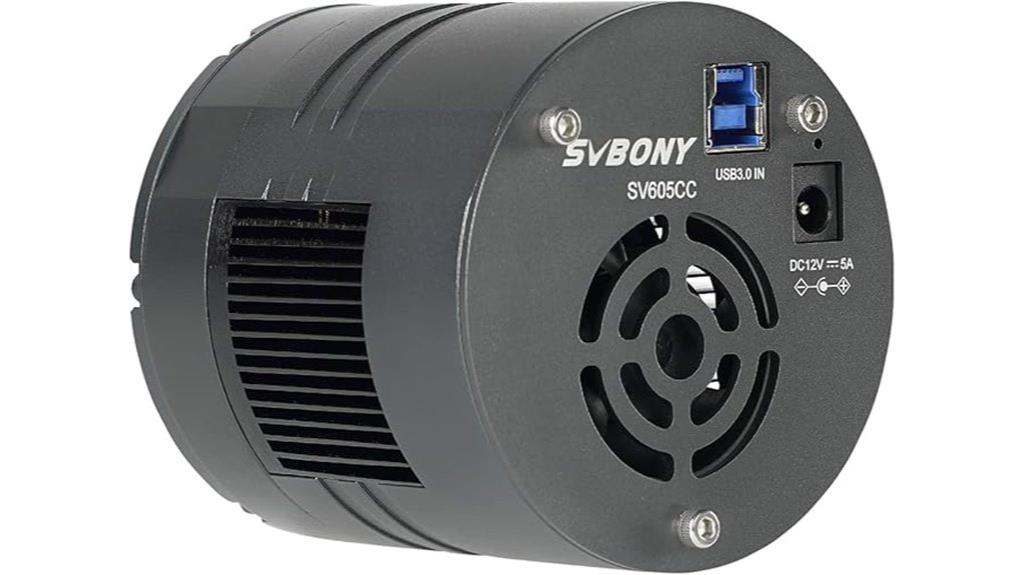
If you’re serious about deep sky imaging or meteor monitoring, the SVBONY SV605CC cooled astrophotography camera is an excellent choice. It features a 9MP IMX533 CMOS sensor with 1-inch square frames, delivering sharp, detailed images with 80% quantum efficiency. The double-layer refrigeration cools the sensor to 30°C below ambient, reducing noise and glow for clearer shots. Its compact design, support for USB 3.0, and IP54 protection make it versatile for outdoor use. Whether capturing deep space objects or meteors, this camera’s high resolution and cooling system ensure high-quality results, making it a valuable tool for both amateurs and professionals.
Best For: amateur and professional astronomers seeking high-resolution, cooled astrophotography capabilities for deep sky imaging, meteor monitoring, and panoramic astronomy.
Pros:
- High 9MP resolution with 80% quantum efficiency for detailed, sharp images
- Effective double-layer refrigeration system cooling the sensor to 30°C below ambient to reduce noise and glow
- Compact, lightweight design with IP54 protection suitable for outdoor astrophotography
Cons:
- Customer rating of 3.9 out of 5 stars indicating moderate satisfaction among users
- Requires external power sources; no onboard batteries included
- Limited information on bundled accessories or optional upgrades
Astromania SGCMOS Series Telescope CMOS Camera
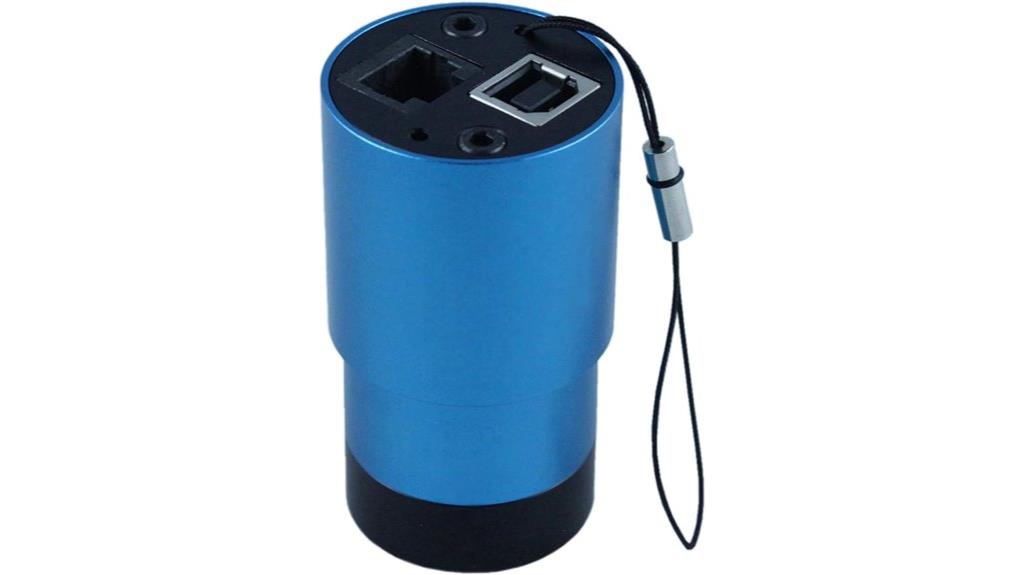
The Astromania SGCMOS Series Telescope CMOS Camera is an excellent choice for amateur astronomers and astrophotographers seeking versatile imaging capabilities. It features a high-sensitivity sensor with fast frame rates and long exposure support, making it ideal for auto-guiding, astrophotography, and multicolor imaging. Its thermal design guarantees efficient heat transfer, while the aluminum CNC housing provides durability. With a standard 1.25-inch interface and C-mount, it’s compatible with eyepieces, filters, and industrial lenses. The built-in ST4 guider port simplifies auto-guiding, and the included software supports video preview, recording, processing, and raw data output—all in a compact, lightweight package.
Best For: amateur astronomers and astrophotographers seeking a versatile, easy-to-use CMOS camera with auto-guiding and imaging capabilities.
Pros:
- High-sensitivity sensor with fast frame rates and long exposure support for detailed astrophotography.
- Compatible with a variety of lenses and filters via C-mount and 1.25-inch interface, offering versatile imaging options.
- Built-in ST4 auto guider port and dedicated software streamline auto-guiding, previewing, recording, and processing.
Cons:
- Rated 3.5 out of 5 stars based on reviews, indicating mixed user satisfaction.
- Slightly compact and lightweight design may limit durability or heat dissipation during prolonged use.
- Requires external software and drivers for full functionality, which may involve a learning curve for beginners.
Factors to Consider When Choosing Cooled CMOS Astro Cameras for Deep Sky Imaging

When choosing a cooled CMOS astro camera, I focus on sensor sensitivity and cooling efficiency to guarantee clear, detailed images. It’s also important to take into account image resolution quality and how well the camera integrates with my existing setup through compatibility options. Finally, software support features can make a big difference in capturing and processing deep sky images effectively.
Sensor Sensitivity Levels
Sensor sensitivity is a crucial factor in selecting cooled CMOS astro cameras for deep sky imaging because it determines how effectively the sensor can capture faint celestial objects. It mainly depends on quantum efficiency, which measures how well the sensor converts incoming photons into an electrical signal. High sensitivity CMOS sensors often boast quantum efficiencies from 70% to over 80%, markedly improving their ability to detect faint details. Smaller pixel sizes, like 3.76μm, can boost resolution but might reduce sensitivity unless paired with advanced technology. Cooling systems help reduce thermal noise, further enhancing sensitivity during long exposures. Ultimately, higher sensor sensitivity means shorter exposure times, allowing me to capture faint objects more efficiently and with better detail in my deep sky imaging sessions.
Cooling Efficiency
Choosing a cooled CMOS astro camera involves understanding how effectively it can manage heat during long exposures. Cooling efficiency depends on how well the sensor can reach and stay around 30°C below ambient temperature. This reduction minimizes thermal noise and sensor glow, which are crucial for high-quality deep sky images. Cameras with advanced double-layer semiconductor refrigeration systems offer better cooling performance and stability over extended sessions. The thermal design, including heat transfer mechanisms and insulation, also plays a critical role in dissipating heat effectively. Higher cooling efficiency enables longer exposures and improves the signal-to-noise ratio, ensuring more detailed and cleaner images. When selecting a camera, prioritize models with proven cooling capabilities to enhance your astrophotography results.
Image Resolution Quality
Higher image resolution considerably enhances the detail and quality of deep sky images captured with cooled CMOS astro cameras. A resolution of at least 9 megapixels, like 3008×3008 pixels, is ideal for capturing intricate celestial features. Higher resolution allows me to distinguish small or faint objects that lower-resolution sensors might miss, resulting in more detailed images. However, to get the most out of high resolution, I need precise focusing and a stable mount, as even slight movements can reduce clarity. It’s also important to balance resolution with sensor size and pixel size; larger pixels can improve signal-to-noise ratio without sacrificing detail. Ultimately, choosing a camera with the right resolution helps me achieve sharper, more detailed astrophotography results.
Compatibility Options
When selecting a cooled CMOS astro camera, verifying its compatibility with my existing equipment is vital to guarantee smooth operation. I check that the camera supports standard interfaces like USB, C-mount, or 1.25-inch connectors to make certain it works seamlessly with my telescope mount and control software. I also confirm that it offers compatible drivers, such as native, ASCOM, or WDM, for smooth integration into my workflow. Additionally, I verify that the firmware and software are compatible with my operating system, whether Windows, macOS, or Linux. It’s important that the camera’s auto-guiding features, like ST4 port support, align with my guiding hardware. Lastly, I make sure it plays well with third-party astrophotography applications for image capture, processing, and remote operation.
Software Support Features
Having robust software support is vital for effectively controlling and processing images from cooled CMOS astro cameras during deep sky imaging. Reliable software enables seamless camera control, image capture, and processing through dedicated or third-party programs. Compatibility with native, ASCOM, and WDM drivers is essential for integrating the camera with various astrophotography platforms. Features like dark field correction, raw data output, and video recording are often managed via specialized software, enhancing image quality and workflow efficiency. User-friendly interfaces and real-time preview capabilities help with focusing, framing, and troubleshooting during sessions. Regular software updates and driver support ensure the camera remains compatible with evolving operating systems and applications, providing a smooth, hassle-free experience that maximizes imaging results.
Mounting and Connectivity
Choosing the right mounting and connectivity options is key to getting the most out of cooled CMOS astro cameras. A versatile mounting system, like T-threads, C-mounts, or 1.25-inch adapters, guarantees compatibility with various telescopes and accessories, providing stable and secure attachment. Proper mounting hardware prevents misalignment and vibration, which can compromise image quality. Connectivity options are equally important; USB 3.0 and USB 2.0 interfaces enable fast, reliable data transfer, making remote operation seamless. Some models offer wireless options like Wi-Fi, adding convenience for remote control and image transfer without cluttering your setup with cables. Compatibility with standard software protocols such as ASCOM and WDM ensures smooth integration with your existing astrophotography software, maximizing your imaging efficiency.
Power & Durability
Power and durability are crucial factors to contemplate because they directly influence a cooled CMOS astro camera’s reliability and performance during long exposures. These cameras typically operate at low power levels around 3 watts, which minimizes heat and conserves energy, essential for extended imaging sessions. Durability is often ensured through sturdy aluminum construction and IP54 ratings, protecting against dust and splashes outdoors. The refrigeration systems, like semiconductor double-layer cooling, keep sensors up to 30°C below ambient, extending sensor life and maintaining consistent performance. External power supplies, rather than batteries, ensure stable operation in various conditions. Overall, robust design and effective cooling mechanisms help reduce thermal stress, prolong sensor lifespan, and guarantee dependable imaging over time.
Frequently Asked Questions
How Does Cooling Efficiency Impact Image Quality in Astro Cameras?
Cooling efficiency directly impacts image quality by reducing thermal noise that can obscure faint celestial details. When my astro camera cools effectively, it produces cleaner, sharper images with less graininess. Poor cooling allows heat to build up, increasing noise and decreasing sensitivity. I always prioritize high cooling efficiency because it guarantees my long exposures capture the true beauty of deep sky objects without unwanted artifacts.
What Is the Typical Lifespan of Cooled CMOS Sensors in Astro Cameras?
The typical lifespan of cooled CMOS sensors in astro cameras ranges from five to ten years, depending on usage and handling. I’ve found that proper maintenance, such as avoiding dust and moisture, can extend their life. While cooling helps reduce noise and improve image quality, it also adds some stress to the sensor over time. Overall, with good care, these sensors can provide excellent performance for many observing seasons.
Are There Compatibility Issues With Specific Telescopes or Mounts?
No, compatibility issues are practically extinct these days—unless you’re still clinging to outdated gear. Modern cooled CMOS astro cameras generally play well with most telescopes and mounts, thanks to standard connectors and versatile adapters. Still, I recommend double-checking the camera’s specifications against your mount’s compatibility list. Better safe than stranded under the stars, right? So, don’t worry too much; most setups get along famously.
How Does Sensor Size Influence Deep Sky Imaging Capabilities?
Sensor size considerably impacts deep sky imaging because larger sensors capture more light and have a wider field of view, making it easier to photograph expansive nebulae and galaxies. I find that bigger sensors also reduce the need for multiple shots, saving time and effort. However, they can be more expensive and require larger mounts. Overall, a bigger sensor generally enhances image quality and detail in deep sky astrophotography.
What Maintenance Is Required for Cooled CMOS Astro Cameras?
I regularly clean my cooled CMOS astro camera’s sensor with a gentle, lint-free cloth and compressed air to prevent dust buildup. I also check the cooling system’s connections and make certain the cooling fans are functioning properly. Periodically, I update the camera’s firmware and software to optimize performance. Storing the camera in a dry, dust-free environment and avoiding abrupt temperature changes helps maintain its longevity and image quality.
Conclusion
So, after diving into these top cooled CMOS astro cameras, it’s clear that choosing the perfect one is almost like picking a star—bright and personal. Sure, all the specs promise incredible deep sky shots, but let’s be honest: sometimes, even the best gear can leave you staring at star trails instead of stunning galaxies. Still, with the right camera, you might just turn your backyard into a cosmic observatory—no telescope required.