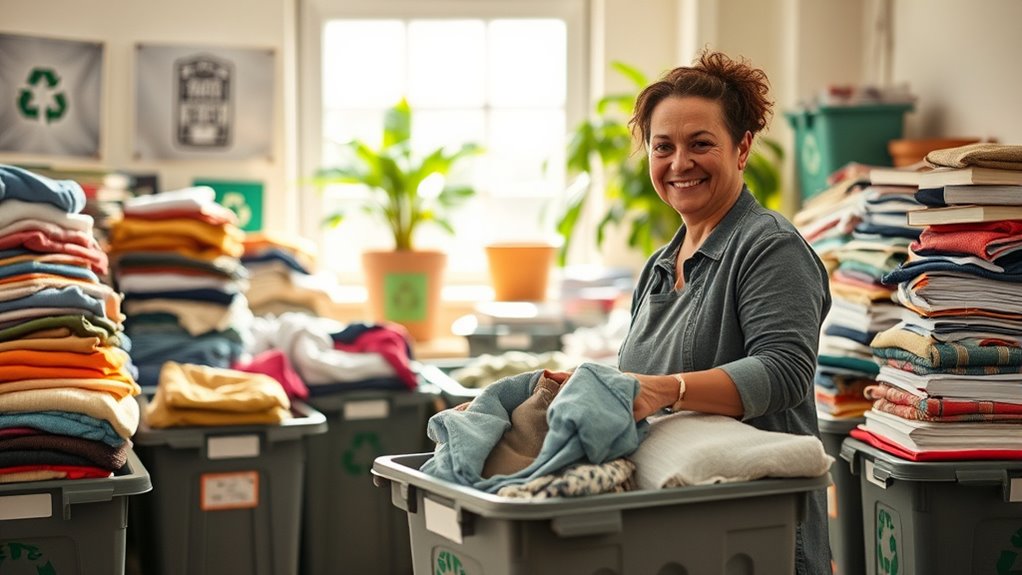

To declutter sustainably, start by donating items in good condition to local charities, shelters, or thrift stores, giving them a second life and supporting your community. Recycle electronics, plastics, and metals through your community programs to reduce waste and conserve resources. Repurpose items like jars and old T-shirts to minimize waste further. By making thoughtful decisions and using eco-friendly disposal methods, you can declutter responsibly and protect the environment—discover more ways to do so effectively.
Key Takeaways
- Evaluate items carefully to keep only valuable and functional possessions, reducing clutter and waste.
- Donate usable items to local charities and shelters to extend their life and support community needs.
- Recycle electronics, plastics, and metals through community programs to conserve resources and prevent landfill buildup.
- Repurpose household items like jars and old textiles to promote resourcefulness and minimize waste.
- Make eco-friendly disposal choices by combining donation, recycling, and reuse strategies for a sustainable decluttering process.
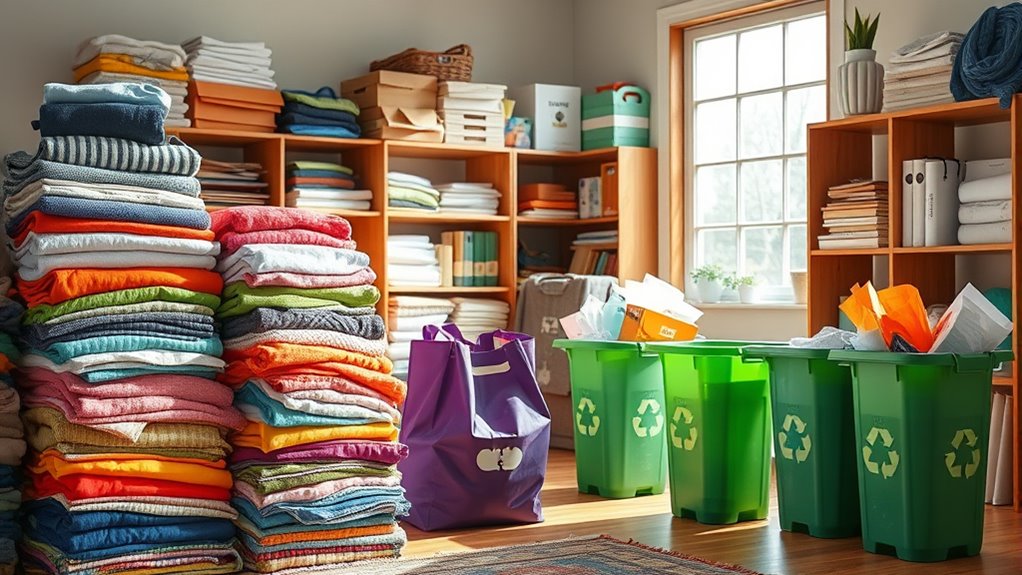
Decluttering your space doesn’t have to harm the environment. When you adopt a minimalist mindset, you focus on keeping only what truly adds value to your life, which naturally reduces waste. This approach encourages you to evaluate each item carefully before deciding whether to keep, donate, or recycle. By doing so, you not only create a more organized living area but also minimize your environmental impact. Instead of rushing to throw things away, you can practice eco-friendly disposal methods that support sustainability and reduce landfill waste.
The key is to view decluttering as an opportunity to make mindful choices. When you decide to donate items, you give them a second life, helping others in need and extending their usefulness. Local charities, shelters, and thrift stores are great places to pass along clothes, furniture, and household goods you no longer need. Not only does this process reduce clutter, but it also keeps items out of landfills, making a positive difference for the environment. Before donating, ensure that the items are clean and in good condition — this increases the chances of someone else benefiting from them and reduces the need for additional cleaning or repairs.
Recycling plays an equally important role in sustainable decluttering. For items that can’t be donated, seek out recycling options rather than just tossing them in the trash. Many communities offer recycling programs for electronics, batteries, plastics, and metals. Being aware of local facilities and guidelines allows you to dispose of these items responsibly. When recycling, be sure to follow proper procedures to prevent contamination, which can make recyclable materials unusable. This eco-friendly disposal method helps conserve resources and reduces the environmental footprint of your decluttering efforts. Additionally, understanding cookie categories can help you manage online privacy while researching recycling options.
To make your decluttering process more sustainable, consider repurposing items when possible. For example, glass jars can become storage containers, or old t-shirts can transform into cleaning rags. This approach aligns with a minimalist mindset by emphasizing simplicity and resourcefulness. It also minimizes waste and reduces the demand for new products, further supporting eco-friendly practices.
Ultimately, responsible decluttering isn’t just about tidiness; it’s about making conscious choices that respect the planet. By integrating eco-friendly disposal techniques, such as donating, recycling, and repurposing, you can clear your space while reducing your environmental footprint. This mindset fosters a sustainable lifestyle where every item has a purpose, and waste is minimized. With each thoughtful decision, you contribute to a healthier planet and a more organized, intentional home.

StorageWorks Wicker Basket, Baskets for Organizing, Storage Basket with Built-in Handles, Water Hyacinth Shelves (Medium 2-Pack, Natural Hyacinth)
Handwoven Craftsmanship: Handwoven by skilled artisans with tight, even braiding, each pantry basket offers a neat, elegant look...
As an affiliate, we earn on qualifying purchases.
Frequently Asked Questions
How Do I Determine if an Item Is Recyclable or Compostable?
To determine if an item is recyclable or compostable, look for recycling symbols on the packaging, which indicate if it’s accepted in your local recycling program. For compostability, check composting guidelines for organic waste like food scraps and biodegradable plastics. If you’re unsure, research the item online or contact your waste management provider. Always follow these indicators to make certain you’re recycling and composting responsibly.
What Are the Best Ways to Find Local Donation Centers?
To find local donation centers, start by exploring community involvement options like local charities, churches, or thrift stores. Check their donation eligibility requirements online or call ahead to confirm what items they accept. Use online directories such as DonationTown or GiveBackBox, and ask neighbors or friends for recommendations. This guarantees your items go to places that truly need them, making your decluttering both sustainable and impactful.
How Can I Prevent Clutter From Accumulating Again?
Think of clutter as a gentle reminder to stay mindful. To prevent it from creeping back, establish simple decluttering routines and invest in smart storage solutions. Regularly assess your belongings and ask if they truly add value to your life. By staying consistent and organized, you create a space that’s easy to maintain, making it less likely for clutter to reaccumulate and ensuring your home remains peaceful and clutter-free.
Are There Eco-Friendly Packing Materials for Donations?
Yes, you can use eco-friendly packaging for donations by selecting biodegradable wrapping materials like paper, plant-based plastics, or compostable bags. These options break down naturally, reducing environmental impact. When packing items, opt for recycled or reusable materials whenever possible. This way, you guarantee your donations are responsibly prepared, supporting sustainability and encouraging others to follow eco-conscious practices in their decluttering efforts.
How Do I Handle Unwanted Electronics Responsibly?
You should handle unwanted electronics through proper electronics recycling and e-waste disposal. Find certified e-waste recycling centers in your area that safely dismantle and recycle devices, preventing harmful materials from polluting the environment. Avoid throwing electronics in regular trash, as it can cause pollution. Many retailers also offer take-back programs, making it easier for you to dispose of electronics responsibly and support sustainable decluttering efforts.

Large 17"x16"x9" (Set of 3) Water Hyacinth Woven Storage Basket – Handmade Natural Wicker Baskets Organizer Bin with Handles for Closet, Shelves, Laundry & Living Room (Natural (3 Pack))
🌿 100% Natural Water Hyacinth Storage Baskets: Handwoven by skilled Vietnamese artisans using premium dried water hyacinth over...
As an affiliate, we earn on qualifying purchases.
Conclusion
By donating and recycling responsibly, you can reduce waste and support your community. Did you know that up to 80% of donated items are reused or recycled, preventing landfill overflows? Every small action counts, so take the time to declutter sustainably. Not only will you create a cleaner space, but you’ll also contribute to a healthier planet. Start today and make a meaningful difference—your efforts truly matter.

Panovox Hand Woven Baskets for Storage, 4Pcs Water-Resistant Wicker Baskets, Brown Wicker Storage Baskets for Shelves, Large Basket with Handle for Organizing, Clothes, Laundry, Blanket - Rectangular
Elevated Woven Look - Bring a warm, high-end touch to your home with a beautifully woven rattan-style design...
As an affiliate, we earn on qualifying purchases.
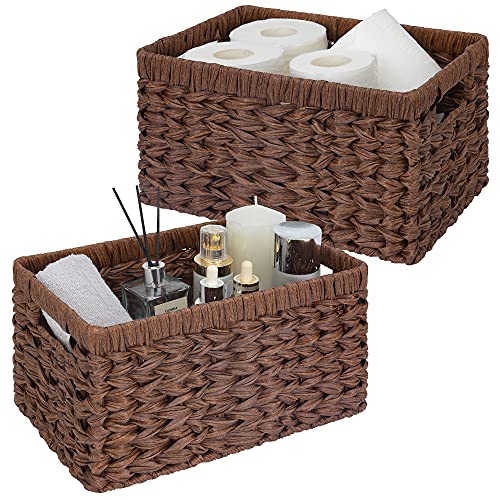
GRANNY SAYS Wicker Storage Baskets for Shelves, Wicker Baskets for Organizing, Waterproof Woven Basket for Pantry, Rectangle Basket for Shelf, Brown, 2-Pack
Spacious Capacity - The wicker storage baskets come in a set of 2, and each dimension is 13...
As an affiliate, we earn on qualifying purchases.