
To organize for aging in place, prioritize accessible storage solutions like pull-out shelves, open shelving, and clear labeled containers to keep essentials within easy reach. Incorporate adjustable cabinets and wall organizers to maximize space and reduce clutter. Use technology like voice assistants and smart locks for added safety. Keep emergency supplies in designated, accessible spots and make sure pathways remain clear. If you explore further, you’ll discover even more ways to create a safe, organized home tailored to your needs.
Key Takeaways
- Install adjustable shelves, pull-out drawers, and open shelving for easy, flexible access to essentials.
- Use clear, labeled containers to quickly identify items and reduce clutter.
- Incorporate wall and vertical storage solutions to maximize space and keep floors clear.
- Integrate smart technology like voice assistants and smart locks for enhanced safety and organization.
- Keep emergency supplies accessible in designated, easy-to-reach locations for quick response.

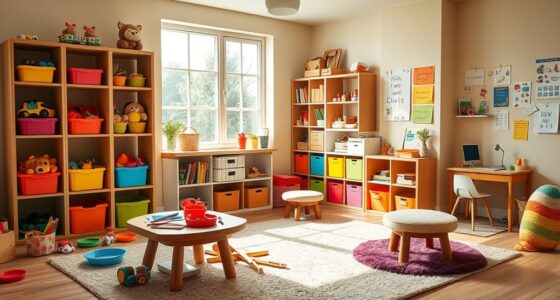
Aging in place allows you to remain comfortable and independent in your own home for as long as possible, but achieving this requires careful planning and organization. One key aspect is creating accessible storage solutions that keep your essentials within easy reach and reduce clutter. Well-organized storage not only simplifies daily routines but also enhances safety, especially when combined with smart technology and emergency preparedness measures. When your belongings are stored thoughtfully, you can quickly find what you need, whether it’s medication, important documents, or everyday items, minimizing frustration and risk. Utilizing wall organization systems can further optimize storage space and improve accessibility around your home.
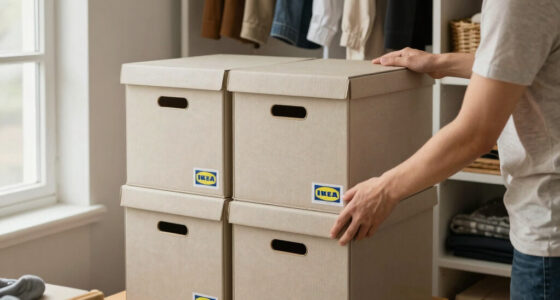
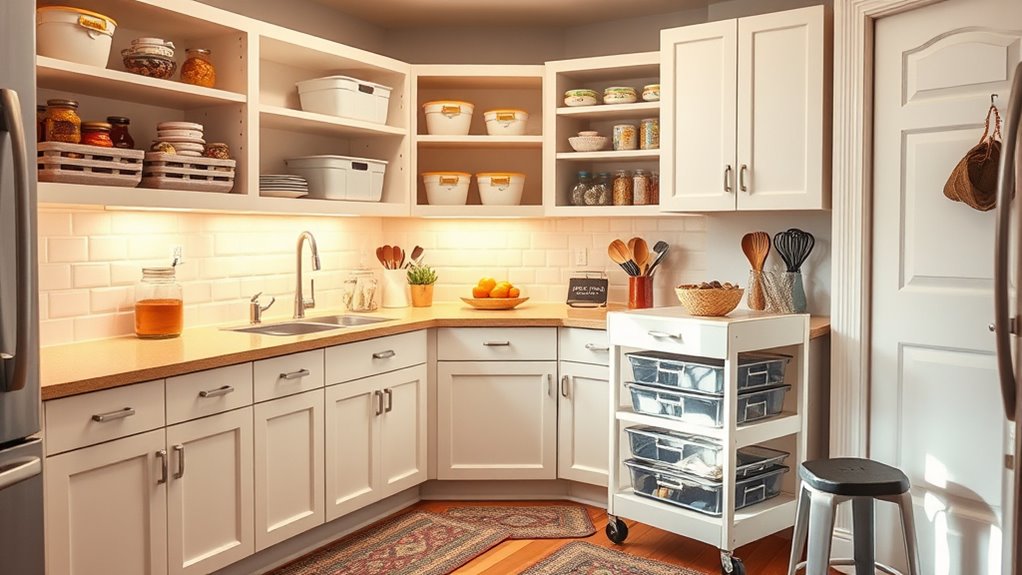
Start by evaluating your space to identify areas where storage can be optimized. Consider installing pull-out shelves, adjustable cabinets, or open shelving that allows you to access items without bending or stretching. Clear, labeled containers help you see what’s inside at a glance, avoiding the hassle of rummaging through clutter. Incorporate smart technology to further streamline access; for example, voice-activated assistants can remind you of medication schedules or provide directions to stored items. Smart locks on cabinets can restrict access to hazardous substances, adding an extra layer of safety. These innovations make it easier to maintain independence while ensuring your environment remains safe and organized.
Evaluate your space, use adjustable and pull-out storage, label containers, and incorporate smart tech for safer, more accessible organization.
Emergency preparedness should be integrated into your storage plan. Keep a designated emergency kit in an accessible spot, filled with essentials like water, non-perishable snacks, a flashlight, batteries, a first aid kit, and any necessary medications. Use accessible storage solutions to ensure this kit is easy to grab quickly, even if mobility becomes limited. Consider installing emergency alert systems that connect to your smartphone or a medical alert device, so you can summon help immediately if needed. Keeping important documents—such as identification, insurance papers, and medical information—in a waterproof, clearly labeled container nearby ensures they’re protected and easy to find during an emergency.
Organization also involves creating clear pathways around your home, free of obstacles, so you can move confidently and quickly in urgent situations. Use vertical storage options to maximize space and keep the floor clear. Incorporate technology that can alert you to potential hazards, like leaks or smoke, and ensure that access to such devices isn’t hindered by clutter. Regularly reviewing and updating your storage solutions keeps your environment safe and functional, accommodating changing needs as you age. By combining accessible storage, smart technology, and emergency preparedness, you make your home a safer, more manageable space—supporting your goal of aging comfortably and confidently in your own residence.

EUDELE Adhesive Shower Caddy, 5 Pack Rustproof Stainless Steel Bath Organizers With Large Capacity, No Drilling Shelves for Bathroom Storage & Home Decor
5 Hanging Shower Organizer Set for Sufficient Bathroom Storage Space:The bathroom organizer comes with 5 pieces for different...
As an affiliate, we earn on qualifying purchases.
Frequently Asked Questions
How Can I Maximize Small Storage Spaces Effectively?
To maximize small storage spaces, you should use stacking containers to efficiently utilize vertical space and keep items organized. Install wall-mounted shelves to free up surface areas and provide easy access to frequently used items. Combine these solutions by grouping similar items together, labeling containers, and adjusting shelf heights as needed. This approach helps you optimize every inch, making your space more functional and accessible for aging in place.
What Are the Best Materials for Accessible Storage Solutions?
Imagine you’re installing a grab-and-go cabinet in your kitchen; choosing durable plastics or corrosion-resistant metals guarantees longevity. These materials withstand daily wear and resist rust, making them ideal for accessible storage. Durable plastics are lightweight and easy to clean, while corrosion-resistant metals provide strength and durability. Both options enhance safety and accessibility, allowing you to easily reach and organize your essentials without concern for damage or degradation over time.
How Can I Prevent Falls Around Storage Areas?
To prevent falls around storage areas, you should use non-slip mats on floors where you access frequently, especially in kitchens and bathrooms. Make certain proper lighting is installed to illuminate these spaces clearly, reducing the risk of tripping over clutter or uneven surfaces. Keep walkways clear of obstacles, and secure any loose rugs or mats. Regularly check the condition of your flooring and lighting to maintain a safe environment.
Are There Eco-Friendly Storage Options for Aging-In-Place?
Imagine turning your home into a greener sanctuary—eco-friendly storage options like bamboo shelves and recycled plastic containers let you do just that. Bamboo is a sustainable, renewable resource that adds warmth and style, while recycled plastic diminishes waste and pollution. These choices not only support the environment but also guarantee your space remains accessible and safe for aging in place. Embrace eco-conscious storage to make a meaningful difference today.
How Do I Organize Medications Safely and Accessibly?
To organize medications safely and accessibly, use a pill organizer with labeled compartments for each day or time. Keep it in a consistent, easy-to-reach spot to promote medication safety. Consider installing a lockable cabinet for added security, especially if there are children or visitors. Regularly check expiration dates and review your medication routine with your healthcare provider to safeguard proper management and safety.

Veken Shower Caddy 6-Pack, Advanced Rustproof Design, No Drilling Adhesive Shelves, Rack with Soap Holder, Large Capacity Bathroom Organizers and Storage, Wall-Mounted Kitchen & Home Decor
Comprehensive Storage Solution: This 6-piece set includes small, medium, and large caddies with a soap dish and toothbrush...
As an affiliate, we earn on qualifying purchases.
Conclusion
By implementing accessible storage solutions, you can make aging in place safer and more comfortable. Did you know that 80% of seniors wish to stay in their homes as they age? With smart organization, you reduce fall risks and create a space that adapts to your needs. Start small, prioritize easy-to-reach storage, and enjoy the independence and peace of mind that come with a well-organized home tailored for aging gracefully.

Bathroom Counter Organizer and Storage, 7 Slots Detachable Toothbrush Holders for Bathrooms, Anti-Slip Electric Toothbrush and Toothpaste Holder Countertop Vanity Organizer Accessories for Adults Kids
Multi-Space & Large Storage: The Homtalker toothbrush holder features 7 thoughtfully designed compartments, providing ample space to organize...
As an affiliate, we earn on qualifying purchases.

X-cosrack 5 Tier Closet Hanging Organizer, Clothes Hanging Shelves with 4 Hanging Hooks 5 S Hooks, Wire Storage Basket Bins, for Clothing Sweaters Shoes Handbags Clutches Accessories Patent Design
Cabinet&Hanging Storage: Come with 4 sturdy large hanging hooks, you can use them to hang the basket on...
As an affiliate, we earn on qualifying purchases.