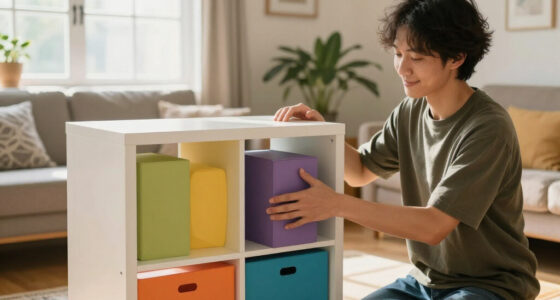
To label like a pro, start with high-quality, durable labels that resist wear and moisture. Apply them to clean surfaces and use bold, easy-to-read fonts with clear icons or color codes to quickly identify items. Stay consistent with your labeling style, organizing items logically—by category, size, or frequency. Regularly update and maintain labels to guarantee they stay legible and effective. Keep these tips in mind, and you’ll discover how effortless organized storage can become.

Get furniture and decor delivered free — and shop member deals
- Fast, free delivery on millions of items
- Access to Prime Big Deal Days deals on October 6–7
- Prime Video, Amazon Music and more included
Key Takeaways
- Use high-quality, durable labels with clear, bold fonts for quick recognition.
- Apply labels to clean, dry surfaces to ensure strong adhesion and longevity.
- Incorporate color-coding and icons to categorize items visually and simplify identification.
- Assign designated, labeled spots for each item to maintain an organized system.
- Regularly review and update labels to keep the system accurate and adaptable over time.

Labeling your products correctly is essential for clear communication and effective organization. When you take the time to label everything properly, you make it easier for yourself and others to find what’s needed quickly. This is especially true if you want to maintain an organized storage system that saves you time and reduces frustration. Using effective labeling techniques helps create a visual system that’s straightforward and durable, so your labels stay intact and legible over time.
Proper labeling ensures clear communication, quick access, and long-lasting organization in your storage system.
To start, consider the importance of organized storage. When everything has a designated spot, and that spot is clearly marked, you eliminate the chaos of rummaging through piles or digging through clutter. Think about the types of items you store—are they small supplies, tools, documents, or food? Tailor your labels to suit each category, ensuring they’re clear and easy to read. Use large, bold fonts for quick recognition, and include essential details like dates, contents, or categories. This prevents confusion and makes maintenance simple, encouraging you to keep your storage areas tidy.
Labeling techniques are key to creating a system that works for you. Use high-quality labels that resist wear and tear, especially if your storage involves handling, moisture, or temperature changes. Waterproof labels or laminated tags are excellent options for durability. When applying labels, make sure the surface is clean and dry so that they adhere properly. Consistency in font size, color, and placement helps build a cohesive look that’s easy on the eyes. For example, color-coded labels can quickly indicate different categories, such as red for urgent items or green for completed ones. Incorporate icons or symbols alongside text if you want to simplify identification further, especially for visual learners or children.
Another effective labeling technique involves creating a system that’s intuitive. For instance, you might organize labels alphabetically, by size, or by frequency of use. This makes it easier to locate items at a glance and helps you develop a routine. Label everything from storage bins and shelves to individual jars and files. When labels are consistent and clear, it reduces the chance of misplacing items or wasting time searching for them. Additionally, understanding organizational systems can enhance your overall efficiency and help you design a more effective labeling strategy.
Finally, remember to review and update your labels regularly. As your storage needs change, so should your labels. Keep your system flexible and adaptable, so it continues to serve you well. Properly labeled items and organized storage not only streamline your daily tasks but also give you peace of mind, knowing everything has its place and can be found effortlessly. With these labeling techniques, you turn a simple task into a powerful organizational tool that keeps your space neat, efficient, and stress-free.
Frequently Asked Questions
What Are the Best Labeling Tools for Delicate or Fragile Items?
When labeling delicate or fragile items, you should prioritize gentle labeling adhesives like removable or low-tack options to avoid damage. Use label material choices such as waterproof or tear-resistant paper, or even plastic labels, to withstand handling. These tools guarantee your labels stay secure without harming fragile surfaces, making your labeling process safer and more effective. Always test a small area first to avoid any potential damage.
How Can I Prevent Labels From Peeling Over Time?
To prevent labels from peeling over time, focus on improving label durability and adhesive strength. You can guarantee better adhesion by cleaning surfaces thoroughly before applying labels and choosing labels with strong, waterproof adhesives. Using a clear sealant or lamination over the label adds an extra layer of protection, enhancing durability. Additionally, avoid exposing labels to excessive moisture, heat, or sunlight, which can weaken the adhesive and cause peeling.
Which Labels Are Waterproof and Suitable for Outdoor Use?
You need weatherproof labels made from durable outdoor label materials to withstand the elements. Look for labels with waterproof coatings or those specifically designed for outdoor use, such as vinyl or laminated options. These labels resist moisture, UV rays, and peeling, ensuring long-lasting identification. By choosing the right weatherproof labels, you’ll keep your outdoor items clearly labeled and organized, even in harsh weather conditions.
How Do I Create Color-Coded Labeling Systems?
Coincidences often reveal hidden patterns, just like color-coded labeling systems do in organization. To create effective color coding strategies, start by choosing an organizational color scheme that aligns with your needs. Assign specific colors to categories, items, or priorities, and use consistent labels across your space. This visual system helps you quickly identify contents, making your storage both efficient and visually appealing while reducing search time.
What Are Some Eco-Friendly Labeling Options?
When choosing eco-friendly labeling options, you can opt for biodegradable labels that break down naturally over time, reducing environmental impact. Recycled label materials are also a great choice, as they use post-consumer waste and promote sustainability. These options help you maintain an organized space while being mindful of the planet. By selecting biodegradable labels or recycled materials, you support eco-conscious practices without sacrificing functionality or style.
Conclusion
So go ahead, label everything—your socks, your snacks, even that mysterious drawer. Because nothing says “organized” like hunting for your keys in a sea of labeled chaos. After all, if you’re going to spend hours searching, you might as well enjoy the thrill of the hunt. Remember, perfection isn’t the goal; it’s the illusion of control. Happy labeling, and may your clutter never outsmart your labels!
Halloween Picks
halloween
As an affiliate, we earn on qualifying purchases.