To organize your kid’s space effectively, use functional storage solutions like low shelves, labeled bins, and baskets at their height to encourage independence. Keep the play and study areas separate to minimize clutter and create dedicated zones for learning and fun. Incorporate vertical storage and multi-purpose furniture to maximize space. Regularly reassess and adjust your setup to keep the environment inviting and balanced. Continue exploring for more tips to create a harmonious, organized room that grows with your child.
Key Takeaways
- Use accessible bins, baskets, and shelves at child’s height to encourage independent cleanup.
- Designate separate zones for play and study to prevent clutter and promote focus.
- Incorporate vertical storage like wall-mounted shelves to maximize space efficiency.
- Label storage containers with pictures or words to help children identify and organize their belongings.
- Regularly reassess and adjust storage solutions to maintain an organized, inviting environment.
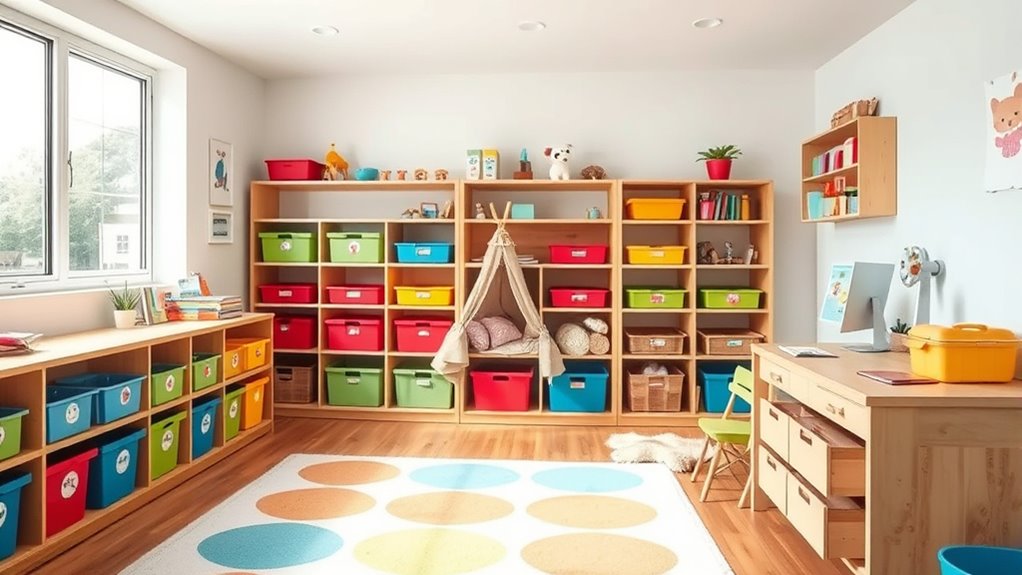
Creating an organized kids’ space starts with understanding your child’s needs and habits. When you know how your child interacts with their environment, you can design a space that promotes both play and learning without chaos. One of the first steps is establishing effective toy storage. Kids tend to accumulate a lot of toys, and without proper storage solutions, their room can quickly become cluttered. Incorporate a variety of storage options like bins, baskets, and shelves that are accessible at their height. This encourages your child to put toys away independently, fostering responsibility and keeping the room tidy. Labeling bins with pictures or words helps your child identify where everything belongs, making tidying up easier and more fun.
Start with understanding your child’s habits to create a tidy, functional play and study space.
In addition to toy storage, creating dedicated study zones is essential for fostering focus and productivity. Designate a specific area in the room where your child can do homework, read, or engage in creative activities. Keep this space organized with a desk or table that’s the right height for their comfort, and supply it with necessary materials like pencils, paper, and art supplies stored neatly in drawers or organizers. Having a designated study zone helps your child associate that space with focus and learning, making it easier to settle down when it’s time to work. Keep the area clutter-free by regularly sorting through supplies and discarding or donating items they no longer need or use. This helps maintain a calm environment conducive to concentration.
Balancing toy storage and study zones requires strategic planning. Place toy storage units in areas that don’t interfere with the study zone, preferably near the play corner or closet, so that toys are easily accessible but not cluttering the workspace. Conversely, the study zone should be free of distractions, with only essential supplies within reach. Use vertical storage options to save space and keep the room feeling open. For example, wall-mounted shelves can hold books and decorative items, giving your child a sense of ownership over their space. Additionally, consider incorporating multi-purpose furniture, like a bed with drawers underneath or a desk with built-in shelves, to maximize storage without sacrificing floor space. Utilizing vertical storage solutions can further optimize space and organization.
Ultimately, organizing your child’s space involves creating a harmonious environment where toys and study areas coexist without chaos. By implementing smart toy storage and dedicated study zones, you help your child develop good habits, stay focused, and enjoy a room that feels inviting and functional. Regularly reassess and adjust the organization as your child grows and their needs change, ensuring the space remains a positive place for both play and learning.
Frequently Asked Questions
How Can I Make Storage Safe for Active Kids?
To make storage safe for active kids, follow child proofing tips and storage safety guidelines. Use sturdy, shatterproof containers and avoid sharp edges. Secure heavy shelves to the wall and keep cords out of reach. Choose low, accessible storage for toys and supplies, and use safety locks on cabinets. Regularly check that everything remains secure and safe, ensuring your kids can play and study without risks.
What Are Eco-Friendly Storage Options for Children’s Spaces?
Eco-friendly options flourish for your child’s space, focusing on recycled materials and biodegradable containers. You can choose colorful, creative storage made from recycled plastics, cardboard, or bamboo, which are safe and sustainable. Biodegradable containers break down naturally, reducing waste and environmental impact. By selecting these eco-conscious choices, you create a safe, sustainable space that promotes environmental awareness and keeps your child’s play and study areas both organized and earth-friendly.
How to Involve Kids in Organizing Their Spaces?
You can involve kids in organizing their spaces by making it fun and part of your organizing routines. Let them choose storage bins or labels, and give them specific tasks like sorting toys or books. Encourage their kids’ involvement by praising their efforts and making the process a team activity. This not only teaches responsibility but also helps them feel ownership over their space, making organization easier and more enjoyable.
What Are Space-Saving Solutions for Small Rooms?
Oh, surely you’ve got endless space to spread out? Think again. In tiny rooms, get creative with creative shelving that stacks vertically, freeing up precious floor space. Multi-purpose furniture becomes your best friend—sofa beds, storage ottomans, fold-away desks—allowing you to maximize every inch. Remember, in small rooms, clever solutions aren’t optional, they’re essential, turning chaos into a surprisingly livable sanctuary.
How Often Should I Reorganize Kids’ Storage Areas?
You should reorganize your kids’ storage areas every few months to maintain organization and efficiency. Regular storage maintenance prevents clutter from building up and keeps organizational routines effective. Set a reminder to assess what items are outgrown or no longer used, and update storage solutions accordingly. Consistent check-ins help guarantee your kids’ spaces stay functional, tidy, and easy to navigate, making daily routines smoother for everyone.
Conclusion
Think of your kids’ space as a garden you’re tending. With thoughtful storage as your watering can and tidy shelves as your sunshine, you help their world bloom beautifully. When everything has a place, play and study grow side by side like vibrant flowers and sturdy trees. Keep nurturing this space, and watch your child’s creativity and focus flourish, turning chaos into a well-tended garden where they can thrive every day.