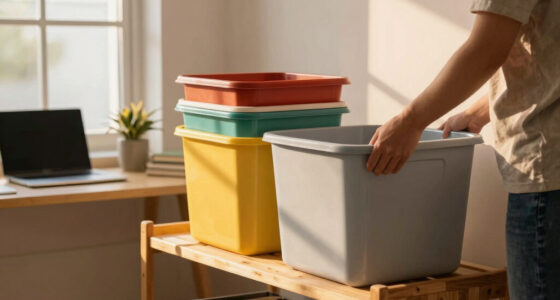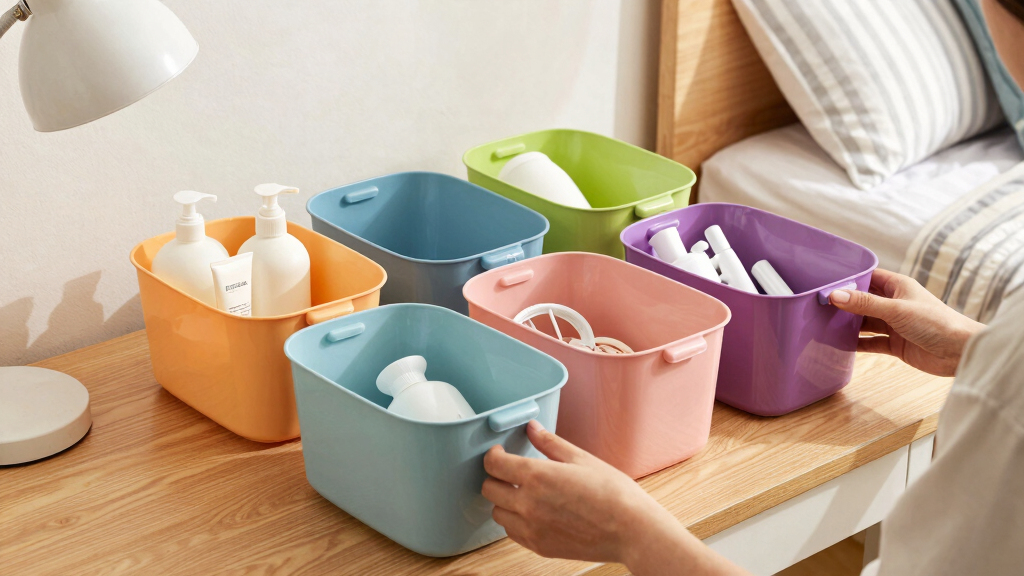
This guide shows students how to choose and organize dorm room storage bins effectively. It covers selecting the right bins, arranging them for easy access, and maintaining order. Suitable for beginners, this process takes about 30 to 60 minutes to complete. By following these steps, you will create a clutter-free space that makes everyday life easier.
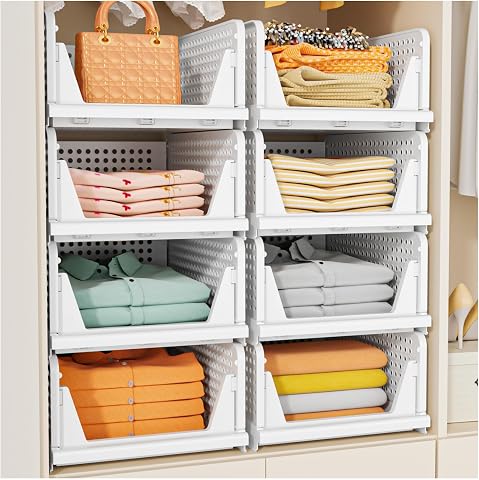
SNSLXH 5 Pack Stackable Closet Storage Baskets, Foldable & Space-Saving Organizer for Bathroom, Kitchen, Laundry, Wardrobe, White
- ✔ Number of Packs: 5
- ✔ Material: High-grade waterproof PP plastic
- ✔ Dimensions: 16.73 x 13.11 x 7.2 inches

Amazon Basics Collapsible Fabric Storage Cubes Organizer with Handles, 6-Pack, Beige, 10.5" x 10.5" x 11"
- ✔ Quantity: 6
- ✔ Color: Beige
- ✔ Dimensions: 10.5" x 10.5" x 11"

Budding Joy 90L Under Bed Storage Containers, Foldable Closet Organizers and Storage Bins, Grey
- ✔ Material: Non-woven fabric + PVC
- ✔ Capacity: 90 liters (24 gallons)
- ✔ Dimensions: 39 x 20 x 7 inches
Difficulty: Beginner | Time: 30-60 minutes
What You’ll Need
Tools & Materials:
- Measuring tape (optional)
- Scissors (if trimming bins)
- Label maker or marker (optional)
Knowledge:
- Basic understanding of your room layout and storage needs
Measure your available space before purchasing bins to ensure they fit comfortably. Consider your daily items to decide what to store in each bin. Set aside a clean, flat workspace for organizing.

SNSLXH 5 Pack Stackable Closet Storage Basket, Multifunctional & Foldable Closet Organizer for Bathroom Kitchen Laundry Room Wardrobe Storage, Space-Saving Clothes Storage Drawer Organizer, White
【Versatile & Stylish】The folding closet organizers are a comprehensive storage and categorization solution that is perfect for organizing...
As an affiliate, we earn on qualifying purchases.
SNSLXH 5 Pack Stackable Closet Storage Baskets, Foldable & Space-Saving Organizer for Bathroom, Kitchen, Laundry, Wardrobe, White
This set of five stackable and foldable baskets stands out for their versatility and space efficiency. Made from durable waterproof plastic, they can be easily cleaned and stacked in multiple layers, making them ideal for maximizing limited dorm space. Compared with fabric options, these baskets are less prone to sagging but can’t slide out fully like a drawer, which limits their use in some applications. Their style fits seamlessly into most decor schemes, and their waterproof quality ensures longevity. However, their inability to fully slide out makes them less ideal as traditional drawers for frequent access.
Pros:
- Versatile and stylish design fits into any decor
- Space-saving stackable and foldable for easy storage
- Durable, waterproof, and easy to clean
Cons:
- Cannot slide out completely like a drawer
- Requires leaning against a wall for full drawer-like use
Best for: Students who want a durable, versatile storage option that can be used across different areas of their dorm and appreciate space-saving stacking.
Not ideal for: Those needing full drawer functionality or heavier-duty storage needs.
Bottom line: A highly versatile, space-efficient choice perfect for lightweight storage needs in dorms.
“A highly versatile, space-efficient choice perfect for lightweight storage needs in dorms.”

Amazon Basics Collapsible Fabric Storage Cubes Organizer with Handles, Sturdy Storage Bins for Organization, 10.5" x 10.5" x 11", Beige, 6-Pack
INCLUDES SIX CUBES: Keep your home tidy and organized with this set of six cloth storage cubes
As an affiliate, we earn on qualifying purchases.
Amazon Basics Collapsible Fabric Storage Cubes Organizer with Handles, 6-Pack, Beige, 10.5" x 10.5" x 11"
These fabric storage cubes excel in offering lightweight, portable organization. Their handles make them easy to carry, and their collapsible nature helps conserve space when not in use. Compared to the plastic baskets, these are softer and more flexible, making them ideal for items like clothing or toys that don’t require rigid support. However, their support limit of 5 lbs per cube means they’re unsuitable for heavier items, and they require compatible storage units to function as intended. They’re best for users who prioritize ease of transport and quick setup over heavy-duty storage.
Pros:
- Set of six versatile storage cubes
- Lightweight and durable fabric construction
- Handles for easy portability
- Collapsible for convenient storage
Cons:
- Supports only up to 5 lbs per cube
- Not designed for heavy-duty storage
- Requires compatible organizer for full functionality
Best for: Students seeking lightweight, flexible storage that can be moved around easily within their dorms.
Not ideal for: Heavy or bulky items that need more rigid support, or users without compatible storage units.
Bottom line: An excellent lightweight option for portable, flexible dorm storage, especially for clothing and toys.
“An excellent lightweight option for portable, flexible dorm storage, especially for clothing and toys.”

Budding Joy 90L Under Bed Storage Containers, Closet Organizers and Storage Bins, Foldable Underbed Storage Bags for Linen Sheets, Blanket, Clothing, Comforter, Sweaters, Pillows, Wrapping Paper, Grey
Premium Material : The under bed storage containers are made from high-quality, odorless, three-ply composite non-woven thick fabric,...
As an affiliate, we earn on qualifying purchases.
Budding Joy 90L Under Bed Storage Containers, Foldable Closet Organizers and Storage Bins, Grey
This large capacity under-bed container is perfect for maximizing space beneath your dorm bed. Made from breathable non-woven fabric with a clear PVC window, it allows for easy identification of contents while keeping everything odorless and fresh. Compared to smaller baskets or cubes, this container handles bulky items like linens, seasonal clothes, or toys with ease. Its reinforced handles make moving it simple, but the lack of a rigid structure means it might sag over time if heavily loaded. Its design is best suited for low-clearance spaces, like under beds, rather than open shelving or closets.
Pros:
- Large 90L capacity suitable for various storage needs
- Breathable, odorless material keeps items fresh
- Clear window for easy content identification
- Reinforced handles for durability and transport
Cons:
- Collapsible design may reduce shape over time
- No rigid support structure, potential for sagging
- Limited to under bed or low-clearance spaces
Best for: Students with limited closet space needing large, long-term storage for seasonal or bulky items.
Not ideal for: Those needing rigid support or frequent access to stored items, as the fabric may sag over time.
Bottom line: Ideal for large, long-term storage of bulky items where rigid support isn’t critical.
“Ideal for large, long-term storage of bulky items where rigid support isn’t critical.”
As an Amazon Associate we earn from qualifying purchases.
Before You Start
Clear the area where you’ll be working to avoid clutter. Have your storage bins, supplies, and measurement tools ready. Decide which items you’ll store and how often you’ll access each to plan your organization layout.
Step-by-Step Instructions
Step 1: Assess your storage needs
Identify the categories of items you want to store, such as clothes, toiletries, school supplies, or snacks. Write down or mentally note the types and quantities.
Tip: Group similar items together to determine the size and number of bins needed for each category.
Check: You have a clear list of item categories and approximate quantities, guiding your bin selection.
Step 2: Measure your available space
Use a measuring tape to determine the dimensions of shelves, under-bed space, closet areas, and desk surfaces where bins will go.
Tip: Record measurements to compare with bin sizes before purchasing.
Check: You have accurate measurements that help you choose appropriately sized bins.
Step 3: Select suitable storage bins
Choose bins based on your item categories and space measurements. Opt for clear plastic bins for visibility or opaque ones for privacy. Select sizes that fit your space without overcrowding.
Tip: Avoid overly large bins that can be difficult to carry or small bins that limit storage capacity.
Check: You have a set of bins that match your needs and fit your available space.
Step 4: Clean and prepare bins
Wash plastic bins with soap and water if new or dirty. Dry thoroughly to prevent mold or odors.
Tip: Label bins with a marker or label maker for easy identification later.
Check: Bins are clean, dry, and labeled (if applicable), ready for use.
Step 5: Sort items into categories
Gather your belongings and group them by category. Discard or donate items you no longer need.
Tip: Keep frequently used items accessible and store seasonal or rarely used items in less accessible bins.
Check: Items are organized into groups, making it easier to assign each to a bin.
Step 6: Fill the bins
Place sorted items into appropriate bins, packing efficiently to maximize space. Use smaller containers or dividers inside bins for small items.
Tip: Avoid overfilling to make bins easy to carry and access.
Check: Bins are filled with no overstuffing, and items are visible or labeled clearly.
Step 7: Arrange bins in your room
Place bins in designated areas: under the bed, on shelves, in closets, or on desks as planned. Ensure heavy bins are on lower shelves for safety.
Tip: Maintain clear pathways and avoid blocking vents or windows.
Check: Bins are organized neatly, accessible, and space-efficient.
Step 8: Label and maintain your organization
Label each bin with its contents for quick retrieval. Regularly check and reorganize to keep your space tidy.
Tip: Use durable labels and update them as your storage needs change.
Check: All bins are labeled, and your room remains organized over time.
Common Mistakes to Avoid
- Using bins that are too small or too large for the items. — Measure your items and space carefully before purchasing bins to ensure a proper fit.
- Overloading bins, making them difficult to carry or close. — Fill bins only to a manageable level, leaving space for handles or lids.
- Not labeling bins, causing confusion about contents. — Label each bin clearly during setup to identify contents instantly.
- Placing heavy bins on high shelves. — Store heavier bins on lower shelves or on the floor for safety.
Troubleshooting
Problem: Bins don’t fit in designated spaces.
Solution: Select smaller bins or rearrange furniture to accommodate your storage containers.
Problem: Items fall out or are hard to access.
Solution: Use dividers or smaller containers inside bins, and ensure bins are not overfilled.
Problem: Room still feels cluttered after organizing.
Solution: Reassess your storage plan; consider additional bins or reassign categories to optimize space.
What Success Looks Like
All items are stored in appropriately sized, labeled bins, which are neatly arranged in designated areas. The room feels organized, accessible, and clutter-free. You can quickly find items and maintain the system with minimal effort.
Next Steps
Regularly revisit your organization system to remove items no longer needed. Re-label bins if contents change, and periodically tidy to prevent clutter buildup. Consider adding decorative touches or labels to make the system more appealing and easier to maintain.
Frequently Asked Questions
How many bins do I need for my dorm room?
Estimate based on your categories and available space. Typically, 4-8 bins suffice for most dorm rooms, but adjust size and quantity according to your storage needs.
What size of bins is best for under-bed storage?
Use low-profile, long, and flat bins that fit under your bed frame. Measure your under-bed clearance to select appropriately sized containers.
Are clear bins better than opaque ones?
Clear bins allow quick identification of contents, saving time. Opaque bins provide privacy and a uniform look but require labels.
How can I prevent bins from tipping over?
Distribute weight evenly, stack bins securely, and place heavier bins on lower shelves or the floor.