
Difficulty: Beginner | Time: 30-60 minutes

Get furniture and decor delivered free with Prime
- Fast, free delivery on millions of items
- Prime Video, Amazon Music and more included
- Member-only deals all year

Amazon Basics Collapsible Fabric Storage Cubes Organizer with Handles, 6-Pack
- ✔ Dimensions: 10.5" x 10.5" x 11"
- ✔ Color: Beige
- ✔ Number of Pieces: 6

Budding Joy 90L Under Bed Storage Containers, Foldable Closet Organizers and Storage Bins, Grey
- ✔ Material: Non-woven fabric + PVC
- ✔ Capacity: 90 liters / 24 gallons
- ✔ Dimensions: 39 x 20 x 7 inches

YFXCVSL 4-Tier Plastic Storage Bins with Lid, 23QT, Stackable with Wheels
- ✔ Capacity: 23 quarts
- ✔ Number of Items: 4
- ✔ Item Dimensions: 32.87"L x 15.35"W x 11"H
What You’ll Need
Tools & Materials:
- Measuring tape
- Scissors or box cutter (if needed for opening or resizing bins)
Knowledge:
- Basic understanding of your room layout
- Ability to categorize belongings
Amazon Basics Collapsible Fabric Storage Cubes Organizer with Handles, 6-Pack
<p>This set of six <strong>lightweight fabric cubes</strong> provides flexible organization options, especially suited for smaller items or as part of a larger storage system. Compared with the other options, these stand out for their <strong>collapsibility</strong> and ease of transport, thanks to sturdy handles. However, they are limited to supporting only <strong>5 lbs per cube</strong>, which makes them unsuitable for heavier items. These cubes work best in situations where versatility and ease of access are priorities, but they require compatible cube organizers for maximum utility.</p>
Pros:
- Set of six offers great value and organization options
- Lightweight yet durable fabric construction
- Handles allow for easy portability
- Collapsible design saves space when not in use
Cons:
- Supports only up to 5 lbs per cube, limiting heavy-duty use
- Requires compatible cube frameworks for full system setup
- Not suitable for storing large or heavy items
Best for: Students needing flexible, lightweight bins for clothes, books, or accessories that can be moved easily.
Not ideal for: Heavy or bulky items, or for those seeking rigid, shape-holding storage solutions.
Bottom line: A flexible, lightweight option ideal for everyday organization but limited in load capacity.
“A flexible, lightweight option ideal for everyday organization but limited in load capacity.”
Budding Joy 90L Under Bed Storage Containers, Foldable Closet Organizers and Storage Bins, Grey
<p>This <strong>90-liter large-capacity under bed storage</strong> container is ideal for bulky seasonal items or linens. Its <strong>breathable non-woven fabric</strong> helps prevent odors, and the clear PVC window makes content identification quick. Compared to fabric cubes, it offers more space but less portability, as its size makes it less suitable for frequent moving. The reinforced handles add durability, but its collapsible design may lead to shape loss over time, especially when heavily loaded. It’s best suited for long-term storage rather than daily access.</p>
Pros:
- Massive 90L capacity for various storage needs
- Breathable, odorless material maintains freshness
- Clear window simplifies content recognition
- Reinforced handles enhance durability
Cons:
- Shape may reduce over time with frequent collapsing
- Less sturdy when fully loaded due to soft structure
- Size limits portability and frequent repositioning
Best for: Students with limited closet space who need to store bulky or seasonal items out of sight.
Not ideal for: Everyday use or frequent access, due to its size and shape constraints.
Bottom line: A spacious, breathable storage solution perfect for seasonal or bulky items but less practical for daily use.
“A spacious, breathable storage solution perfect for seasonal or bulky items but less practical for daily use.”
YFXCVSL 4-Tier Plastic Storage Bins with Lid, 23QT, Stackable with Wheels
<p>This set of four <strong>stackable, wheeled plastic bins</strong> is designed for versatile storage and mobility. The <strong>front doors and top lid</strong> allow quick access without unstacking, while the <strong>lockable wheels</strong> make repositioning effortless. Compared to fabric options, these bins are more rigid and durable, suitable for heavier or more fragile items. However, their aesthetic may not suit all decor styles, and assembly instructions can be minimal. These bins are especially useful in multi-purpose spaces that require frequent access and reorganization.</p>
Pros:
- Stackable and space-efficient design
- Wheels with locking feature for easy mobility
- Front access doors for quick retrieval
- Includes lids for dust and dirt protection
Cons:
- Assembly instructions are limited
- Wheels may not support very heavy loads
- Design may not blend with all decor styles
Best for: Students needing mobile, accessible storage for clothes, crafts, or household items in shared or flexible spaces.
Not ideal for: Aesthetic-focused setups or where a more uniform look is desired, due to their utilitarian appearance.
Bottom line: A practical, mobile storage option that maximizes space and access, ideal for dynamic dorm environments.
“A practical, mobile storage option that maximizes space and access, ideal for dynamic dorm environments.”
As an Amazon Associate we earn from qualifying purchases.
Before You Start
Review your room layout and list the items you need to store. Measure shelves, under-bed space, closet areas, and desk surfaces to determine bin sizes. Gather all supplies before beginning to save time.Step-by-Step Instructions
Step 1: Assess your storage needs
List the categories of items you need to store, such as clothes, school supplies, snacks, or toiletries. Measure available space in your room for each storage area.Tip: Group similar items to determine the size and type of bins needed for each category.
Check: You have a clear list of items and measurements for each storage zone.
Step 2: Select appropriate bins
Choose bins that fit your measured spaces, considering stackability and accessibility. Opt for clear bins if visibility is important, or opaque for privacy.Tip: Use uniform containers for a tidy look, or varied sizes based on specific needs.
Check: Bins fit comfortably in designated areas, with lids if needed to contain dust or secure contents.
Step 3: Clean and prep the storage areas
Wipe down shelves, under-bed areas, or closet sections where bins will go. Ensure these areas are dry and free of dust or debris.Tip: Use a mild cleaner for stubborn spots, and let surfaces dry completely before placing bins.
Check: Storage spaces are clean and ready for organizing.
Step 4: Sort items into categories
Gather belongings and group similar items together. Decide what goes into each bin based on categories and frequency of use.Tip: Discard or donate items you no longer need to reduce clutter.
Check: Items are grouped logically and ready to be packed into bins.
Step 5: Pack items into bins
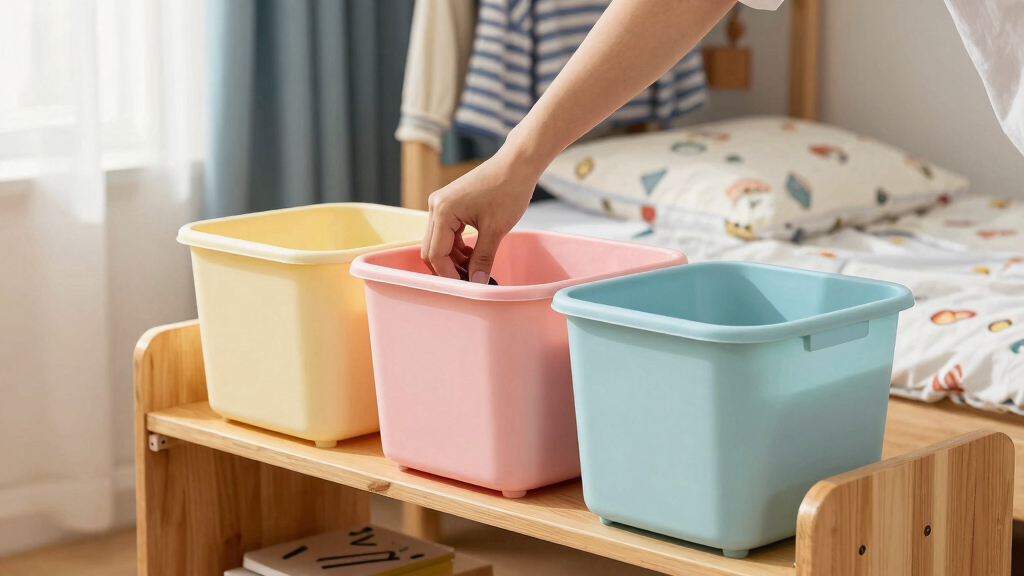
Place sorted items into their respective bins, filling them efficiently without overstuffing. Use smaller bins for tiny items like cords or toiletries.Tip: Label each bin with a masking or duct tape label for easy identification.
Check: Bins are filled with items securely and labeled clearly.
Step 6: Arrange bins in designated areas
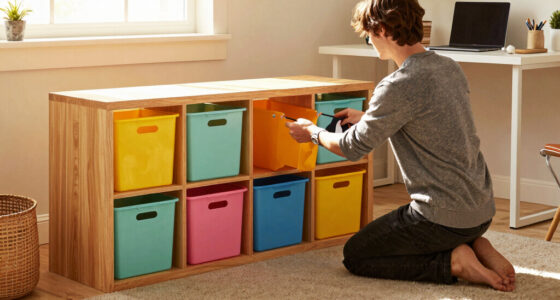
Place bins in their assigned spaces, stacking or lining them up neatly. Ensure frequently used items are easily accessible.Tip: Place heavier bins on the bottom or in less accessible spots; keep everyday items at eye level or near your desk.
Check: Bins are organized and accessible, with a clear visual overview.
Common Mistakes to Avoid
- Choosing bins that are too small or too large for the space. — Measure carefully and select bins that fit the dimensions of your storage areas.
- Overfilling bins, causing difficulty in closing or lifting. — Fill bins to capacity without overstuffing, and leave some space for easy handling.
- Not labeling bins, making it hard to find items. — Label each bin immediately after packing for quick retrieval.
- Ignoring weight distribution when stacking bins. — Place heavier bins at the bottom to avoid tipping or damage.
Troubleshooting
Problem: Bins do not fit in designated space.
Solution: Re-measure the space and select smaller or more flexible containers, or reorganize the space to accommodate larger bins.
Problem: Items fall out or are hard to access.
Solution: Use bins with secure lids, or add dividers inside large bins for better organization.
Problem: Labeled bins become unreadable over time.
Solution: Use waterproof or adhesive labels, and replace or rewrite labels as needed.