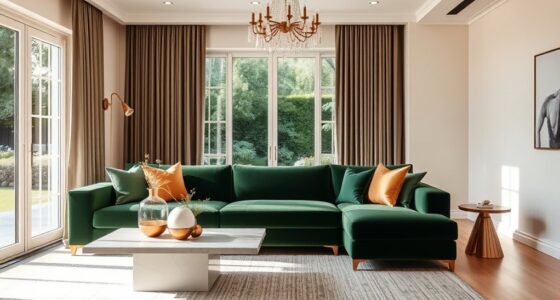
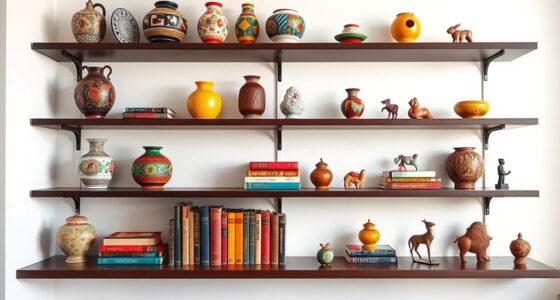
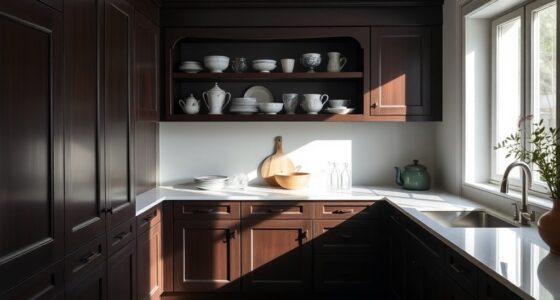
In 2025, embracing traditional and timeless design means creating spaces rooted in craftsmanship, authentic details, and harmony. You’ll blend vintage charm with modern practicality, using quality materials like rich woods, textured fabrics, and natural stone. Thoughtful lighting highlights moldings and artisanal touches, while balanced furniture keeps the space inviting. This approach guarantees your interiors remain beautiful, meaningful, and enduring. Continue exploring to discover how to incorporate these elements seamlessly into your home.
Key Takeaways
- Prioritize classic furniture and authentic craftsmanship to create spaces that evoke history and stability.
- Integrate vintage details like moldings, antique fixtures, and artisanal techniques for added charm.
- Ensure seamless architectural harmony through cohesive materials, lines, and design elements.
- Balance traditional and modern touches for timeless interiors that remain functional and stylish.
- Use strategic lighting and high-quality materials to highlight craftsmanship and enhance a warm, inviting atmosphere.

Despite the ever-changing trends in interior design, traditional and timeless styles continue to hold a prominent place in 2025. You’re drawn to spaces that evoke a sense of history and stability, where every detail feels intentional and rooted in craftsmanship. This approach isn’t about resisting change but rather embracing the enduring appeal of design elements that have stood the test of time. When you focus on architectural harmony, you create environments where each piece, each line, and each material work together seamlessly, fostering a cohesive and balanced atmosphere. You understand that harmony isn’t just about aesthetics; it’s about ensuring every element enhances the overall flow of the space, making it inviting and functional. To achieve this, you value vintage craftsmanship—those authentic details and artisanal techniques that give furniture, fixtures, and finishes a unique character. Vintage craftsmanship offers more than just visual charm; it provides a tactile connection to the past, adding depth and authenticity to your interiors. You might incorporate handcrafted woodwork, intricate moldings, or antique fixtures, knowing these details elevate the space with a sense of history and sophistication. The beauty of traditional design lies in its flexibility—you can blend vintage pieces with modern elements, creating a timeless look that feels fresh yet familiar. It’s about striking a balance: selecting furniture with classic lines that withstand changing trends, while adding contemporary touches for contrast and practicality. You often find yourself appreciating the subtle richness of materials like rich woods, textured fabrics, and natural stone, which age gracefully and deepen in character over time. These choices reinforce your desire for a space that’s not only beautiful but also meaningful. You also recognize that lighting plays a pivotal role in highlighting architectural harmony and vintage craftsmanship. Thoughtfully placed sconces, chandeliers, or table lamps can accentuate intricate moldings or vintage details, making them stand out and adding warmth to the room. Additionally, maintaining the integrity of drivetrain components such as the gears and chain ensures your bike remains reliable and performs well over time. When you prioritize traditional design, you’re creating more than just a visually appealing environment; you’re cultivating a sanctuary where history, craftsmanship, and harmony coexist. This approach allows you to craft spaces that feel both personal and timeless, resisting fleeting trends and instead celebrating enduring styles. In 2025, embracing traditional and timeless design means investing in quality, appreciating craftsmanship, and understanding how architectural harmony can transform a house into a warm, inviting home that truly endures.
Frequently Asked Questions
How Can Traditional Design Be Adapted for Modern Living Spaces?
You can adapt traditional design for modern living by incorporating vintage accents that add character and charm. Mix patterns like florals with geometric prints to create visual interest while maintaining a timeless feel. Use classic furniture pieces with sleek, contemporary touches to blend old and new seamlessly. This approach keeps your space feeling warm and inviting, yet fresh and relevant, perfect for today’s lifestyle.
What Are the Key Elements That Define Timeless Interior Design?
You might think timeless design is all about chasing fleeting trends, but it’s actually about embracing classic elements like antique furniture and floral patterns that never truly go out of style. The key is balance—pairing these pieces with modern touches creates a space that feels both elegant and current. Remember, it’s the thoughtful mix of tradition and subtle innovation that defines truly timeless interior design.
How Do Sustainable Materials Influence Traditional Design Choices?
Sustainable materials like eco-friendly furniture and recycled textiles substantially influence traditional design choices by adding authenticity and environmental responsibility. You can seamlessly incorporate eco-friendly furniture that showcases craftsmanship and timeless appeal. Recycled textiles, such as vintage fabrics or repurposed upholstery, enhance the nostalgic feel while reducing waste. This blend of sustainability and tradition creates a warm, enduring aesthetic that reflects your commitment to eco-conscious living without sacrificing classic elegance.
Can Traditional Design Be Cost-Effective for Renovations?
Yes, traditional design can be incredibly cost-effective for renovations if you focus on budget-friendly upgrades. Imagine transforming your space with classic elements that last a lifetime without breaking the bank—saving you money while achieving timeless elegance. By choosing cost-effective upgrades like repainting, refinishing furniture, or sourcing vintage pieces, you’ll enjoy stunning results that are both stylish and budget-friendly, making your renovation truly a smart investment.
What Role Do Cultural Influences Play in Timeless Design Trends?
Cultural influences shape timeless design trends by incorporating cultural symbolism and regional aesthetics, making your space unique and meaningful. You can draw from local traditions, patterns, and colors that resonate with your heritage or community. This approach guarantees your design remains relevant across generations, blending authenticity with style. By embracing these cultural elements, you create a space that celebrates history while maintaining a classic, enduring appeal.
Conclusion
So, in 2025, don’t be surprised if everyone’s rushing back to vintage chandeliers and ornate moldings—because who doesn’t want a little nostalgia with their Wi-Fi? Embrace the charm of timeless design before it’s declared “retro” and suddenly worth millions. After all, why settle for sleek minimalism when you can proudly show off your grandmother’s antique clock? Immerse yourself in tradition—because nothing says “future-proof” like a classic that never goes out of style.