
When choosing white paint colors for different lighting, consider how natural and artificial light impacts their appearance throughout the day. Bright, sunlit rooms benefit from neutral whites with minimal undertones, while spaces with limited light do better with warmer whites. Under artificial bulbs, select whites formulated to hold their hue despite warm or cool lighting. If you explore further, you’ll discover tips on picking the perfect white that stays beautiful regardless of lighting conditions.
Key Takeaways
- Choose neutral white shades with minimal undertones for rooms with varied natural light.
- Test paint samples at different times to see how lighting impacts their appearance.
- Opt for warm whites with yellow or beige undertones in spaces with limited natural light.
- Select whites with adaptable undertones to maintain consistency under both artificial and natural lighting.
- Consider the type and temperature of artificial lighting to ensure the white paint’s hue remains true.
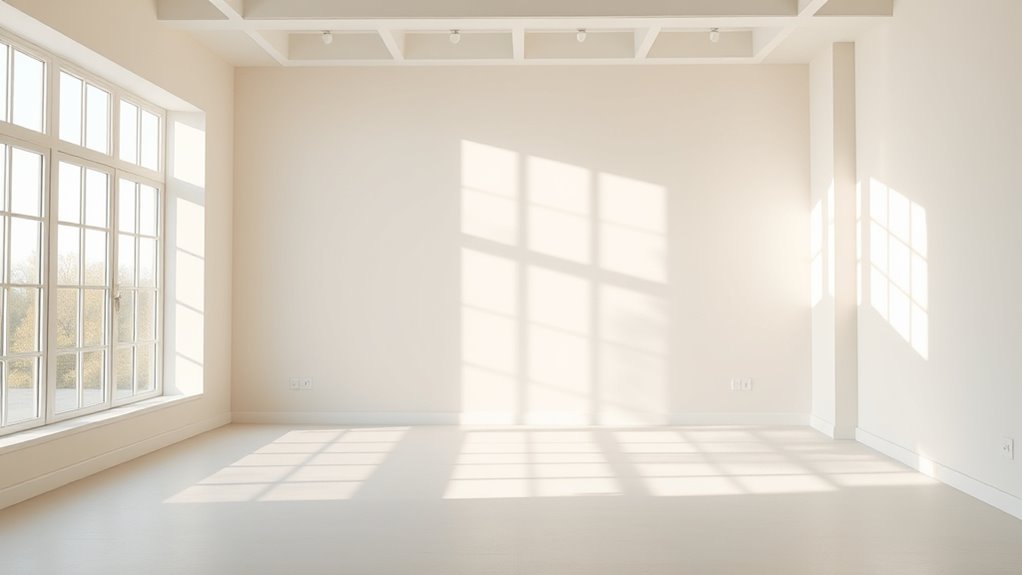
Choosing the right white paint color can be tricky because different lighting conditions dramatically change how it looks. Natural light variations throughout the day can make a single white shade appear warm, cool, or even slightly gray. In the morning, sunlight tends to be softer and warmer, giving whites a gentle, creamy hue. As the day progresses and sunlight becomes brighter, whites may seem crisper and more neutral. In the evening, artificial lighting effects come into play, and your white walls might take on a yellowish or bluish tone depending on the bulbs you use. Being aware of these shifts helps you pick a white that remains appealing no matter the time of day or lighting setup.
Lighting changes throughout the day significantly alter how white paint appears in your space.
When choosing a white paint, consider how much natural light your space receives. If your room has large windows and plenty of sunlight, opt for a brighter, more neutral white with minimal undertones. These whites won’t become overly warm or cool as the daylight changes. Conversely, if your space is darker or has limited natural light, warmer whites with subtle yellow or beige undertones can add coziness and prevent the room from feeling cold or stark. Keep in mind that natural light variations can make your white paint look different from one part of the day to another, so it’s smart to test samples on your walls and observe them at different times.
Artificial lighting effects are equally important. Incandescent bulbs cast a warm, yellowish glow that can make whites appear softer and more buttery. On the other hand, cool LED or fluorescent lights tend to emphasize blue or gray undertones, making whites look crisper or even clinical. If you want a consistent look at all hours, choose a white with neutral undertones that aren’t heavily influenced by warm or cool artificial lights. Some whites are specifically formulated to adapt well under various lighting conditions, so reading product descriptions and reviews can guide you toward smarter choices. Additionally, considering light temperature and bulb type can help you select whites that maintain their hue across different lighting environments.
Ultimately, understanding how natural light variations and artificial lighting effects influence your white paint color helps you create a space that feels just right. It’s about finding a shade that adapts beautifully to your environment, maintaining its appeal whether the sun’s shining or the lamps are on. Take your time testing different whites in your space at different times, and you’ll be able to select a color that truly complements your lighting conditions and personal style.
Frequently Asked Questions
How Does Natural Light Affect White Paint Appearance?
Natural light substantially influences how white paint looks in your space. As sunlight varies in temperature throughout the day, it can make white appear warmer or cooler. Additionally, the paint’s sheen affects its reflection; a matte finish softens the light, while a glossy sheen enhances brightness. You’ll notice that changing light conditions alter the white’s tone, so it’s wise to test paint samples in your space at different times for the best result.
Can White Paint Look Different in Small Versus Large Rooms?
Imagine a tiny, cozy room versus a vast, open space—white paint changes with size. In small rooms, a warm white with a softer color temperature can make the space feel inviting, while in larger rooms, a crisp, cool white enhances brightness. The paint sheen also impacts perception; matte finishes soften edges, while satin or semi-gloss reflect light, making whites appear different based on room size and lighting angles.
What White Shades Work Best for East-Facing Rooms?
For east-facing rooms, you should choose white shades with warm undertones. These colors brighten the space during morning sunlight, creating a cozy feel. Opt for whites like creamy or buttery tones that enhance natural light. To guarantee a cohesive look, coordinate your wall color with your furniture and decor. This approach helps balance the warm undertones and makes your east-facing room feel inviting and harmonious all day long.
How to Prevent White Paint From Looking Dull or Yellow?
It’s funny how white paint can look dull or yellow despite your best efforts. To prevent this, use lighting tricks like adding more natural light or warm bulbs, and choose a paint finish with a slight sheen—like satin—that reflects light better. This way, your walls stay crisp and bright, not dull or yellow. Remember, the right lighting tricks and a thoughtful paint finish can make all the difference.
Are There White Paints That Suit All Lighting Conditions?
You’re wondering if any white paint suits all lighting conditions. While no single white is perfect for every space, some shades like pure white or slightly warm whites work well across various lighting. Considering paint color psychology helps you choose a white that feels right, and proper white paint maintenance keeps your walls looking fresh. So, select versatile whites and adjust lighting or decor to enhance your space’s overall harmony.
Conclusion
Choosing the right white paint color for your space is like finding the perfect song—it can change everything. Remember, lighting acts as the spotlight, transforming how your whites appear. Don’t be afraid to test a few shades and see which one truly sings in your room. After all, your walls are the canvas—let them reflect your style and shine under the right light. So, go ahead, make your space a masterpiece of white!