When mixing vintage rugs with modern furniture, focus on coordinating colors to create harmony or add contrast for visual interest. Guarantee the rug’s size fits your space by letting front legs of furniture rest on it, and choose patterns that complement your sleek, minimal pieces. Balancing textures and styles helps make your room feel curated and inviting. To discover more ways to blend these elements seamlessly, keep exploring effective tips and ideas.

Get furniture and decor delivered free with Prime
- Fast, free delivery on millions of items
- Prime Video, Amazon Music and more included
- Member-only deals all year
Key Takeaways
- Choose vintage rugs with geometric or abstract patterns to complement modern furniture’s clean lines.
- Match or contrast rug colors with furniture tones to create visual interest and cohesion.
- Ensure the rug’s size balances with furniture, with front legs on the rug for a unified look.
- Incorporate textured vintage rugs to add visual and tactile contrast to sleek, smooth modern pieces.
- Opt for sustainable, neutral-toned vintage rugs to enhance eco-friendly decor and provide versatile styling options.

Blending vintage rugs with modern furniture creates a dynamic and stylish interior that feels both fresh and timeless. The key to making this combination work seamlessly lies in mastering two essential elements: color coordination and scale balancing. When you choose a vintage rug, pay close attention to its color palette. Opt for a rug whose hues complement your modern furniture, whether through matching tones or contrasting shades that add visual interest. For example, if your furniture features cool, neutral tones, a vintage rug with warm accents can create a lively yet cohesive look. Conversely, if your furniture boasts bold colors, select a vintage rug with more subdued or harmonizing shades to avoid overwhelming the space. This careful color coordination ensures that the vintage piece enhances rather than clashes with your contemporary decor.
Balance vintage rugs with modern furniture through thoughtful color choices and scale for a cohesive stylish space.
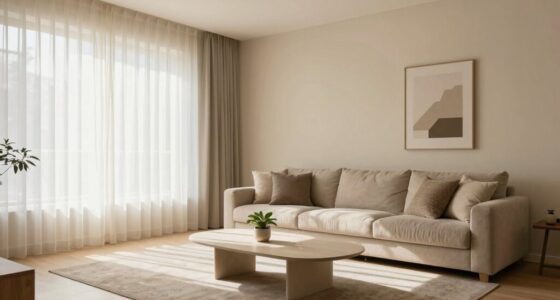
Scale balancing is equally important. A vintage rug that’s too small can look lost beneath modern furniture, making the room feel disjointed. Conversely, an overly large rug might overpower sleek, minimalistic pieces. You want to find that sweet spot where the rug anchors your furniture without dominating the room. Typically, a rug that extends slightly beyond the edges of your main furniture pieces, like sofas and chairs, helps create a sense of unity. When you’re arranging your space, consider the size of your furniture in relation to the rug. For example, in a living room, ensure the front legs of your sofa and chairs rest on the rug, tying everything together. This scale balancing not only grounds your space but also emphasizes the contrast between vintage and modern elements, making the mix feel intentional and well-designed.
In addition to color and scale, think about texture and style. Modern furniture often features clean lines and smooth surfaces, while vintage rugs tend to have intricate patterns and a softer, more textured feel. Combining these creates a rich sensory contrast that’s pleasing to the eye and touch. Keep your overall design cohesive by choosing a vintage rug that echoes the geometric or abstract patterns found in your modern pieces or by selecting a more neutral rug to serve as a subtle foundation for bolder furniture choices.
Furthermore, incorporating sustainable materials in vintage rugs can enhance your eco-friendly interior design, aligning with current trends in environmentally conscious decorating. Ultimately, the secret to mixing vintage rugs with modern furniture is deliberate balance. By carefully coordinating colors and paying attention to scale, you’ll craft a space that showcases both the timeless charm of vintage pieces and the sleek appeal of modern design. This harmony results in an interior that feels curated, fresh, and uniquely yours.
Products Worth Considering

Philips Hue Play Gradient Light Tube, Large, Black

Levoit Core 300S-P Smart Wi-Fi Air Purifier

Philips Hue Play Floor Lamp, RGBWWIC LED, 53 Inch, Black
As an affiliate, we earn on qualifying purchases.
Frequently Asked Questions
How Do I Choose the Right Vintage Rug for My Space?
When choosing a vintage rug, consider antique weaving techniques that add unique charm and character. Look for one that complements your space’s color palette and style. Prioritize rug durability to guarantee it withstands daily use. Think about the size and pattern to balance your modern furniture. You want a piece that’s timeless yet practical, so select a vintage rug that enhances your home’s aesthetic while offering longevity.
What Color Schemes Work Best With Vintage Rugs?
Did you know that 78% of interior designers recommend pairing vintage rugs with neutral color palettes? To make your vintage rug pop, stick with soft, muted tones like beige, gray, or cream as your main colors. Use accent hues—like deep blues, rich reds, or vibrant oranges—to add personality and contrast. This balance creates a cohesive look, blending the timeless charm of vintage rugs with your modern furniture effortlessly.
Are Vintage Rugs Suitable for High-Traffic Areas?
Yes, vintage rugs can be suitable for high-traffic areas if you consider durability concerns. Choose rugs made from sturdy materials like wool or synthetic fibers, which withstand wear better. To preserve their beauty, use preservation techniques like regular cleaning and rotating the rug to prevent uneven aging. Proper maintenance helps you enjoy the vintage charm while ensuring the rug remains durable and vibrant despite heavy foot traffic.
How Can I Clean and Maintain Vintage Rugs Properly?
To clean and maintain your vintage rug, start by regularly removing dirt with gentle vacuuming, avoiding beater bars that can damage fibers. For stain treatment, act quickly by blotting with a clean cloth and using a mild solution suitable for delicate textiles. Avoid harsh chemicals, and consider professional cleaning once a year for deep dirt removal. This keeps your vintage rug looking vibrant and preserves its character over time.
Can Vintage Rugs Be Layered With Modern Carpets?
Yes, you can layer vintage rugs with modern carpets to create a stylish look. Choose antique patterns that complement contemporary textures, ensuring the vintage rug adds character without overwhelming the space. Place the vintage rug slightly under the modern carpet for a layered effect, and use coordinating colors to tie the design together. This approach highlights both styles, adding depth and personality to your room effortlessly.
Conclusion
By blending vintage rugs with modern furniture, you craft a space that whispers stories of the past while embracing the present. It’s like weaving a tapestry of time, where old-world charm dances with sleek design, creating harmony and character in every corner. When you mix textures and eras, you don’t just decorate—you tell a story, a rhythmic symphony of history and innovation that makes your home uniquely yours.