
TL;DR

Get furniture and decor delivered free with Prime
- Fast, free delivery on millions of items
- Prime Video, Amazon Music and more included
- Member-only deals all year
Alfred Hitchcock sought Frank Lloyd Wright’s design for the house in North by Northwest, but the project was not completed. Instead, the set was built by Hollywood designers. Recent revelations shed light on this lost collaboration, highlighting its significance in film and architecture history.
Alfred Hitchcock’s desire for Frank Lloyd Wright to design the house in North by Northwest was never realized, but new details reveal that the legendary filmmaker did indeed approach the architect for the project. This revelation offers fresh insight into the film’s production and Hitchcock’s interest in integrating architecture into his storytelling, highlighting why this story matters to both film and architectural history.
According to recent disclosures, Hitchcock initially approached Frank Lloyd Wright to design the modernist house featured in North by Northwest, inspired by Wright’s iconic Fallingwater. However, Wright reportedly requested ten percent of the film’s entire budget, leading Hitchcock to instead commission production designer Robert F. Boyle to create the set. Despite this, it is now confirmed that Hitchcock’s intent was for Wright to craft the house, emphasizing the film’s innovative use of architecture as a narrative device.
While the final house used in the film was a constructed set, it was designed to resemble Wright’s style, especially his cantilevered structures. The set was built on a Hollywood lot, with some elements painted on backdrops, creating a convincing illusion of a modernist mansion. Recent interviews with film historians and archival research have confirmed Hitchcock’s interest in Wright’s work for this project.
Why Hitchcock’s Choice of Wright Matters Today
This revelation underscores Hitchcock’s pioneering approach to integrating architecture into cinematic storytelling, influencing future filmmakers and set designers. It also highlights the enduring importance of Wright’s architectural vision, which continues to inspire both architects and artists. The fact that Hitchcock considered Wright for the design underscores the cultural significance of their potential collaboration, blending film history with architectural innovation.
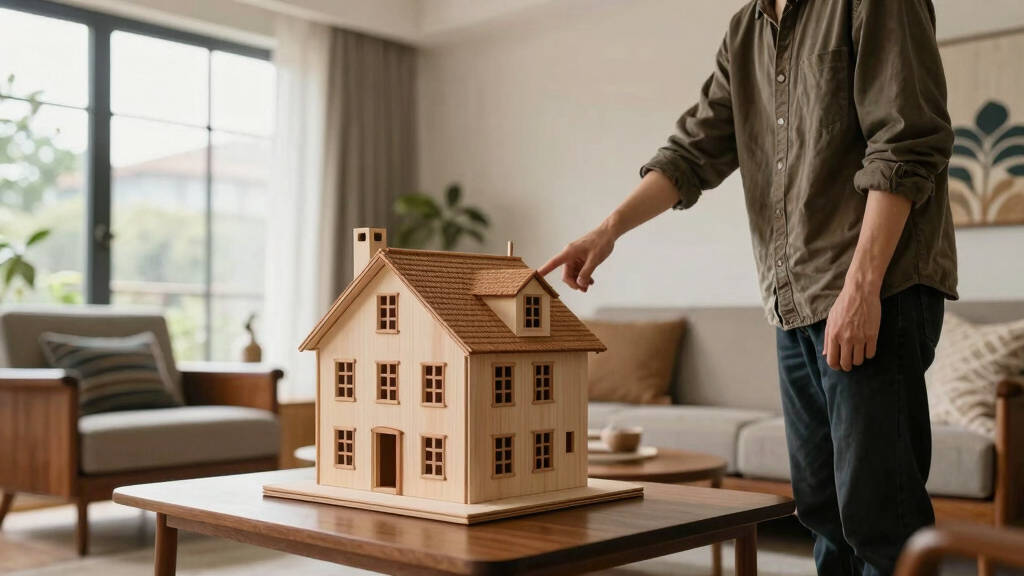
Frank Lloyd Wright modernist house model
As an affiliate, we earn on qualifying purchases.
As an affiliate, we earn on qualifying purchases.
Historical Context of Hitchcock and Wright’s Interplay
In the late 1950s, Hitchcock was renowned for his mastery of suspense and innovative use of visual elements. Frank Lloyd Wright, at that time, was an established American architect known for his organic designs, including Fallingwater and the Ennis House. Although there was no documented collaboration between the two before, Hitchcock’s interest in Wright’s style aligns with his penchant for using architecture as a narrative tool. The house in North by Northwest has since become iconic, emblematic of modernist architecture in film.
The story of Hitchcock’s attempt to involve Wright has been largely speculative until now, with recent research confirming the filmmaker’s direct outreach. This adds a new layer to the understanding of the film’s production design and Hitchcock’s artistic vision.
“Hitchcock did indeed approach Wright about designing the house, but the details were long considered lost until recent archival discoveries.”
— an anonymous researcher
As an affiliate, we earn on qualifying purchases.
Unresolved Details of the Wright-Hitchcock Proposal
It remains unclear whether Wright ever formally agreed to design the house or if Hitchcock’s proposal was purely exploratory. The exact negotiations, if any, between Wright and Hitchcock are not documented, and it is unknown whether Wright’s requested fee was ever discussed or rejected outright. Further archival research may reveal more about their interactions.
architectural design books Frank Lloyd Wright
As an affiliate, we earn on qualifying purchases.
As an affiliate, we earn on qualifying purchases.
Future Research and Potential Exhibitions of the Concept Art
Scholars plan to examine additional archives for correspondence between Hitchcock and Wright, potentially uncovering sketches or plans. There is also interest in creating a detailed reconstruction of what Wright’s design might have looked like, which could be displayed in upcoming architectural or film retrospectives. The story continues to develop as new materials come to light.
As an affiliate, we earn on qualifying purchases.
Key Questions
Did Frank Lloyd Wright ever agree to design the North by Northwest house?
It is not yet confirmed whether Wright formally accepted the project; recent research indicates Hitchcock approached him, but no documented agreement exists.
Why did Hitchcock ultimately choose to build a set instead of involving Wright?
Wright reportedly asked for ten percent of the film’s budget, which Hitchcock and the production team found impractical, leading to the set being built by Hollywood designers.
What influence did Wright’s architectural style have on the film’s house design?
The set was designed to resemble Wright’s modernist style, especially his cantilevered structures, although it was a constructed set rather than an actual Wright design.
Will there be any public display of Wright’s potential design for the film?
There are currently no plans for a public exhibition, but researchers are considering creating visual reconstructions based on available sketches and descriptions.
How does this story change our understanding of Hitchcock’s filmmaking approach?
It reveals Hitchcock’s deep interest in architecture as a storytelling element, and his willingness to collaborate with leading architects to enhance his films’ visual narrative.
Source: The best free cultural & educational media on the web – Open Culture
Columbus Day / Indigenous Peoples' Day Picks
long weekend sales
As an affiliate, we earn on qualifying purchases.