TL;DR
Dave and Jenny Marrs featured a handmade Moroccan zellige backsplash in a farmhouse kitchen on season 5, episode 4 of Fixer to Fabulous. The glossy, patterned tile gives the room a distinctive focal point, but handmade variation, cleaning demands and installation costs may make it less suitable for some kitchens.
Dave and Jenny Marrs featured a handmade Moroccan zellige backsplash in a farmhouse kitchen shown in season 5, episode 4 of Fixer to Fabulous, offering a patterned alternative to the white subway tile common in many kitchens. The design pairs the glossy, decorative tile with cream-colored cabinets and a light blue island, though the handmade material can bring added cleaning and installation considerations.

Get furniture and decor delivered free with Prime
- Fast, free delivery on millions of items
- Prime Video, Amazon Music and more included
- Member-only deals all year
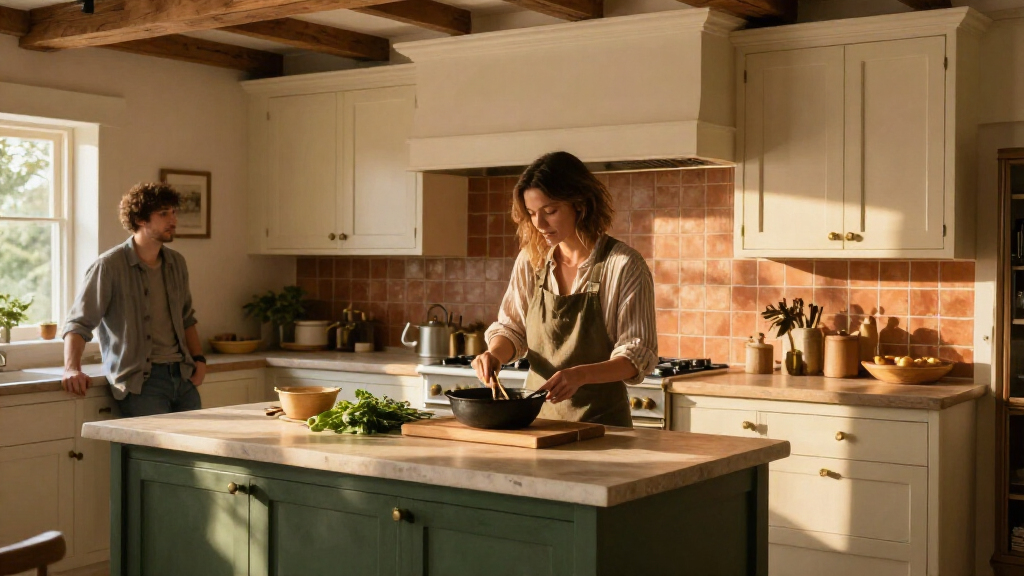
The backsplash uses a square mosaic pattern with clay-colored lines and dark blue stars. Its reflective finish and repeated geometry make it a focal point in the kitchen while connecting with the room’s softer farmhouse palette. The squares create a surface that can read almost like patterned wallpaper, rather than the familiar horizontal grid of subway tile.
In a blog post about the renovation on the couple’s website, Jenny Marrs described the client’s preference for farmhouse style and the choices made for the room. “I absolutely love the detail and color of these handmade tiles. Now, the kitchen is cozy and joyful,” she wrote. Marrs also said the design paired cream cabinets and a light blue island with a farmhouse-inspired backsplash.
The tiles appear to be the Tiles of Ezra Moroccan Zellige Estela Mosaic, although that identification is not confirmed. Zellige tiles are available in different colors and patterns. Their handmade character can mean that individual pieces are not perfectly uniform, a feature that adds visual variation but may complicate installation and upkeep.
Looking Beyond Subway Tile A Farmhouse Kitchen Idea
Dave and Jenny Marrs featured handmade Moroccan zellige in a farmhouse kitchen. Its glossy pattern adds character, with upkeep and installation trade-offs to consider.
A patterned alternative
A square mosaic with clay-colored lines and dark blue stars makes the backsplash a focal point.
Handmade zellige
Glossy, patterned squares bring texture and visual variation to the wall.
Soft farmhouse tones
Cream cabinets and a light blue island balance the decorative tile.
A distinctive focal point
The repeated geometry reads more like patterned wallpaper than a subway tile grid.
Trade-offs to weigh
The handmade finish brings character, but can add practical demands.
- Distinctive detail and color
- Visual texture in a restrained palette
- Variation may complicate installation and cleaning
- Cost and care requirements are not specified
Before choosing a similar tile
Use the renovation as a design reference, then check how the material fits your own kitchen.
View tile beside cabinet and wall colors.
Check product guidance and cleaning demands.
Ask a qualified installer about fitting and project cost.
A Patterned Alternative to Subway Tile
The renovation offers homeowners an example of how a backsplash can carry much of a kitchen’s visual character without abandoning a restrained palette. Here, the patterned zellige adds color and texture, while the cream cabinets and pale blue island keep the overall scheme tied to farmhouse design. The effect is less dependent on a dramatic change to cabinetry or layout.
That approach may appeal to people who like the warmth of farmhouse interiors but want to move beyond a familiar white-tile backsplash. The design also illustrates a trade-off: handmade surfaces can bring variation and a distinctive finish, but they are not automatically a practical or low-cost choice. Homeowners considering the look need to weigh appearance against cleaning, price and installation.
The example is a featured renovation, not evidence that zellige is replacing subway tile or that it suits every kitchen. Its value for readers is as a specific design reference: a patterned tile can work alongside muted finishes, provided the surrounding colors and materials are selected to complement it.
Products Worth Considering

Roborock Qrevo 2 Pro Robot Vacuum and Mop with 20,000 Pa Suction

Philips Hue Bridge Pro Smart Lighting Hub, 1-Pack

TCL 85-Inch QM64L QD-Mini LED 4K Smart Fire TV
As an affiliate, we earn on qualifying purchases.
How the Marrs Kitchen Uses Zellige
White subway tile has been a familiar backsplash choice for more than a century, in part for its clean, hygienic appearance. The Marrses’ renovation shows a different direction: a glossy mosaic with a star pattern rather than a plain rectangular tile. The contrast is not simply a switch in color; the smaller squares and decorative grid change how the backsplash reads across the wall.
The look also fits common farmhouse design choices described in the renovation: natural materials, visible texture and a warm, welcoming palette. Neutral zellige can appear timeless in that setting, while more colorful patterns can make the backsplash more prominent. In either case, the cabinets and wall colors should be considered alongside the tile so the finishes work together.
The couple’s blog post supplies Jenny Marrs’ account of the client’s style and the kitchen’s color choices. The episode and post document a particular design decision; they do not provide a general recommendation for every home or establish the exact product used beyond the reported identification as Tiles of Ezra mosaic tile.
“I absolutely love the detail and color of these handmade tiles. Now, the kitchen is cozy and joyful.”
— Jenny Marrs, in a blog post about the renovation
Product and Upkeep Questions
The precise product used in the episode is not confirmed; the tiles are described as appearing to be the Tiles of Ezra Estela Mosaic. The available renovation details also do not state the project’s tile budget, the amount of backsplash installed or how the surface performs after extended use.
Handmade zellige pieces can vary in shape, which may make the finished surface less uniform and harder to clean than some alternatives. The account gives no specific cleaning instructions or maintenance schedule. It also does not provide a price comparison, though handmade tiles can cost more than mass-produced options and may require professional installation. Buyers should check product guidance and obtain installation and cost estimates for their own project.
What Homeowners Should Check
The episode and blog post present the completed design; no further development or follow-up about the renovation is specified. For homeowners considering a similar backsplash, the practical next step is to compare tile samples with cabinet and wall colors, then confirm the product’s care requirements and expected cost with a qualified installer.
Because handmade tiles may not have uniform shapes, installation details matter. A professional can advise on layout, fitting and the suitability of the tile for the intended area. Those checks can help determine whether the visual effect shown in the Marrses’ kitchen works within a particular home’s budget and maintenance preferences.
Source: rss
Key Questions
What backsplash tile did Dave and Jenny Marrs feature?
The kitchen featured a handmade Moroccan zellige mosaic with clay-colored lines and dark blue stars. It appears to be Tiles of Ezra Moroccan Zellige Estela Mosaic, but that product identification is not confirmed.
Where was the kitchen shown?
The renovation appeared in season 5, episode 4 of Fixer to Fabulous. Jenny Marrs also discussed the project in a blog post on the couple’s website.
What are the potential drawbacks of zellige backsplash tile?
Handmade pieces may vary in shape, which can make installation and cleaning more demanding. Zellige can also cost more than mass-produced tile and may require professional installation.
Does the Marrs kitchen prove zellige is better than subway tile?
No. The renovation shows one design option, not a general comparison of performance. The right choice depends on a homeowner’s desired look, budget, cleaning expectations and installation needs.
Source: hunker.com