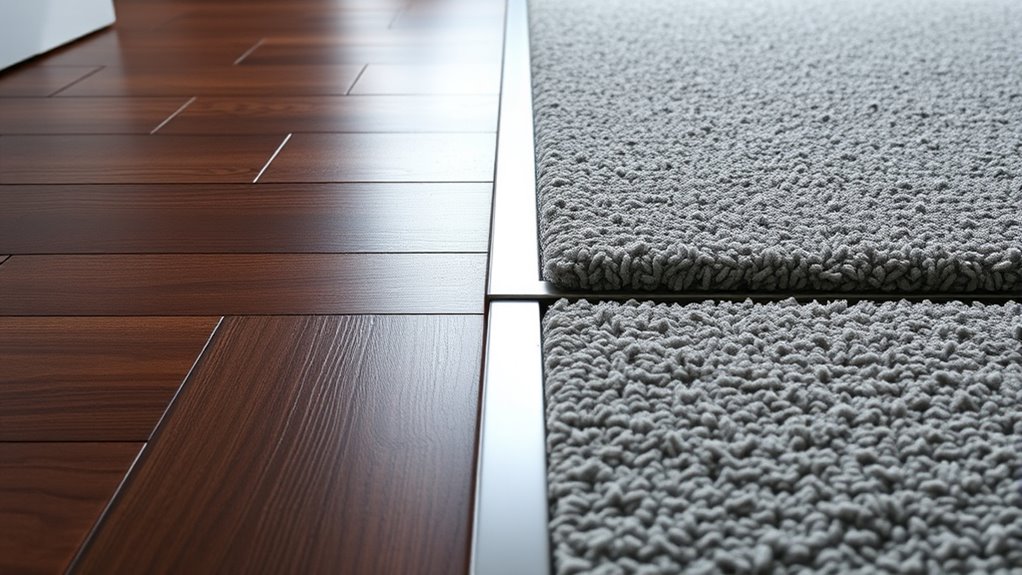

To move flooring seamlessly between rooms, start by choosing the right transition strip based on height and texture differences. Measure carefully to guarantee a snug fit and match the textures for a cohesive look. Use reducer strips for height variations and flush transitions for matching surfaces. Secure the strips properly and align the grains or patterns across the transition. For more tips on creating flawless flooring transitions, keep exploring to learn how to achieve a polished finish.
Key Takeaways
- Select appropriate transition strips that match or complement the flooring textures and heights for a cohesive look.
- Use reducer strips to smoothly bridge height differences between flooring types or levels.
- Ensure precise measurements and clean cuts for a snug fit, preventing gaps and movement over time.
- Align grain patterns or textures across the transition to maintain visual continuity and seamless appearance.
- Securely fasten transition strips with suitable adhesives or fasteners for durability and safety.

When switching flooring between rooms, a smooth and seamless connection is essential for both aesthetic appeal and safety. One of the first issues you’ll encounter is threshold gaps—those small spaces between different flooring types or room entries. These gaps can be both unsightly and hazardous, causing tripping hazards or catching dirt and debris. To address this, you want to choose the right transition solutions that hide or minimize these gaps, providing a clean look while guaranteeing safety. Installing a threshold strip or transition strip can bridge the gap effectively, especially if you select one that matches the textures of the flooring materials. Matching textures is key here; if your floors have distinct textures, use a transition that complements or blends these textures, creating a cohesive flow. For example, a smooth transition strip works well between hardwood and tile when their textures differ markedly, preventing a jarring visual interruption.
Seamless flooring transitions prevent gaps, enhance safety, and create a cohesive, polished look between rooms.
When selecting a transition method, consider the height differences between floors. If the flooring materials are at different levels, a reducer strip can help create a gentle slope, preventing tripping hazards and making the transition look natural. For level floors with matching textures, a flush transition—where the flooring surfaces meet evenly—can provide a sleek, uninterrupted look. If the textures don’t match, a contrasting transition strip can serve as a visual cue, guiding the eye and emphasizing the change in materials. This strategic choice can make the transition feel intentional rather than accidental. Additionally, understanding home essentials concepts like proper installation and matching textures will ensure a professional finish.
Proper installation is vital to achieve a seamless look. Measure carefully to guarantee the transition strip fits snugly and covers any gaps entirely. When working with matching textures, aligning the grains or patterns across the transition can further enhance the seamless appearance. If you’re working with different materials, make sure the edges are cut cleanly and securely fastened to prevent movement or gaps over time. Using the right adhesive or fasteners guarantees durability and prevents the transition from shifting or cracking.
Ultimately, your goal is to create a transition that feels natural and unobtrusive, maintaining both safety and aesthetic appeal. Pay attention to the details—like matching textures and filling threshold gaps properly—and your flooring transition will look professional and polished. With careful planning and precise execution, you can enjoy a smooth, clean, and safe connection between your rooms, making your home feel cohesive and well-designed.
Frequently Asked Questions
Can I Use the Same Flooring Type in All Rooms?
You can definitely use the same flooring type in all rooms, especially if you focus on matching patterns and color coordination. This creates a cohesive look throughout your space. However, consider the function of each room—durability might vary. Sticking with one flooring type simplifies installation and enhances flow. Just make certain that the matching patterns and colors complement each other, giving your home a unified, stylish appearance.
How Do I Handle Uneven Subfloor Surfaces?
Facing unevenness in your subfloor? First, focus on firm, flawless subfloor preparation by leveling unevenness with a self-leveling compound or grinding down high spots. Proper subfloor preparation creates a smooth, sturdy surface, ensuring your flooring stays secure and looks seamless. Don’t skip this step—addressing uneven subfloors now prevents future problems, providing a polished, professional finish that lasts. Your diligent dedication to leveling unevenness makes all the difference!
What Tools Are Recommended for Seamless Transitions?
To achieve a seamless shift, you’ll need the right tools for flooring and for transition strip installation. A saw or utility knife helps cut transition strips to size, while a drill makes securing them easier. A hammer can gently tap the strip into place. Make certain you also have a measuring tape for accuracy. Using these tools guarantees a smooth, professional-looking shift between rooms.
How Long Does It Take to Install Transition Strips?
The installation timing for shift strip types varies, but generally, it takes about 15 to 30 minutes per strip. The time depends on the strip’s material and the room’s size. You’ll want to measure carefully, prepare the area, and follow proper installation steps. With the right tools and patience, you can complete the process efficiently, ensuring a smooth and professional-looking shift between your flooring types.
Are There Eco-Friendly Options for Transition Flooring?
You’re wondering if eco-friendly options exist for change flooring. Luckily, many recycling options are available, like using reclaimed or recycled materials for strips and thresholds. Biodegradable materials, such as cork or bamboo, also offer sustainable choices that break down naturally over time. By choosing these options, you reduce waste and support environmental health. So, you can achieve a seamless look while making eco-conscious decisions for your home.
Conclusion
Seamless flooring crossings make your home look polished and feel comfortable. While it might seem tricky, taking the time to plan and choose the right materials pays off in the end. Don’t let the fear of imperfections hold you back—your effort creates a beautiful, cohesive space that welcomes you home. With patience and attention, you’ll enjoy a flawless transition that reflects your style and care, making every step feel just right.