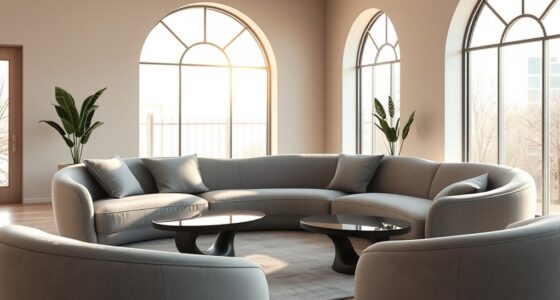
To create cohesion across rooms without matching everything, focus on a unified color palette by repeating hues through accessories, artwork, or accent walls. Mix different furniture styles, but choose similar finishes or materials to maintain flow. Arrange furniture to guide movement and define zones with rugs or lighting. Incorporate recurring decor elements like vases or textiles, balancing consistency with personality. Keep pathways clear and thoughtful, and explore more ideas to craft a seamless, inviting space.

Get furniture and decor delivered free with Prime
- Fast, free delivery on millions of items
- Prime Video, Amazon Music and more included
- Member-only deals all year
Key Takeaways
- Use a consistent color palette with complementary hues in accessories, artwork, and accent walls to create visual links.
- Incorporate similar materials or finishes in furniture to establish harmony without matching styles.
- Arrange furniture to guide natural movement and define zones, maintaining clear pathways and balanced spacing.
- Repeat small decor elements like textiles, patterns, or artwork across rooms to subtly connect spaces.
- Balance shared design elements with unique room personalities to create a cohesive yet diverse environment.
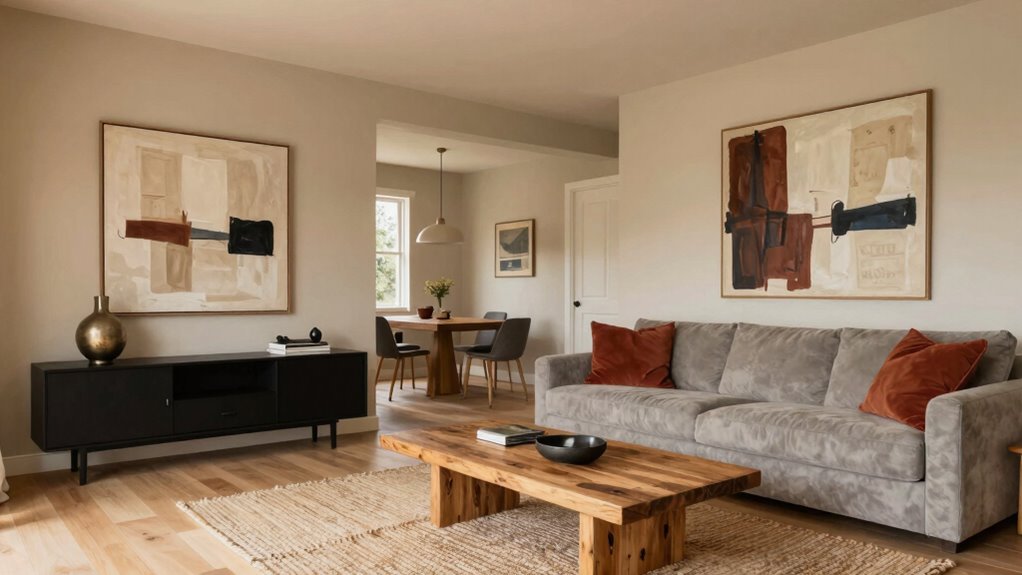
Have you ever wondered how to make different rooms in your home feel connected and harmonious? Achieving a cohesive look doesn’t mean you have to match every piece of furniture or stick to the same color everywhere. Instead, focus on creating a sense of flow and continuity that guides the eye naturally from one space to the next.
Start with color continuity. You don’t need identical shades, but choosing a recurring color palette across your rooms helps tie everything together. For example, if your living room features soft blues and warm neutrals, incorporate similar hues into your dining area or bedroom. This doesn’t mean painting every wall the same color, but using accessories, artwork, or accent walls in complementary shades reinforces a visual link. Subtle repetitions of color create a sense of unity that’s both calming and deliberate.
Use a recurring color palette across rooms with accessories and artwork to create calming, cohesive flow.
Next, consider furniture flow. Instead of matching every piece, aim for a harmonious mix of styles and shapes that work well together. Use similar materials or finishes—like wood tones, metals, or fabrics—to establish a visual connection. For instance, if your living room has a chunky wooden coffee table, choose side tables with a similar finish or texture in adjoining rooms. This creates a visual rhythm, making each space feel part of a larger design story rather than isolated islands. Incorporating design principles can further enhance this flow. Additionally, paying attention to the contrast ratio in your decor choices can help balance visual interest and cohesion across spaces.
In addition, think about how furniture placement influences flow. Arrange pieces so that the eye naturally moves through each room, from entry points to focal areas. Keep pathways clear and use rugs or lighting to define zones without creating abrupt visual separations. Consistent spacing and scale help maintain a balanced transition, ensuring each room feels connected without feeling overly uniform.
Accessories also play a key role. Use similar decorative elements like vases, artwork, or textiles across different rooms. These small details reinforce your chosen color scheme and style, subtly linking spaces. For example, if you have a patterned throw pillow in one room, incorporate a similar pattern or color into your curtains or wall art elsewhere. This layered approach adds interest and cohesion without risking monotony.
Ultimately, creating cohesion across rooms is about balancing consistency with diversity. You want each space to have its own personality, but with enough shared elements—like color continuity and furniture flow—that your home feels thoughtfully designed as a whole. By paying attention to these details, you guide your guests and yourself through a seamless, inviting environment that feels unified without being matchy-matchy.
As an affiliate, we earn on qualifying purchases.
Frequently Asked Questions
How Do I Choose a Unifying Color Palette?
To choose a unifying color palette, start with a base color that you love and that fits your overall style. Incorporate color contrast thoughtfully to add interest, while ensuring palette harmony by selecting shades that complement each other. Use variations of your base color or analogous hues to create cohesion across rooms. This balance helps your spaces feel connected without matching everything exactly, making your home feel intentionally styled and harmonious.
Can Different Furniture Styles Work Together Seamlessly?
Think of your space as a symphony, where mixed styles create a rich, layered melody. Different furniture styles can work together seamlessly when you focus on furniture harmony—like balancing bold pieces with softer accents. Mix vintage with modern thoughtfully, and use a unifying color palette or similar textures to tie everything together. With a little intentionality, your diverse furniture can sing in harmony, making your home both eclectic and cohesive.
What Role Do Accessories Play in Creating Cohesion?
Accessories play a essential role in creating cohesion by adding decorative accents that tie different rooms together. Use similar color palettes or themes in your decorative accents, like vases or artwork, to create visual links. Incorporate textural contrasts with pillows, rugs, or throws to add depth without matching. These elements subtly unify your spaces, making them feel connected yet unique, enhancing overall harmony without sacrificing individual style.
How Can Lighting Enhance Room Cohesion?
Lighting acts as the heartbeat of your space, pulling rooms together like a symphony. You can enhance cohesion by using ambient lighting to cast a warm, unifying glow across rooms. Layered illumination, combining different light sources, adds depth and flow, guiding the eye seamlessly from one area to another. Thoughtful lighting choices create a visual thread, transforming separate spaces into a harmonious, inviting home.
Is It Better to Use Consistent Flooring Throughout?
Using consistent flooring throughout can create a seamless flow, but don’t shy away from texture variety and pattern mixing to add visual interest. If you prefer different flooring in each room, choose complementary tones or subtle patterns that connect the spaces. This approach maintains cohesion while allowing for individuality. Ultimately, balancing uniformity with diverse textures and patterns keeps your home lively without feeling disjointed.
As an affiliate, we earn on qualifying purchases.
Conclusion
By mixing textures, colors, and styles thoughtfully, you can create a cohesive flow across your rooms without everything matching perfectly. Remember, about 85% of homeowners report feeling more relaxed and at home when their spaces have a unified yet varied design. So, trust your instincts, experiment with different elements, and enjoy the process of crafting a harmonious home that feels both personal and inviting. Your unique style will shine through, creating a seamless progression from room to room.
As an affiliate, we earn on qualifying purchases.
As an affiliate, we earn on qualifying purchases.
Halloween Picks
halloween
As an affiliate, we earn on qualifying purchases.