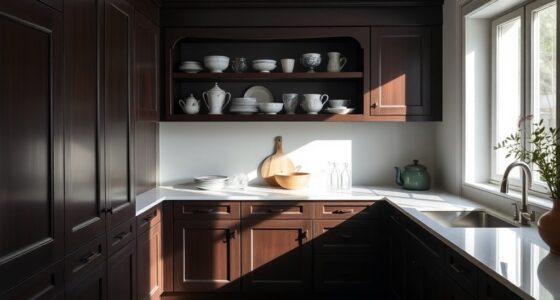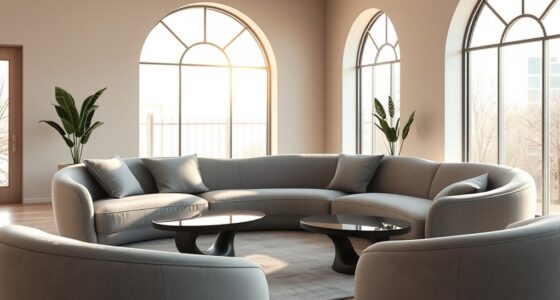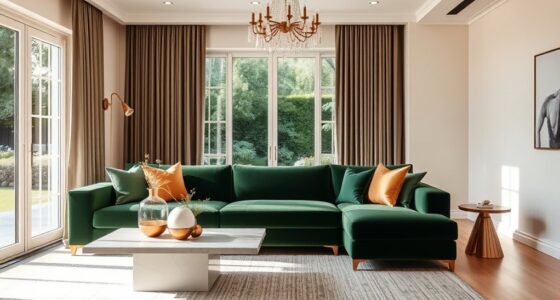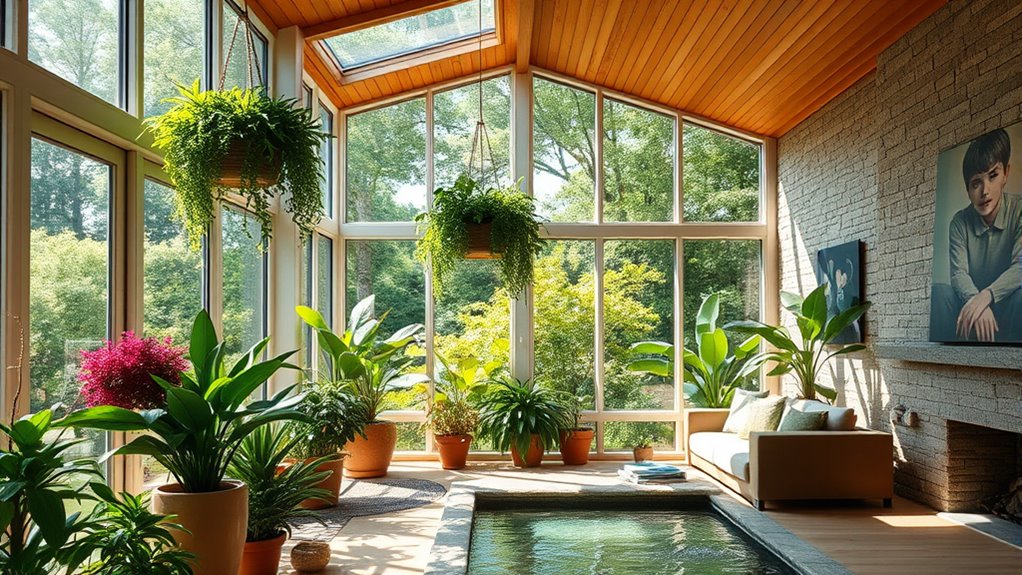

To bring nature indoors through biophilic design, incorporate indoor plants and natural materials like wood or stone to add texture and warmth. Maximize natural light and views of the outdoors, using strategic window placement and large windows. Use calming color palettes inspired by nature, and include water features or green walls for visual interest. Enhance sensory experience with natural scents and sounds. Keep exploring how these elements can transform your space into a restorative haven.
Key Takeaways
- Incorporate indoor plants, natural materials, and water features to create calming, sensory-rich environments.
- Maximize natural light and outdoor views through strategic window placement and framing.
- Use nature-inspired color palettes like greens, browns, and blues to promote tranquility.
- Engage senses with natural scents and sounds such as lavender, rain, or birds.
- Install green walls or vertical gardens with sustainable materials to enhance air quality and aesthetics.
Incorporate Indoor Plants
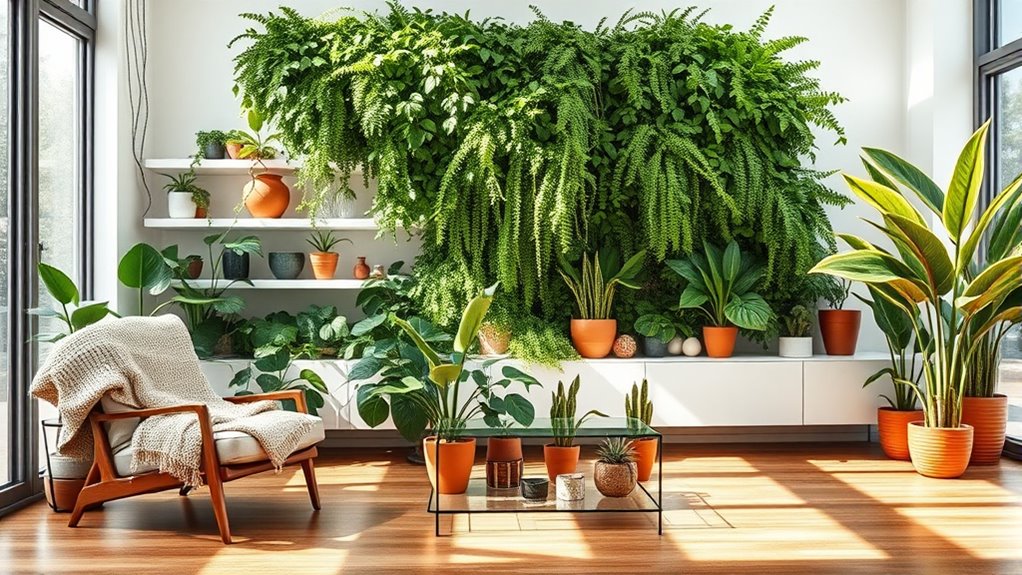
Adding indoor plants is one of the simplest ways to bring biophilic design into your space. You can achieve this with air purifying plants that improve air quality and create a healthier environment. Low maintenance greenery is perfect if you’re new to plant care or have a busy schedule. Opt for plants like snake plants, pothos, or ZZ plants—they require minimal watering and thrive in various lighting conditions. Incorporating these plants not only adds visual interest but also enhances your well-being by reducing stress and increasing comfort. Place them on shelves, desks, or windowsills to seamlessly integrate nature into your daily life. With the right selection, your space will feel more vibrant, calming, and connected to nature.
Maximize Natural Light
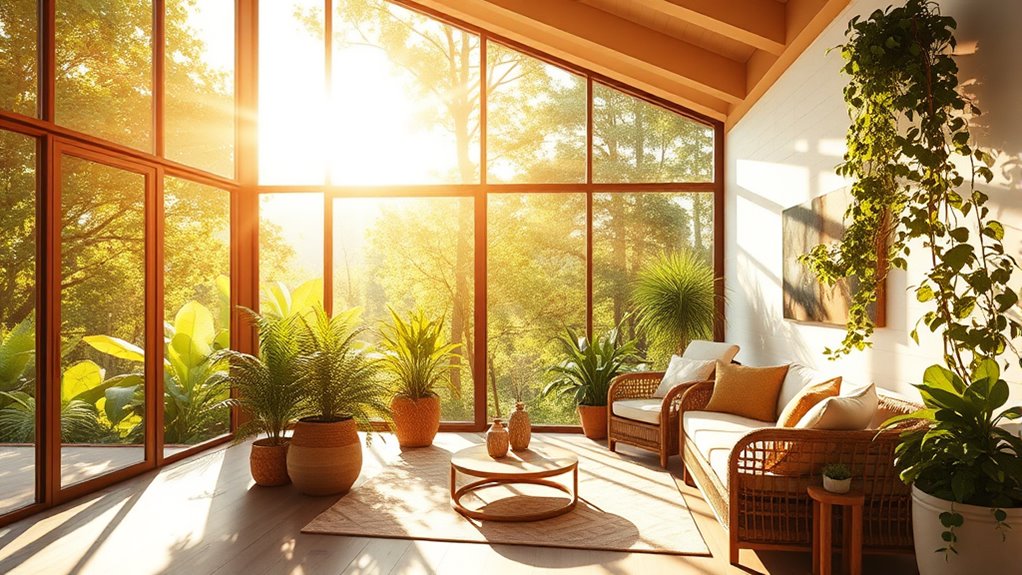
You can boost natural light in your space by carefully placing windows where they catch the sun and avoid obstructions. Using light-reflective surfaces like mirrors or glossy finishes helps bounce daylight further into the room. Additionally, adding skylights brings in overhead sunlight, making the space feel brighter and more inviting. Incorporating strategies for effective location scouting can further optimize the placement of windows and skylights for maximum natural illumination.
Optimize Window Placement
Maximizing natural light through ideal window placement can considerably enhance indoor environments by reducing the need for artificial lighting and boosting occupant well-being. To achieve this, focus on window orientation: positioning windows to capture optimal daylight while minimizing glare and heat gain. North-facing windows offer consistent, indirect light, ideal for balanced illumination. East and west-facing windows provide morning and late afternoon light but may require exterior shading to prevent overheating. South-facing windows maximize sunlight exposure, especially in colder months, making them ideal for natural warmth and brightness. Incorporate exterior shading elements like awnings or louvers to control direct sunlight and prevent overheating, ensuring a comfortable indoor space. Proper window placement and shading work together to optimize natural light, creating healthier, more inviting environments. Additionally, considering window placement carefully can help support biophilic design principles by bringing more outdoor elements into the interior.
Use Light-Reflective Surfaces
Using light-reflective surfaces can markedly increase the amount of natural light in a space by bouncing daylight deeper into rooms. Reflective surfaces, such as glossy paint, mirrors, or polished tiles, help facilitate light bouncing, which spreads daylight more evenly and reduces dark corners. By strategically placing these surfaces opposite windows or light sources, you maximize the diffusion of sunlight. This not only brightens your space but also enhances the connection to nature, promoting well-being. Keep in mind that the finish of your surfaces matters—high-gloss or satin finishes reflect more light than matte ones. Incorporating light-reflective surfaces is an effective way to amplify natural illumination without adding extra fixtures, creating a brighter, more inviting environment that aligns with biophilic principles. Additionally, choosing surfaces with proper finish types can further optimize light reflection and improve overall lighting quality.
Incorporate Skylights
Have you contemplated how skylights can transform your space by flooding it with natural light? Installing skylights is an effective way to maximize daylight harvesting and create a brighter, more inviting environment. When you opt for skylight installation, you enhance your home’s connection to nature while reducing energy costs. Here are three benefits to consider:
- Increased natural illumination reduces the need for artificial lighting during the day.
- Enhanced mood and productivity by bringing in sunlight directly from above.
- Improved energy efficiency as daylight harvesting lessens reliance on electrical lighting.
- Proper placement and size of skylights can also influence light diffusion, ensuring a uniform and comfortable brightness throughout your space.
Use Natural Materials and Textures
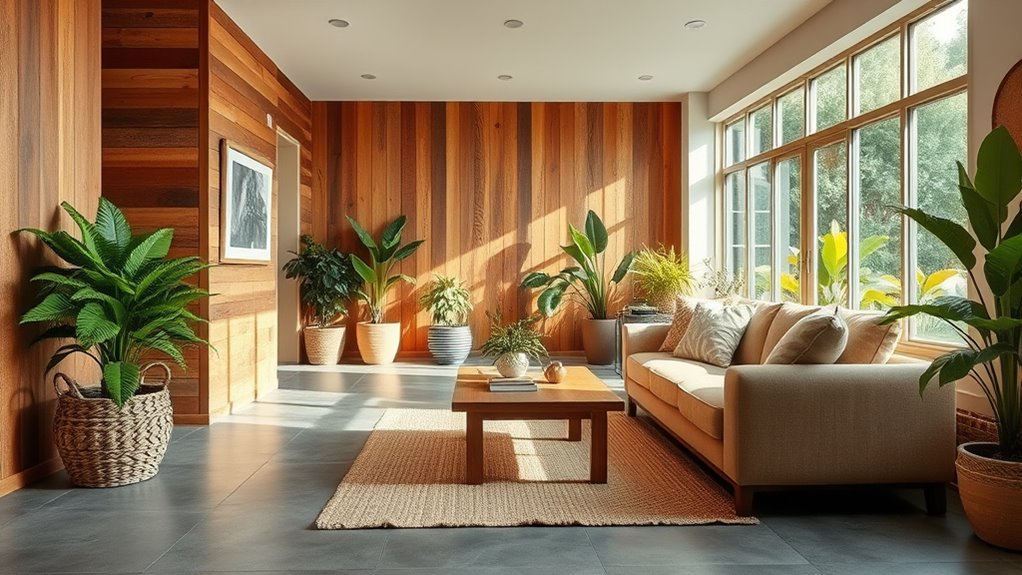
In biophilic design, incorporating natural materials and textures helps create spaces that feel more connected to the environment. You can achieve this by choosing organic textures, like rough-hewn wood, woven textiles, or stone surfaces, which evoke the natural world. Opt for sustainable materials such as bamboo, reclaimed wood, or cork to reduce environmental impact while adding authentic, tactile qualities to your interiors. These elements not only enhance visual interest but also foster a sense of warmth and calm. When you incorporate natural materials, you invite nature’s textures indoors, making your space feel more grounded and inviting. Pay attention to the details—smooth, rough, matte, or glossy—to create a layered, sensory-rich environment that resonates with nature. Incorporating natural materials with varying textures can further enhance the tactile experience and deepen your connection to nature indoors.
Bring in Views of Nature
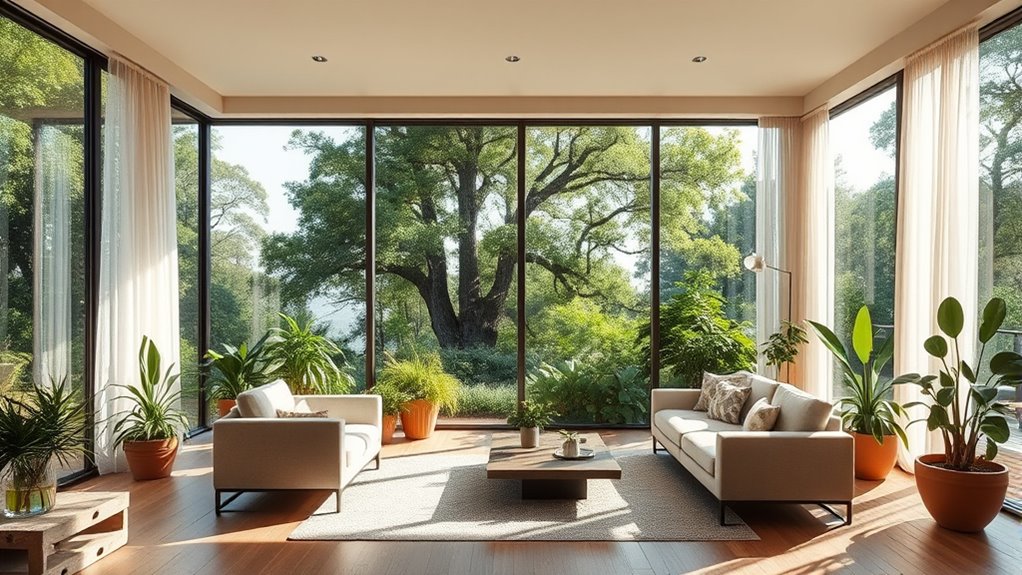
You can enhance your space by maximizing window placement to offer clear views of the outdoors. Incorporating living walls brings nature inside, creating a seamless connection with your environment. Using natural light further amplifies these views, making your space feel open and inviting. Incorporating aesthetic wall organization can also add visual interest while maintaining a natural, harmonious look.
Maximize Window Placement
Maximizing window placement is essential for bringing natural views into your space, creating a seamless connection with the outdoors. Focus on choosing the right window orientation to capture the best natural light and scenic views. Proper window framing enhances the visual impact, making the views more prominent and inviting. To optimize your windows, consider these steps:
- Position windows to face natural landscapes or garden views for maximum impact.
- Use large, unobstructed window frames to frame outdoor scenery like artwork.
- Align window placement with natural light patterns to reduce glare and improve indoor ambiance.
- Incorporate evidence‑based insights to ensure your design choices promote well-being and reduce stress.
Incorporate Living Walls
Have you considered adding living walls to bring a lush, natural element indoors? Modular green walls make this easy, offering a versatile way to introduce greenery into your space. These walls utilize sustainable planting techniques, using eco-friendly materials that support healthy plant growth. By choosing a variety of plants suited to indoor conditions, you can create a vibrant, living artwork that enhances your environment. Living walls not only improve air quality but also add visual interest and a sense of calm. They can be installed in offices, homes, or commercial spaces to foster a connection with nature. Incorporating a living wall is a smart step toward biophilic design, helping you enjoy the benefits of nature without leaving your indoor environment. Aesthetically pleasing and functional, they can serve as a striking focal point in any room.
Use Natural Light
Bringing in natural light and views of nature transforms indoor spaces into vibrant, energizing environments. Exposure to sunlight diffusion not only brightens your environment but also supports your well-being. To maximize this effect:
- Position windows to capture the dawn chorus, allowing early morning light to fill your space and connect you with natural rhythms.
- Use sheer curtains or skylights to diffuse sunlight, reducing glare while maintaining brightness.
- Incorporate views of outdoor greenery or landscapes, so you feel immersed in nature even indoors.
- Considering the use of biophilic design elements can further enhance your connection to nature within indoor spaces. These strategies help you harness natural light, creating a soothing atmosphere that boosts mood and productivity. By inviting natural light and scenic views, you bring the calming presence of the outdoors inside, enhancing your daily experience.
Install Water Features
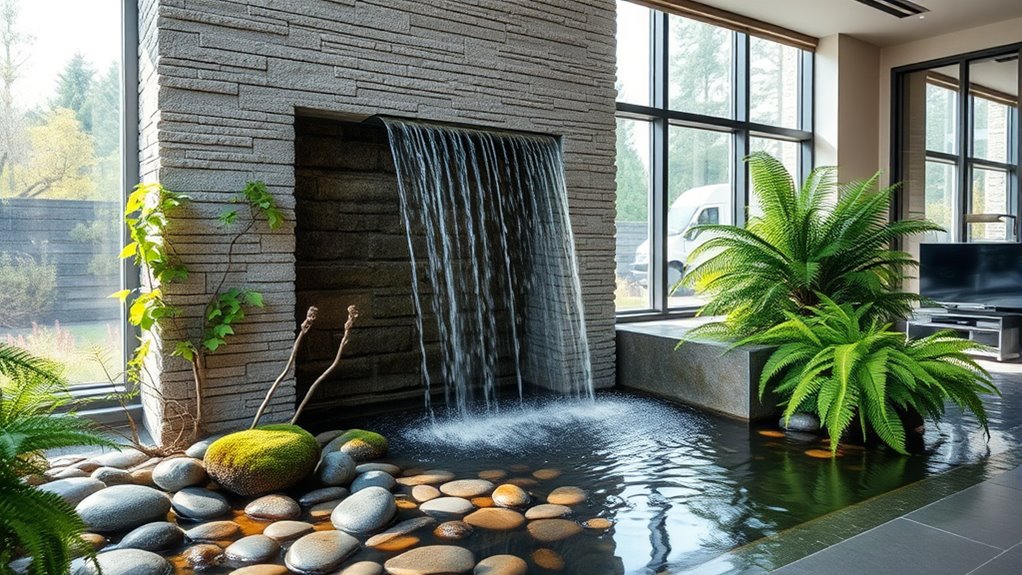
Why should you consider installing water features in your space? Water soundscapes create a calming atmosphere, reducing stress and enhancing focus. An aquatic plant display adds visual interest and promotes a sense of tranquility. When thoughtfully designed, water features can serve as focal points, bringing nature’s soothing elements indoors. Incorporating high-tech bidet systems can further elevate your bathroom’s relaxation and hygiene experience, seamlessly blending nature-inspired design with modern innovation.
Create Green Walls or Vertical Gardens
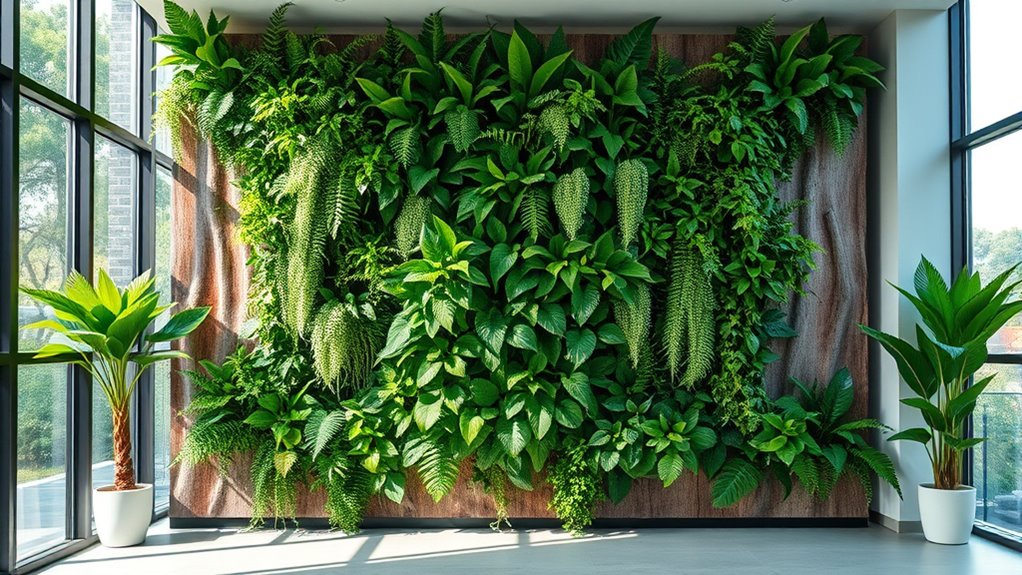
Creating green walls or vertical gardens transforms empty walls into lush, living displays that enhance your space’s aesthetics and air quality. To succeed, consider these key steps:
- Choose sustainable materials like recycled metal or bamboo for the structure, reducing environmental impact.
- Select plants that require minimal maintenance and suit your indoor environment to simplify plant care.
- Install an efficient irrigation system to support plant health and reduce water waste.
Use Nature-Inspired Color Palettes
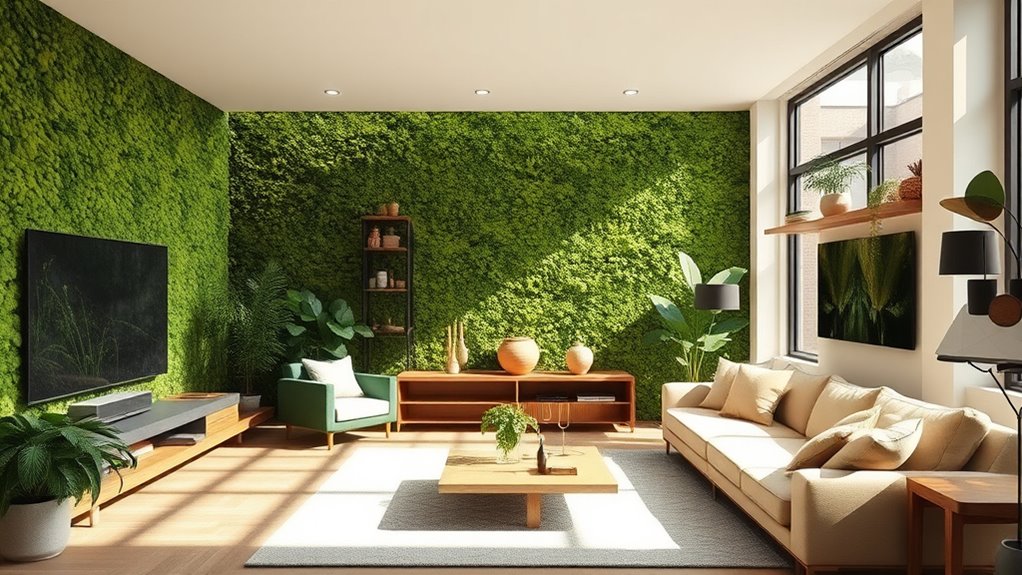
Incorporating nature-inspired color palettes into your space instantly creates a calming and harmonious environment. Opt for soft greens, earthy browns, gentle blues, and muted neutrals to evoke a sense of tranquility. These colors promote harmony in decor, making your space feel balanced and welcoming. Using a cohesive palette helps tie different elements together, enhancing the overall sense of serenity. Lighter shades can open up your space and boost calming effects, while darker accents add depth without overwhelming the senses. Keep the palette simple and consistent to maintain a peaceful atmosphere. By choosing colors inspired by nature, you foster a connection to the outdoors that nurtures relaxation and well-being, turning your indoor environment into a sanctuary of calm.
Integrate Natural Scents and Sounds
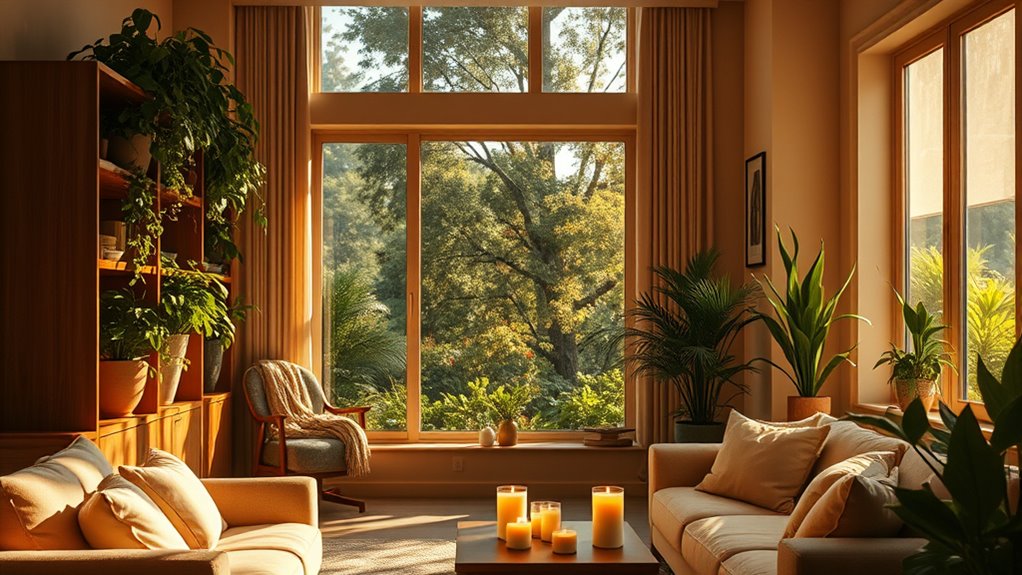
Adding natural scents and sounds to your space can substantially enhance its calming effect. You can achieve this by using scent diffusers filled with essential oils like lavender or eucalyptus, which promote relaxation. To deepen the connection with nature, try these approaches:
- Set up scent diffusers with calming fragrances to create a soothing atmosphere.
- Play nature sounds playlists featuring gentle rain, chirping birds, or flowing streams.
- Incorporate sound machines or smart speakers that seamlessly blend these sounds into your daily routine.
These elements help engage your senses, making your environment feel more peaceful and restorative. By thoughtfully integrating natural scents and sounds, you cultivate a space that promotes relaxation, focus, and well-being—bringing nature’s serenity indoors.
Frequently Asked Questions
How Does Biophilic Design Improve Mental Health?
You might notice that being around natural elements helps reduce your stress and boosts your mood. Incorporating natural light, plants, and views of nature can lead to stress reduction and cognitive enhancement, making it easier to focus and think clearly. These elements connect you to the outdoors, creating a calming environment that supports your mental well-being and overall health. Embracing nature indoors can truly transform your mental health positively.
What Are Cost-Effective Ways to Incorporate Nature Indoors?
You can easily incorporate nature indoors by using affordable greenery like succulents or potted plants, which are budget-friendly and low-maintenance. DIY natural decor, such as handmade planters or wall-mounted plant holders, adds a personal touch without breaking the bank. You might also repurpose everyday items, like jars or crates, to display plants creatively. These simple, cost-effective ideas help you enjoy the benefits of nature in your space without overspending.
Can Biophilic Elements Be Suitable for Small Spaces?
Did you know that over 50% of people live in urban areas with limited space? Biophilic elements can definitely suit small spaces if you use creative arrangements. For example, vertical gardens or small potted plants fit well in compact spaces and add natural beauty without clutter. You can also incorporate natural textures or sunlight to make your environment feel more open and inviting, even in tight quarters.
How Does Biophilic Design Impact Indoor Air Quality?
You might wonder how biophilic design impacts indoor air quality. It encourages air purification through the use of plants that naturally filter toxins and improve air circulation. Additionally, incorporating natural ventilation methods enhances airflow, reducing indoor pollutants and humidity. By bringing in elements like greenery and open windows, you create a healthier environment, making your indoor space fresher, cleaner, and more comfortable.
What Maintenance Is Required for Indoor Natural Features?
To keep indoor natural features healthy, you need regular maintenance. You should prune plants regularly to promote growth and remove dead or diseased leaves. Establish cleaning routines to keep the space tidy and prevent pests or mold. Check for dust buildup on leaves and clean them gently. Proper maintenance guarantees your indoor natural features stay vibrant, healthy, and safe, enhancing your environment and supporting your well-being.
Conclusion
By embracing biophilic design, you transform your space into a sanctuary that feels both alive and calming. Incorporate indoor plants, natural textures, and soothing sounds to create a seamless connection with nature—no time machine needed. As you bring the outdoors inside, you’ll notice increased well-being and inspiration. Remember, even in a world racing faster than a Tesla, taking these simple steps helps you stay grounded and refreshed, just like the ancient forests that first inspired us.