
TL;DR
Interior designer Aniela Thorman has called herringbone flooring the “live, laugh, love” of 2020s interiors, arguing that mass-market vinyl versions and formulaic use have weakened its appeal. The Livingetc report also presents the case for keeping the pattern, which remains a design choice rather than a style universally declared out of fashion.
Interior designer Aniela Thorman has described herringbone flooring as the “live, laugh, love” of 2020s interiors, arguing that mass-market imitation materials and repeated use in neutral modern homes have made the once-luxurious pattern feel generic. A Livingetc report examines her criticism alongside support for the style, but does not establish that herringbone floors are broadly out of fashion.

Get furniture and decor delivered free with Prime
- Fast, free delivery on millions of items
- Prime Video, Amazon Music and more included
- Member-only deals all year
Thorman, of @foundry.interiors, told Livingetc that the pattern’s accessibility is part of the problem. She said the growth of luxury vinyl tile (LVT) has led manufacturers to use herringbone as a way to make lower-cost flooring appear more high-end. Her objection is not only to the pattern itself, but to its association with synthetic materials and predictable interior schemes.
“Originally, herringbone was designed for heritage buildings with grand, soaring proportions and high ceilings. When you drop it into modern builds, especially in synthetic materials and grey finishes, it cheapens the look,” Thorman told the publication. She argues that herringbone can feel more at home in Georgian, Victorian or Edwardian properties, where its traditional character matches the architecture.
She also said straight-plank timber may suit some contemporary rooms better, because longer boards can visually extend walls and make a space feel larger. Livingetc’s report, however, also includes designers who favor herringbone for the movement and rhythm it can bring to a room. The available source excerpt cuts off before those opposing views are fully detailed, so their reasoning cannot be described further.
Why Flooring Choice Signals More Than Trend
The dispute matters to homeowners and renovators weighing a long-term flooring investment, particularly where less expensive patterned products are being considered. Thorman’s argument draws attention to the difference between a layout’s history and how it is currently used: a traditional pattern may read differently when paired with synthetic materials, grey finishes or architecture that does not echo its origins.
It is also a reminder that flooring choices affect a room’s proportions and overall character. Thorman says straight planks can make modern spaces feel longer, while Livingetc describes herringbone as bringing movement to interiors. Those are design judgments, not universal rules. The report offers no survey, sales figures or other evidence showing that consumer demand has shifted away from herringbone.
Products Worth Considering

Philips Hue Play Floor Lamp, RGBWWIC LED, 53 Inch, Black

Philips Hue Amarant Outdoor Smart Light Bar, Black

Dyson V15 Detect Cordless Stick Vacuum
As an affiliate, we earn on qualifying purchases.
From Heritage Floors to Mass-Market Copies
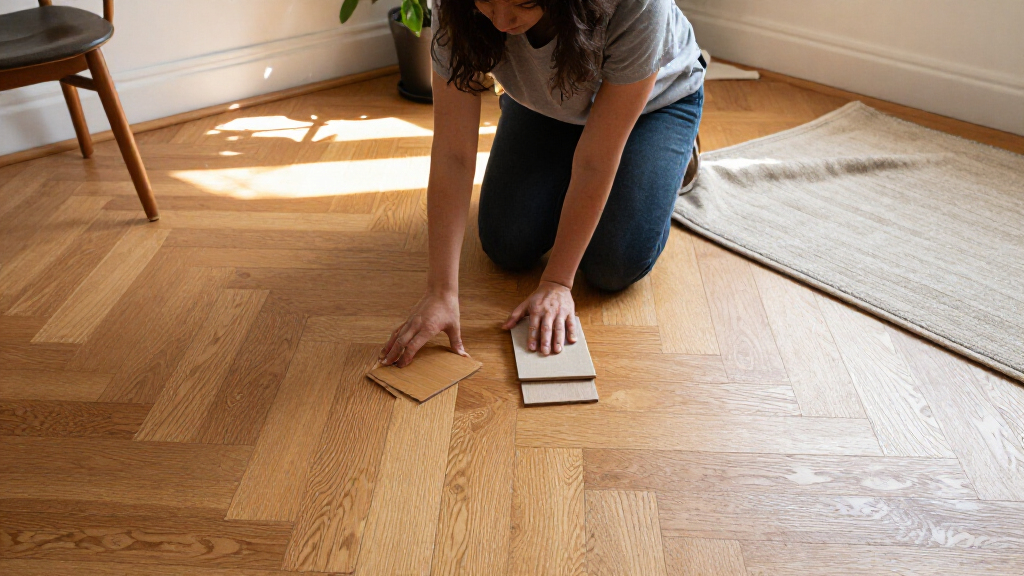
Herringbone is a zigzag arrangement of rectangular flooring pieces. Livingetc traces the pattern’s roots to the 16th century, describing how French aristocrats adapted the look of stone formations associated with Ancient Rome into wooden floors. The style later became linked with luxury and European heritage interiors.
The report says the pattern is now common in some new-build homes and available in lower-cost materials that imitate wood. Thorman argues that this wider availability has changed its associations, especially when the floors appear in grey finishes and highly neutral interiors. The article frames the backlash as a response to repetitive, trend-led design, rather than evidence that the pattern itself has lost all value.
““I called it that because of the massive influx of LVT (luxury vinyl tile) flooring. Because herringbone has become so accessible, mass-market manufacturers lean on it as a shortcut to make cheap materials look ‘high-end’.””
— Aniela Thorman, interior designer at @foundry.interiors, quoted by Livingetc
No Evidence of a Universal Style Shift
The report does not provide market data, a poll of designers or evidence that herringbone flooring has fallen out of favor across the interiors industry. Thorman’s “live, laugh, love” comparison is her stated opinion, not a measured industry verdict. The supplied article excerpt also ends as it begins presenting the opposing case, leaving the full range of views from herringbone supporters unavailable.
It is also unclear how much of Thorman’s criticism applies to different types of herringbone flooring. The source distinguishes traditional wood from LVT imitations, but does not compare specific products, prices or installation settings. Whether the pattern feels appropriate will depend on a home’s materials, architecture and the owner’s preferences.
How Designers May Weigh the Pattern
The immediate next step is not a reported industry decision or trend forecast: the source presents an ongoing design debate. Readers considering new floors can compare the pattern with their home’s architecture, the material they plan to use and the visual effect they want. Thorman’s comments point toward considering straight planks in some modern rooms, while the opposing view in Livingetc’s report suggests herringbone can still add visual rhythm.
No product launch, industry survey or follow-up announcement is identified in the supplied material. The question of whether herringbone is losing popularity more broadly remains open; the reporting supports a narrower conclusion that some designers object to its routine use in mass-market, neutral interiors.
Key Questions
Did a designer say herringbone floors are out of style?
Aniela Thorman called herringbone the “live, laugh, love” of 2020s interiors. That is her opinion, as reported by Livingetc, not proof of a general industry consensus.
Why does Thorman object to herringbone flooring?
She says mass-market LVT imitations and repeated use in grey, neutral modern homes have made the pattern feel generic and less connected to its heritage associations.
Does the report say herringbone flooring should never be used?
No. The report presents both criticism and support for the pattern. Thorman’s comments focus on how flooring relates to materials and architecture, rather than setting a universal rule.
What flooring does Thorman say may suit modern spaces?
She says longer, straight-plank timber can suit some contemporary rooms because it may visually elongate walls and expand the space.
Source: livingetc.com