To create a lush, stylish home with indoor plants, choose containers that match your decor and guarantee proper drainage. Group plants of varying heights and textures for visual interest, placing them near natural light sources. Regularly check soil moisture and adjust watering accordingly, avoiding over- or underwatering. Incorporate stylish plant stands and hanging planters to enhance your space. Paying attention to plant care and placement will keep your home vibrant and inviting—exploring these tips further can transform your environment.

Get furniture and decor delivered free with Prime
- Fast, free delivery on millions of items
- Prime Video, Amazon Music and more included
- Member-only deals all year
Key Takeaways
- Select decorative pots that complement your interior style and ensure proper drainage for healthy plants.
- Group plants of different heights and textures on shelves or stands to create visual interest.
- Place plants near natural light sources, rotating them regularly for even growth and vibrant foliage.
- Incorporate colorful, patterned, or earthy-toned pots to add personality and warmth to your space.
- Maintain proper plant care routines to keep your indoor garden lush, healthy, and visually appealing.
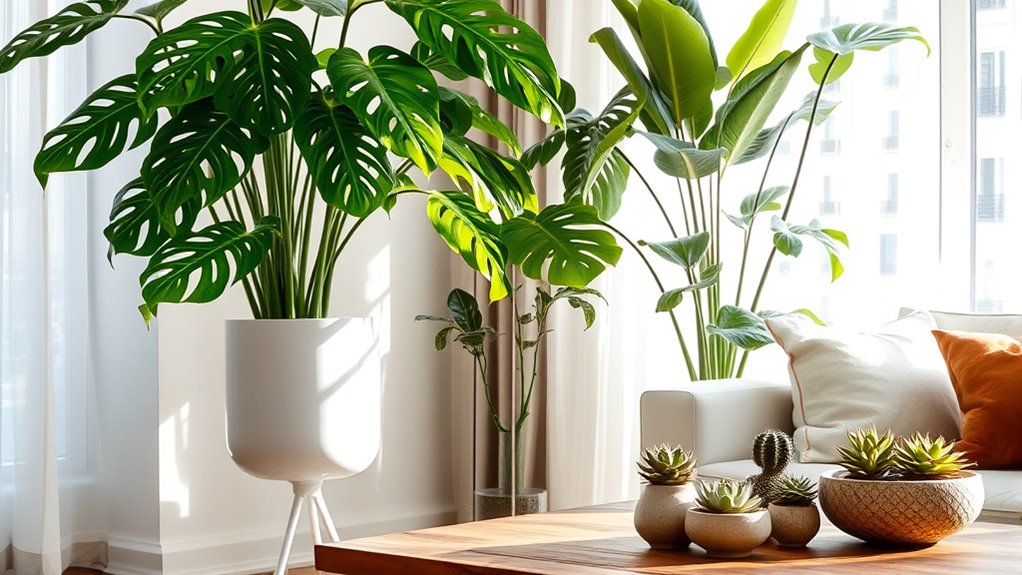
Indoor plants can transform your living space by adding natural beauty and a touch of freshness. When you choose to incorporate them into your home decor, you’re not just bringing in greenery—you’re creating a vibrant, inviting environment that reflects your style. To make the most of your indoor plants, focus on proper plant care. This means understanding each plant’s specific needs, such as light, water, and humidity. Regularly check the soil moisture and adjust your watering schedule accordingly, avoiding both overwatering and underwatering. Keep an eye out for signs of pests or disease, and prune when necessary to encourage healthy growth. Consistent plant care guarantees your plants stay lush and thriving, enhancing your space over time. Additionally, incorporating personal growth principles such as mindfulness while caring for your plants can deepen your connection to your environment and promote mental clarity.
Proper plant care and understanding their needs keep indoor greenery lush and thriving.
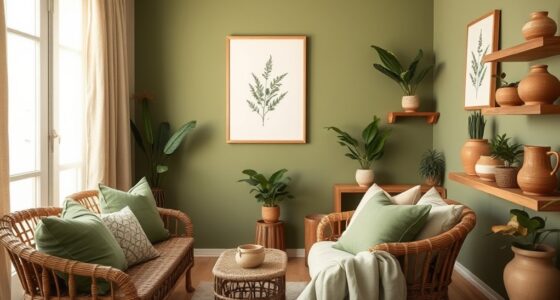
Another key element in decorating with indoor plants is selecting the right decorative pots. The pots you choose should complement your interior design and suit the size and style of your plants. Modern, minimalist homes often benefit from sleek, simple containers in neutral tones like white, black, or gray. If your decor leans toward bohemian or eclectic styles, consider colorful or patterned pots that add personality. For a more natural look, terracotta or clay pots introduce warmth and earthy appeal. The shape and height of the pots also matter; tall, narrow planters work well on shelves or beside furniture, while wide, shallow containers are perfect for spreading out low-growing plants. Don’t forget about drainage—holes are essential to prevent water from accumulating and causing root rot.
Placement plays a significant role in making your indoor plants look stylish and healthy. Group plants of varying heights and textures to create visual interest. Use plant stands, hanging planters, or decorative shelves to showcase your collection. Position plants near natural light sources, such as windows, but be mindful of their specific light requirements. Some plants thrive in direct sunlight, while others prefer indirect or low light conditions.
When you incorporate decorative pots into your plant care routine, you’re also elevating your home’s aesthetic. A well-chosen pot can serve as a statement piece or seamlessly blend into your existing decor. Remember to rotate your plants regularly so they get even light exposure, and consider repotting when they outgrow their current containers. This not only keeps your plants healthy but also refreshes their appearance. With attention to plant care and thoughtful selection of decorative pots, your indoor garden will flourish, adding style, vitality, and a natural touch to your home environment.
decorative indoor plant pots with drainage
As an affiliate, we earn on qualifying purchases.
As an affiliate, we earn on qualifying purchases.
Frequently Asked Questions
How Do I Choose Plants for Low-Light Spaces?
When choosing plants for low-light spaces, consider the light levels carefully. Opt for varieties like snake plants or pothos that thrive in low light. You should also focus on plant placement; keep these plants away from direct sunlight and near shaded corners. By selecting low-light tolerant plants and placing them appropriately, you’ll guarantee they stay healthy and vibrant, adding lush greenery to even the dimmest areas of your home.
What Are the Best Plants for Pet-Friendly Homes?
If you’re looking for pet-friendly options, focus on non-toxic houseplants that are safe around your furry friends. Some of the best pet-safe foliage includes spider plants, Boston ferns, and calathea. These plants add beauty without risking your pets’ health. Always double-check plant toxicity and keep your pets from chewing on unfamiliar greenery. You’ll enjoy a lush, stylish home that’s safe for everyone.
How Often Should I Water Different Indoor Plants?
Think of your indoor plants as delicate dancers needing just the right amount of water to perform beautifully. Your watering schedule varies by plant type, size, and environment. Some might need weekly hydration, while others thrive with less frequent watering. Observe their leaves—wilting signals dehydration, while yellowing indicates overwatering. By understanding each plant’s unique needs, you guarantee proper plant hydration, keeping your indoor garden vibrant and thriving.
Can Indoor Plants Help Improve Air Quality?
Indoor plants can definitely help improve air quality by acting as natural filters. They absorb toxins and release oxygen, making your space healthier. Many air purifying plants, like snake plants and pothos, are especially effective. By adding these plants to your home, you create a cleaner environment, boost humidity, and enjoy a more invigorating atmosphere. So, yes, indoor plants are a smart, natural way to enhance your air quality.
How Do I Prevent Pests on My Indoor Plants?
Did you know 30% of houseplant owners face pest issues? To prevent pests, try proactive pest prevention strategies like inspecting new plants and avoiding overwatering. Organic pest control methods, such as neem oil or insecticidal soap, work well without harming your plants or home environment. Regularly checking your plants and maintaining good hygiene helps keep pests at bay, ensuring your indoor garden stays healthy and pest-free.
stylish plant stands for indoor plants
As an affiliate, we earn on qualifying purchases.
As an affiliate, we earn on qualifying purchases.
Conclusion
Now that you’ve learned the secrets to decorating with indoor plants, imagine the stunning transformation awaiting your space. But here’s the catch—your perfect lush, stylish home isn’t complete yet. There’s one essential detail you might be overlooking that could make all the difference. Ready to uncover it and truly elevate your indoor greenery game? Stay tuned, because the final touch could be just around the corner—waiting to turn your home into a breathtaking oasis.
hanging planters for indoor plants
As an affiliate, we earn on qualifying purchases.
As an affiliate, we earn on qualifying purchases.
As an affiliate, we earn on qualifying purchases.
Halloween Picks
halloween
As an affiliate, we earn on qualifying purchases.