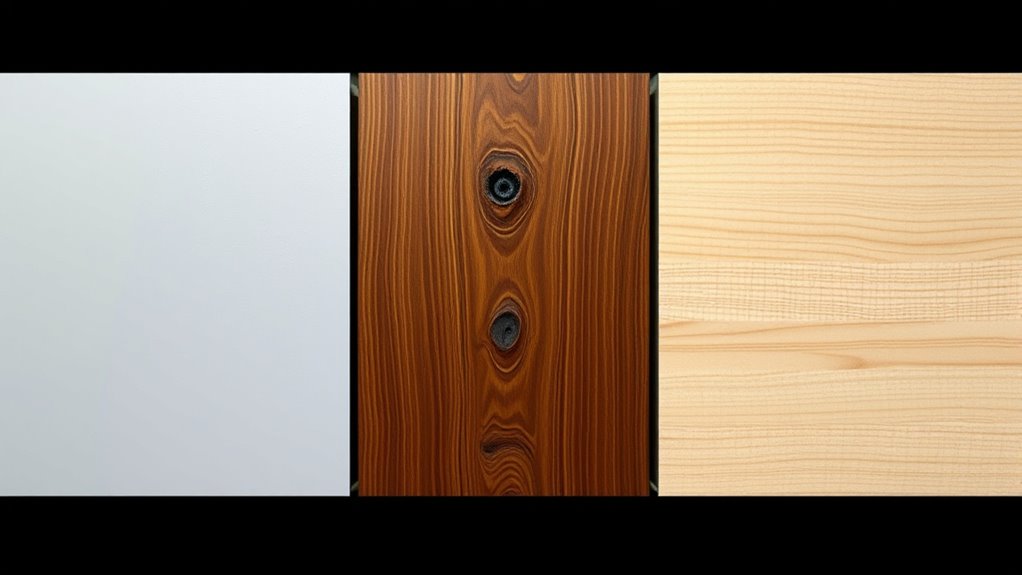

When choosing wood furniture, understanding the differences between MDF, solid wood, and veneer helps you make an informed decision. Solid wood is durable, timeless, and eco-friendly but costs more. Veneer offers the look of real wood at a lower price but isn’t as resilient. MDF is budget-friendly, has a smooth finish, but may contain formaldehyde and is less durable long-term. Continue exploring to find out which material matches your style, budget, and environmental values best.
Key Takeaways
- Solid wood is durable, lasts generations, and is eco-friendly when sustainably sourced, but is more expensive.
- Veneers offer a real wood look at lower cost but are less durable and prone to damage.
- MDF provides a smooth, painted finish, is affordable, and resistant to warping but may contain formaldehyde.
- Proper maintenance extends the lifespan of all materials, with solid wood requiring regular polishing and careful moisture control.
- Consider environmental impact and budget when choosing, as solid wood is eco-friendly but pricier, while MDF and veneers are more budget-conscious options.
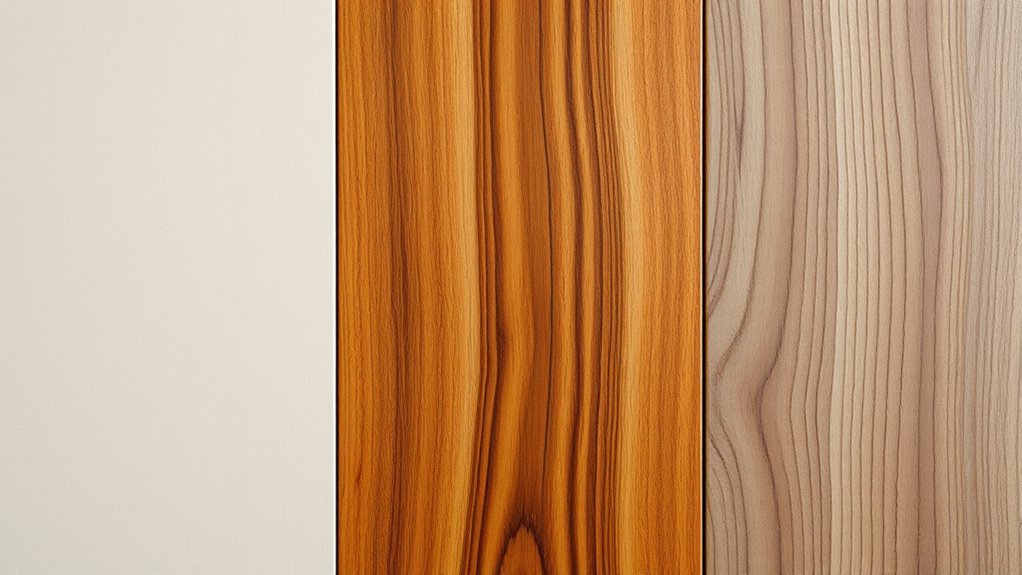
Wood furniture offers timeless beauty and durability that can enhance any space. Whether you’re outfitting your living room, bedroom, or office, understanding the differences between MDF, solid wood, and veneer helps you make informed choices that suit your style, budget, and values. One of the key factors to consider is care and maintenance. Solid wood furniture requires regular dusting and occasional polishing to keep its surface looking fresh. It’s also important to protect it from moisture and extreme temperature changes, which can cause warping or cracking over time. Veneer furniture, on the other hand, needs gentle cleaning with soft cloths and mild cleaners to prevent scratches that might penetrate the thin surface layer. MDF, being a composite material, is more resistant to warping but can be damaged by water if not properly sealed. You should also consider environmental impact when choosing your furniture. Solid wood is a natural, biodegradable resource, especially when sourced sustainably, making it a more eco-friendly option. However, its harvesting can contribute to deforestation if not managed responsibly. Veneers are often made from thin slices of wood glued onto a core material, which can reduce the amount of real wood used but still involves processing that impacts the environment. MDF is manufactured from wood fibers bonded with resin, which can contain formaldehyde and other chemicals, raising concerns about indoor air quality and environmental safety. When shopping for furniture, look for labels or certifications indicating sustainable sourcing, such as FSC or FSC-certified wood. This ensures your piece supports responsible forestry practices. Besides environmental impact, think about longevity and how well each material suits your lifestyle. Solid wood furniture can last generations if properly cared for, making it a worthwhile investment despite its higher price point. Veneers offer the look of real wood at a lower cost, but they may not stand up to heavy use or damage as well as solid wood. MDF provides a smooth, consistent finish ideal for painted or laminated surfaces, and it’s often more affordable than solid wood, but it’s generally less durable in the long run. In addition, sustainable sourcing is an important consideration for environmentally conscious consumers. In the end, your choice depends on balancing your aesthetic preferences, budget, and environmental values. Proper care and maintenance will extend the life of your furniture, regardless of the material. And by choosing sustainably sourced pieces, you contribute to reducing environmental impact, ensuring that your beautiful furniture can be enjoyed for years to come without harming the planet.
Frequently Asked Questions
How Eco-Friendly Are MDF, Solid Wood, and Veneer Furniture?
When considering eco-friendliness, you should look at sustainable materials and chemical emissions. Solid wood is often the most eco-friendly since it’s natural and renewable, especially if sourced responsibly. MDF contains formaldehyde-based adhesives, which can emit harmful chemicals and impact indoor air quality. Veneer uses less wood, making it more sustainable, but some adhesives might also release chemicals. Choosing furniture with low emissions and sustainable sourcing helps reduce your environmental footprint.
Which Type of Wood Furniture Is Most Durable Long-Term?
When choosing durable wood furniture, consider grain strength and finish longevity. Solid wood generally offers the best durability because of its natural strength and ability to withstand wear over time. Veneer can be long-lasting if properly finished, but it’s more prone to damage from scratches and moisture. MDF is less durable long-term, especially if the finish wears down, making solid wood your best bet for long-lasting furniture.
Can Veneer Furniture Be Repaired if Damaged?
You might be surprised to learn that veneer furniture can often be repaired if damaged, thanks to specialized veneer repair techniques. When veneer damage occurs, you can carefully sand, fill, or re-glue the affected area to restore its appearance. Coincidentally, knowing how to handle veneer repair not only extends furniture life but also preserves its beauty. With the right approach, you’ll find that veneer furniture can look almost new again after minor damage.
How Do Moisture Levels Affect MDF and Veneer Furniture?
Moisture levels profoundly impact MDF and veneer furniture. When moisture absorption occurs, it can cause MDF to swell or warp, compromising its structure. Veneer furniture is also sensitive; excess humidity can lead to delamination or bubbling. To protect your furniture, maintain proper humidity control in your space, avoiding excessive moisture. Regularly monitor moisture levels to guarantee your MDF and veneer pieces stay stable, durable, and looking their best.
Are There Health Concerns Associated With MDF or Veneer?
You might wonder if MDF or veneer furniture poses health safety concerns. Both can emit chemical emissions, especially if they contain adhesives or finishes with formaldehyde. Prolonged exposure to these emissions may cause respiratory issues or sensitivities. To minimize risks, choose furniture with low or zero VOC finishes, ensure good ventilation, and look for products certified for low chemical emissions. Your health safety depends on careful selection and proper maintenance of your furniture.
Conclusion
Now that you understand the differences between MDF, solid wood, and veneer, you can confidently choose the right furniture for your home. Think of it like selecting a trusty steed—each has its own strengths, whether it’s the durability of solid wood or the affordability of MDF. Just remember, investing in quality furniture today means your home will be a cozy castle for years to come, even if you’re channeling a bit of a 21st-century knight.