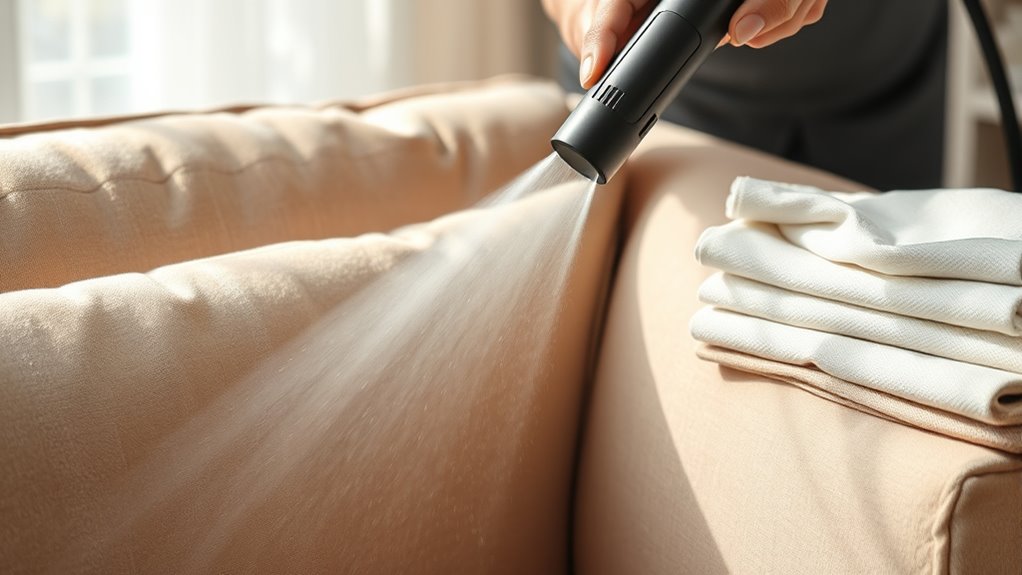

To clean upholstery effectively, identify the fabric type—natural fibers like cotton need gentle care, while synthetics such as polyester are more stain-resistant. Gather the right tools, like soft cloths, brushes, and vacuum attachments, and use suitable cleaning solutions, testing them first on hidden areas. Act quickly on stains and follow proper techniques to prevent damage. Keep upholstery in great shape by following these tips, which you’ll find easy to apply once you explore further.
Key Takeaways
- Identify fabric types (natural vs. synthetic) and consult care labels for tailored cleaning instructions.
- Use appropriate tools like soft brushes, microfiber cloths, and vacuum attachments to prevent fabric damage.
- Act quickly on stains, blot gently, and apply suitable cleaning solutions to avoid permanent marks.
- Test cleaning methods on hidden fabric areas before full application to ensure compatibility and prevent damage.
- Regular maintenance, including vacuuming and prompt stain treatment, prolongs upholstery lifespan and keeps fabrics looking fresh.

Have you ever wondered how to keep your upholstery looking fresh and clean? It’s a common concern, especially when fabric stains start to appear or your furniture begins to look dull. The key lies in understanding the different fabrics and using the right cleaning tools for each type. Knowing how to treat fabric stains promptly can save you time and effort, preventing permanent damage and keeping your furniture looking its best.
Keeping your upholstery clean and fresh starts with understanding fabric types and proper stain treatment.
When tackling fabric stains, the first step is to identify the fabric type. Different materials respond to cleaning methods differently. For instance, natural fibers like cotton or linen are more absorbent and can stain easily, but they also tend to be more delicate. Synthetic fabrics like polyester or microfiber are usually more resistant to stains and easier to clean. Once you know the fabric, gather the appropriate cleaning tools—such as soft brushes, microfiber cloths, or vacuum attachments—and cleaning solutions suitable for that material. For most fabrics, a mild detergent mixed with water works well, but always check the manufacturer’s care label for specific instructions.
For fresh fabric stains, act quickly. Blot the stain gently with a clean, damp cloth to absorb as much of the spill as possible—don’t rub, as that can push the stain deeper into the fibers. For tougher stains, you may need to use a specialized upholstery cleaner or a mixture of mild soap and water. Apply the solution sparingly with a soft cloth or sponge, working from the outside of the stain inward to prevent spreading. Use cleaning tools like a soft-bristled brush to gently agitate the fabric if needed, but be careful not to damage delicate fibers.
In addition to spot cleaning, regular maintenance is essential for keeping upholstery looking fresh. Vacuuming with a brush attachment removes dirt and dust that can grind into the fabric over time. For some fabrics, steam cleaning can help lift dirt and kill bacteria, but always check whether your material is compatible with steam. Remember to test any cleaning solution on a hidden area first to ensure it doesn’t cause discoloration or damage.
Frequently Asked Questions
Can I Use DIY Cleaning Solutions on Delicate Fabrics?
You can use DIY solutions on delicate fabrics, but you need to be cautious. Avoid harsh chemicals and opt for gentle ingredients like mild soap or vinegar diluted with water. Test your DIY solution on a small, hidden area first to prevent damage. If you’re unsure, it’s better to consult a professional cleaner. Using the wrong DIY solutions might harm delicate fabrics, so always proceed carefully.
How Often Should I Professionally Clean My Upholstery?
Think of your upholstery as a garden that needs regular tending. You should schedule professional maintenance every 12 to 18 months to keep it fresh and extend its lifespan. Regular cleaning frequency depends on usage and household factors, but professional cleaning guarantees deep-down dirt and allergens are removed. Don’t wait until it looks tired—timely professional care keeps your furniture looking its best and maintains a healthy home environment.
Are There Eco-Friendly Cleaning Options Available for Upholstery?
You’ll be glad to know eco-friendly products are widely available for upholstery cleaning. These options use sustainable cleaning methods and ingredients, reducing environmental impact. You can choose natural, biodegradable cleaners or DIY solutions like vinegar and baking soda for effective, safe results. Always check product labels for eco certifications, and opt for companies that prioritize sustainable cleaning practices to keep your furniture fresh without harming the planet.
What Should I Do if My Upholstery Gets Stained Frequently?
If your upholstery gets stained frequently, focus on stain prevention and fabric protection. Regularly vacuum and use slipcovers or throws to shield the fabric from spills. Apply fabric protectors that create a barrier against stains, making cleanup easier. Address spills immediately with a clean cloth, and avoid harsh chemicals. By maintaining these habits, you reduce the chances of stains setting in, keeping your furniture looking fresh longer.
How Can I Prevent Future Damage During Cleaning?
Imagine a shield forming as you clean—fabric protectants act like that shield, preventing future stains. To avoid damage, establish a consistent cleaning schedule, so dirt and spills don’t settle in. Always test protectants on a small area first. Using gentle cleaning methods and avoiding harsh chemicals also helps preserve your upholstery’s fabric. With these steps, you keep your furniture looking fresh and damage-free over time.
Conclusion
Now that you know how to clean different fabrics, you’re ready to restore your upholstery’s beauty, maintain its freshness, and extend its lifespan. By understanding the right methods, choosing suitable products, and staying consistent, you’ll keep your furniture looking its best. Cleaning upholstery isn’t just about removing dirt; it’s about caring for your space, protecting your investment, and creating a healthier home. So, clean regularly, act promptly, and enjoy the comfort of pristine, inviting furniture.