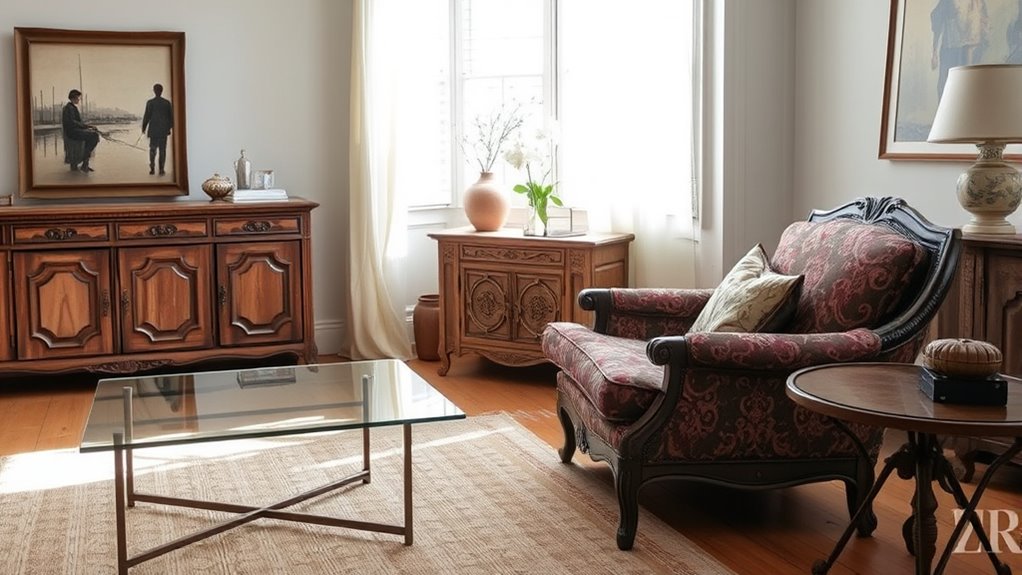

To mix vintage and new furniture effectively, start by choosing a standout piece as a focal point and build your design around it. Play with contrast by pairing weathered vintage items with sleek modern accessories, and coordinate materials like polished wood with matte metals. Use neutral colors as a base, and add vibrant accents for interest. Keep proportions balanced and space open to create a cohesive, inviting look. Keep exploring for more tips on creating a stylish blend.
Key Takeaways
- Establish a focal point with either vintage or modern furniture to create a cohesive design foundation.
- Use contrast by pairing vintage statement pieces with contemporary accessories for visual interest.
- Coordinate materials and finishes, such as combining polished wood with matte metals, for a harmonious look.
- Balance colors and arrangements with neutral palettes and vibrant accents to unify diverse styles.
- Pay attention to scale and space, mixing ornate and streamlined furniture to maintain an inviting, balanced environment.

Blending vintage and new furniture can create a unique and personalized look that reflects your style. When you combine these pieces thoughtfully, you harness the antique charm of older furniture while embracing the sleek, functional appeal of modern designs. The key is to strike a balance that highlights the strengths of each style without overwhelming the space. Start by choosing a focal point, like a vintage armoire or a modern sofa, and build around it. This approach guarantees your room feels cohesive rather than cluttered or mismatched.
Mixing vintage and new furniture works well because the contrast adds visual interest. The antique charm of a weathered coffee table or a retro sideboard can serve as a statement piece that anchors the room. To enhance this effect, pair it with contemporary accessories—think minimalist lamps, abstract art, or sleek rugs—that provide a modern contrast. This not only elevates the vintage piece but also brings a fresh, current vibe to your space. When selecting furniture, consider the materials and finishes. Combining polished wood with matte metals or glass can create a balanced mix that feels intentional rather than chaotic.
Contrasting vintage charm with modern accessories creates a stylish, balanced space.
Colors play a vital role in blending vintage and modern furniture. Keep a neutral palette as a base to unify diverse styles, then add pops of color through cushions, throws, or artwork. This keeps the space lively without clashing. For example, a vintage velvet armchair in a deep hue can be paired with a contemporary geometric rug, creating a layered look that’s both inviting and stylish. When arranging your furniture, don’t be afraid to experiment with placement. Sometimes, the best combinations happen when you place a traditional piece in an unexpected spot or pair a sleek modern table with vintage chairs.
Pay attention to scale and proportion. Vintage furniture often has more ornate details or a different size than modern pieces, so aim for a harmonious mix. For instance, if you have a large, intricate antique mirror, balance it with streamlined, unembellished furniture. Keep the space open and avoid overcrowding, allowing each piece to stand out and contribute to the overall aesthetic. Remember, your goal is to create a space that feels curated and authentic. When you thoughtfully combine antique charm with modern contrast, you craft an environment that’s not only visually appealing but also deeply personal. Incorporating vetted Halloween product reviews can provide inspiration for themed decorating ideas that blend styles creatively.
Frequently Asked Questions
How Can I Balance Different Furniture Styles Effectively?
To balance different furniture styles, you should mix textures and balance proportions carefully. Start by combining vintage pieces with modern ones that share similar colors or materials, creating harmony. Use contrasting textures to add visual interest, but keep proportions in check so no item overpowers the space. This approach helps you create a cohesive look where vintage charm and contemporary style blend seamlessly, making your space feel balanced and inviting.
What Are Common Mistakes When Mixing Vintage and Modern Pieces?
You might think mixing vintage and modern furniture is a walk in the park, but the biggest mistake is ignoring matching patterns, scale, and proportion, leading to a chaotic look. Overdoing it with contrasting styles or mismatched sizes can make your space feel off-balance and cluttered. Always aim for harmony by balancing bold vintage pieces with sleek modern ones, paying attention to how patterns and sizes complement each other to create a cohesive design.
How Do I Choose a Cohesive Color Palette?
You should start by understanding color theory to select a cohesive palette. Choose a base color that complements both vintage and modern pieces, then pick accent shades that create harmony. When selecting paint, consider how the colors interact in different lighting and with your furniture styles. Stick to a consistent color scheme throughout the space, balancing bold and neutral tones to unify vintage charm with contemporary freshness seamlessly.
Are There Specific Materials to Avoid Combining?
You should avoid combining overly shiny or plastic materials with vintage pieces, as they can clash. Be cautious with fabric combinations—pair delicate, textured fabrics with more modern, sleek ones to create balance. Materials pairing like glossy finishes with matte surfaces work well, but steer clear of mixing rough textures with smooth, polished surfaces. This approach helps your vintage and new furniture blend seamlessly, creating a cohesive, stylish space.
How Can I Incorporate Vintage Pieces Without Clutter?
You can incorporate vintage pieces without clutter by selecting a few statement vintage accessories and balancing them with modern art. Keep the space open and avoid overcrowding by limiting vintage items to key areas. Use clean lines and neutral backgrounds to highlight vintage accents. Combining these elements thoughtfully creates a cohesive look that feels curated, not cluttered, allowing each piece to stand out while maintaining a fresh, modern vibe.
Conclusion
Blending vintage and new furniture is like creating a beautiful tapestry—each piece adds its unique thread, weaving together a space that’s both timeless and fresh. Trust your instincts, and don’t be afraid to experiment. When you mix these styles thoughtfully, you’ll craft a home that feels perfectly you—full of character and charm. So, embrace the adventure and let your personal style be the guiding star in this delightful design journey.


