To keep your leather furniture lasting, clean it regularly with a soft, dry or slightly damp microfiber cloth, avoiding harsh chemicals. Protect it from direct sunlight, sharp objects, and spills by using covers and blotting spills immediately. Condition the leather every 6 to 12 months with a suitable moisturizer to maintain its softness and prevent cracks. For more detailed tips on caring for your leather furniture’s longevity, continue exploring.

Get furniture and decor delivered free with Prime
- Fast, free delivery on millions of items
- Prime Video, Amazon Music and more included
- Member-only deals all year
Key Takeaways
- Regularly dust and clean with a soft, damp microfiber cloth to remove surface debris and prevent buildup.
- Use pH-balanced leather cleaners and conditioners tailored to your leather type for deep cleaning and moisturization.
- Protect furniture from direct sunlight, sharp objects, and spills by using covers and immediate blotting of any accidents.
- Condition leather every 6 to 12 months to maintain suppleness and prevent cracking or drying out.
- Incorporate routine cleaning and conditioning into your maintenance schedule to prolong the furniture’s lifespan.
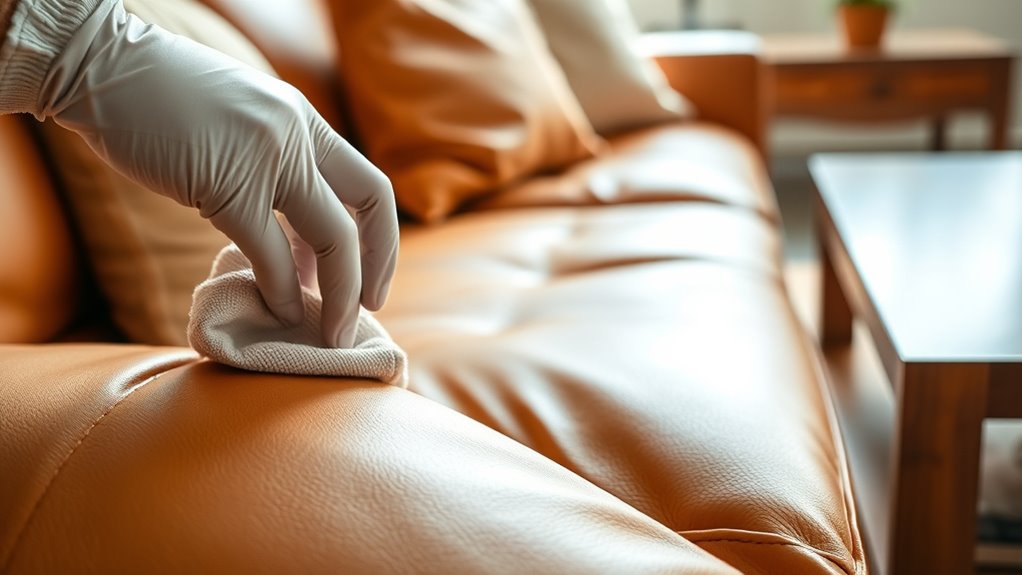
Leather furniture adds elegance to any space, but it requires proper care to maintain its beauty and durability. To keep your leather looking its best, you need to understand the right cleaning techniques and choose suitable leather conditioner options. Regular maintenance prevents dirt, oils, and grime from building up, which can cause cracks and fading over time. Start by dusting your furniture with a soft, dry cloth to remove surface debris. For deeper cleaning, dampen a microfiber cloth with distilled water and gently wipe the surface. Avoid harsh chemicals or abrasive cleaners, as they can damage the leather’s finish. Instead, opt for mild, pH-balanced cleaners specifically designed for leather. These are gentle enough to clean without stripping away natural oils or damaging the surface. When using cleaning solutions, always test a small, inconspicuous area first to ensure it doesn’t cause discoloration or harm. Using protective sprays designed for leather can also add a barrier against stains and spills. Once your furniture is clean, it’s essential to keep it moisturized. Leather conditioner options are crucial for maintaining suppleness and preventing cracks. You should choose a conditioner suited for your specific type of leather—whether it’s aniline, semi-aniline, or pigmented. There are many options available, from natural oils like mink or lanolin to commercial leather conditioners formulated with hydrating agents. Apply the conditioner sparingly using a soft cloth, working it into the leather with gentle circular motions. Allow it to absorb for the recommended time, then buff away any excess with a clean, dry cloth. Regular conditioning—about every 6 to 12 months—helps preserve the leather’s natural oils, keeping it soft and resisting wear. Proper cleaning and conditioning are essential for extending the lifespan of your leather furniture. In addition to cleaning and conditioning, you should also protect your leather furniture from direct sunlight, which can cause fading, and from sharp objects that might scratch the surface. Using slipcovers or throws can add an extra layer of protection, especially in high-traffic areas or homes with pets. If spills occur, blot them immediately with a dry cloth—never rub—as this can spread the stain or push it deeper into the leather. For stubborn stains, consult professional leather cleaners rather than trying to scrub it yourself. By incorporating proper cleaning techniques and selecting the right leather conditioner options, you guarantee your furniture remains beautiful and durable for years to come. Consistent care is key to maintaining its luxurious appearance and extending its lifespan, so make these practices part of your regular routine.
Products Worth Considering

Sonos Era 100 Wireless Smart Speaker with Alexa, Black

LG 55-Inch QNED73B Mini LED 4K Smart TV (2026)

Philips Hue Play Gradient Light Tube, Large, Black
As an affiliate, we earn on qualifying purchases.
Frequently Asked Questions
Can I Use Household Cleaning Products on Leather Furniture?
You shouldn’t use household cleaners on leather furniture, as they can cause leather damage. Many household cleaners contain chemicals that strip away the natural oils and damage the surface, leading to cracks or fading. Instead, opt for gentle, leather-specific products or a damp cloth. This way, you preserve your furniture, maintain its appearance, and guarantee it lasts longer without risking damage from harsh household cleaning products.
How Often Should I Condition Leather to Prevent Cracking?
You might think leather naturally ages like fine wine, but no, it actually needs a leather conditioning schedule to prevent cracks. To keep your furniture looking pristine, condition it every 6-12 months—more often in dry climates. This leather crack prevention method helps keep the leather supple and beautiful. So, don’t wait until it’s too late; regular conditioning is your best bet for long-lasting, crack-free leather furniture.
Is It Safe to Sit on Leather Furniture Immediately After Cleaning?
You might wonder if it’s safe to sit on leather furniture immediately after cleaning. Generally, it’s best to wait a few minutes for the leather to dry after leather cleaning before you sit on it. If you don’t, the moisture could cause damage or staining. Waiting guarantees the leather is fully dry and conditioned, so you can enjoy your furniture without worry. Always follow the specific cleaning product instructions for best results.
What Should I Do if My Leather Develops a Stain?
You notice a stain on your leather, and suddenly, everything feels uncertain. Don’t panic—act quickly with these leather cleaning tips. Start by gently blotting the stain without rubbing. For stubborn marks, try a mix of mild soap and water, or use a leather stain removal product designed for your furniture. Remember, patience and proper leather cleaning tips will help your furniture look new again, preserving its beauty for years.
How Can I Protect Leather Furniture From Sun Damage?
To protect your leather furniture from sun damage, you should use sun protection methods like UV inhibitors, which block harmful rays. Place your furniture away from direct sunlight or use curtains and blinds to limit exposure. Regularly applying a leather conditioner with UV protection can also help. These steps prevent fading, cracking, and drying, keeping your furniture looking great for years.
Conclusion
Properly caring for your leather furniture keeps it looking new and luxurious, but neglect can turn it dull and cracked. Think of your leather as a fine piece of art—worthy of attention and gentle handling. With regular cleaning and conditioning, you preserve its beauty and durability. So, while leather may seem tough, remember that your consistent care makes all the difference—transforming everyday maintenance into a lasting investment and a timeless centerpiece in your home.