
TL;DR
Designers interviewed by House Beautiful describe growing interest in freestanding cook’s tables as an alternative to oversized built-in kitchen islands. They point to flexibility, a lighter visual footprint and furniture-like warmth, but the source provides no sales data or specific evidence that the shift will define kitchens in 2027.
Freestanding cook’s tables are gaining attention as an alternative to large built-in kitchen islands, according to designers quoted by House Beautiful. They say the tables can make kitchens feel less crowded and more welcoming, while serving as adaptable prep and gathering surfaces; the report offers design observations rather than data confirming how widespread the shift will be by 2027.

Get furniture and decor delivered free with Prime
- Fast, free delivery on millions of items
- Prime Video, Amazon Music and more included
- Member-only deals all year
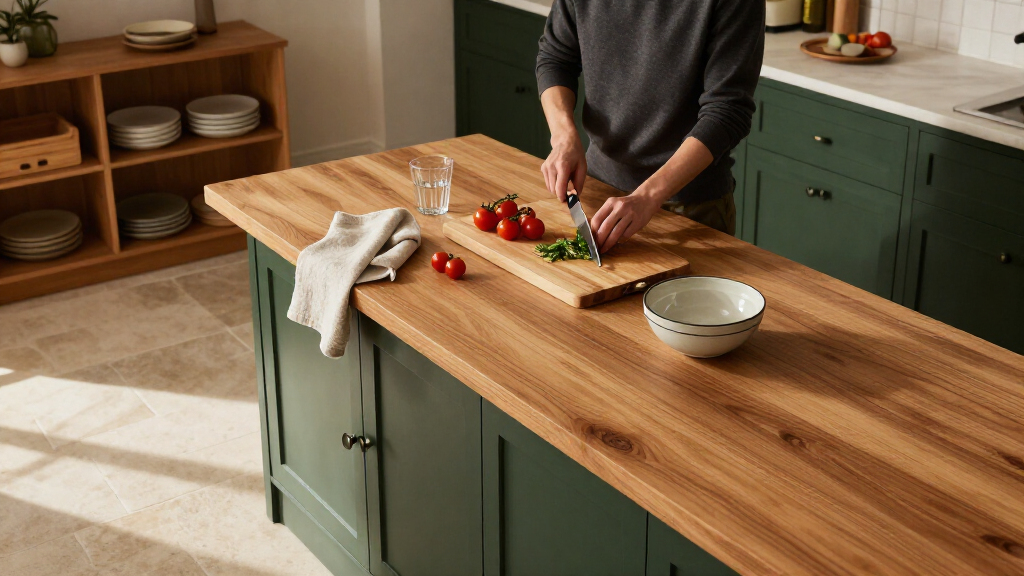
A cook’s table is a freestanding piece of furniture, often made of wood, that can serve as a work surface, dining spot or place to gather. Unlike a fixed island, it can be moved or repositioned, particularly if fitted with casters. Designers say that can help households adapt a kitchen for everyday cooking, children’s homework or larger gatherings.
Designer Amy Sklar says a conventional island can dominate a kitchen, while a table without a bulky built-in base feels visually lighter. Designer Becky Ducsik of The Phinery links renewed interest in communal kitchen spaces to changes in how people use their homes since the pandemic. The source presents these as designers’ assessments, not survey findings.
For choosing a table, the designers emphasize scale, height and material. A piece needs to leave enough room for people to move around it, and some vintage tables may sit lower than a standard counter. Wood such as oak, maple or walnut is recommended for warmth and durability; reclaimed wood, metal and butcher-block tops offer different looks and practical qualities. Shape also affects use: curves can soften a room, while rectangular tables can provide more seating or work area.
Kitchen Islands or Cook’s Tables What Designers Expect for 2027
Designers see freestanding cook’s tables as a flexible, furniture-like alternative to oversized built-in islands. The report offers design observations, not evidence of a confirmed market shift.
Why consider a cook’s table?
Designers describe practical and visual benefits for households that want a less imposing kitchen center.
Adapt the space
A freestanding table can be repositioned for cooking, homework or gatherings.
Open up the room
Without a bulky built-in base, a table can feel less dominant and more welcoming.
Add furniture warmth
Wood, vintage finishes and visible wear can bring individual character to a kitchen.
Choose for the room
Scale, circulation and intended use matter as much as appearance.
Ducsik recommends roughly four to five feet around a table for comfortable movement.
Some vintage tables sit below standard counters; casters or leg extensions may help.
Oak, maple, walnut, reclaimed wood, metal and butcher block offer different qualities. Curves soften a room; rectangles can add work or seating area.
Island or cook’s table?
The right center depends on storage needs, floor space and how the household uses the kitchen.
- Can provide substantial counter space and integrated storage.
- May occupy floor area and restrict movement, especially in compact or galley kitchens.
- Can move as cooking or gathering needs change.
- May offer less integrated storage; fit depends on room dimensions and tasks.
A More Flexible Kitchen Center
The choice between an island and a cook’s table affects more than appearance: it shapes circulation, storage and how people gather in the kitchen. A fixed island can provide substantial counter space and built-in storage, but may take up much of the floor area. A smaller freestanding table can leave a room feeling more open and can be shifted when needs change.
That flexibility may be particularly useful in compact or galley kitchens, where a permanent island could restrict movement. In larger rooms, a table can act as a focal point if appliances and storage are concentrated along the perimeter. Ducsik recommends leaving roughly four to five feet of clearance around a table for comfortable movement. That is design guidance from the source, not a universal building-code requirement.
The furniture-like character also reflects a preference described by the designers for warmer, less minimal interiors. A vintage or antique table can bring visible wear and individual character into a room dominated by cabinetry and appliances. Whether that preference becomes a broad 2027 market trend is not established by the available material.
Products Worth Considering

Dyson V9 Motorbar Cordless Vacuum

Bose Lifestyle Ultra Speaker

Dyson V15 Detect Cordless Stick Vacuum
As an affiliate, we earn on qualifying purchases.
From Built-In Island to Furniture
For years, large kitchen islands have been a central feature in many residential designs, combining work surfaces, storage and sometimes appliances or seating. The source describes a recent interest in alternatives that feel smaller and more adaptable, but does not identify when that change began or quantify its scale.
Designers cited in the report frame the cook’s table as both a practical and stylistic option. Cynthia Lananh describes a furniture-like island as more casual and approachable, while Ducsik says a carefully chosen vintage or custom piece can anchor a larger kitchen. The distinction is not strictly between two fixed styles: a cook’s table can complement a room with cabinetry and perimeter storage, and a homeowner may still prefer a built-in island for its capacity.
The report also notes a workaround for kitchens without enough central floor space: Ducsik suggests extending cabinetry with a peninsula-style table to create a communal surface. That option may capture some of the table’s social function without requiring a fully freestanding piece in the middle of the room.
“A traditional island can dominate a kitchen.”
— Amy Sklar, designer
How Broad the Shift Will Be
The source does not provide sales figures, consumer surveys or a quantified forecast showing that cook’s tables are becoming more common, nor does it establish that they will replace islands by 2027. Its evidence consists of designers’ observations and recommendations. The scale and pace of adoption therefore remain unclear.
It is also not clear which households will find the change practical. A freestanding table may offer less integrated storage than a built-in island, and its usefulness depends on room dimensions, cooking habits and the need for seating or prep space. The report does not compare costs, installation needs or long-term durability across the two options.
Measure Before Choosing a Table
For homeowners considering the change, the designers’ immediate advice is to measure the room and check that the table’s size and height suit its intended use. Leave clear walking space around the piece, and account for how doors, drawers and appliances open. If a vintage table is too low for comfortable food preparation, Sklar says casters or leg extensions may help adjust its height.
Casters can also make a table easier to reposition for cooking or entertaining, though the source gives no specific guidance on their load limits or locking mechanisms. Buyers should check that any chosen piece is stable and appropriate for its intended tasks. Designers also suggest coordinating wood tones through shelves, cutting boards or serving pieces, while allowing the table’s shape and finish to retain a furniture-like character.
The wider trend will be clearer only with further reporting, such as market data or broader homeowner surveys. For now, the source supports a narrower conclusion: designers see cook’s tables as a useful option for flexible, characterful kitchens, not as a confirmed replacement for the island.
Key Questions
What is a cook’s table?
A cook’s table is a freestanding surface, often furniture-like and made of wood, used for food preparation, dining or gathering. Unlike a built-in island, it can often be moved or repositioned.
Why are designers recommending cook’s tables?
Designers quoted by House Beautiful say they can feel less imposing than built-in islands, offer flexibility and bring warmth or character to a kitchen. Those comments reflect professional opinion, not quantified consumer research.
Can a cook’s table work in a small kitchen?
It may work where a large island would restrict movement, but the right fit depends on the room. Ducsik recommends about four to five feet of clearance around a table where possible; homeowners should measure their own layout before choosing one.
Will cook’s tables replace kitchen islands by 2027?
The source does not establish that. It reports designers’ interest in cook’s tables but provides no market data or forecast showing that they will replace islands or become dominant by 2027.
Source: housebeautiful.com