
To arrange furniture in an open-concept space, start by choosing a focal point like a fireplace or large window. Use rugs to define different zones and select multi-purpose furniture to maximize functionality. Position seating to face the focal point and keep pathways clear for easy flow. Layer lighting to create ambiance and highlight specific areas. Paying attention to style and balance helps you craft a cozy, cohesive environment—continue for more tips on perfecting your layout.
Key Takeaways
- Define distinct zones using rugs, furniture placement, or visual cues to create functional areas within the open space.
- Arrange main seating around a focal point like a fireplace or entertainment center for natural gathering spots.
- Use multi-purpose furniture and storage solutions to maximize functionality and reduce clutter.
- Ensure clear pathways by maintaining proper spacing and avoiding overcrowding, facilitating easy movement.
- Incorporate layered lighting—ambient, task, and accent—to enhance ambiance and highlight different zones.

Open-concept spaces offer a versatile canvas for your furniture arrangement, but they also present unique challenges in defining distinct areas while maintaining a cohesive flow. To do this effectively, start by considering your decorating styles. Your chosen style—be it modern, rustic, bohemian, or minimalist—will influence how you divide the space. For example, a sleek, contemporary look might feature streamlined furniture and bold accent pieces, while a cozy, rustic vibe calls for warm wood tones and textured textiles. When selecting furniture, pick pieces that reflect your style and serve multiple purposes if possible. Sectional sofas, for instance, can create natural boundaries without blocking sightlines, helping you carve out a living zone within the open layout.
Defining zones in open-concept spaces depends on your decorating style and strategic furniture choices.
Lighting options play a vital role in defining separate areas and tying the space together. Incorporate layered lighting—ambient, task, and accent—to create visual zones and set the mood. Overhead fixtures like chandeliers or pendant lights can anchor a dining area, while floor lamps and table lamps add warmth and functionality to the living zone. Use lighting to highlight specific areas, drawing attention to your decorating style and making each zone feel intentional rather than just a flow of furniture. Adjustable lighting options, such as dimmers or smart bulbs, give you flexibility to change the ambiance based on the time of day or occasion, enhancing the overall cohesiveness of the space.
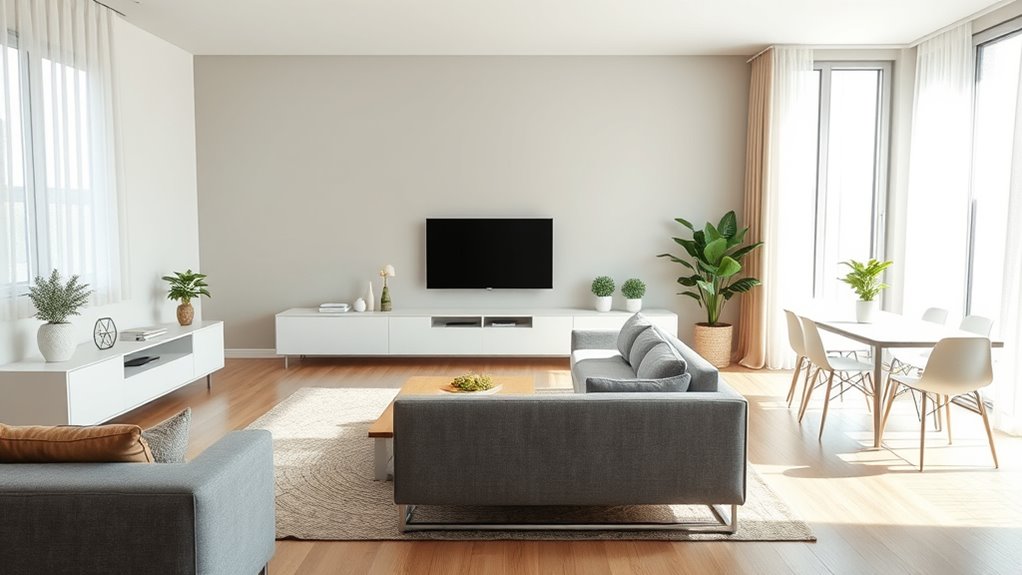
Arranging furniture in an open-plan layout requires thoughtful planning. Start by establishing a focal point—like a fireplace, entertainment center, or large window—and orient your main seating around it. This creates a natural gathering spot and helps define the space. Use rugs to anchor different zones; a large area rug can delineate the living area, while a smaller one might set apart a reading nook or conversation corner. Keep pathways clear and avoid overcrowding by leaving enough space between furniture pieces for easy movement. Consider the flow of natural light and how your lighting options interact with it to enhance each zone’s functionality and aesthetic.
Additionally, maximizing space through strategic furniture placement and organization can make a significant difference in open-concept areas, ensuring that the space remains functional and inviting. Ultimately, the key to arranging furniture in an open-concept space is balancing your decorating styles with strategic lighting. When these elements work together, they transform a sprawling area into a harmonious, inviting environment. You’ll find that the space feels cohesive yet flexible, making it perfect for both relaxing and entertaining. With deliberate planning, your open layout can reflect your personal style while providing practical zones that serve your everyday needs seamlessly.
Frequently Asked Questions
How Can I Create Privacy in an Open-Concept Layout?
To create privacy in an open-concept space, you can use room dividers or privacy screens to define separate areas. These solutions are versatile and easy to move, allowing you to customize your space as needed. Position them strategically around seating or work areas to block sightlines and reduce noise, giving you a sense of seclusion without sacrificing the openness. This approach helps you enjoy privacy while maintaining an airy, connected environment.
What Are the Best Color Schemes for Open Spaces?
You should choose a cohesive color palette that unifies your open space, making it feel harmonious. Incorporate neutral tones like soft grays, beiges, or whites as your base, then add accent tones such as bold blues, warm terracotas, or vibrant greens for interest. This approach creates a balanced, inviting environment. Keep in mind that mixing subtle shades with striking accent tones helps define different zones while maintaining visual flow.
How Do I Choose Multifunctional Furniture for Open Areas?
Think of multifunctional furniture as your space-saving superheroes, ready to transform your open area effortlessly. When choosing pieces, look for versatile options that serve double duty, like a sofa bed or an ottoman with storage. Use furniture placement tips to keep the flow smooth—place larger pieces against walls and keep pathways clear. This way, your space feels open yet functional, and your furniture works smarter, not harder.
What Lighting Options Work Best in Open-Concept Homes?
You should prioritize a mix of natural light and ambient lighting to brighten your open-concept home. Maximize natural light with large windows and light-colored window treatments. Add ambient lighting with ceiling fixtures, floor lamps, or wall sconces to create a warm, inviting atmosphere in the evening. Combining these options helps define different zones and maintains an airy, spacious feel, making your space both functional and cozy.
How Can I Define Different Zones Without Walls?
Think of your space as a blank canvas, like Monet’s water lilies. To define zones without walls, you can use area rugs to anchor each area, creating visual boundaries. Decorative screens also work as stylish dividers that add privacy and style. By placing these elements strategically, you establish distinct zones, making your open-concept home functional and inviting while maintaining a cohesive flow.
Conclusion
Now that you know how to thoughtfully position furniture in your open-concept space, you’re ready to create a cozy, cohesive haven. By balancing boundaries and blending styles, you’ll build a beautiful, breathable layout that invites relaxation and radiates warmth. Remember, with a bit of planning and a touch of patience, your open area will become a stunning sanctuary where style and comfort seamlessly synchronize. Start shaping your space today and see your vision vividly vivify!