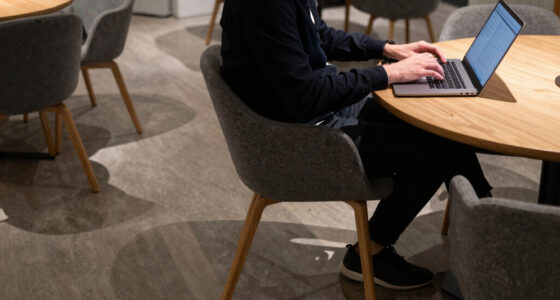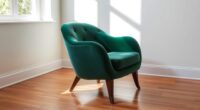
Curved dining tables and chairs create a stylish, welcoming space that promotes better interaction and comfort. You can choose from materials like wood for warmth, metal for modernity, or glass for elegance, combining them to match your style and needs. The ergonomic design guarantees everyone stays comfortable during meals or gatherings. To discover more about how to select the perfect curved furniture for your space, keep exploring these options.

Get furniture and decor delivered free with Prime
- Fast, free delivery on millions of items
- Prime Video, Amazon Music and more included
- Member-only deals all year
Key Takeaways
- Curved dining tables and chairs promote better interaction and create a welcoming, conversational atmosphere in the dining space.
- Materials like wood, metal, and glass offer diverse styles, with combinations enhancing aesthetic appeal and customization options.
- Ergonomic features such as contoured seats and supportive backrests increase comfort during extended meals or gatherings.
- Material choices impact maintenance needs, durability, and style, allowing you to balance luxury, practicality, and budget.
- Curved furniture naturally guides movement and adds visual interest, making the dining area more functional and stylish.

Curved dining tables and chairs are an excellent way to enhance your dining space with a stylish, modern touch. The unique curvature not only creates a visually appealing focal point but also promotes a more inviting and intimate atmosphere. When selecting curved furniture, you’ll find a variety of material options that suit different styles and budgets. Wood offers warmth and durability, with finishes ranging from sleek polished surfaces to rustic, textured looks. Metal adds a contemporary feel with its sleek lines and strength, while glass can lend an airy, sophisticated vibe. Combining these materials is also common, such as a wooden tabletop with metal legs, allowing you to customize your space according to your preferences.
One of the key benefits of choosing curved dining furniture is its ergonomic design. Unlike traditional straight-edged tables, curved designs facilitate better interaction among diners, making conversations more natural and engaging. The gentle bends allow for closer proximity without crowding, which is especially advantageous in smaller spaces. Chairs designed to complement curved tables often feature ergonomic features that prioritize comfort, such as contoured seats and supportive backrests. These ergonomic elements help you enjoy longer meals or gatherings without discomfort, encouraging you to linger around the table.
Curved dining furniture promotes better interaction and comfort, making gatherings more natural and engaging.
The material options for chairs also influence their ergonomic qualities. For example, upholstered seats provide soft cushioning that reduces pressure points, while molded plastic or curved wood seats can offer firm support with the right contouring. The choice of materials impacts not just comfort but also maintenance and durability. Leather or faux leather upholstery can give your dining area a luxurious look but may require regular cleaning. Conversely, fabric options tend to be softer and more breathable, ideal for extended use. Additionally, considering cost and budgeting factors can help you select options that balance quality and affordability.
Designing your space with curved dining furniture means paying attention to the ergonomic features that enhance comfort and usability. Look for chairs with adjustable height options or upholstered padding for prolonged sitting. Some models incorporate armrests that complement the curved design, providing additional support. When combined with a carefully chosen table material, these ergonomic details ensure that your dining area is both functional and stylish. The curved shape naturally guides movement and creates a welcoming environment, making your meals and gatherings more enjoyable.
Ultimately, selecting the right material options and prioritizing ergonomic design allows you to craft a dining space that’s both aesthetically pleasing and highly comfortable. Whether you prefer the warmth of wood, the sleekness of metal, or the elegance of glass, curved furniture offers versatility and sophistication. By focusing on ergonomic features, you ensure that your dining experience is as comfortable as it is visually stunning, transforming your dining area into a perfect blend of style and function.
Frequently Asked Questions
How Do Curved Tables Affect Room Acoustics?
Curved tables influence room acoustics by altering sound reflection and spatial dynamics. Their rounded edges help diffuse sound waves, reducing harsh echoes and dead spots. This creates a more balanced acoustic environment, making conversations clearer and more natural. You’ll notice improved sound distribution, especially in larger or irregularly shaped rooms. With curved tables, you’re enhancing both the visual appeal and acoustic comfort, making your space more inviting and functional.
Are Curved Chairs More Comfortable Than Traditional Designs?
Yes, curved chairs often feel more comfortable than traditional designs because they provide better ergonomic support by conforming to your body’s natural shape. Their smooth, rounded lines also enhance aesthetic appeal, creating a more inviting and stylish space. You’ll likely notice less pressure on your back and hips, making them ideal for extended sitting periods. Overall, curved chairs combine comfort with visual elegance, making them a great choice for your dining area.
What Materials Are Best for Outdoor Curved Dining Sets?
You should choose weather-resistant materials like treated teak, aluminum, or synthetic wicker for outdoor curved dining sets. These options withstand rain, sun, and humidity, ensuring durability. Additionally, they offer a variety of aesthetic design options, so you can select styles that complement your outdoor space. By opting for these materials, you’ll enjoy both longevity and a stylish look, making your outdoor dining area comfortable and inviting year-round.
How Do I Clean and Maintain Curved Furniture?
To keep your curved furniture looking its best, regularly clean surfaces with a damp cloth and mild soap. For upholstery, vacuum and spot clean with appropriate fabric or leather cleaners. To prevent scratches, use coasters and felt pads on furniture legs. Avoid harsh chemicals that can damage finishes. Consistent maintenance, gentle cleaning, and scratch prevention measures will extend your furniture’s life and preserve its elegant appearance.
Can Curved Dining Tables Be Customized in Size?
Yes, curved dining tables can be customized in size, offering you more design flexibility to fit your space perfectly. You can choose custom size options that match your room dimensions and seating needs. Many manufacturers allow you to select the length, width, and curvature details, ensuring your table complements your decor. This personalization helps create a functional, stylish dining area tailored specifically to your preferences.
Conclusion
So, after all this talk about the elegance and charm of curved dining tables and chairs, you might think they’re perfect for every home. But here’s the irony: their stunning design can sometimes make your space feel more confined, not spacious. It’s funny how something so stylish can turn out to be a challenge. Still, if you love the look, it’s worth risking a little coziness for that undeniable touch of sophistication.
Halloween Picks
halloween
As an affiliate, we earn on qualifying purchases.