TL;DR
A Nature Yardlife YouTube tutorial turns an untreated cedar fence board into a small, roofed nesting house for mason bees. The project uses removable nesting tubes and calls for a sheltered, firmly mounted site; the report does not establish how many bees the house attracts or whether the design has been tested beyond the tutorial.
A Nature Yardlife YouTube tutorial, featured in a Hunker report, shows how to turn an extra untreated cedar fence board into a small, roofed nesting house for mason bees. The project offers gardeners a way to add nesting cavities as well as flowers to a yard, though the report provides no measured results showing how many bees the house attracts.

Get furniture and decor delivered free with Prime
- Fast, free delivery on millions of items
- Prime Video, Amazon Music and more included
- Member-only deals all year
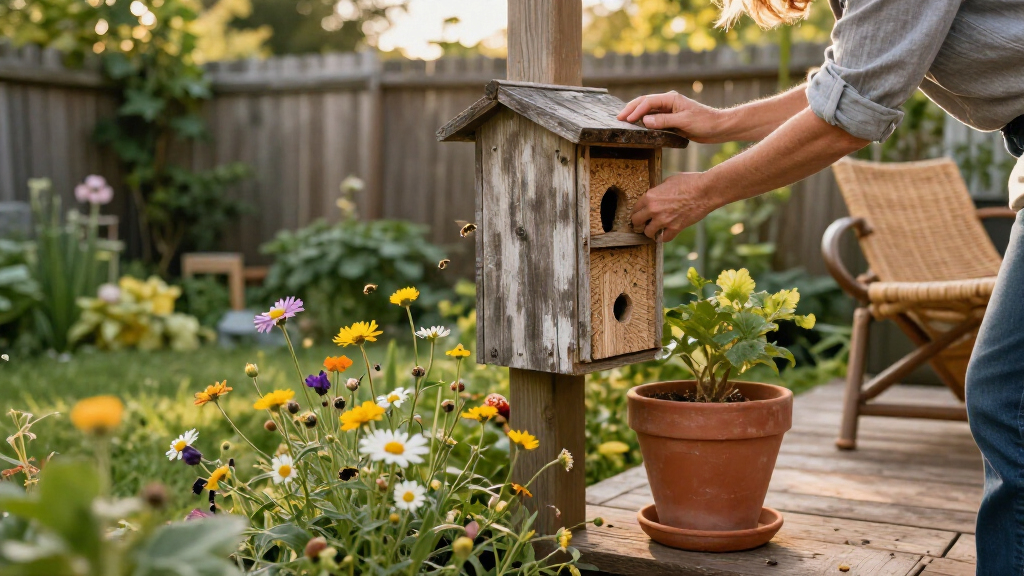
The design uses a cedar board cut into side panels, a back, a floor and an overhanging roof. The sides are made at different heights so the roof can angle toward the front. After cutting, the builder sands rough edges and joins the pieces with screws and a drill or a brad nailer and suitable fasteners. A mounting strip attached to the back provides a way to secure the finished house to a post or tree.
The upper section holds removable nesting tubes intended for mason bees, with paper liners listed as optional. The report advises choosing the tubes before cutting so the housing is deep enough to protect them. A divider can also create a lower compartment; in the video, the gardener uses that space for cocoons, but the feature is optional.
The tutorial recommends installing the house firmly beneath cover and facing it east, where it can receive morning sunlight. It also recommends seasonal maintenance of the tubes, warning that nesting materials reused without appropriate cleaning or replacement can accumulate parasites and disease. The report does not specify a cleaning method or schedule.
Adding Nesting Space Alongside Flowers
The project highlights a practical distinction in backyard pollinator gardening: providing flowers is not the same as providing places to nest. The report says solitary mason bees use existing cavities to raise their young rather than living in a shared honeybee-style hive. Tubes in a bee house are intended to imitate the small cavities these bees seek, while nearby blooms provide food.
For readers, the construction approach makes use of a leftover building material and a relatively short supplies list. But the house is not a substitute for suitable planting or upkeep. Its usefulness depends on appropriate nesting materials, a protected installation site and seasonal care; the source gives no data on occupancy or effects on local pollination.
Products Worth Considering

Philips Hue Amarant Outdoor Smart Light Bar, Black

Roborock Qrevo S Pro Robot Vacuum and Mop with Multifunctional Dock

LG 55-Inch QNED73B Mini LED 4K Smart TV (2026)
As an affiliate, we earn on qualifying purchases.
How the Fence-Board Design Works
The Hunker report credits a Nature Yardlife tutorial on YouTube for the design. Its stated materials include untreated cedar, measuring and cutting tools, sandpaper, fasteners, mounting hardware and removable mason-bee tubes. The builder plans the cuts around the tube length, assembles the housing, then fits the tubes into the upper compartment.
The design is aimed at solitary mason bees, not a honeybee colony. The source describes the tubes as a substitute for natural hollow stems and other small spaces. It also recommends pairing the finished house with bee-friendly plants, so nesting sites and flowers are available in the same yard. Hunker notes that it may receive a commission from purchases made through links; the supplied material does not identify any products or report sales.
“Nesting materials reused without proper cleaning or replacement can allow parasites and diseases to build up.”
— Hunker report
What the Tutorial Does Not Establish
The supplied report does not give the tutorial’s publication date, measurements for the cuts, tube dimensions, or a detailed maintenance procedure. It also does not provide observations or data on whether bees used the finished house, how many occupied it, or whether the design affected pollination. The east-facing placement and morning-sun guidance are recommendations attributed to the tutorial, not independently tested findings in the report.
The source does not specify which mason-bee species the design may suit or whether local conditions change the recommended placement. Anyone following the project would need to choose tubes compatible with the intended bees and consider local guidance; the report does not offer species-specific instructions.
Installation and Seasonal Tube Care
The source describes no scheduled follow-up, testing or future update. For gardeners using the design, the next steps are to select nesting tubes before cutting, build and mount the house under cover, and provide flowering plants nearby. Removable tubes can then be inspected and maintained seasonally, following suitable local guidance rather than assuming that used materials are ready to reuse.
Whether the house attracts mason bees will depend on conditions not measured in the report, including the site and available habitat. The supplied material does not say whether Nature Yardlife or Hunker plans to publish additional results.
Key Questions
What is the fence-board bee house designed for?
The design is intended to provide nesting cavities for solitary mason bees. It uses removable tubes rather than a shared honeybee-style hive.
What materials does the project call for?
The report lists an untreated cedar fence board, measuring and cutting tools, sandpaper, fasteners, mounting hardware and mason-bee nesting tubes. Paper liners are optional.
Where does the tutorial recommend mounting the house?
The tutorial, as summarized by Hunker, recommends a firm mount beneath cover and facing east to receive morning sunlight. The report does not provide test data for that recommendation.
Do the nesting tubes need maintenance?
Yes. The report recommends seasonal maintenance and warns that reused nesting materials may accumulate parasites or disease if they are not properly cleaned or replaced. It does not specify a cleaning schedule or method.
Does the report show that the bee house attracts bees?
No measured results are included. The source describes the design and its intended use but does not report occupancy counts or pollination outcomes.
Source: rss