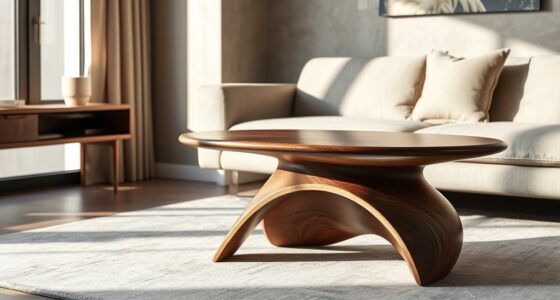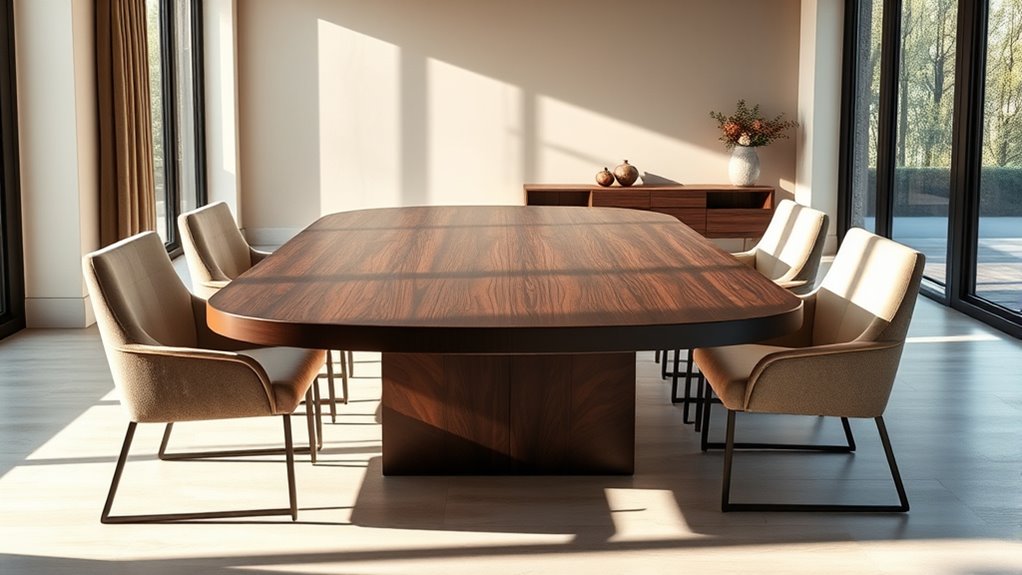

To select the right dining table shape and size, first measure your space—leaving at least 36 inches for chairs and movement. Consider your room’s layout and any existing furniture, then decide how many people you usually entertain. Round tables work well in small or irregular spaces, while rectangular ones maximize seating in larger rooms. Guarantee the table complements your decor, and double-check measurements for a perfect fit. Keep exploring to find the ideal combination for your home.
Key Takeaways
- Measure your room’s dimensions, leaving at least 36 inches of clearance around the table for easy movement.
- Match the table shape to your space’s layout; round for small or irregular rooms, rectangular for larger, open areas.
- Determine seating needs to select a size that comfortably fits your household and guests without overcrowding.
- Consider table features like extendable leaves or modular designs for flexibility and future space adjustments.
- Coordinate the table style and materials with existing decor for a harmonious and functional dining environment.
Assessing Your Available Space

Before choosing a dining table, you need to measure your available space carefully. Start by measuring the length, width, and height of the area where you plan to place the table. Consider leaving at least 36 inches of clearance around the table for easy movement. When selecting decor material, think about durability and how much maintenance it requires; for example, wood tables need regular dusting, while glass surfaces may show fingerprints more easily. Maintenance tips include using coasters to prevent stains and wiping spills promptly. Make sure the table size fits comfortably in your space without crowding other furniture. Proper assessment guarantees you choose a table that’s functional, visually appealing, and easy to maintain within your available room. Additionally, choosing the right table shape can enhance the overall flow and aesthetic of your dining area.
Determining the Number of Regular Diners
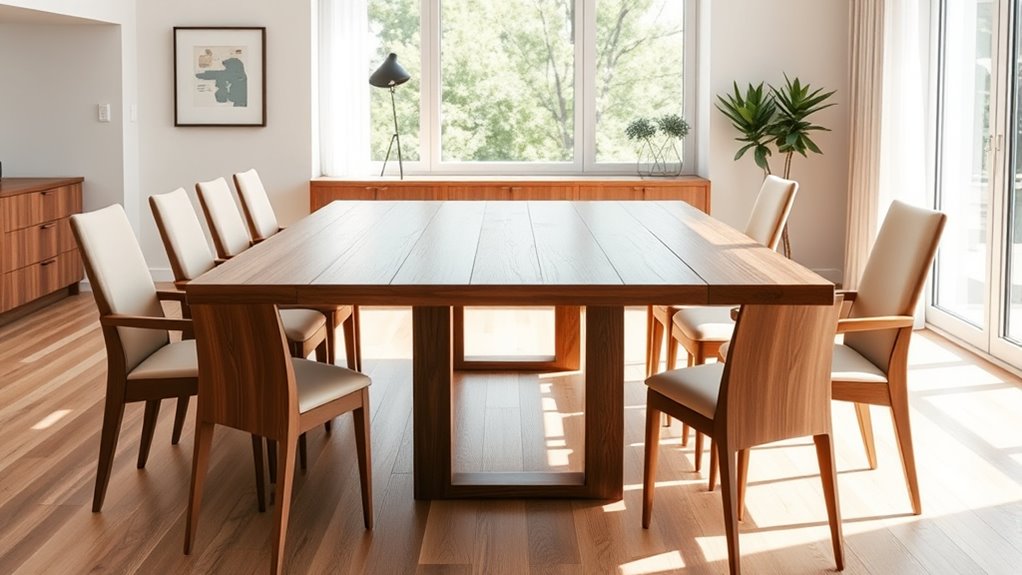
Knowing how many people regularly dine with you is essential when choosing the right table size. Consider your daily routines and how often you host guests. A smaller family might need a table for four, while larger households or frequent entertainers should plan for six or more. Think about the space needed for comfortable seating and movement. Also, plan for decorative accents like centerpiece arrangements or lighting options that complement your table size without overcrowding. Visualize your setup with these ideas:
- Seating for 4-6 people comfortably
- Space for decorative accents like candles or flowers
- Adequate room for serving dishes and utensils
- Clear pathways for easy movement
- Lighting options that enhance the dining experience
- Remember to account for self watering plant pots if you plan to incorporate greenery, as they can add a touch of freshness without requiring extra maintenance.
This helps guarantee your table fits your needs while creating a welcoming atmosphere.
Considering the Shape of Your Room and Layout
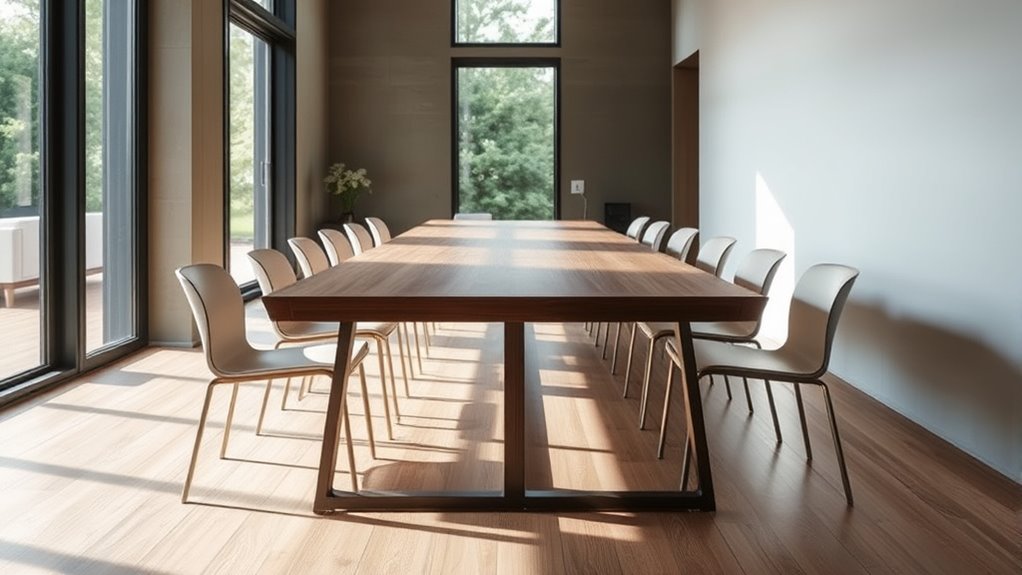
Your room’s shape influences which table works best, so consider how the geometry fits your space. Make sure there’s enough room for people to move comfortably without blocking walkways. Balancing your layout helps optimize traffic flow and keeps your dining area functional. Additionally, understanding website performance metrics can help you assess how your layout impacts overall usability and visitor experience.
Room Geometry Compatibility
The shape of your room plays a crucial role in selecting the right dining table. To guarantee harmony, consider how the table’s shape complements your space’s geometry. A rectangular table fits well in long, narrow rooms, while round tables foster intimacy in smaller or square spaces.
Think about:
- Creating a balanced layout that supports artistic expression through your table’s design
- Using color coordination to unify the table with your room’s decor
- Avoiding overcrowding by leaving enough space for movement
- Choosing a size that fits without overwhelming the space
- Considering the flow of natural light to enhance the room’s ambiance
Matching your table shape with your room’s layout enhances both aesthetics and functionality, making your dining area a true reflection of your style.
Traffic Flow Optimization
Since the shape of your room directly influences how people move around your dining table, optimizing traffic flow for comfort and safety is vital. You want enough space for guests to sit and move without feeling cramped or causing congestion. Consider your decor style and choose a table shape that complements it—rectangular, round, or oval—to facilitate smooth circulation. Material choices also matter; lighter finishes or glass can make the space feel more open, enhancing flow. Avoid placing the table in a way that blocks pathways or access to other key areas like the kitchen or pantry. By thoughtfully selecting a shape and size that align with your room’s layout and decor style, you guarantee easy movement, making your dining experience more comfortable and functional. Additionally, incorporating furniture proportions that suit your space helps maintain a balanced and inviting environment.
Space for Movement
When planning your dining space, considering the room’s shape and layout is essential to guarantee good movement flow. A well-placed table allows easy navigation and enhances your decorating themes and lighting considerations. To assure smooth movement, keep these in mind:
- Leave at least 36 inches around the table for chairs and passage
- Avoid placing the table near doorways or windows obstructing access
- Use the room’s shape to choose a matching table style—rounds suit small or irregular spaces
- Coordinate lighting fixtures to avoid shadows and maximize illumination
- Arrange furniture to create clear pathways without clutter
- Proper space allocation is key to creating a comfortable and functional dining area.
Choosing the Appropriate Table Shape
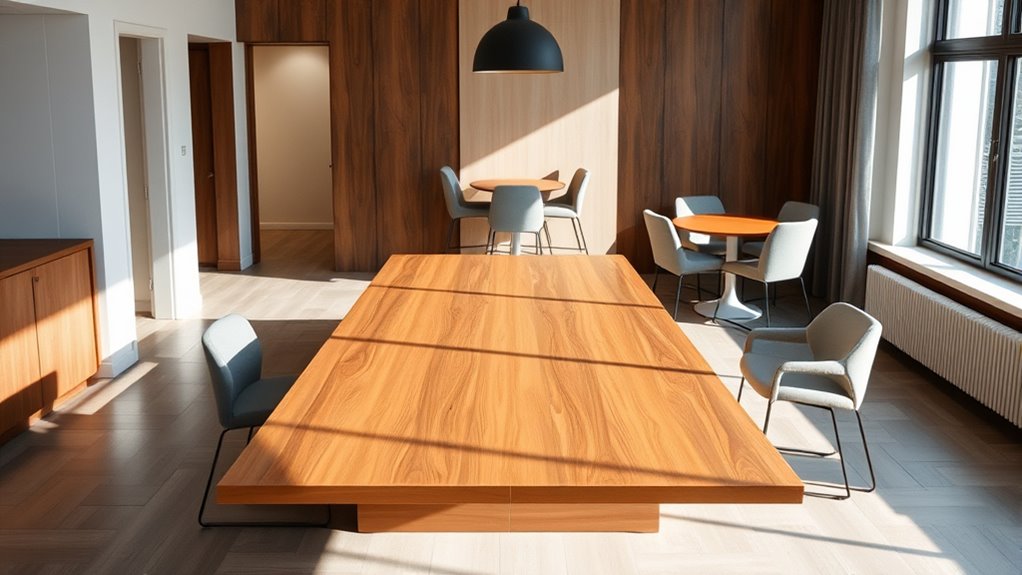
When selecting a table shape, consider how well it fits your space and room layout to guarantee easy movement. Think about how you prefer to interact during meals—whether in a more intimate or communal setting—and choose a shape that encourages that style. Matching the table to your space and social needs helps create a functional and inviting dining area. Additionally, understanding the benefits of curiosity can inspire you to explore different styles and designs that best suit your lifestyle.
Space Compatibility
Choosing the right table shape begins with evaluating your space to guarantee it fits comfortably and functions well. Consider the room’s size, shape, and flow when selecting a shape that complements your decor style and material choices. A round table promotes intimacy and works well in smaller spaces, while rectangular tables maximize seating in longer rooms. An oval shape combines features of both, offering versatility. Think about surrounding furniture and pathways—leaving enough room for movement is essential. Visualize how each shape aligns with your decor style, whether modern, rustic, or traditional, and how the material choices enhance the overall ambiance. Keep in mind that the right shape should seamlessly blend with your space, offering comfort without sacrificing style.
Room Layout Considerations
Once you’ve assessed your space, the next step is to think about how the table will fit within your room’s layout. Consider the placement of decorative accents like artwork or sideboards, making sure the table doesn’t obstruct them. Lighting considerations are also important; make certain there’s enough space for pendant lights, chandeliers, or lamps that complement your table shape. For example, a round table works well in smaller rooms, leaving more open space, while rectangular tables can define a room’s flow. Think about traffic flow and ensure there’s enough clearance around the table for comfortable movement. Proper layout helps create a balanced, functional space where your dining table enhances the room’s overall aesthetic. Additionally, applying space and organization principles can optimize your room’s arrangement for both style and practicality.
Social Interaction Style
The shape of your dining table directly influences how people interact during meals and gatherings. If you prefer a formal dining setup, a rectangular or oval table fosters structured conversations and elegant seating arrangements. For casual eatery vibes, round tables encourage relaxed conversations and a more inclusive atmosphere. Consider these points:
- Rectangular tables suit formal dining with defined head and side seats
- Round tables promote equal participation and intimacy
- Square tables work well in small spaces for casual get-togethers
- Oval tables combine elegance with conversational flow
- Pedestal bases maximize legroom for comfort during long meals
- Being aware of current news in Indonesia can help you stay updated on trends in home design and lifestyle preferences.
Choosing the right shape depends on whether you want a more structured or relaxed social interaction style. Your table shape should complement your desired atmosphere, whether for formal dining or casual gatherings.
Selecting the Correct Table Size
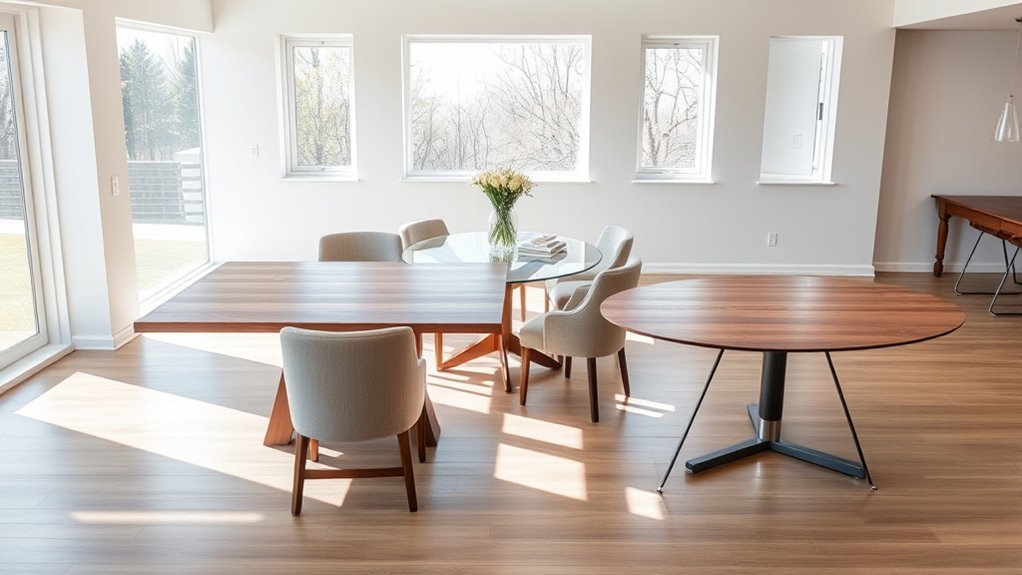
Selecting the right table size is essential to make sure your dining space feels comfortable and functional. You need to consider not only the number of people you’ll seat but also the material durability, ensuring the table withstands daily use. A sturdy material like hardwood or metal offers longevity, while lightweight options might sacrifice durability. Additionally, think about color coordination; a table that complements your room’s palette creates a cohesive look. Measure your space carefully, leaving at least 36 inches around the table for easy movement. Avoid choosing a table that’s too large or small relative to your room, as it can hinder movement and comfort. The right size balances practicality with aesthetics, making your dining experience enjoyable and visually pleasing. Incorporating a shower into your home can also enhance your overall comfort and improve the functionality of your bathroom space.
Accounting for Additional Seating and Flexibility
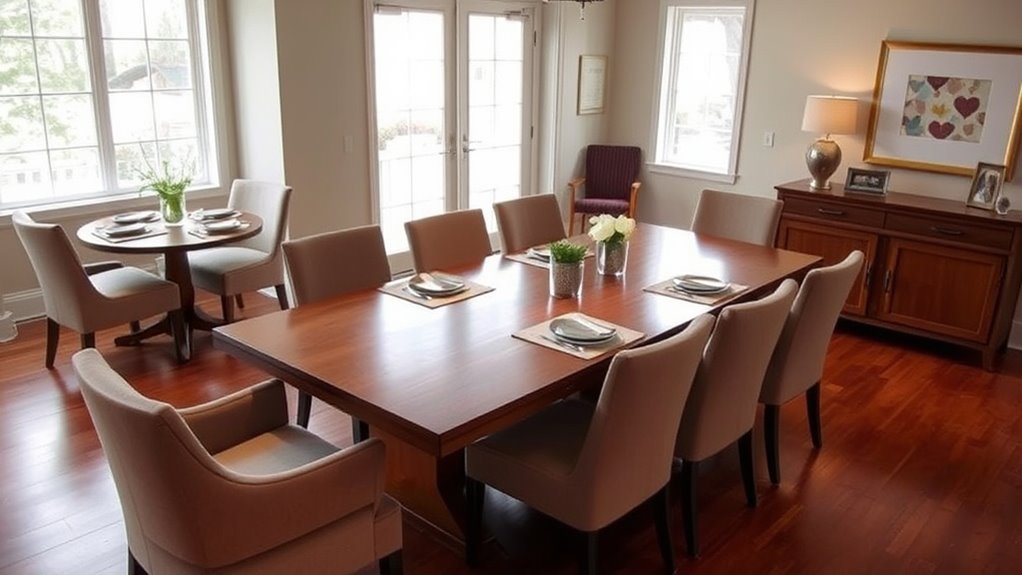
Considering how your dining needs might change over time guarantees your table remains functional and inviting. To prepare for growth or special occasions, think about options to expand seating and create flexible arrangements. You might choose a table with leaves or extendable features to accommodate extra guests. Additionally, consider:
- Tables with built-in leaves for easy expansion
- Benches or side chairs that can be tucked away or pulled out
- Round tables that promote flexible seating arrangements
- Modular designs that can be reconfigured for different settings
- Multi-purpose furniture that doubles as storage or extra seating
- Motorized conversion kits can be used to adapt bikes for different terrains, demonstrating how versatile solutions can enhance functionality in various contexts.
These choices help you adapt your space for both everyday use and entertaining, ensuring your table remains versatile and welcoming as your needs evolve.
Ensuring Adequate Clearance Around the Table
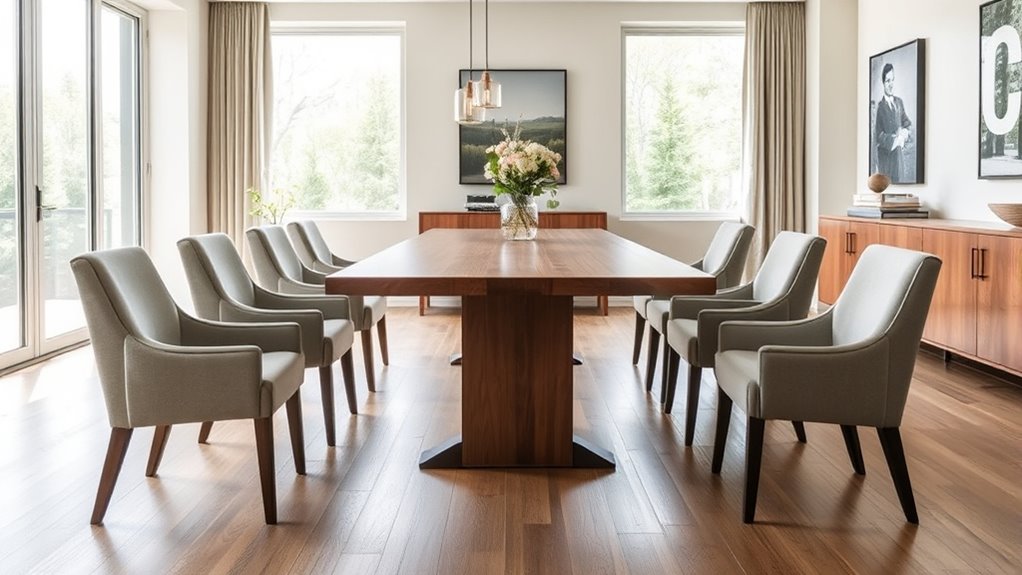
Ensuring adequate clearance around your dining table is essential for comfortable movement and a functional space. You should leave at least 36 inches of space between the table edge and the walls or other furniture, allowing you to move freely and serve easily. The table material influences this, as heavier or bulkier materials might require more room for access and cleaning. Consider chair comfort as well; chairs with arms or thick padding need extra space to slide in and out comfortably without crowding. When planning your layout, account for the space needed for chairs to be pulled out fully. Proper clearance not only enhances usability but also prevents accidents and makes your dining area more inviting.
Matching the Table to Your Home’s Decor Style
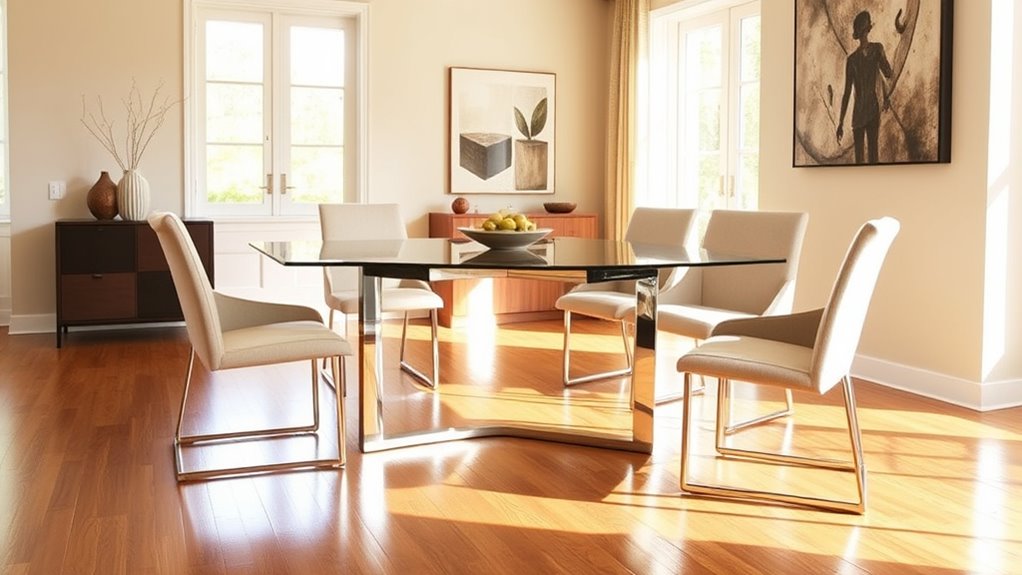
Matching your dining table to your home’s decor style creates a cohesive and inviting space. To achieve furnishings harmony, select a table that complements your existing furniture and design theme. Consider color coordination to tie everything together—whether you prefer a sleek, modern look or rustic charm. Think about the materials, finishes, and overall aesthetic. For example:
- A glass table for a contemporary, minimalist vibe
- A distressed wood table for farmhouse or shabby chic decor
- A sleek, black metal table for industrial spaces
- A polished marble table for luxury interiors
- A warm-toned wood table to enhance traditional styles
Choosing a table that aligns with your decor guarantees your dining area feels intentional and harmonious, making your space more welcoming.
Balancing Functionality and Aesthetics
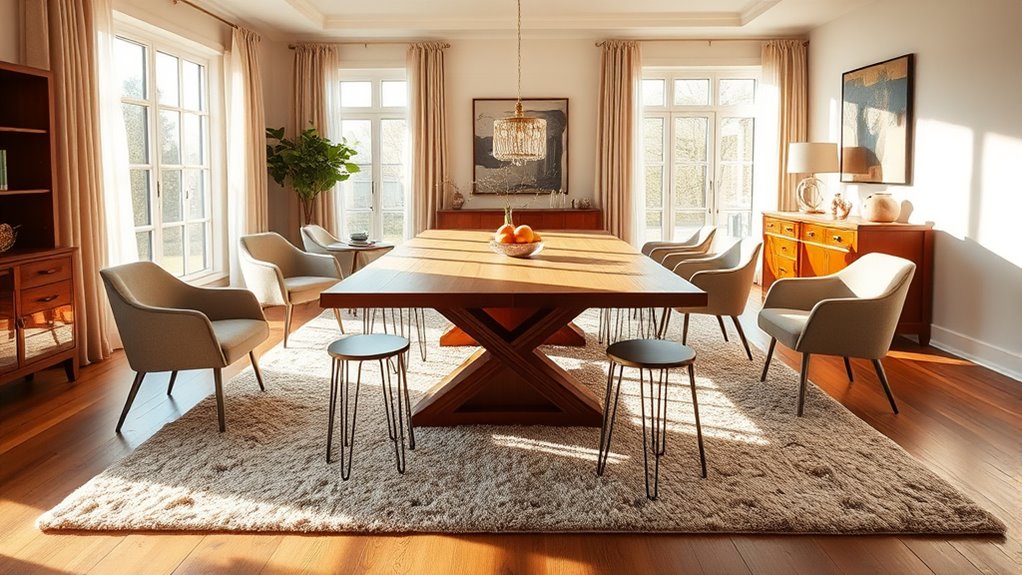
You want your dining table to be both practical and stylish, so consider how it fits into your space. Think about optimizing space utilization to keep the room functional without feeling crowded. Make sure the table’s design complements your room’s style, creating a balanced look that’s both attractive and useful.
Optimizing Space Utilization
Balancing functionality and aesthetics is key to optimizing space utilization when choosing a dining table. You want a piece that fits comfortably without overwhelming the room, while still complementing your decor style. Consider how material choices influence both look and practicality—sleek wood for warmth, glass for openness, or metal for durability. To maximize space, think about:
- A round table for smaller rooms or intimate gatherings
- Extending tables for flexible seating options
- Narrow or oval shapes to fit tight spaces
- Multi-functional tables with storage features
- Light-colored finishes to create a sense of openness
Complementing Room Style
Choosing a dining table that complements your room style involves more than just selecting a shape or size; it requires thoughtful coordination with your existing decor. Your dining preferences, whether casual or formal, influence the table’s aesthetic and material choices. For a modern space, sleek glass or metal tables work well, adding a contemporary touch. Classic or rustic rooms benefit from wood table materials that bring warmth and texture. Consider how the table’s design aligns with your overall decor, from color schemes to furniture styles. Balancing functionality and aesthetics ensures your table fits seamlessly into the room, enhancing its visual appeal while serving your needs. Ultimately, selecting the right table materials and shape reflects your personal taste and complements your room’s style.
Making Final Measurements and Confirmations
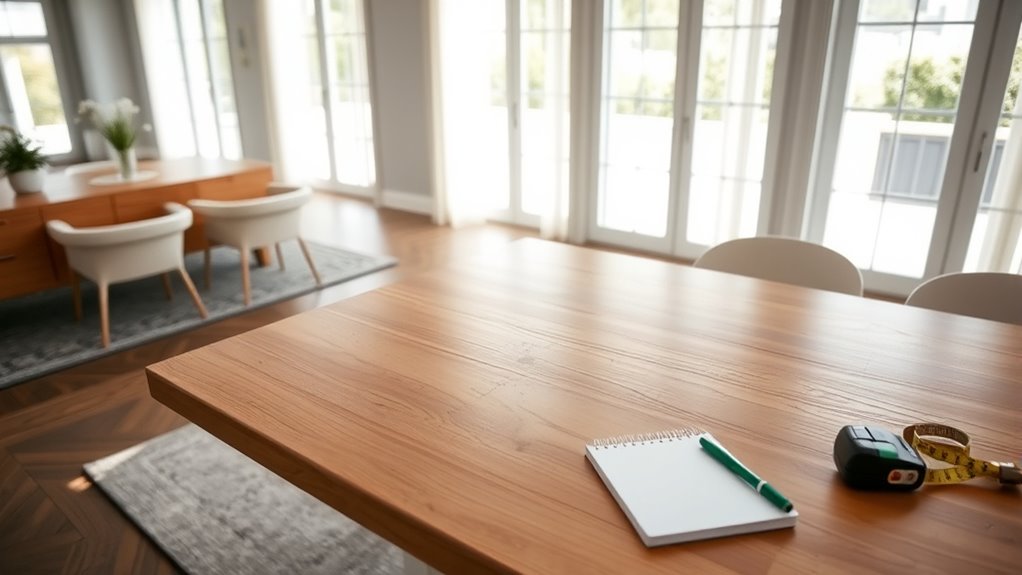
Before finalizing your dining table choice, it’s essential to double-check all measurements to guarantee a perfect fit. Measure the available space carefully, considering clearance for chairs and movement. Confirm the table’s material durability matches your lifestyle—especially if you host often or have kids. Think about how the table’s color will coordinate with your existing decor for a cohesive look. To visualize, picture:
Double-check measurements, durability, and color coordination to ensure your perfect dining table fit.
- Sufficient space for guests to sit comfortably without feeling cramped
- Easy access to pathways around the table
- The table fitting seamlessly into your room’s layout
- Matching the table’s material and color with your room’s style
- Room for extension or leaves if needed
Double-checking these details ensures your new dining table complements your space perfectly.
Frequently Asked Questions
How Do I Choose a Table for Irregularly Shaped Rooms?
When dealing with irregular room layouts, you should consider custom table solutions to fit your space perfectly. Measure your area carefully, accounting for any awkward angles or protrusions, and opt for a table that complements those unique features. You might also choose an adaptable shape like a freeform or oval table to maximize functionality and style. Custom solutions guarantee your table fits seamlessly, making your dining area both practical and visually appealing.
What Materials Are Best for Durability and Style?
When choosing materials for your dining table, focus on durability and style. Solid wood offers strength and timeless appeal, while glass adds a modern touch. Consider table edge styles—whether rounded or beveled—for safety and aesthetics. Also, select table height options that suit your space and comfort. These choices make certain your table stays functional and stylish, blending seamlessly with your room’s decor while withstanding daily use.
How Can I Optimize Seating for Guests?
Think of your dining space as a stage and seating arrangements as the choreography that guides guest flow. To maximize seating for guests, arrange chairs to create easy pathways and promote conversation, avoiding overcrowding. Use symmetry or focal points to enhance visual balance. This thoughtful setup ensures comfortable guest flow, making everyone feel welcomed and engaged, transforming your dining area into a harmonious gathering place.
What Are Space-Saving Options for Small Apartments?
In small apartments, you can maximize space by choosing compact designs that fit your layout seamlessly. Opt for multi-functional furniture, like a dining table that doubles as a workspace or has foldable leaves, to save room when not in use. Look for tables with slim profiles and hidden storage options. These strategies help you create a versatile, functional dining area without sacrificing valuable space.
How Do I Maintain and Care for Different Table Materials?
To keep your table looking its best, you need proper maintenance and care. For tablecloths, change or wash them regularly and follow the care instructions to prevent stains. For different table materials, use appropriate cleaning techniques—like gentle cloths and mild cleaners on wood, or glass-specific cleaners on glass tables. Regular dusting and avoiding harsh chemicals will preserve the finish and extend your table’s lifespan.
Conclusion
By carefully evaluating your space, considering your needs, and matching your table to your decor, you’ll create a dining area that feels like it’s straight out of a magazine. Remember, the right table can transform your entire home and make every meal an unforgettable experience. Trust your instincts, double-check your measurements, and don’t settle for anything less than perfection. Your dream dining space is just a decision away—prepare to impress everyone who steps through your door!