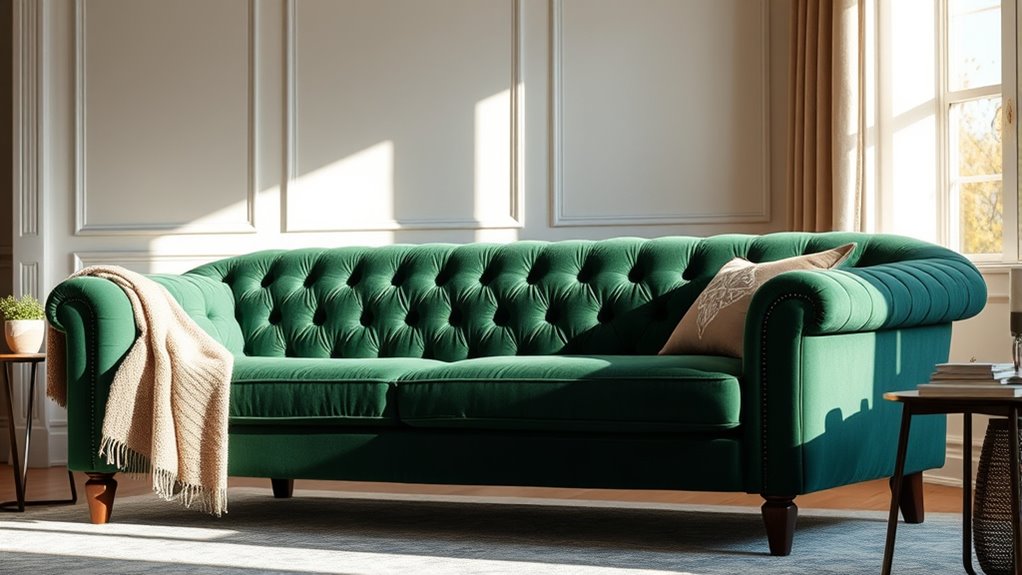

To buy a sofa that lasts for years, focus on the frame and construction quality by choosing sturdy, well-assembled pieces. Opt for durable upholstery fabrics or leather that resist wear and stains. Prioritize comfort with supportive cushions and proper sizing to fit your space. Check the joinery for stability and review warranties to protect your investment. Keep these tips in mind, and you’ll find a sofa that stands the test of time—more details await to guide your choice.

Get furniture and decor delivered free with Prime
- Fast, free delivery on millions of items
- Prime Video, Amazon Music and more included
- Member-only deals all year
Key Takeaways
- Prioritize sturdy frames made from sustainable, kiln-dried woods like oak or maple with quality joinery for durability.
- Choose high-quality, tightly woven, stain-resistant fabrics or thick leather for long-lasting upholstery.
- Measure your space carefully and select a style, size, and color that complements your existing decor.
- Opt for high-density foam cushions and check the joinery for stability to ensure lasting support and comfort.
- Review warranty coverage and return policies to protect your investment and ensure long-term satisfaction.
Assess the Frame and Construction Quality

When evaluating a sofa, the frame and construction are the foundation of its durability and comfort. You want a sturdy frame built with sustainable materials, ensuring it’s both eco-friendly and long-lasting. Look for hardwood frames like kiln-dried oak or maple, which provide strength and stability. Avoid softwood or particleboard, as they tend to warp over time. Additionally, check if the sofa features an ergonomic design, which promotes proper support for your back and hips, enhancing comfort during extended use. Well-constructed joints—dowels, corner blocks, or metal brackets—are signs of quality craftsmanship. A solid frame not only extends the sofa’s lifespan but also guarantees that it maintains its shape and support, making it a worthwhile investment for years of reliable use. Incorporating protective styling benefits and ensuring quality construction can help your sofa withstand daily wear and tear over the years.
Choose Durable and High-Quality Upholstery Materials

When selecting upholstery, consider how well the fabric or leather will maintain over time. Look for fabrics with tight weaves and stain resistance, and check leather for thickness and smoothness. Choosing the right materials ensures your sofa stays beautiful and durable for years to come. Additionally, selecting seasonally suitable fabrics can help your sofa withstand varying weather conditions and usage patterns.
Fabric Longevity Factors
Choosing durable and high-quality upholstery materials is vital if you want your sofa to last. Fabric treatments play an essential role in enhancing longevity, offering added protection against wear and tear. Look for fabrics with stain resistance, which helps prevent spills from setting in and damaging the material. Fabrics like microfiber or performance textiles often come with built-in treatments that repel liquids and dirt, making them easier to clean and maintain over time. Additionally, consider the fabric’s weave; tightly woven fabrics tend to be more resistant to snagging and fraying. Always check for high abrasion resistance ratings, which indicate the fabric’s ability to withstand daily use. Selecting fabrics with these longevity factors ensures your sofa remains attractive and functional for years to come. Incorporating fabrics with proven research-backed durability, such as those with high abrasion resistance, can further ensure your investment endures over time.
Leather Quality Indicators
Since not all leather is created equal, it’s vital to look for specific indicators of quality to guarantee durability, comfort, and long-lasting appearance. First, examine the leather grain—full-grain leather is the top choice, offering strength and a natural look. Second, check dye consistency; high-quality leather has even color distribution without blotches or fading. Third, feel the leather’s texture—premium leather should feel smooth yet firm, not overly soft or plasticky. Fourth, look for minimal markings or scars, which indicate genuine, high-grade material. These indicators ensure you’re choosing durable, high-quality upholstery that will age gracefully and maintain its appeal over years. Prioritizing leather grain and dye consistency helps you invest in a sofa that truly lasts.
Prioritize Comfort and Support

Prioritizing comfort and support guarantees your sofa will be a cozy spot for relaxation and sustained sitting. When selecting a sofa, consider how well it supports your posture and comfort needs. A supportive frame and high-quality cushions make a difference. Think about your decor styles and choose a sofa with the right color options to match your space.
| Feature | Tip | Why it Matters |
|---|---|---|
| Cushion Firmness | Test for medium firmness for balance | Ensures comfort without sinking |
| Frame Support | Look for sturdy, kiln-dried wood frames | Promotes longevity and stability |
| Upholstery Material | Opt for breathable fabrics or leather options | Enhances comfort and durability |
| Support Layers | Check for foam or feather-filled cushions | Provides lasting support |
Consider the Size and Style for Your Space

Once you’ve found a sofa that offers the right comfort and support, it’s time to think about how it fits into your space. Consider the size and style to guarantee harmony with your decor. Here are key tips:
- Measure your room to select a sofa that fits comfortably without overwhelming the space.
- Match the sofa’s style with your decor styles, whether modern, traditional, or eclectic.
- Choose a color that complements your existing color coordination, creating a cohesive look.
- Consider the shape and silhouette to enhance flow and functionality.
- Incorporate rustic elements to ensure your sofa complements the farmhouse aesthetic and creates a cozy, inviting atmosphere.
Examine the Cushioning and Filling Options

Choosing the right cushioning and filling options is essential for ensuring your sofa remains comfortable and durable over time. Memory foam offers excellent support and retains its shape, making it a popular choice for long-lasting comfort. When evaluating foam, pay attention to foam density; higher density foam (around 1.8 to 2.5 pounds per cubic foot) tends to be more durable and resistant to sagging. Low-density foam may feel soft initially but can break down quickly, leading to less support and the need for replacements sooner. Consider a combination of foam and other fillings like down or fiberfill for added softness, but prioritize high-density foam for the core cushions. This approach will help your sofa maintain its comfort and structure for years to come. Additionally, understanding the butter composition and characteristics can serve as a reminder that quality materials are key to longevity in various products.
Check the Sofa’s Joinery and Stability

To guarantee your sofa remains sturdy and safe over time, it’s important to carefully check its joinery and overall stability. First, examine the frame joints—look for tight, seamless connections without gaps or wobbling. Second, push gently on the arms and backrest to test for movement; they should feel firm and secure. Third, inspect the legs and ensure they are solidly attached and level, especially if you plan to match sofa color options with decorative accents. Fourth, consider the construction materials—solid hardwood frames are more durable than softwoods or particleboard. Additionally, assessing the joinery quality can help determine the overall durability of the sofa. A stable, well-joined sofa will support your daily use and complement your decor, including decorative accents that enhance its style without compromising its integrity.
Review Warranties and Return Policies

Before making your purchase, review the warranty duration and what it covers to guarantee it offers adequate protection. Check the return policy conditions so you know if you can easily exchange or refund the sofa if needed. Also, pay attention to any coverage limitations that might affect your satisfaction later on. Understanding product durability can help ensure your sofa remains in good condition over time.
Warranty Duration Details
Understanding the warranty duration and return policies is essential when buying a quality sofa, as it safeguards your investment and ensures peace of mind. Here are four key points to contemplate:
- Check how long the warranty lasts—some cover 1 year, others up to 10 years or more.
- Confirm what damages or issues are covered, including fabric or frame defects.
- Review whether the warranty applies to all color options or if some are excluded.
- Compare warranties across different brands by doing a price comparison; higher price often means better coverage.
- Consider the durability of materials used, as this impacts the longevity of your sofa over time.
Knowing these details helps you avoid surprises later. Be sure to read the fine print on warranty and return policies to ensure your sofa’s durability and your satisfaction.
Return Policy Conditions
Reviewing the return policies alongside warranties is crucial because it guarantees you know the conditions under which you can return or exchange your sofa if it doesn’t meet your expectations. Check if the store offers flexible return windows and if there are any restocking fees. Pay attention to whether they accept returns for a variety of color options, especially if you’re unsure about your choice. Comparing these policies across different stores helps you find the best deal and avoid surprises later. Also, consider the ease of returning the sofa—some places require you to keep the original packaging. Doing your price comparisons and understanding the return conditions ensures you’re making a confident, informed purchase, saving you time and potential hassle later on. Additionally, understanding payment processing security measures can help ensure your financial information remains protected during the purchase.
Coverage Limitations
When examining return policies and warranties, it’s important to pay attention to coverage limitations that could affect your overall satisfaction. These limitations often specify what’s covered and for how long. Be sure to check for:
- Restrictions on fabric care, such as stains or spills not covered under warranty.
- Limits related to colorfastness ratings, which affect how well the sofa maintains its color over time.
- Specific coverage periods for structural components versus upholstery.
- Conditions that void warranty, like improper cleaning or damage from pets.
Understanding these limitations helps you know what to expect and how to care for your sofa properly. This ensures you’re not caught off guard if issues arise, especially when it comes to maintaining fabric quality and appearance.
Frequently Asked Questions
How Do I Identify Signs of Poor Craftsmanship in a Sofa?
When checking for poor craftsmanship, look closely at the fabric quality—fraying or uneven stitching can be signs of trouble. Test the frame sturdiness by pressing down on the cushions; if it wobbles or feels unstable, the frame may be weak. Also, examine the joints and seams for any gaps or loose threads. A well-made sofa should feel solid, with tight stitching and durable materials that stand up to daily use.
What Maintenance Routines Can Extend My Sofa’S Lifespan?
Imagine your sofa transforming into a fortress of comfort that withstands the ages. To achieve this, stick to simple cleaning tips like vacuuming regularly and spot-cleaning spills immediately. Use fabric protection sprays to repel stains and dirt. Rotate cushions often to prevent uneven wear. By maintaining your sofa properly, you’ll keep it looking new and inviting, making sure it stays your favorite spot for years to come.
Are Eco-Friendly Materials More Durable Than Traditional Options?
Eco-friendly materials like sustainable fabrics often offer comparable or greater durability than traditional options. When you choose eco-conscious durability, you’re selecting fabrics designed to withstand wear while reducing environmental impact. These sustainable fabrics are crafted to be resilient, making your sofa last longer. So, if you prioritize eco-friendliness, you’ll find that eco-conscious durability doesn’t compromise quality—instead, it supports a sturdy, long-lasting piece that’s better for the planet.
How Often Should I Replace or Upgrade Sofa Cushions?
Did you know that sofa cushions typically last around 5-7 years? For ideal comfort, you should consider cushion replacement every few years, especially if foam durability starts to decline. Keep an eye out for signs like loss of support or visible wear. Regularly replacing cushions helps maintain your sofa’s look and comfort, ensuring you enjoy it for many years to come.
What Are Common Manufacturing Defects to Watch Out For?
When inspecting a sofa, watch out for common manufacturing defects like fabric tears and uneven stitching. These issues can signal poor craftsmanship and impact durability. You should also check for loose seams, mismatched patterns, and uneven padding. Address these problems early by examining the sofa carefully before purchasing. Spotting these defects helps ensure you buy a sturdy, well-made piece that lasts for years.
Conclusion
By applying these tips, you’ll find a sofa that truly lasts. For example, imagine investing in a sturdy frame with quality upholstery—your sofa remains comfortable and stylish for years. Think of it as choosing a reliable partner for your living space. With careful inspection and smart decision-making, you avoid quick replacements and enjoy lasting comfort. So, take your time and select wisely—you’ll thank yourself every day you relax on your durable, beautiful sofa.
Halloween Picks
halloween
As an affiliate, we earn on qualifying purchases.