
TL;DR

Get furniture and decor delivered free with Prime
- Fast, free delivery on millions of items
- Prime Video, Amazon Music and more included
- Member-only deals all year
A DIY project featured by Hunker shows how to turn a dry paper egg carton into a rustic rooster decoration. The tutorial uses cut carton cups, paint, felt and a cardstock tail; the finished piece is intended for indoor display and can be adapted with different colors.
A DIY tutorial by YouTube creator Zad Crafts, featured in a report by Hunker, shows how to turn a dry paper egg carton into a rustic rooster decoration. The project uses the carton’s textured cups for the bird’s body, with paint, felt, beads and a fringed cardstock tail providing the details; it offers a way to reuse some household packaging as indoor decor.
The project calls for a paper egg carton with about six usable cups, along with extra carton scraps, scissors, a hot-glue gun, watercolor paint and a brush. The additional materials include red felt, cardstock and two black beads for the rooster’s comb, tail and eyes. A wooden dowel is optional if the maker wants to display the bird among plants.
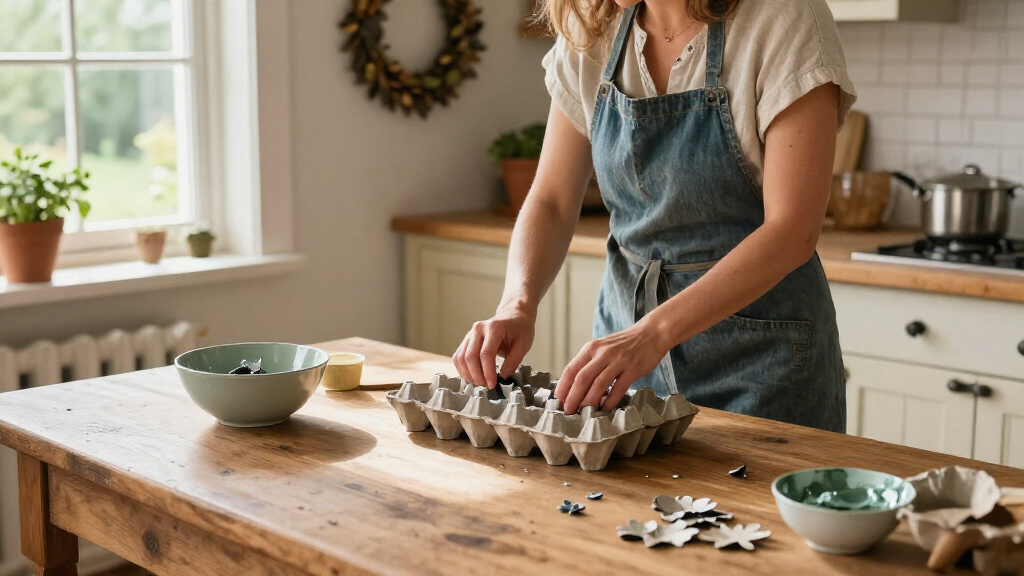
To form the body, the tutorial cuts out and trims two cups, then glues them together at their rims. Another trimmed cup, with a hole cut into it, forms the tail base. At the other end, three cups with zigzag-cut edges are stacked to create the rooster’s neck and head. Torn carton pieces can be glued over awkward seams before the body is painted in tan and brown.
The remaining features are made separately: cardboard wings are attached to the sides and painted with teal accents, while a yellow-painted cardboard beak, felt comb and wattle, and bead eyes complete the face. For the tail, cardstock is painted on both sides, cut into strips and snipped along the edges to resemble feathers. The strips are gathered into a fan and glued into the tail opening, according to the instructions described by Hunker.
A Second Use for Paper Cartons
The project presents reuse as a small-scale craft option: rather than discarding a paper carton, a maker can use its molded cups as building pieces for a decoration. The report does not quantify any environmental benefit or compare the craft’s cost with store-bought decor, so its practical value is chiefly the specific reuse idea and the opportunity to make an item from materials already at home.
Its construction also makes the result adaptable. Hunker notes that the rooster’s brown, teal and red palette is not required; makers can choose other colors or use craft feathers instead of cardstock. Making several birds in different shades is another option described in the report. That flexibility may appeal to people who want a handmade accent that fits their own kitchen or seasonal display.
There is a practical limit to where the finished piece should go. Paper and glue can be damaged by moisture, and the source advises keeping the rooster indoors and away from wet soil or splashes. A dowel can make it look like a plant stake, but that does not make the carton decoration suitable for damp conditions.
Products Worth Considering

Bose SoundLink Plus Portable Bluetooth Speaker, Black

Philips Hue Smart Light Starter Kit with Bridge and 4 White and Color A19 Bulbs

Bose SoundLink Flex Bluetooth Speaker (2nd Gen), Black
As an affiliate, we earn on qualifying purchases.
How the Rooster Takes Shape
Hunker’s report places the rooster among other ways to source farmhouse-style decor, such as antique shops, thrift stores and home-goods retailers. Rather than documenting a product launch or a new commercial line, the report focuses on a hands-on project from a creator’s video and explains how the carton is assembled into a bird.
The carton’s rough molded surface is central to the look described in the report: it gives the painted body a textured, rustic appearance. The design combines that surface with simple add-on materials—cardboard wings, felt facial details and a cut-paper tail. The instructions are specific to a dry paper carton; the source does not say that plastic or foam cartons will work in the same way.
What the Instructions Do Not Specify
The source describes the materials and assembly sequence but does not provide measurements, drying times or a full video transcript. It also does not report how long the finished rooster lasts, how well the hot-glue joints hold over time, or whether the creator tested the design with carton types other than paper. Those details should not be assumed from the project description.
Hunker identifies Zad Crafts as the creator but does not give a date for the original tutorial in the supplied material. The report also makes no claim that the craft replaces a particular product or produces measurable waste reductions. Its stated use is decorative, with indoor placement recommended to keep the paper construction away from moisture.
Making and Displaying the Bird
Readers who want to try the project can follow the steps described in Hunker’s report and consult the Zad Crafts tutorial for the creator’s visual demonstration. Before assembling the bird, they will need to set aside a dry paper carton and gather the listed craft supplies, including scissors and a hot-glue gun. The supplied report does not provide a separate schedule or additional follow-up announcement.
After assembly, the rooster can be placed on an indoor shelf or fitted with a wooden dowel for a plant display, provided it is kept clear of wet soil and splashes. The next step is up to the maker: retain the brown-and-teal look, alter the colors, or try craft feathers. The source offers these as customization ideas rather than as separately tested versions of the project.
Key Questions
What does the egg-carton rooster project make?
It turns a dry paper egg carton into a small rooster decoration with a painted body, cardboard wings, felt comb and wattle, bead eyes and a fringed cardstock tail.
What materials are needed?
The report lists a carton with roughly six usable cups, extra carton scraps, scissors, a hot-glue gun, watercolor paint and a brush. It also calls for red felt, cardstock and two black beads; a wooden dowel is optional.
Can the finished rooster go in a planter?
A dowel can be attached to use the rooster as a plant stake, but Hunker advises keeping it indoors and away from wet soil or splashes because the paper construction can get soggy.
Do the colors have to match the tutorial?
No. The report says makers can choose different paint colors or replace the paper tail feathers with craft feathers. The suggested brown, teal, yellow and red palette is one option, not a requirement.
Source: hunker.com