
TL;DR

Get furniture and decor delivered free with Prime
- Fast, free delivery on millions of items
- Prime Video, Amazon Music and more included
- Member-only deals all year
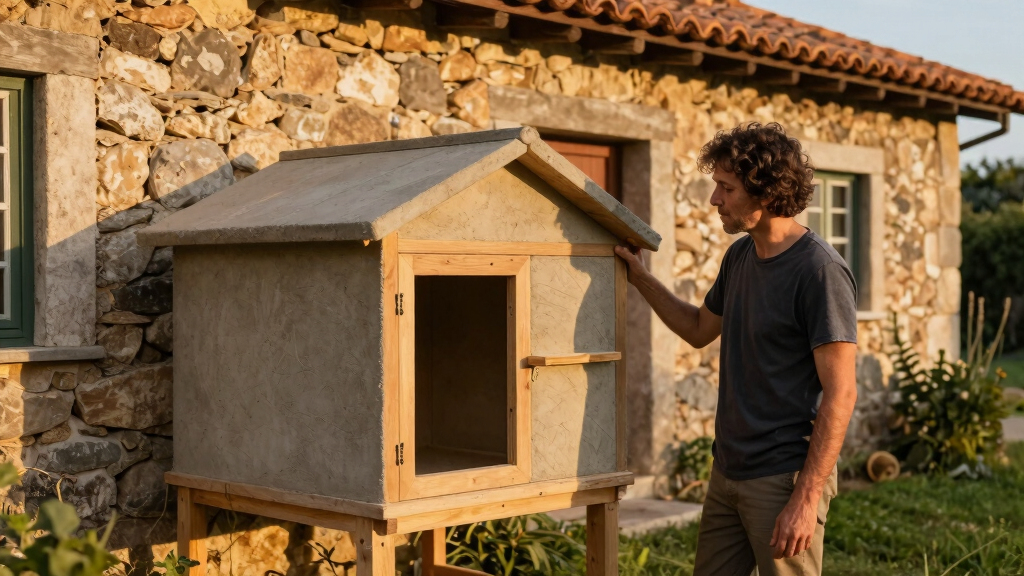
Ricardo Leal constructed a hempcrete chicken coop alongside a Portuguese home, emphasizing sustainable building practices. The project highlights eco-friendly design in rural settings.
Portuguese designer Ricardo Leal has completed a hempcrete chicken coop beside a traditional home, emphasizing sustainable construction methods. This development illustrates growing interest in eco-friendly rural architecture and alternative building materials.
Leal’s project involves the construction of a chicken coop using hempcrete, a bio-composite material made from hemp fibers and lime, positioned adjacent to a conventional Portuguese residence. The coop’s design integrates with the existing landscape, aiming to reduce environmental impact and promote sustainable farming practices.
According to Leal, the use of hempcrete offers advantages such as thermal insulation, breathability, and low carbon footprint. The project was completed in early July 2026, with the coop serving both as a functional animal shelter and a demonstration of eco-conscious construction.
There is no indication that the project involves any official approval or certification process; it appears to be a personal or experimental initiative focused on sustainable living.
Potential Impact on Sustainable Rural Architecture
This project underscores the potential for hempcrete and similar eco-friendly materials to be used in small-scale rural constructions. It may inspire other designers and farmers to adopt sustainable building techniques, contributing to environmental conservation and reducing reliance on traditional, less sustainable materials.
Additionally, the integration of such structures into existing rural environments highlights the feasibility of combining modern eco-architecture with traditional lifestyles, potentially influencing future rural development standards.
As an affiliate, we earn on qualifying purchases.
Growing Interest in Hempcrete and Sustainable Building Materials
Hempcrete has gained recognition in recent years as a sustainable alternative to concrete, praised for its low carbon footprint and insulating properties. Its use in residential and small-scale structures has increased in Europe, supported by a broader movement toward environmentally conscious construction.
Ricardo Leal’s project aligns with this trend, demonstrating practical application in a rural setting. Similar initiatives have been reported across Europe, where designers seek to showcase the versatility and sustainability of hemp-based materials.
“Hempcrete offers significant environmental benefits and can be a game-changer for sustainable rural architecture.”
— an anonymous researcher
As an affiliate, we earn on qualifying purchases.
Extent of Broader Adoption and Regulatory Support
It is not yet clear whether this project will lead to broader adoption of hempcrete in rural architecture or if regulatory frameworks support its widespread use in Portugal. Details on official certifications or incentives remain unavailable, and the scalability of such projects is still uncertain.
As an affiliate, we earn on qualifying purchases.
Next Steps for Sustainable Rural Building Initiatives
Further projects may follow Leal’s example, with increased interest in hempcrete and eco-friendly materials. Monitoring local policies and potential certifications will be crucial to understanding the material’s future role in Portuguese rural architecture. Additional demonstrations or case studies could influence regional building standards.
As an affiliate, we earn on qualifying purchases.
Key Questions
What is hempcrete and why is it considered sustainable?
Hempcrete is a bio-composite made from hemp fibers and lime, valued for its low carbon footprint, thermal insulation, and breathability, making it a sustainable alternative to traditional concrete.
Is hempcrete widely used in Portugal or Europe?
Its use is growing in Europe, especially in eco-conscious projects, but it remains relatively niche compared to conventional building materials. Regulatory support varies by country.
Can hempcrete be used for larger structures?
While primarily used for small-scale and insulating applications, research is ongoing into its use for larger structures, but currently, most projects are limited to residential or auxiliary buildings.
Are there any legal or building code restrictions on using hempcrete in Portugal?
Specific regulations are still evolving. It is recommended to consult local authorities and ensure proper certification when planning to use hempcrete in construction projects.
What are the environmental benefits of using hempcrete?
Hempcrete absorbs CO2 during curing, requires less energy to produce, and reduces reliance on carbon-intensive materials like concrete, contributing to lower overall emissions.
Source: Dezeen
Halloween Picks
halloween
As an affiliate, we earn on qualifying purchases.