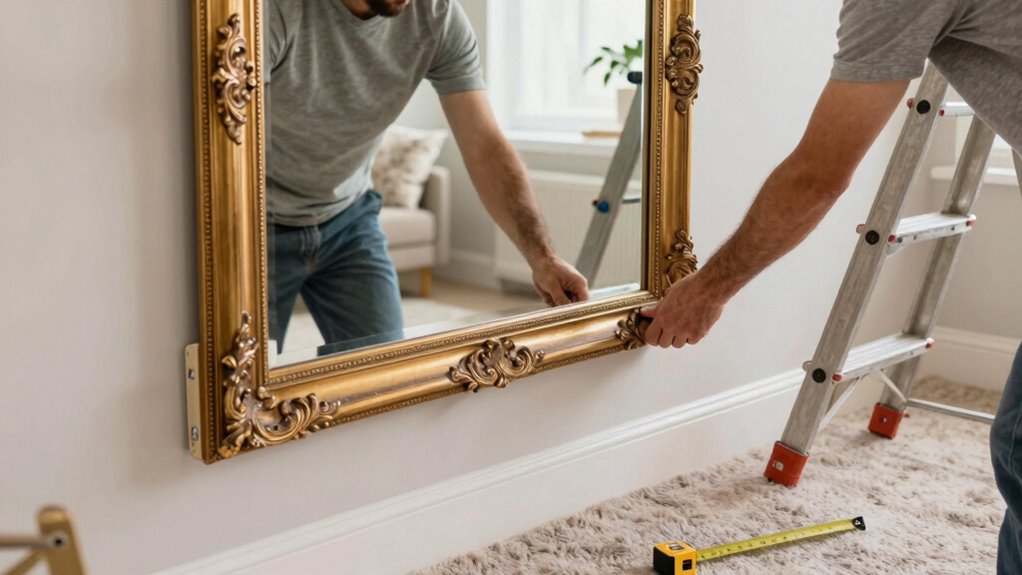

Before hanging heavy mirrors or art, make certain you choose the right wall anchors rated for the weight and wall material, whether drywall, plaster, or masonry. Use multiple anchors to distribute the load evenly and prevent shifting. Always follow the manufacturer’s instructions for installation, and consider locating wall studs for extra support. Proper hardware and technique are key to safety and stability. Want to learn more about how to secure your pieces for the long term?

Get furniture and decor delivered free with Prime
- Fast, free delivery on millions of items
- Prime Video, Amazon Music and more included
- Member-only deals all year
Key Takeaways
- Use wall anchors rated for the mirror’s weight and suitable for your wall type.
- Distribute the weight evenly with multiple anchors to ensure stability.
- Follow manufacturer’s installation instructions carefully for secure mounting.
- Locate wall studs with a stud finder for maximum support, especially for heavy items.
- Confirm the load capacity of hardware to prevent overloading and ensure safety.
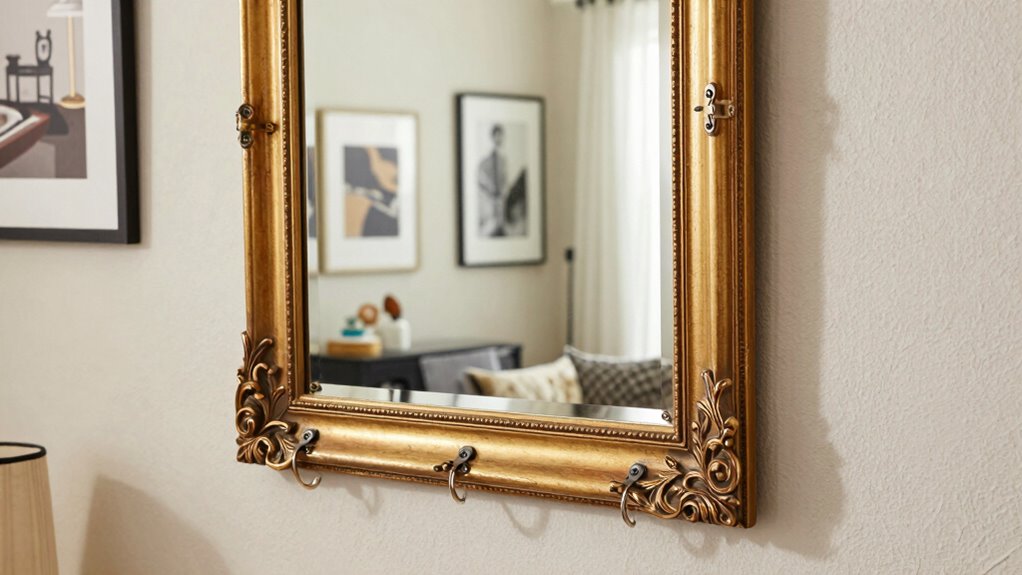
Hanging heavy mirrors and art can dramatically elevate a room’s style, but it requires careful planning to guarantee safety and stability. The first step is understanding how to properly secure these items so they don’t become hazards or cause damage. Wall anchors are essential tools in this process. They provide the extra support needed to hold heavy objects securely against the wall. When choosing wall anchors, pick ones rated for the weight of your mirror or art piece. Using anchors designed for heavier loads ensures your wall can support the weight without pulling out or causing the wall material to crumble.
Wall anchors rated for heavy loads ensure secure, safe support for your mirrors and art.
Weight distribution plays a vital role in hanging heavy items. You want to spread the weight evenly across multiple anchors when possible, rather than relying on just one point of support. This not only reduces stress on each anchor but also minimizes the risk of the wall failing. For larger or heavier pieces, use several anchors strategically placed along the top or sides to distribute the load. This approach helps keep the mirror or art secure and prevents it from shifting or falling over time. Additionally, understanding the importance of proper installation techniques ensures your hanging hardware functions as intended and maintains safety over the long term. Being aware of wall material considerations can further influence your choice of hardware and installation methods to ensure optimal support.
A crucial aspect is also understanding load capacity to prevent overestimating what your wall can handle. Before you start drilling, locate the wall studs if possible. Studs are the strongest points in your wall and provide the best support for heavy items. Use a stud finder to identify these locations accurately. Attaching your hanging hardware directly into studs offers maximum stability, but if you can’t align your piece with a stud, wall anchors become your best option. Always confirm your anchors are appropriate for your wall type—whether drywall, plaster, or masonry—and follow the manufacturer’s instructions carefully. Proper installation is key; even the strongest anchors won’t hold if they’re not installed correctly. Recognizing weight distribution and ensuring it is balanced across multiple points can further enhance the long-term stability of your hung items.
Products Worth Considering

Bose Smart Dolby Atmos Soundbar

Dyson V9 Motorbar Cordless Vacuum

Bose Lifestyle Ultra Speaker
As an affiliate, we earn on qualifying purchases.
Frequently Asked Questions
How Do I Prevent Mirrors From Slipping or Falling Over Time?
To prevent mirrors from slipping or falling over time, you should prioritize mirror safety by securely anchoring it to the wall. Use appropriate hardware like heavy-duty brackets and guarantee proper weight distribution across multiple hooks. Double-check that the mounting hardware can handle the mirror’s weight, and regularly inspect the setup for stability. This proactive approach keeps your mirror safe, stable, and prevents accidents in your space.
What Tools Are Best for Hanging Heavy Artwork Securely?
Think of hanging heavy artwork like balancing a tightrope walker. Use a stud finder to locate strong points in your wall, ensuring proper weight distribution. Choose heavy-duty hooks or brackets rated for your artwork’s weight, and secure them with a power drill for stability. Adjust the hanging height to suit your space, making sure the piece is level. With these tools and techniques, your art stays secure and beautifully displayed.
How Do I Choose the Right Wall Anchors for Heavy Pieces?
To choose the right wall anchors for heavy pieces, consider weight distribution and anchor durability. For heavier artwork, opt for toggle bolts or molly bolts, as they spread the weight evenly and provide strong support. Make certain the anchors are rated for the weight of your mirror or art. Always match the anchor type to your wall material—drywall, plaster, or brick—to ensure secure, lasting support.
Can I Hang Heavy Mirrors on Textured or Uneven Walls?
Hanging heavy mirrors on textured or uneven walls can feel like trying to hang a picture on a bumpy road, but with the right techniques, it’s feasible. Use long, sturdy anchors and consider decorating ideas like mounting a large, flat piece on a backing board first. Mirror placement tips include marking exact spots and using a level to guarantee stability. This approach keeps your decor secure and visually appealing, even on tricky surfaces.
What Should I Do if the Wall Material Is Unknown or Mixed?
If the wall material is unknown or mixed, start with wall type identification to determine its composition. Use a stud finder or consult a professional if needed. For mixed material solutions, consider using versatile anchors like toggle bolts or masonry screws that work across different surfaces. Always test a small area first and verify the hardware you choose provides enough support for heavy items. Safety comes first!
Conclusion
Before hanging heavy mirrors and art, remember that proper support is essential for safety and stability. Always use the right anchors and choose the correct placement to balance your space’s aesthetic and structural needs. Investigate wall types and weight limits to make sure your pieces stay secure. Visualize your setup beforehand—this helps prevent accidents and guarantees your artwork or mirror hangs perfectly. Taking these precautions ensures your display remains stunning and safe for years to come.