
To frame and hang your own photos and art, start by carefully measuring your pieces and choosing complementary frames made of wood or metal, adding acid-free mats and UV-protective glass for preservation. Use sturdy hardware like D-rings and picture hooks, and guarantee your artwork is hung at the right height and angle. Proper lighting with adjustable spots or picture lights enhances your display and protects your art. Keep exploring to learn more tips for creating a stunning, lasting display.
Key Takeaways
- Measure your artwork accurately and choose a frame that complements without overpowering the piece.
- Use acid-free mats and UV-protective glass to preserve colors and prevent damage over time.
- Select sturdy hanging hardware like D-rings and picture hooks, ensuring they support the artwork’s weight.
- Position lighting at a 30-degree angle to highlight details while avoiding glare and reflections.
- Mount artwork securely on appropriate wall surfaces, using proper techniques for safety and stability.
Framing and hanging your own photos and art can transform your space and showcase your personal style, but it might seem intimidating if you’re new to it. The key is understanding how to choose the right framing materials and how to optimize your display with good gallery lighting. When selecting framing materials, you want to think about both aesthetics and protection. Wood frames offer a classic, warm look and are easy to customize, while metal frames provide a sleek, modern vibe and are durable. If your art or photos are valuable or sentimental, consider museum-quality framing materials—acid-free mats and UV-protective glass—to preserve them over time. These choices help prevent fading, discoloration, or damage from environmental factors, ensuring your artwork remains vibrant for years.
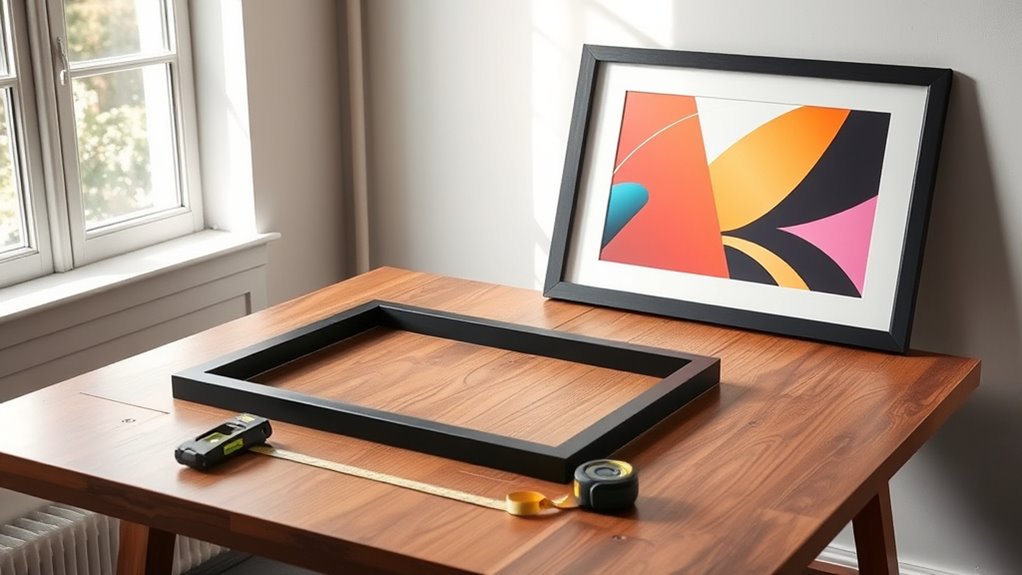
Once you’ve picked your framing materials, measure your artwork carefully. Use a ruler or a tape measure to determine the exact dimensions, and then select a frame that complements the piece without overpowering it. For a more polished look, add a mat layer between the artwork and the frame. Mats not only enhance the visual appeal but also provide a buffer that protects your art from touching the glass, which can cause sticking or damage over time. When it comes to hanging, make sure your hardware is sturdy enough to support the weight of your framed piece. D-rings and picture hooks are reliable options, but always check the weight capacity before hanging.
Lighting plays a *vital* role in how your art is perceived. Proper gallery lighting can dramatically enhance colors, textures, and details. Use adjustable spotlights or picture lights to highlight your favorite pieces. Position lights at a 30-degree angle to avoid glare and reflections on the glass. If natural light is available, consider the placement carefully—direct sunlight can cause fading, so use curtains or UV-filtering glass if you want to display pieces in well-lit areas. Combining good framing with strategic gallery lighting creates a professional, curated look, making your art stand out while also protecting it.
Frequently Asked Questions
What Tools Are Essential for Framing and Hanging Art?
To frame and hang your art, you’ll need essential tools like a level, measuring tape, and a hammer. Don’t forget gallery lighting options to highlight your pieces effectively. For framing, use a saw to cut frame matting and glass cutters for precision. A screwdriver helps assemble the frame. These tools guarantee your artwork is properly displayed, looking professional and polished in your space.
How Do I Choose the Right Frame for My Artwork?
When choosing the right frame for your artwork, consider the style and mood you want to convey. Decide between matte or glossy finishes to enhance colors and textures. Opt for ornate frames if you prefer a classic look or minimalist designs for a sleek, modern feel. Think about your space and personal taste, and select a frame that complements your art while highlighting its unique character.
What Are the Best Methods to Avoid Damaging Walls?
To avoid damaging walls, you should use wall protection methods like adhesive hooks or damage prevention strips. These options prevent holes and scratches while securely hanging your artwork. Always choose the right weight capacity and follow installation instructions carefully. Consider using removable hooks for easy adjustments, and avoid overloading hooks to maintain wall integrity. This way, you keep your walls looking pristine while displaying your favorite photos and art.
How Can I Ensure My Artwork Is Level and Aligned?
To guarantee your artwork is level and aligned, you should focus on grid alignment and spacing consistency. Use a level to check that each piece is straight before final hanging. Measure equal distances between frames, and consider using painter’s tape or a template to mark spots. This approach helps you maintain proper alignment and consistent spacing, creating a polished, professional look on your wall.
How Do I Hang Heavy or Large Art Pieces Securely?
They say “a chain is only as strong as its weakest link,” and that’s true for hanging heavy art. To do it securely, you need proper weight distribution and sturdy wall anchors. Use anchors rated for the weight of your piece, and attach hooks or hardware to distribute the weight evenly. Double-check that everything’s level and secure before hanging, so your masterpiece stays put.
Conclusion
Think of your wall as a garden waiting to bloom with your favorite memories and artwork. With your thoughtful framing and careful hanging, you’re planting seeds of personality and creativity. Over time, each piece will flourish, transforming your space into a vibrant, personal masterpiece. Remember, you’re the gardener here—tend to your wall with care and patience, and watch as your unique gallery grows into a beautiful expression of you.