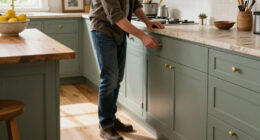
Painting cabinets with historical colors adds timeless charm and authentic character to your space. Choose shades inspired by old-world palettes, such as muted tones or vibrant hues from specific eras, to evoke different moods and eras. Use proper restoration techniques like thorough cleaning, sanding, and multiple thin coats for a smooth finish. Incorporate finishing touches like glazing or distressing to enhance the vintage look. Keep exploring for tips on achieving truly authentic, aged cabinet finishes.

Get furniture and decor delivered free with Prime
- Fast, free delivery on millions of items
- Prime Video, Amazon Music and more included
- Member-only deals all year
Key Takeaways
- Select authentic historical colors inspired by specific eras or cultural movements for an authentic look.
- Prepare cabinets thoroughly with cleaning, sanding, and priming to ensure proper adhesion of historical paints.
- Use vintage-inspired finishes like matte, eggshell, or satin to match the era’s typical appearance.
- Incorporate glazing, antiquing, or distressing techniques to add depth, character, and an aged effect.
- Seal with a clear protective coat to enhance durability and preserve the historical finish over time.

Have you ever wondered how to give your cabinets a timeless appeal? One of the most effective ways is by choosing colors rooted in history, which can transform your space into a charming, nostalgic retreat. When considering this approach, it’s helpful to explore famous color palettes that have stood the test of time. These palettes often originate from specific periods or cultural movements, such as the muted tones of the Arts and Crafts movement or the vibrant hues of the mid-century modern era. By selecting colors from these well-known palettes, you tap into a rich visual history that immediately adds character and authenticity to your cabinets. But simply selecting a color isn’t enough—you’ll want to understand restoration techniques that help you achieve a professional, durable finish.
Restoration techniques are essential for preserving the integrity of your cabinets while applying historical colors. Before painting, you should thoroughly clean and sand the surfaces to ensure proper adhesion. Using a high-quality primer tailored for wood helps seal the surface and prevents paint from chipping over time. When choosing your paint, opt for finishes that match the era you’re drawing inspiration from—matte, eggshell, or satin finishes often work well for vintage looks. Applying multiple thin coats, rather than a single heavy layer, results in a smoother, more authentic appearance. You might also consider distressing the paint slightly for an aged look, which enhances the historical vibe and adds depth to your cabinets. Additionally, understanding color psychology can help you select hues that evoke specific moods or periods, further enriching the historical authenticity of your project.
To further enhance the authenticity, you can incorporate techniques like glazing or antiquing, which mimic the natural wear and tear of older cabinetry. These methods involve applying a tinted glaze over the painted surface and then gently wiping away excess, leaving subtle shadows in crevices and details. This process not only emphasizes the craftsmanship but also creates a sense of history and depth. When all is said and done, sealing your work with a clear protective coat will lock in the color and finish, making your cabinets resilient against daily use.
As an affiliate, we earn on qualifying purchases.
Frequently Asked Questions
How Do I Choose the Right Historical Color for My Cabinet Style?
To choose the right historical color for your cabinet style, start by researching the period’s typical color palette selection. Look at historical photos, furniture, and paint samples from that era to guarantee historical accuracy. Consider the overall aesthetic of your space and how the color complements existing decor. You’ll want a shade that captures authentic charm while also making your cabinets stand out beautifully.
Are Historical Colors Suitable for Modern Kitchen Designs?
Did you know 65% of homeowners are blending historical colors into modern kitchens? Yes, these colors work well, adding depth and unique character. You can explore current color trend predictions to find shades that complement your sleek, contemporary design. A cost comparison analysis shows that using historical colors may be more affordable than custom options, making them a stylish, budget-friendly choice for your modern kitchen.
What Type of Paint Best Preserves Historical Cabinet Appearances?
You should choose chalk paint or oil-based finishes to preserve historical cabinet appearances. Chalk paint is ideal because it adheres well to furniture without extensive prep and creates an authentic vintage look. Oil-based finishes provide a durable, glossy surface that maintains the rich, traditional feel of historical colors. Both options help protect the cabinets while keeping their original charm, ensuring your classic design stays beautiful over time.
How Often Should I Repaint Cabinets With Historical Colors?
You should repaint your cabinets with historical colors every 5 to 10 years, depending on your maintenance schedule and how much the color fades over time. Regular cleaning and gentle touch-ups help preserve the original look longer. Keep an eye on signs of color fading or damage, and plan re-painting before the paint wears thin or the color markedly diminishes, ensuring your cabinets stay true to their historical charm.
Can I Mix Multiple Historical Colors in One Cabinet Project?
Yes, you can mix multiple historical colors in one cabinet project using color mixing techniques. To achieve a cohesive look, select colors from authentic historical palettes that complement each other. You might use layering or blending to create subtle shifts between shades. Be mindful of the era you’re referencing to make certain the mix reflects the authentic style. Experiment on small areas first to perfect your technique before applying broadly.
As an affiliate, we earn on qualifying purchases.
Conclusion
By choosing historical colors for your cabinets, you connect your space to history and tradition. Some say these hues can even boost your home’s charm and value. While not scientifically proven, embracing these colors can create a timeless feel that resonates emotionally. So, go ahead—experiment with these shades and see how they transform your space into a beautiful, nostalgic retreat that tells its own story.
As an affiliate, we earn on qualifying purchases.
As an affiliate, we earn on qualifying purchases.
Halloween Picks
halloween
As an affiliate, we earn on qualifying purchases.