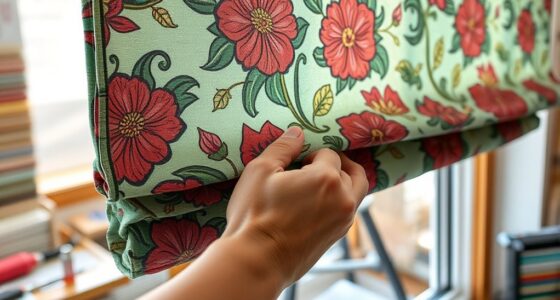
To plan a DIY accent wall that fits your style, start by choosing colors that complement your overall room and reflect the mood you want. Coordinate your furniture and accessories with the wall, either matching or contrasting for visual interest. Think about the wall’s placement and how it works with your room’s layout, natural light, and existing elements. Visualize your design before starting, using online tools or inspiration boards. Keep exploring to learn more tips for a flawless finish.

Get furniture and decor delivered free with Prime
- Fast, free delivery on millions of items
- Prime Video, Amazon Music and more included
- Member-only deals all year
Key Takeaways
- Define your room’s overall color scheme and choose an accent wall color that complements or contrasts effectively.
- Decide whether the accent wall will serve as a focal point or a subtle background to guide your design approach.
- Plan the layout to position the accent wall where it enhances visual interest, such as behind main furniture pieces.
- Prepare tools and materials in advance, and use painter’s tape for clean lines and precise application.
- Visualize your finished space with online tools or Pinterest to ensure the design aligns with your personal style.

Creating a DIY accent wall can transform a room’s look and feel, but proper planning is vital to achieve a polished result. The first step is to think about the wall color selection. Your choice should complement the overall color scheme of the room while allowing the accent wall to stand out. Think about colors that evoke the mood you want—bold hues like navy or emerald add drama, while softer shades like blush or taupe create a subtle, sophisticated touch. Take into account the natural light in the space, as this can influence how your chosen color appears throughout the day. Test small swatches on the wall before committing to a full paint job to see how they interact with the room’s lighting and existing decor.
Next, focus on furniture coordination. Your furniture should harmonize with the new wall color, either by matching or providing a pleasing contrast. If your accent wall features a vibrant or dark tone, opt for furniture in neutral shades like beige, gray, or white to balance the space. Conversely, if your wall is painted in a lighter or pastel shade, you can introduce furniture in bolder colors or patterns to create visual interest. Keep in mind the style of your furniture—modern, rustic, vintage—and choose accessories and textiles that complement that aesthetic. Pillows, rugs, and artwork should work together to reinforce the room’s overall vibe, ensuring the accent wall enhances rather than clashes with your decor.
Planning your layout is equally important. Decide whether the accent wall will be the focal point or serve as a subtle backdrop. If you want it to be the star, position it behind your main seating area or bed. For a more understated approach, you might choose a wall with less visual clutter. Once you’ve selected the wall and colors, prepare for the actual application—whether painting or applying wallpaper—by gathering the right tools and taping off edges for clean lines. Don’t forget to take into account the room’s existing elements like window trim, ceiling color, and flooring, as these will influence your overall design harmony. Additionally, considering color psychology can help you select a hue that sets the right tone for your space.
Finally, visualize the finished space before you start. Use online tools or Pinterest inspiration boards to see how different color combinations and furniture arrangements look together. Planning thoroughly helps you avoid costly mistakes and ensures your accent wall reflects your personal style. With thoughtful consideration of wall color selection and furniture coordination, your DIY project will result in a stunning feature that elevates your entire room.
As an affiliate, we earn on qualifying purchases.
Frequently Asked Questions
What Are the Best Tools for Creating an Accent Wall?
You’ll need essential tools like painter’s tape, a level, and a measuring tape to guarantee precise lines and measurements. A paintbrush and roller help you apply color schemes smoothly, while a wallpaper scraper or textured tools assist in creating unique wall textures. Consider a stencil or painter’s putty for detailed designs. These tools help you customize your accent wall, bringing your style to life with perfect textures and colors.
How Do I Choose the Right Color for My Accent Wall?
You choose the right color for your accent wall by tapping into color psychology, which influences mood and perception. Think about what vibe you want—calm, energetic, sophisticated—and select trendy palettes that match. For example, deep blues promote tranquility, while vibrant reds energize the space. Trust your instincts and consider how the color complements your overall decor, creating a focal point that reflects your style and personality.
Can I Create an Accent Wall in a Small Space?
Yes, you can definitely create an accent wall in a small space. Focus on color schemes that brighten or enlarge the room, like light or neutral shades, and choose material options that add texture without overwhelming the space. Use bold patterns or contrasting colors sparingly to create impact without clutter. Keep the design simple and strategic, and your small space will feel more stylish and inviting.
How Long Does It Take to Complete a DIY Accent Wall?
It typically takes a weekend, about 2-3 days, to complete a DIY accent wall, depending on your wall’s size and the complexity of wall textures or decorative finishes you choose. You’ll spend time prepping the wall, applying textures, and letting finishes dry. If you opt for intricate decorative finishes, expect a little extra time for detailed work. Patience guarantees a professional-looking result.
What Are Common Mistakes to Avoid When Planning?
Avoid awkward mistakes by paying close attention to color coordination and pattern selection. You might overlook how mismatched hues clash or how busy patterns overwhelm the space. Make sure your colors complement your existing decor and choose patterns that add interest without chaos. Planning pauses to visualize your wall helps prevent these pitfalls, so you create a cohesive, engaging accent wall that perfectly fits your style and sparks joy every time you see it.
wall painter's tape for clean lines
As an affiliate, we earn on qualifying purchases.
As an affiliate, we earn on qualifying purchases.
Conclusion
Now that you’ve mapped out your DIY accent wall, you’re ready to turn your vision into reality. Think of it as planting a seed—you’ll nurture it with your creativity and patience, watching it grow into a stunning feature that’s uniquely yours. Remember, the key is to have fun and let your style shine through. Before you know it, your space will sing with personality, making your home feel warm, inviting, and beautifully yours.
removable wallpaper for accent wall
As an affiliate, we earn on qualifying purchases.
As an affiliate, we earn on qualifying purchases.
As an affiliate, we earn on qualifying purchases.
Fall Picks
fall essentials
As an affiliate, we earn on qualifying purchases.