
TL;DR
TikTok creator Derya.tavas shared a lamp makeover that turns cardboard, organza and wire into flower-shaped shade petals. The craft calls for an LED bulb and space between the synthetic fabric and the bulb to reduce heat-related risks.
TikTok creator Derya.tavas has shared a makeover that turns a plain silver lamp into a flower-shaped fixture using cardboard, organza and wire. The project offers a way to personalize an existing lamp, but its use of synthetic fabric near a bulb makes heat and clearance important safety concerns.

Get furniture and decor delivered free with Prime
- Fast, free delivery on millions of items
- Prime Video, Amazon Music and more included
- Member-only deals all year
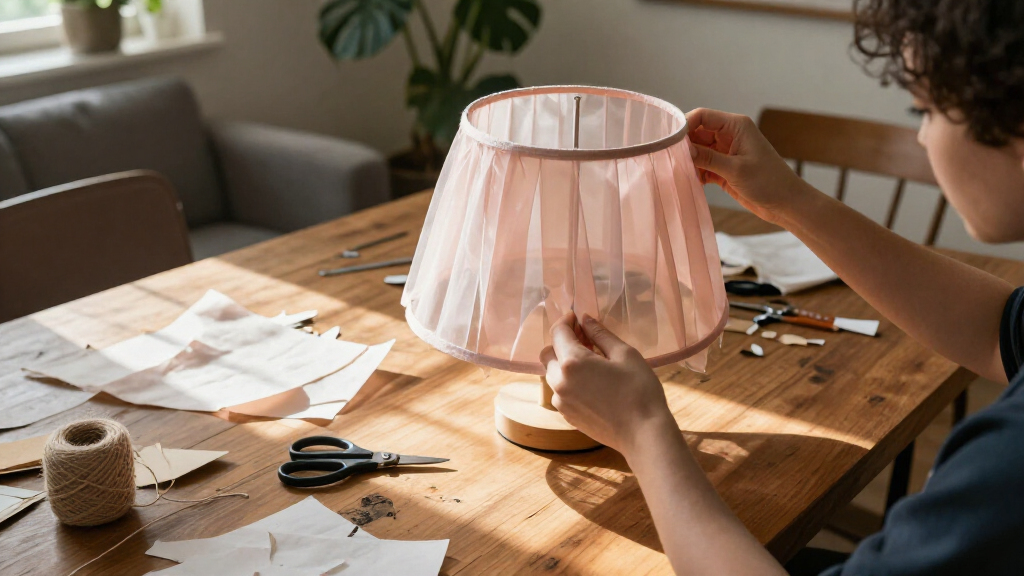
The method begins with a petal template drawn on old cardboard. The creator’s instructions suggest shaping a shade roughly twice the width of the lamp base and about one-third of the lamp’s overall height, while adjusting the petals to suit the fixture. The cardboard can be reused as a template for multiple petals, with varied shapes and sizes adding dimension.
After cutting the template, crafters trace it onto organza fabric and cut out the petals. Three lengths of silver aluminum wire are glued across each fabric piece to support its shape; an additional layer of organza can help cover the wire and add structure. The petals are then attached around the lamp below the bulb. Leaving extra wire at the base can make it easier to secure them, and the petals can be gently shaped by hand.
The post describes the project as a decorative makeover, not a tested lamp product or electrical modification. It also notes that synthetic fabrics can melt when exposed to high temperatures. The instructions recommend replacing the existing bulb with an LED bulb, keeping petals away from direct contact with the bulb and switching off the lamp when leaving the room.
A lamp makeover with a safety check Flower petals from cardboard and organza
Derya.tavas’s TikTok project reshapes a plain silver lamp with handmade petals. Its heat-sensitive materials make bulb choice and clearance essential.
What makes the flower
Cardboard creates the reusable pattern; organza and wire form the visible petals.
Cardboard template
Trace a petal shape onto old cardboard and use it to mark the fabric.
Organza petals
Cut fabric petals; crepe paper is also mentioned as an alternative.
Aluminum wire
Glue wire across each piece to help it hold its shape.
Shape it to the fixture
The suggested proportions are a starting point, not a universal fit.
- Shade about twice the base’s width
- Shade about one-third of the lamp’s height
- Vary petal shapes and sizes
- Keep petals clear of the bulb and hot parts
Build the petal shade
Draw and cut a petal from cardboard.
Trace the shape onto organza, cut it out and glue wire across it.
Secure petals below the bulb and gently shape them by hand.
Check heat and clearance
The project is decorative and has no reported heat evaluation or minimum clearance measurement.
- Use the recommended LED bulb.
- Keep fabric away from direct bulb contact and other hot parts.
- Check fixture and bulb instructions; do not modify wiring.
- Switch off the lamp when leaving the room.
A Low-Cost Way to Rework a Lamp
The idea gives people a way to change the look of a familiar fixture using reused cardboard and a limited set of craft materials, rather than replacing the lamp. The cardboard serves as a pattern rather than the finished shade, while the organza and wire create the visible flower form.
Its practical appeal comes with a constraint: this is a decorative, heat-sensitive design. A handmade shade may place fabric closer to the bulb than a conventional shade, so the bulb type, spacing and fit matter. Readers should treat the LED recommendation and clearance warning as central parts of the project, not optional styling details.
Products Worth Considering

Samsung 65-Inch M70H Series 4K Mini LED Smart TV (2026)

Dyson Airwrap i.d. Multi-Styler with Bluetooth Connectivity

Ring Battery Doorbell 2K Plus, Indoor Cam 2K, and Window & Door Sensor Bundle
As an affiliate, we earn on qualifying purchases.
How the Petal Shade Takes Shape
The makeover starts with an existing lamp whose original shade is removed. The maker traces a petal outline onto cardboard, cuts it out and uses that shape to mark the organza. The instructions allow for different petal sizes, which can produce a fuller, less uniform flower effect.
Wire is glued to the fabric to help each petal hold its form. Once the glue dries, the petals are arranged around the fixture and secured by wrapping the longer wire around the lamp below the bulb. The post also mentions crepe paper as an alternative to organza, using the same tracing and cutting approach. It does not provide a tested pattern, a specific lamp model or measurements for individual fixtures.
“A lampshade should be twice as wide as the lamp base and a third of its overall height.”
— Derya.tavas, in the TikTok project instructions
Fit and Heat Need Checking
The post does not identify the lamp’s bulb wattage, the exact distance between bulb and petals, or whether the finished setup was evaluated for heat buildup. It also does not specify a particular LED model or give a minimum clearance measurement. The suggested shade proportions are general guidance, not a guarantee that the design will fit every lamp safely.
Readers should check the fixture and bulb instructions before attaching decorative material. If the fabric or wire cannot be kept securely away from the bulb and other hot components, the project should not be used on that lamp. The instructions do not address electrical alterations, and the makeover should not require modifying wiring.
Check the Fixture Before Use
Anyone trying the makeover would first need to measure the lamp, choose a suitable LED bulb and plan the petals so they do not touch the bulb. After assembling the shade, check that the wire is firmly attached, the fabric stays clear of hot parts and the lamp remains stable. Turn the light off when leaving the room, as the project instructions advise.
The post does not announce a follow-up test or a broader product release. Its next step for readers is practical: adapt the template to the fixture and assess the fit before using the lamp. A similar petal-making process can be used with crepe paper, but the material and bulb clearance should still be checked.
Source: rss
Key Questions
What materials does the flower lamp makeover use?
The project uses cardboard for petal templates, organza for the petals, aluminum wire for support, and hot glue. It also calls for a pencil and sharp scissors.
Why use an LED bulb?
The instructions recommend an LED bulb because synthetic fabric can melt under high heat. The petals should also stay clear of direct contact with the bulb.
Can crepe paper replace organza?
Yes. The post describes crepe paper as an alternative that can be traced and cut using the cardboard petal template. It does not provide separate safety testing for that material.
Will the suggested shade proportions fit every lamp?
No universal fit is established. The post offers a general starting point—about twice the base’s width and one-third of the lamp’s height—but says to adjust the petals to the specific fixture.
Source: hunker.com