To make your own custom lampshade, start by measuring your existing shade or frame, and choose lightweight fabrics like cotton, linen, or silk for soft light diffusion, or thicker options like burlap for a rustic feel. Cut the fabric with enough seam allowance, then use a hot glue gun to secure it to the frame, smoothing out wrinkles and keeping it taut. Finish with neat edges, guarantee the glue dries completely, and enjoy your personalized lighting fixture by installing it carefully.
Key Takeaways
- Choose lightweight fabrics like cotton, linen, or silk, and measure your shade frame accurately, adding seam allowances.
- Cut fabric slightly larger than the shade to ensure full coverage and ease of attachment.
- Use a hot glue gun to securely adhere fabric edges to the frame, smoothing out wrinkles and bubbles as you work.
- Select fabric transparency based on desired lighting effect; semi-translucent for soft light, opaque for focused glow.
- Allow glue to dry completely, trim excess fabric and glue strings, then place the new shade on your lamp for personalized lighting.
Creating your own custom lampshade is a rewarding way to add a personal touch to your space. When it comes to lamp design, customizing your shade allows you to express your style while also controlling the lighting ambiance. Whether you prefer a warm, cozy glow or a bright, energizing light, designing your own lampshade gives you the flexibility to achieve the perfect atmosphere. You can choose colors, patterns, and textures that match your decor, making your lighting truly unique. Plus, crafting your lampshade can be a fun, creative project that saves money compared to buying ready-made options.
To start, pick the right fabric that complements your room’s color scheme and mood. Lightweight cotton, linen, or silk are popular choices because they diffuse light softly, creating a warm, inviting glow. Thicker fabrics like burlap or canvas add more contrast and can give your lamp an industrial or rustic feel. Once you’ve selected your fabric, measure your existing lampshade or the frame you plan to use, ensuring you have enough material to wrap around completely with some overlap. Cutting your fabric to size is straightforward—just add a few inches on all sides for seam allowances.
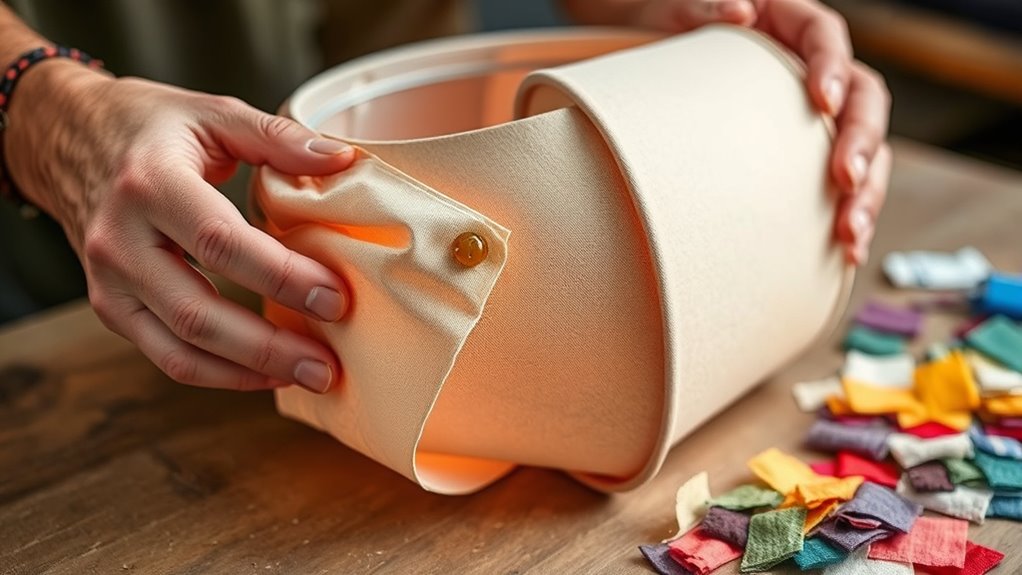
The next step involves attaching the fabric to the lampshade frame using glue. A hot glue gun is ideal for this project because it provides quick, strong adhesion. Carefully apply the glue along the edges of the fabric, pressing it onto the frame as you go. Start with one side, then smooth out any wrinkles or bubbles before moving to the next. Make sure the fabric is taut but not overstretched, as this will prevent sagging or wrinkling over time. For a cleaner look, fold the edges neatly and glue them underneath the frame or inside the shade’s rim.
Additionally, incorporating space-saving solutions such as compact or multi-functional designs can help optimize your space and make your DIY lampshade even more functional in a small room.
As you work, think about how the fabric’s color and transparency will influence the lighting ambiance. Light-colored or semi-translucent fabrics will soften the light and create a subtle, relaxing atmosphere. Darker or opaque fabrics cast a more dramatic, focused glow. Adding embellishments or layering fabrics can further customize your lampshade’s look and light diffusion.
Once the glue has dried thoroughly, inspect your work for any loose edges or bubbles. Trim any excess fabric or glue strings for a polished finish. Installing your new shade is simple—place it on your lamp base, and turn on the light to see your personalized creation in action. With a little effort, you’ve crafted a unique lampshade that not only enhances your interior decor but also elevates your lighting ambiance, making your space feel warm, inviting, and truly yours.

DIY Lampshade Kit 8"x12" White – DIY Lamps Shade Making Kit with All Materials – Self-Adhesive Lampshade Backing, Metal Rings, Double Sided Tape and Instructions, No Fabric Included – Adult Craft Kit
- Complete DIY Lampshade Kit: Includes rings, liner, tape, and instructions
- Customizable Fabric Option: Use your own fabric for personalized design
- Self-Adhesive Lampshade Backing: Peel and stick for easy assembly
As an affiliate, we earn on qualifying purchases.
As an affiliate, we earn on qualifying purchases.
Frequently Asked Questions
Can I Use Any Type of Fabric for My Lampshade?
You can’t use any fabric for your lampshade, as fabric durability and pattern choices matter. Opt for tightly woven fabrics like cotton, linen, or polyester, which hold up well and prevent light from leaking through. Avoid delicate or stretchy fabrics that may sag or tear. Choose patterns that complement your space, and guarantee the fabric is heat-resistant or properly sealed to avoid fire hazards.
What Glue Is Best for Fabric Lampshades?
Think of choosing glue for your fabric lampshade as selecting a loyal companion for a delicate dance. You want an adhesive with strong adhesive strength that can hold your fabric securely while remaining gentle on its surface. Look for fabric-specific glues or spray adhesives designed for fabric compatibility. These options guarantee your lampshade stays beautiful and sturdy, dance after dance, without any slips or damage.
How Do I Ensure My Lampshade Is Evenly Shaped?
To guarantee your lampshade is evenly shaped, focus on balancing construction and applying shaping techniques. Start by carefully measuring and cutting your fabric, then use a flexible frame or form to maintain symmetry during assembly. Smooth out wrinkles as you glue or attach fabric, and periodically check the shape from all angles. Using clamps or weights can help hold the shape while the glue dries, ensuring a professional, even finish.
Can I Customize Lampshades for Different Bulb Sizes?
Yes, you can customize lampshades for different bulb sizes by considering bulb compatibility and shade adjustment. Measure your bulb and choose a shade with adjustable features or flexible fabric that can accommodate varying sizes. You might also add a trim or fold the fabric differently to guarantee a snug fit. Always double-check the bulb’s dimensions and the shade’s opening to ensure a perfect fit and safe usage.
How Do I Clean a Fabric Lampshade Without Damaging It?
To clean your fabric lampshade without damage, start by dusting it gently with a soft brush or vacuuming with a brush attachment. Use a mild fabric maintenance solution—mix a small amount of gentle detergent with water—and spot clean with a soft cloth. Avoid soaking the fabric. For stubborn stains, test a hidden area first. Follow these cleaning tips to keep your lampshade looking fresh and vibrant.

SHJADE Hot Glue Gun with 30 Glue Sticks, 20W Mini Hot Melt Gun Kit(White)
- Fast Heating: Heats up in 1-3 minutes
- Compatible Glue Sticks: Fits φ0.27 inch (7mm) sticks
- Safe & Easy to Use: Lightweight with ergonomic handle
As an affiliate, we earn on qualifying purchases.
As an affiliate, we earn on qualifying purchases.
Conclusion
Creating your own custom lampshade is like painting a personal sunset—each fabric choice and glue stroke brings warmth and individuality into your space. When you finish, your lampshade becomes more than just a cover; it’s a beacon of your creativity, illuminating not only the room but also your unique style. Let your handcrafted piece symbolize the light you shine in everyday life, turning simple materials into a glowing reflection of your inner beauty.

Aspen Creative 33026A, Transitional Pleated Empire Shape Spider Construction Lamp Shade in Rice White, 14" wide (7" x 14" x 11")
- Pack includes one lamp shade: 1 Pack Transitional Pleated Empire Replacement Lamp Shade
- Fabric material: Tetoron Cotton Fabric in Off-White with Pleats
- Dimensions: 7" Top x 14" Bottom x 11" Slant Height
As an affiliate, we earn on qualifying purchases.
As an affiliate, we earn on qualifying purchases.

6/8/10 Inch Metal Lampshade Ring Set (2 Pcs Each) – Heavy Duty Lamp Shade Holder Frame for DIY Repair, Replacement, Custom Lighting Projects
- Size Options: Available in 6, 8, and 10 inches
- Heavy Duty Construction: Made from thick steel for durability
- Supports Heavy Fabrics: Suitable for linen, burlap, and more
As an affiliate, we earn on qualifying purchases.
As an affiliate, we earn on qualifying purchases.