Look for tight, consistent grain patterns and an even finish that feels smooth without blotches or streaks. Check the joinery—high-quality pieces have precise, seamless joints without gaps or visible nails. Assess the weight and stability—heavier furniture usually means better durability and less wobbling. Inspect hardware—screws should be tight, and hinges should open smoothly. Watch for red flags like uneven surfaces or weak joints; if you keep exploring, you’ll uncover even more ways to spot top craftsmanship.
Key Takeaways
- Look for consistent, tight grain patterns and smooth, even finish without blotches or streaks.
- Check for precise joinery like dovetails or mortise-and-tenon with seamless grain alignment.
- Ensure furniture feels heavy and stable, resisting wobbling when gently tested.
- Confirm hardware is flush, securely attached, and allows smooth operation without gaps.
- Avoid rough edges, uneven surfaces, visible glue or nails, and poorly finished or chipped areas.
Amazon Product B0D9B96TBX
As an affiliate, we earn on qualifying purchases.
Examining the Wood Grain and Finish

When evaluating the quality of wood furniture, examining the wood grain and finish is essential. Look closely at the wood grain patterns—high-quality pieces often have consistent, tight grain that indicates durability and craftsmanship. Irregular or mismatched grains can signal poor construction. Check the finish for smoothness and evenness; a high-quality piece will have finish consistency without blotches, drips, or streaks. Feel the surface to ensure it’s smooth to the touch, not rough or tacky. Good furniture showcases a natural beauty in the grain without overly thick coatings that hide imperfections. Vibrational energy can also influence the perception of quality, as a well-crafted piece often resonates with positive energy. By paying attention to these details, you’ll better identify furniture that’s built to last and crafted with care.
Amazon Product B07RTH8LM7
As an affiliate, we earn on qualifying purchases.
Checking the Joinery and Construction Techniques
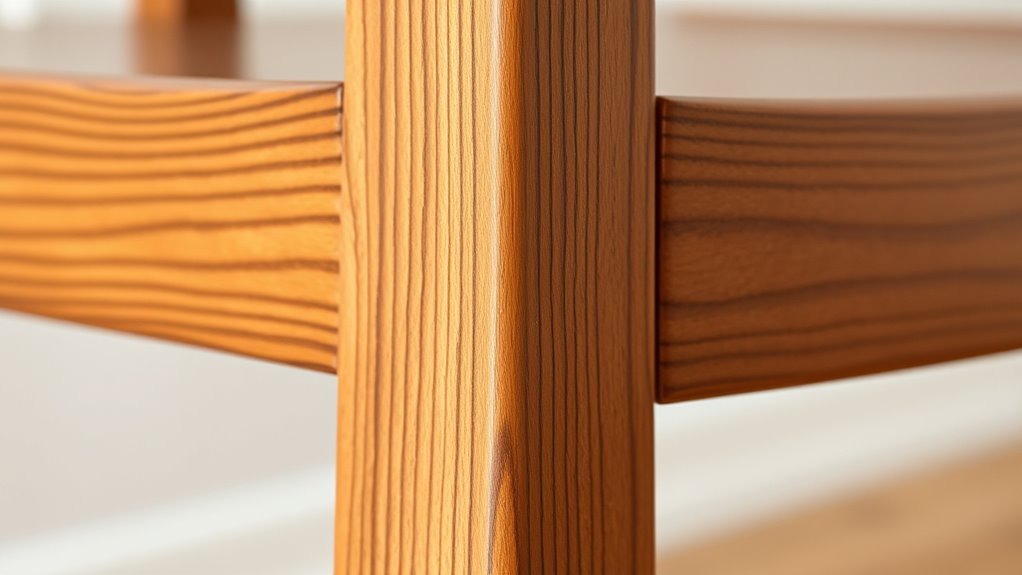
Checking the joinery and construction techniques is essential because these details directly impact a piece’s durability and stability. High-quality furniture features precise joinery methods like dovetails, mortise-and-tenon, or dowels, which hold strong without visible gaps or glue. Examine the grain pattern along joints—if it lines up seamlessly, it indicates careful craftsmanship. You should also check the finish quality around joints; a smooth, even finish without drips or rough spots suggests attention to detail. Avoid furniture with poorly aligned joints, visible fasteners, or glued seams that appear uneven or sloppy. Well-constructed pieces feel sturdy and solid when you test them, confirming that the craftsmanship supports long-lasting use. These details reveal the skill and care invested in the furniture’s construction.
Amazon Product B00GHX5HGG
As an affiliate, we earn on qualifying purchases.
Assessing the Weight and Stability
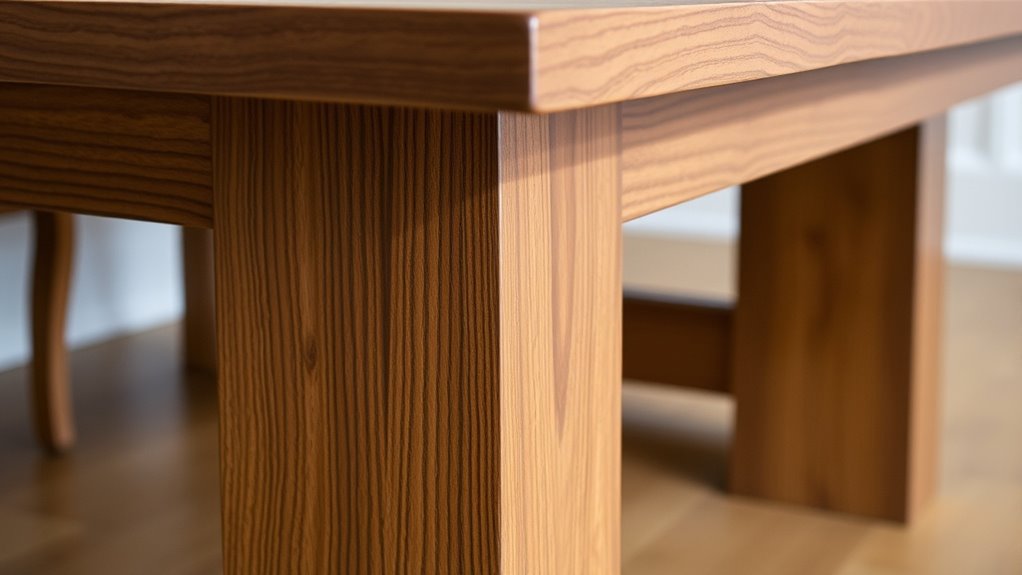
Evaluating the weight and stability of wood furniture provides immediate insight into its quality. Heavier pieces typically indicate higher wood density, which contributes to durability. To test stability, gently shake or push the furniture; high-quality pieces should feel solid and resist wobbling. Conduct stability testing by placing the furniture on a flat surface and observing if it stays balanced without shaking or tilting. Additionally, paying attention to color accuracy and the overall finish can further indicate the craftsmanship involved.
Amazon Product B098XFGHV2
As an affiliate, we earn on qualifying purchases.
Observing the Hardware and Hardware Placement

Inspecting the hardware and its placement reveals a lot about furniture quality. Well-installed hardware should be flush with the surface, with no gaps or wobbling. Proper hardware placement ensures that drawers and doors open smoothly and stay aligned over time. Check that hinges and handles are securely attached, with screws tightened neatly without gaps or misalignment. High-quality hardware often uses durable materials like brass or stainless steel, which resist tarnishing and damage. Avoid furniture with hardware that’s unevenly spaced, loose, or poorly aligned, as this indicates rushed assembly or inferior craftsmanship. Good hardware placement reflects attention to detail and enhances the piece’s overall durability. When hardware quality and placement are excellent, you’ll notice increased functionality and a polished, professional appearance. Material durability is also an indicator of long-lasting furniture.
Recognizing Signs of Poor Quality and Common Red Flags
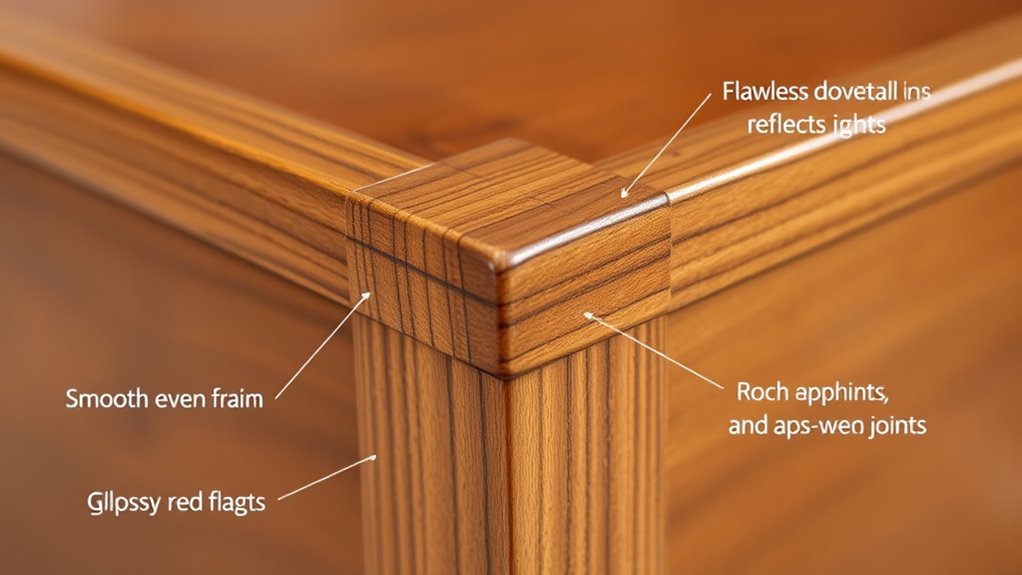
One of the quickest ways to spot poor-quality furniture is by paying attention to common red flags that indicate inferior craftsmanship or cheap materials. Look for uneven surfaces, rough edges, or visible glue, which suggest poor wood treatment. Check the joints; loose or wobbly connections reveal subpar construction. Be wary if the finish appears chipped or uneven, hinting at improper wood treatment. Also, consider the brand reputation—trusted brands typically maintain quality standards. Here’s a quick guide:
| Red Flag | What to Watch For | Why It Matters |
|---|---|---|
| Poor finish quality | Chipped or uneven surface | Indicates cheap wood treatment |
| Weak joints | Wobbly or loose connections | Poor craftsmanship |
| Visible glue or nails | Excess glue or nails visible | Low-quality assembly |
| Unknown brand reputation | No reviews or suspicious reviews | Risk of inferior materials and craftsmanship |
Frequently Asked Questions
How Can I Identify Genuine Hardwood Versus Veneer?
To tell genuine hardwood from veneer, look closely at the wood grain patterns; real hardwood has consistent, natural grains that follow the wood’s shape, while veneer often shows repetitive or unnatural patterns. Check the thickness of the veneer—if it’s very thin, it’s more likely veneer. You can also tap the surface gently; genuine hardwood sounds solid, whereas veneer may feel hollow or thin.
What Are the Best Tools to Assess Wood Quality at Home?
So, you want to become a wood detective at home? Grab a magnifying glass or a good flashlight to examine the wood grain closely—genuine hardwood displays tight, consistent patterns. Sniff around—authentic wood often has a faint, earthy scent, unlike veneers. For a quick test, scratch lightly; real wood leaves a visible mark, while veneer might peel or chip. These tools help you spot quality without needing a fancy lab!
How Does Wood Type Affect Furniture Durability and Value?
You should consider how wood type impacts furniture durability and value. Hardwoods like oak and maple have dense wood grain, making them more durable and resistant to wear, which boosts their value. Softer woods like pine tend to dent easily. Additionally, finish quality matters; a well-applied finish enhances the wood grain’s natural beauty and protects against damage, ensuring your furniture lasts longer and retains its worth over time.
Are There Specific Brands Known for High-Quality Wood Furniture?
You should look for brands with a strong reputation for quality, like Ethan Allen or Stickley, as their craftsmanship and materials often stand out. Check customer reviews to see if buyers praise durability and finish. High-end brands typically use solid wood and quality veneers, while avoiding cheap particleboard or flimsy construction. By focusing on reputable brands and positive feedback, you can confidently choose furniture that lasts and adds value to your home.
What Maintenance Routines Best Preserve High-Quality Wood Furniture?
To safeguard your high-quality wood furniture, you should follow proper maintenance routines. Use gentle cleaning techniques like a soft cloth and mild soap, avoiding harsh chemicals. Regular dusting helps prevent buildup, and applying furniture polish or wax preserves the finish. Consider environmental factors such as humidity and sunlight, which can damage the wood. By maintaining consistent care, you ensure your furniture stays beautiful and durable for years to come.
Conclusion
Now that you know what to look for, you’re ready to spot high-quality wood furniture with confidence. But beware—sometimes the clues aren’t obvious at first glance. Will that beautiful finish hide hidden flaws? Could that sturdy-looking joint be a sign of shortcuts? Stay vigilant, trust your instincts, and remember: the best furniture isn’t just about looks—it’s about what’s beneath the surface. The next piece you choose might just surprise you.