To craft custom Roman shades with patterned fabric, start by choosing fabrics that match your decor and consider how patterns will look when pulled up or down. Measure your window carefully, then cut and sew the fabric with precise pleats and seam allowances. Incorporate lining for a polished finish, and guarantee your installation hardware is secure for smooth operation. For tips on perfecting your project and achieving a professional look, explore the detailed steps ahead.
Key Takeaways
- Choose patterned fabrics that complement your decor and consider pattern orientation for seamless visual flow.
- Use fabric samples to test pattern placement and ensure alignment before purchasing large quantities.
- Follow precise measurement and cutting techniques to create even pleats and a professional finish.
- Incorporate lining or interlining to enhance light control, durability, and overall appearance.
- Install hardware securely, mounting slightly above the window frame for a tailored, polished look.
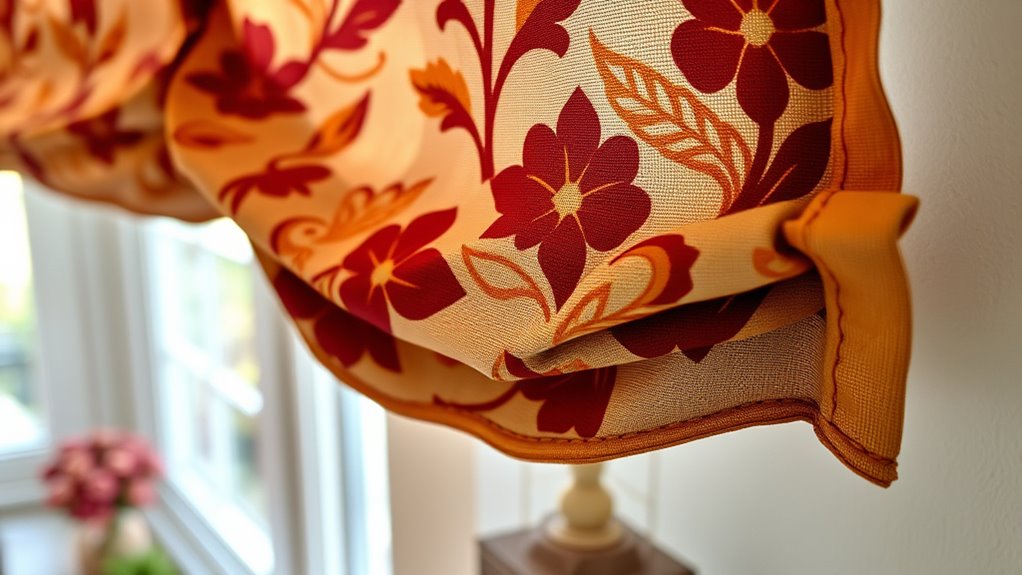
Creating your own Roman shades is a rewarding project that adds a touch of elegance to any room. When you choose patterned fabric, you bring personality and style to your space, making it uniquely yours. The first step is selecting the right fabric, which is vital for achieving the look and functionality you desire. Look for patterned fabrics that match your interior decor, considering color schemes and motifs. Thinner fabrics work well for softer, more flowing shades, while thicker, stiffer materials give a more structured appearance. Make sure the fabric is durable enough to withstand sunlight without fading quickly, especially if your window faces direct sunlight. When selecting your fabric, also keep in mind the pattern’s orientation and how it will look when the shade is pulled up or down. You might want to test the pattern’s placement with a small sample before purchasing the full amount to guarantee it aligns properly and complements your room.
Once you’ve chosen your fabric, it’s time to focus on the construction process. Cutting your fabric precisely is essential for creating even, professional-looking pleats. Use sharp scissors and a ruler or rotary cutter for accuracy. When sewing your shades, follow a clear pattern or tutorial, paying attention to the dimensions needed for your window. Incorporate seam allowances carefully and press your seams to keep everything crisp. If you’re adding lining or interlining, do so before assembling the main panels to give your shades a polished appearance and better light control. Additionally, understanding optimal angles for pinball machines can inspire design choices for your shades, such as incorporating geometric patterns or angled pleats that mimic game aesthetics.
When it comes to installation tips, proper mounting is key to ensuring your Roman shades hang smoothly and operate effortlessly. Measure your window frame carefully, and double-check your measurements before cutting or sewing. Use sturdy brackets and anchors suited to your wall type, and position them so the shade will hang evenly. When hanging your shades, ensure they are level and secure, adjusting the brackets if necessary. It’s helpful to install the hardware slightly above the window frame to give your shades a clean, tailored look and to allow for smooth operation. Test the pull cords or mechanisms after hanging to make sure they function smoothly. Keep the cords tidy and out of reach of children for safety. With careful fabric selection and attention to installation tips, your custom Roman shades will not only look stunning but also operate effortlessly, transforming your space into a more elegant and personalized environment.

StangH Black Floral Roman Shades for Windows, Cordless Magnetic Velvet Window Blind with Privacy Vintage Moody Botanical Printed Shade for Bedroom Living Room, W34 x L64, 1 Panel
TIMELESS CHARM: Elevate your home with our Floral Velvet Roman Shade, featuring a moody dark botanical print with…
As an affiliate, we earn on qualifying purchases.
As an affiliate, we earn on qualifying purchases.
Frequently Asked Questions
How Do I Choose the Best Patterned Fabric for My Roman Shades?
To choose the best patterned fabric for your Roman shades, consider fabric pattern coordination with your room’s decor to create a cohesive look. Opt for a durable fabric selection that withstands sun exposure and frequent use. Think about the scale of the pattern—larger designs make a statement, while smaller ones add subtlety. Test fabric samples in your space to see how they complement your existing colors and textures before making a final decision.
What Tools Are Essential for Crafting Custom Roman Shades?
Did you know that using the right tools can cut your crafting time by half? For your custom roman shades, you’ll need a good fabric scissors, a sewing machine, a measuring tape, and a seam ripper. Always prioritize tool safety by wearing protective gloves and working in a well-lit area. These essential tools help you achieve precise fabric selection and flawless stitching, making your project both enjoyable and professional-looking.
How Can I Ensure the Shades Fit Perfectly in My Window Frame?
To make certain your shades fit perfectly, start by measuring your window frames carefully, including width and height, to get accurate dimensions. When crafting your shades, adjust the shade length as needed, leaving a small margin for hemming or adjustments. Double-check your measurements before cutting fabric, and consider making a mock-up or test shade first. This way, you’ll achieve a precise fit that enhances your window’s look.
Are There Eco-Friendly Fabric Options Available for Roman Shades?
Did you know that 70% of textiles are recyclable or biodegradable? You can choose eco-friendly fabrics for your roman shades by selecting sustainable textiles like organic cotton, hemp, or bamboo. Look for options dyed with eco-friendly dyes, which reduce chemical runoff and environmental impact. These choices help you create beautiful, environmentally conscious shades that are better for the planet without sacrificing style or quality.
How Do I Maintain and Clean Patterned Fabric Roman Shades?
To keep your patterned fabric roman shades looking great, regularly dust them using a soft cloth or vacuum with a brush attachment. For fabric stain removal, gently spot clean with a mild detergent and cold water, avoiding harsh chemicals. Always test a small hidden area first. Avoid excessive moisture to prevent damage. By maintaining shade dusting and prompt stain removal, you’ll preserve the beauty and longevity of your shades.

AHANDMAKER 4 Set Cord Lock Mechanism, 3 Line Idler Pulley Swivel Type Blinds Lock Replacement Brackets Roman Shade Hardware Kit for Roman Woven Wood Shades and Bamboo Window Covering
4 Sets Available: Size 36×45.5×20mm. This Roman shade hardware kit includes 4 complete sets (each containing 1 bamboo…
As an affiliate, we earn on qualifying purchases.
As an affiliate, we earn on qualifying purchases.
Conclusion
So, after all that measuring, sewing, and pattern matching, you might think your custom Roman shades are a masterpiece. Ironically, the real beauty lies in the effort you put in—something store-bought simply can’t replicate. Sure, it’s a lot of work, but isn’t it satisfying to see your unique fabric transforming your space? Now, every time you draw those shades, you’ll remember that sometimes, the most time-consuming projects are the most rewarding—at least until the next DIY adventure.

Chicology Cordless Roman Window Shade, Belgian Flax, 29"W x 64"H
PRIVACY + LIGHT FILTERING (NOT BLACKOUT) – Softens sunlight and provides daytime privacy. At night with interior lights…
As an affiliate, we earn on qualifying purchases.
As an affiliate, we earn on qualifying purchases.

Extendable Measuring Stick Tool | Pinch Stick for Woodworking | No Numbers, No Mistakes | Carpentry, Woodworking, Hobbies, and Remodeling Projects.
Cut perfect-fitting trim for molding, windows, floors, walls.
As an affiliate, we earn on qualifying purchases.
As an affiliate, we earn on qualifying purchases.